Counting practice Sight Words Worksheets for Ages 6-7
5 filtered results
-
From - To
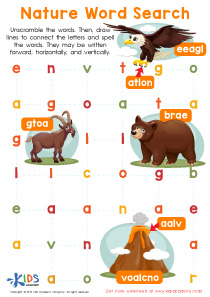
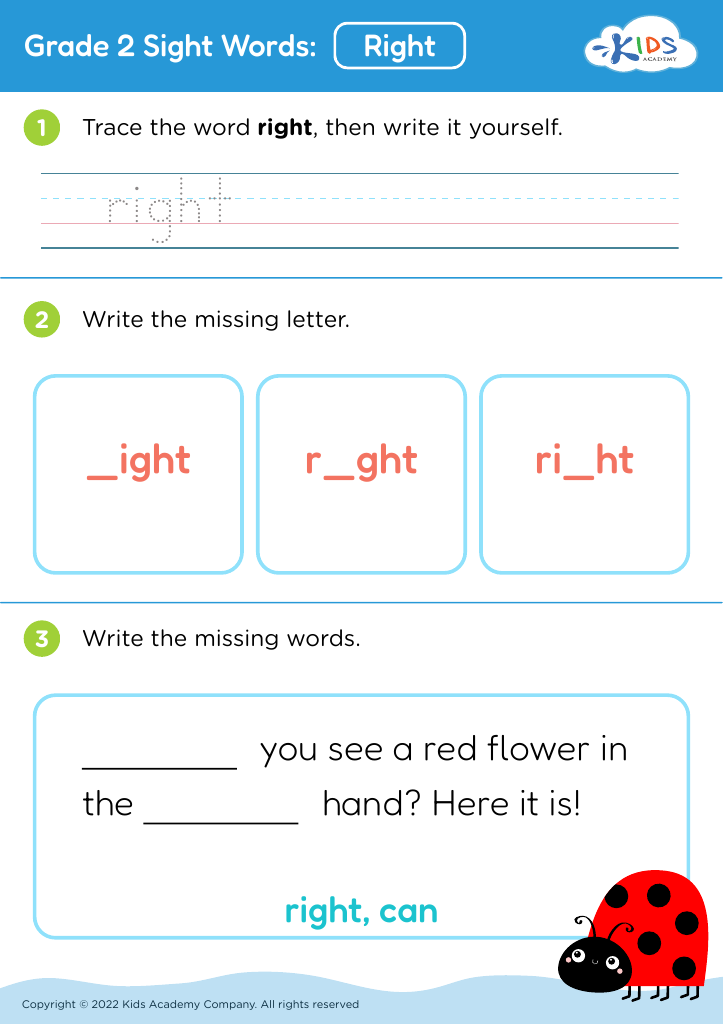
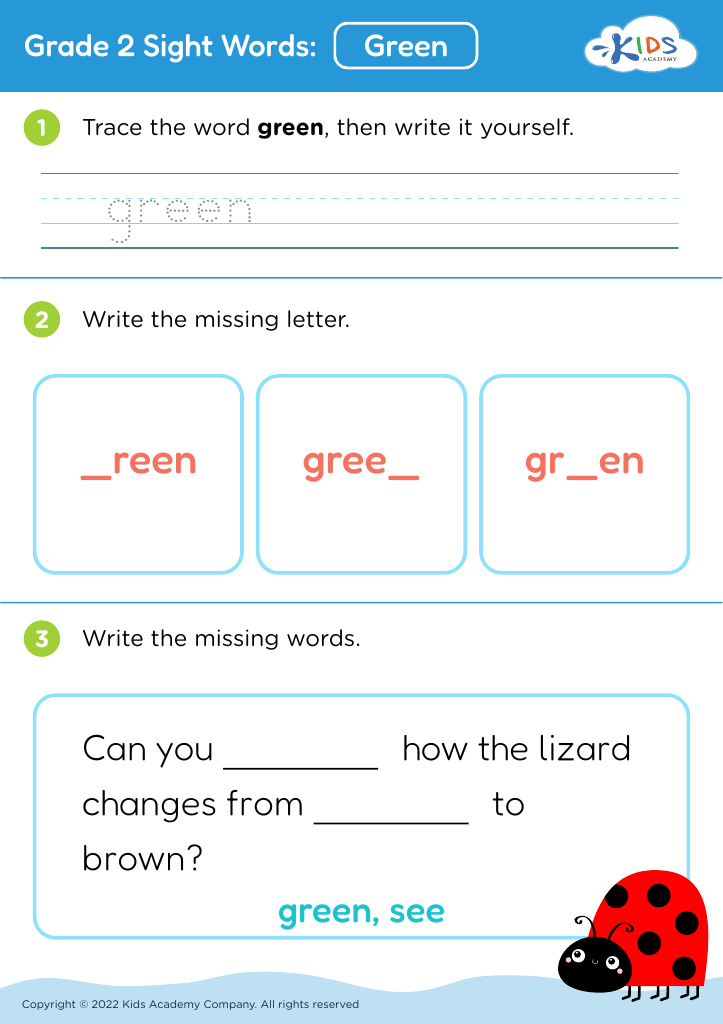
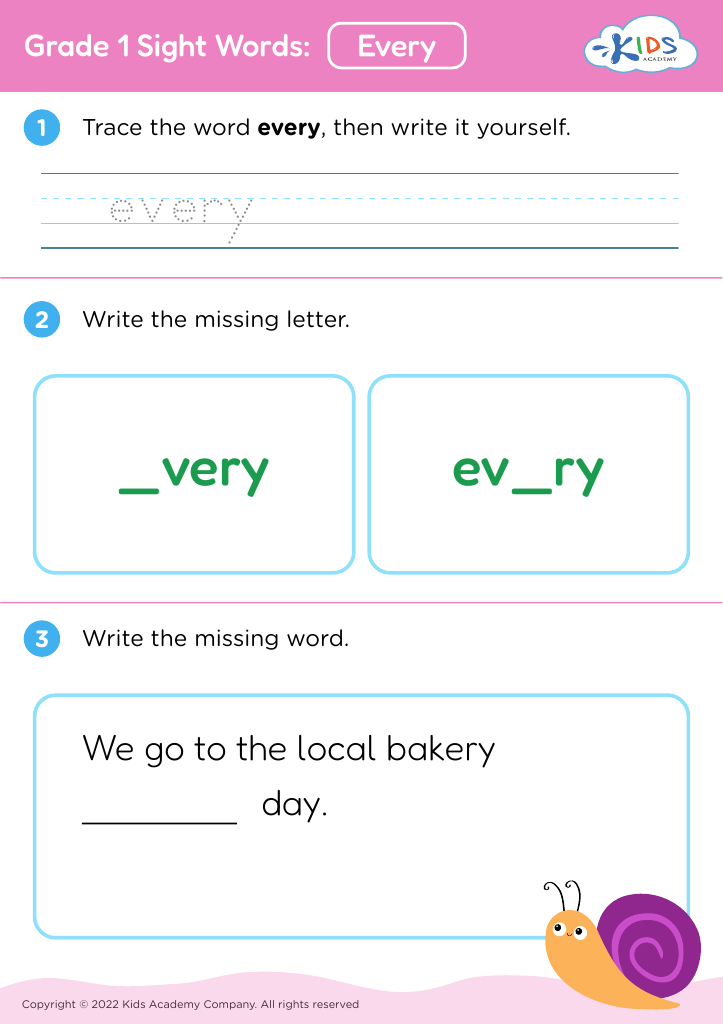
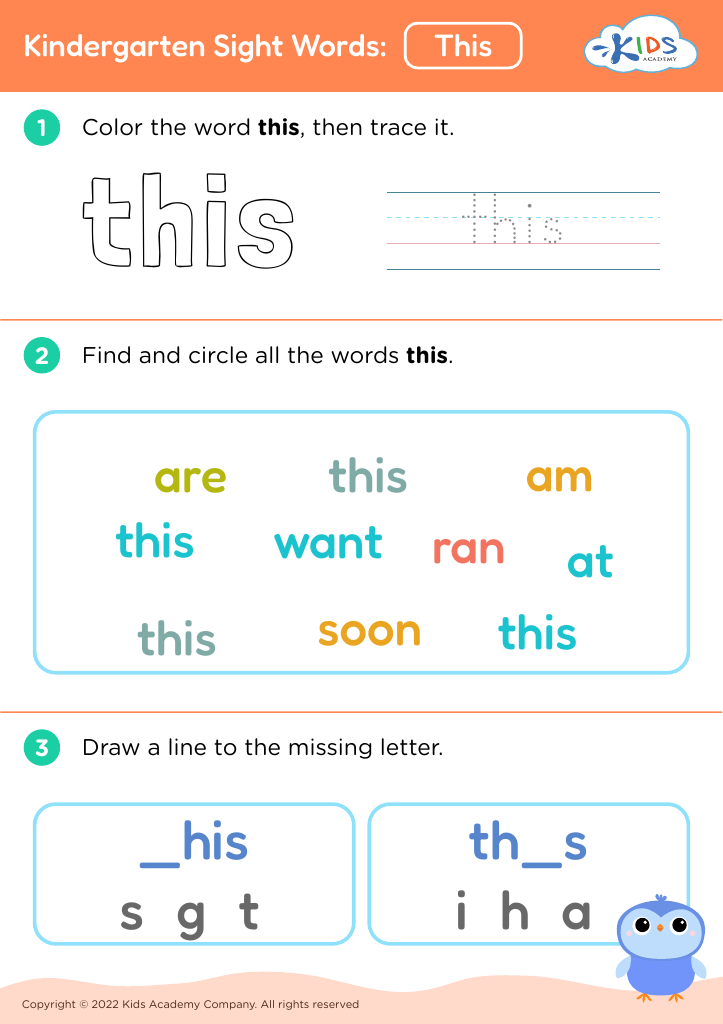
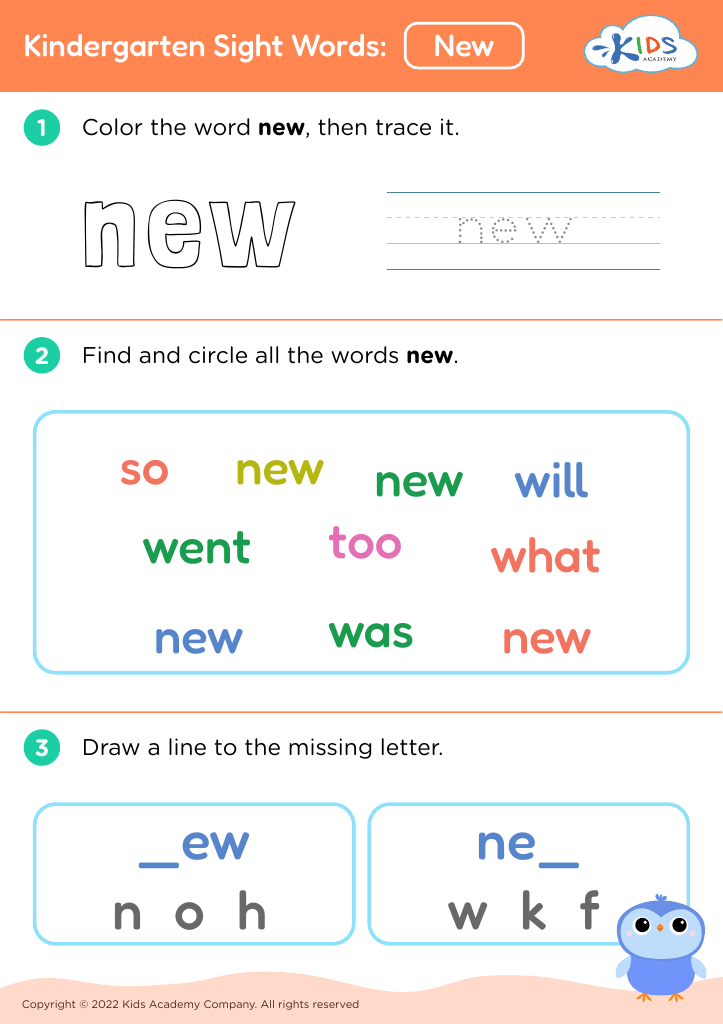
Boost your child's learning with our Counting Practice Sight Words Worksheets tailored for ages 6-7! These engaging resources combine essential sight word recognition with fun counting exercises to enhance literacy and math skills simultaneously. Designed to support young learners, our worksheets feature colorful illustrations and interactive activities that make counting enjoyable. Each worksheet reinforces both word familiarity and numerical concepts, ensuring a comprehensive learning experience. Perfect for homeschooling or supplementary classroom activities, our counting practice worksheets help build confidence and mastery in early reading and mathematics. Give your child a head start on their educational journey with these exciting and effective resources!














.jpg)
Counting practice and sight words are crucial components of early literacy development for children aged 6-7. At this age, children are transitioning from learning to read to reading to learn, making a solid foundation in both counting and sight word recognition essential.
Counting practice helps children grasp basic math skills and fosters logical thinking. By learning to count, children develop an understanding of number sense, which is vital for their future success in mathematics. It also promotes fine motor skills and enhances memory. Furthermore, the ability to count is often integrated into various learning activities, reinforcing interdisciplinary connections.
Sight words, on the other hand, are fundamental for reading fluency. These are common words that children should recognize instantly without decoding, such as "the," "and," and "is." Mastery of sight words allows for smoother reading experiences, instilling confidence in young readers. When children recognize these words quickly, they can focus on comprehension rather than struggling with word pronunciation.
In summary, prioritizing counting practice and sight word recognition not only equips children with essential literacy and math skills but also lays the groundwork for future academic achievement. Parents and teachers who support this foundational learning create environments where children can thrive.