Categorization skills Animals Worksheets for Ages 6-7
3 filtered results
-
From - To
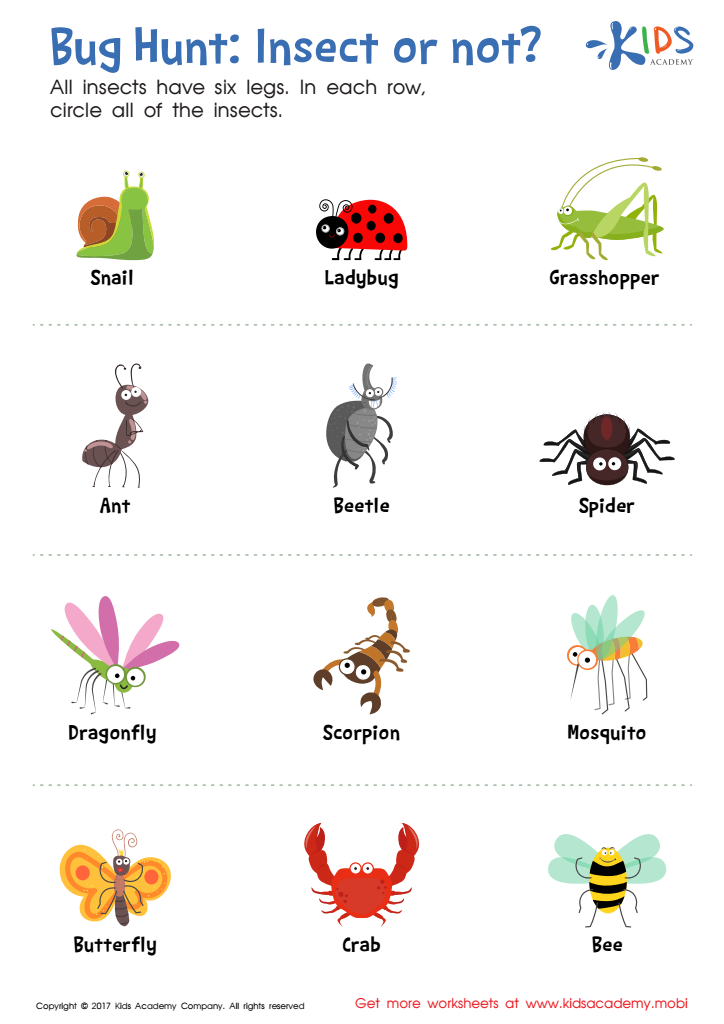
Boost your child's categorization skills with our engaging Animals Worksheets designed for ages 6-7! These expertly crafted worksheets will help young learners explore the fascinating world of animals while enhancing their critical thinking abilities. Children will sort, classify, and categorize different animals based on various attributes such as habitat, diet, and characteristics. Fun illustrations and interactive activities make learning enjoyable, fostering a love for science. Perfect for home or classroom use, these worksheets support key developmental milestones, providing a solid foundation for future learning. Dive into the exciting realm of animal classification and watch your child's skills soar!
 Assign to My Students
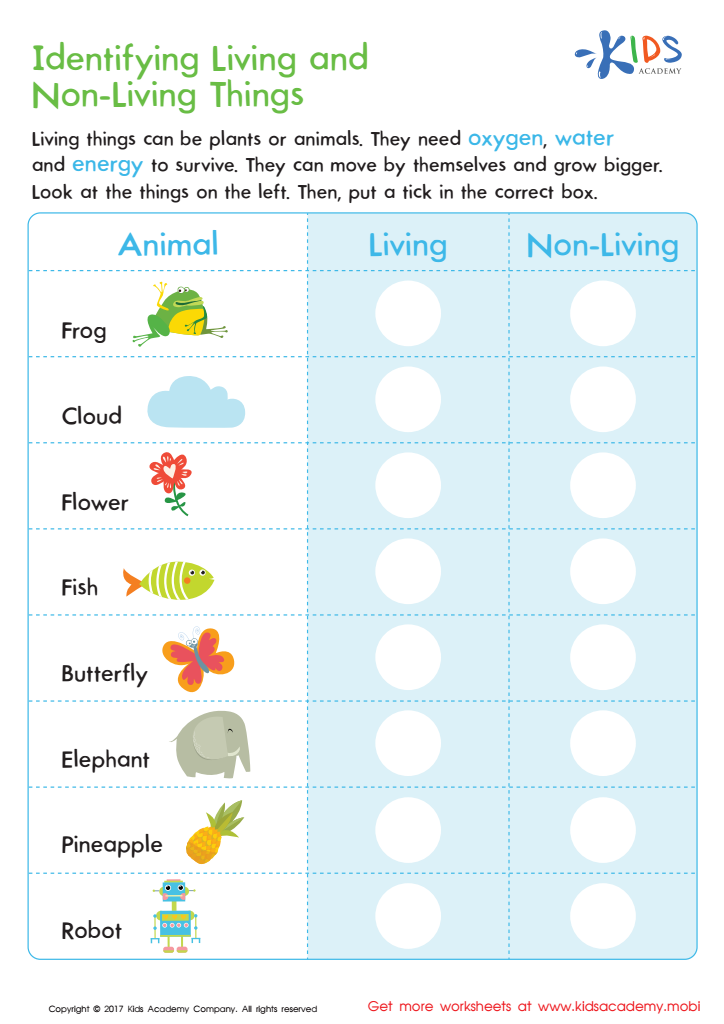
Identifying Living or Non–living Worksheet
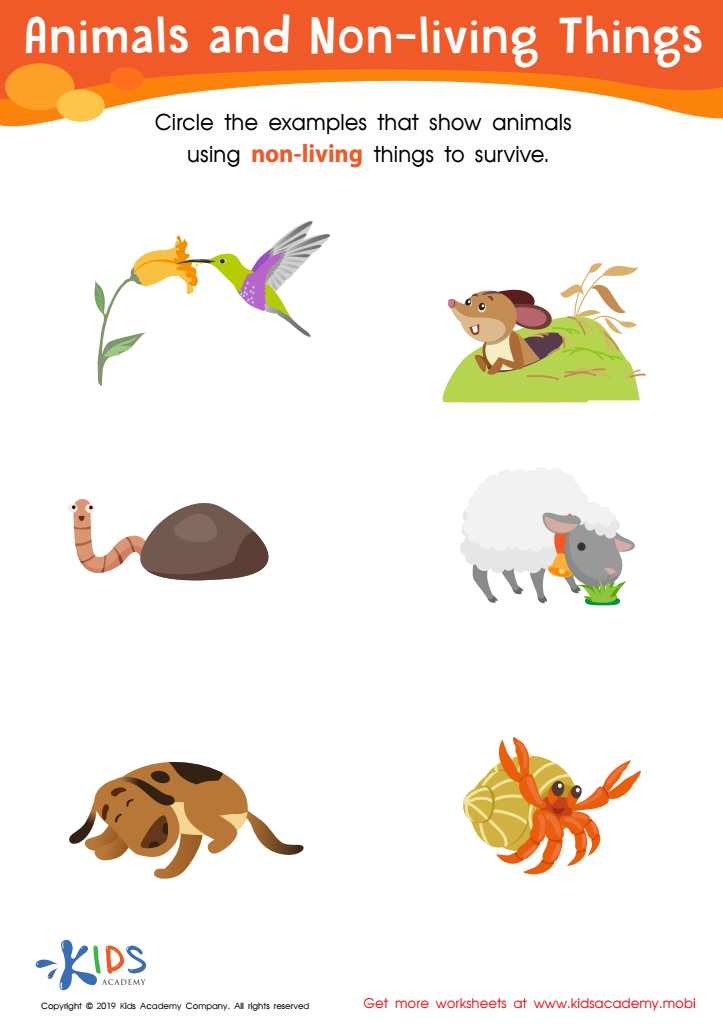
Animals and Non-Living Things Worksheet


%20(1).jpg)





Categorization skills, particularly regarding animals, are crucial for children ages 6-7 as they form the foundation for critical thinking, organization, and cognitive development. During this developmental stage, children are naturally curious about their environment, and engaging them in categorizing animals can ignite that curiosity and foster a love for learning.
Understanding categorization helps children make sense of the world around them. For instance, classifying animals as mammals, reptiles, or birds allows them to grasp differences and similarities, enhancing their observation and analytical skills. These skills are transferable, aiding children in organizing information across various subjects, such as science, reading, and math.
Moreover, teaching categorization encourages creativity and problem-solving, as children explore how animals relate to each other and the environment. It nurtures their ability to communicate effectively, as they learn to express their thoughts on why certain animals belong to specific categories.
Lastly, categorization activities can promote social interaction. Collaborating with peers in sorting and discussing animals bolsters teamwork and communication skills. Thus, fostering categorization skills in young learners not only enriches their academic foundation but also promotes essential life skills, making it imperative for both parents and teachers to engage in these learning activities.