Phonics recognition Beginning Consonants Worksheets for Ages 6-8
3 filtered results
Difficulty Level
Grade
Age
-
From - To
Subject
Activity
Standards
Discover our engaging Phonics Recognition Beginning Consonants Worksheets designed specifically for ages 6-8. These worksheets focus on helping children recognize and practice initial sounds in words, an essential skill for early literacy development. Through fun activities, including matching exercises and tracing tasks, young learners will build confidence in their phonemic awareness. Our worksheets not only support language skills but also promote critical thinking and problem-solving abilities. Ideal for homeschooling, classroom use, or supplementary practice, these resources provide a solid foundation for future reading milestones. Start your child's phonics journey today with our convenient and effective worksheets!
Favorites
With answer key
Interactive
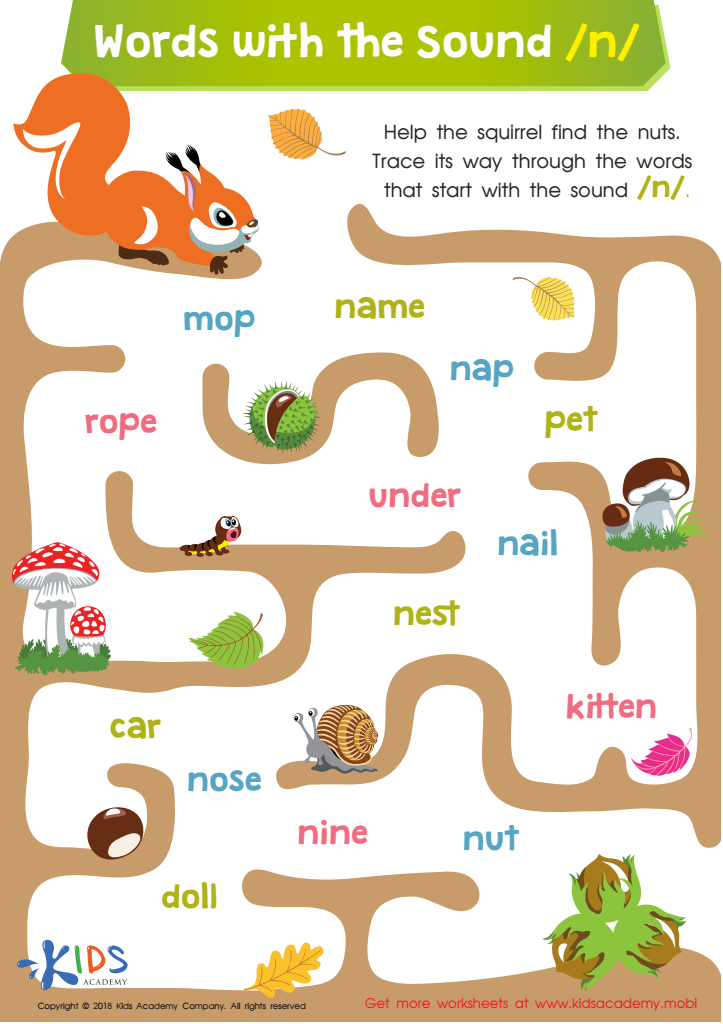
Words with Sound N Reading Worksheet
Young readers will love the colourful pictures and simple sight words on this download worksheet. They can trace their way through the maze as they help the cute squirrel reach his acorns, finding words with the sound "n" as they go. It's a fun way to work on reading skills - they won't even realise they're learning!
 Assign to My Students
Words with Sound N Reading Worksheet
Worksheet
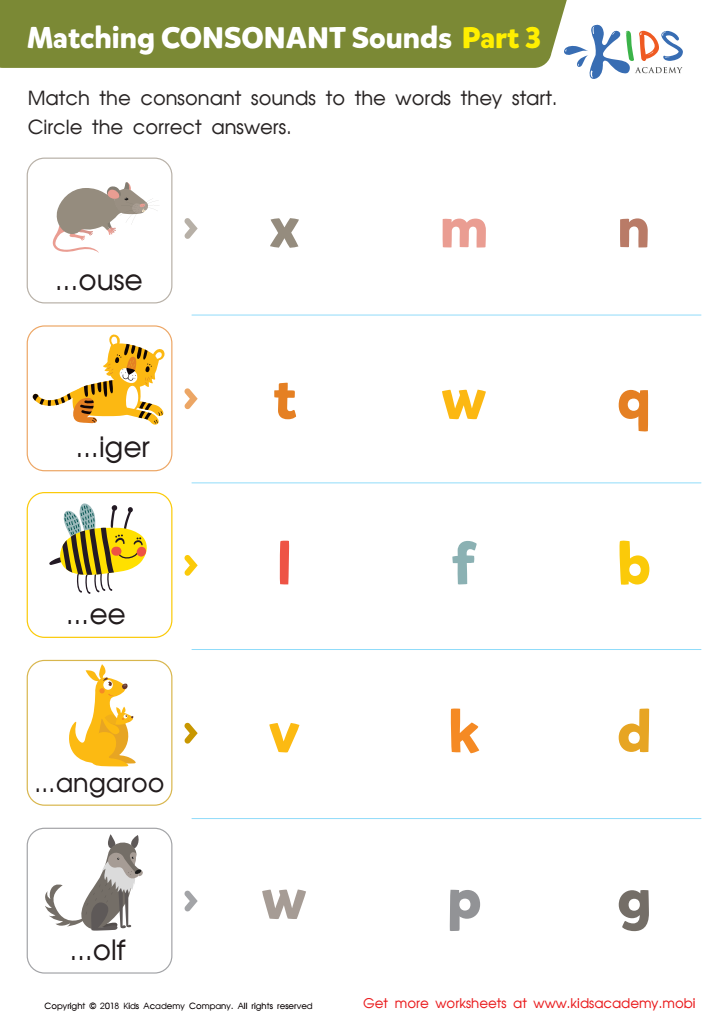
Matching Consonant Sounds: Part 3 Worksheet
Help your early learner match consonant sounds to words with this fun worksheet! Have them name the pictures and try out each letter in the corresponding column. When they hear the sound that matches, circle it. Have them write the letter in the box to complete the word. Work their way down the page until the critters' names all match with consonants!
Matching Consonant Sounds: Part 3 Worksheet
Worksheet
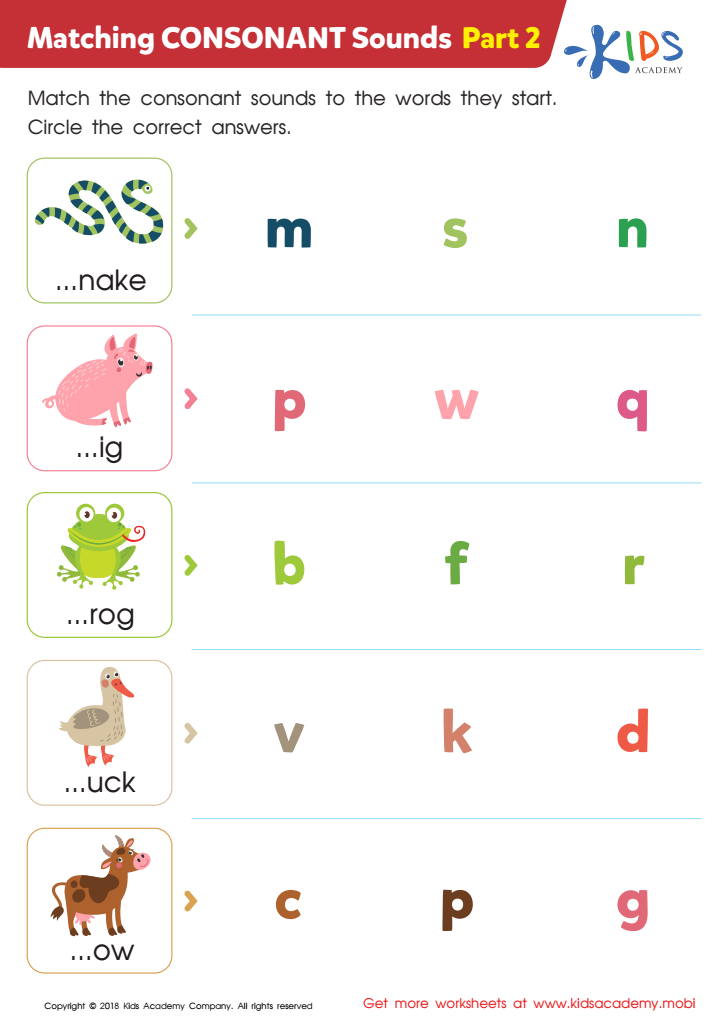
Matching Consonant Sounds: Part 2 Worksheet
Look at the picture, say the word and match the consonant sound with the letter. Coach your child to name the animal and complete the word. For extra challenge, write the missing letter in the box! This PDF worksheet helps kids learn to read words with familiar animal pictures.
Matching Consonant Sounds: Part 2 Worksheet
Worksheet
Join Kids Academy for Free
Who is primarily going to use this learning content?


Phonics recognition, especially beginning consonants, is a fundamental skill for children aged 6-8 as it lays the groundwork for successful reading and language development. Understanding the sounds associated with consonants helps young learners decode words, contributing to improved reading fluency and comprehension. This skill enables children to sound out unfamiliar words, empowering them to become more confident and independent readers.
Moreover, beginning consonants are often the first step in phonemic awareness, which is crucial for spelling and writing. As children learn to identify and manipulate initial sounds, they develop the ability to segment and blend sounds, enhancing their overall literacy skills. This foundation also supports vocabulary development, as recognizing consonants aids in identifying and learning new words.
Parents and teachers play a key role in reinforcing these skills through interactive and engaging activities. Encouraging children to explore beginning consonants through phonics games, storytelling, and everyday conversation fosters a love for learning and language. Ultimately, early proficiency in phonics recognition not only bridges the gap between spoken communication and written language but also sets up a strong educational trajectory, instilling lifelong learning habits. This underlines the crucial role that adults play in supporting literacy during these formative years.