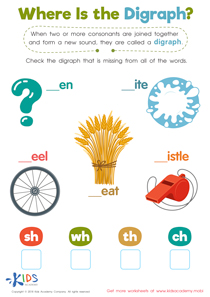
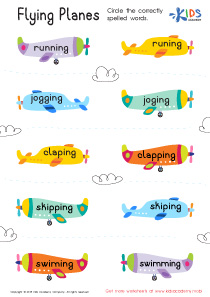
Phonics Skills Beginning Consonants Worksheets for Ages 6-8
4 filtered results
-
From - To
Explore our engaging phonics skills worksheets focused on beginning consonants for children aged 6-8. Designed to enhance early literacy, these worksheets provide fun and interactive activities that help young learners identify and practice beginning consonant sounds. With a variety of exercises, including matching, tracing, and coloring, kids can strengthen their phonemic awareness while developing important reading skills. Our thoughtfully crafted materials make learning enjoyable and build a solid foundation for future reading success. Perfect for at-home practice or classroom use, these worksheets will ignite your child's love for reading and improve their phonics proficiency. Start fostering literacy skills today!
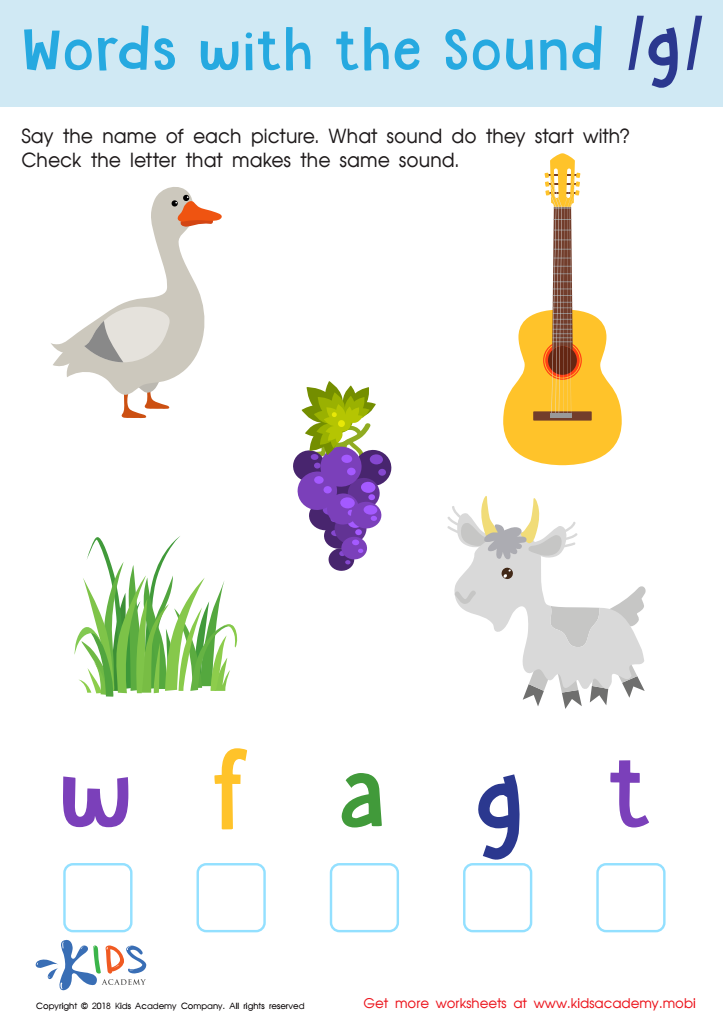
Words with sound g Reading Worksheet
 Assign to My Students
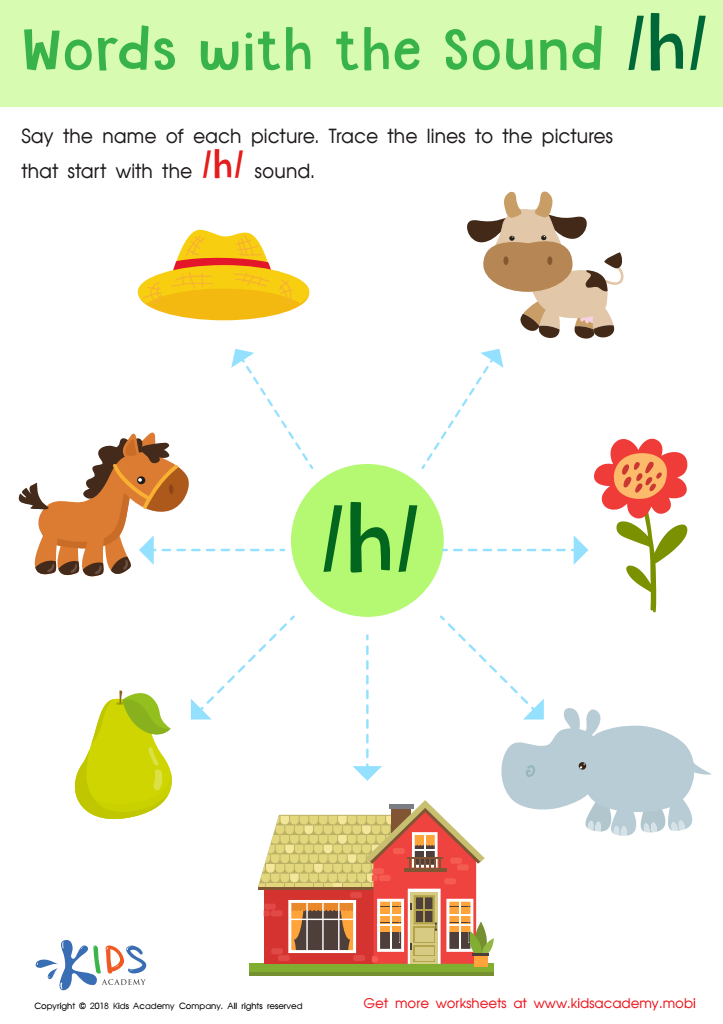
Words with sound h Reading Worksheet
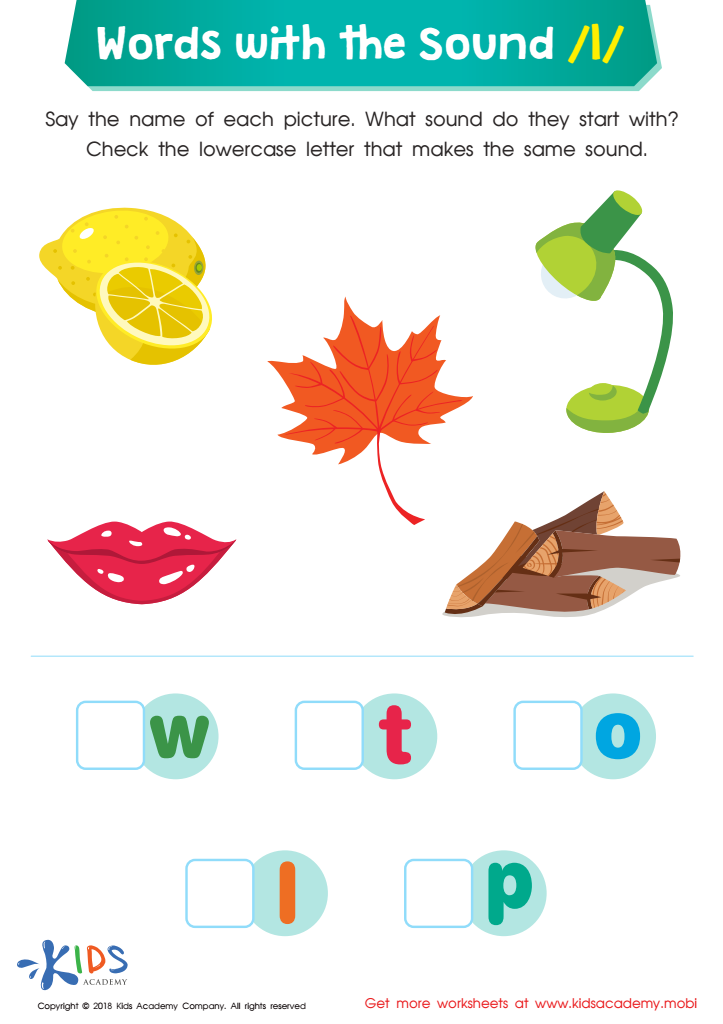
Words with Sound L Reading Worksheet
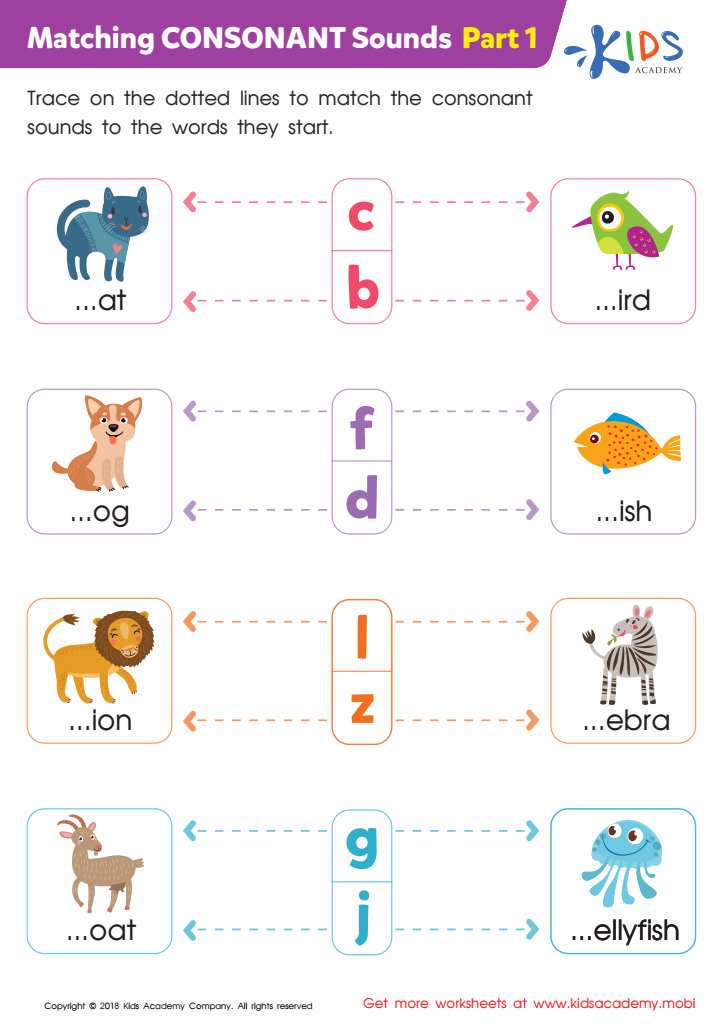
Matching Consonant Sounds: Part 1 Worksheet


Phonics skills, particularly in recognizing beginning consonants, are essential for children ages 6-8 as they form the foundation for reading and literacy development. During these critical years, children are transitioning from learning to read to reading to learn. Mastery of beginning consonants enhances their ability to decode unfamiliar words, which is fundamental for vocabulary acquisition and comprehension.
Understanding consonants allows children to make connections between letters and sounds, aiding them in sounding out words independently. This skill not only boosts their confidence in reading but also encourages a love for literature, as they become more proficient in navigating texts. Moreover, phonics instruction fosters spelling skills, as children begin recognizing patterns and structures in words.
For parents and teachers, supporting children's phonics development is crucial; it helps identify any challenges early on and enables timely interventions. Engaging young learners through games, songs, and activities centered on beginning consonants can make learning enjoyable and effective. When children grasp these foundational skills, they are better equipped for academic success and lifelong learning, underscoring the importance of focusing on phonics in early education. Ultimately, strong phonics skills lead to improved literacy outcomes, paving the way for future educational achievements.