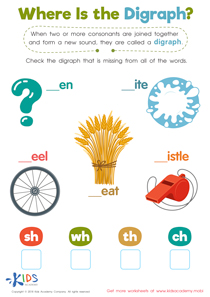
Sound recognition Beginning Consonants Worksheets for Ages 6-8
3 filtered results
-
From - To
Enhance your child's phonemic awareness with our "Sound Recognition Beginning Consonants Worksheets" designed specifically for ages 6-8. These engaging and colorful worksheets focus on helping young learners identify and recognize initial consonant sounds in words, laying a strong foundation for reading and writing skills. With a variety of fun activities, including matching games, picture associations, and fill-in-the-blank exercises, children will enjoy practicing their sound recognition while honing their literacy skills. Perfect for classroom or at-home learning, these worksheets encourage interactive learning and are tailored to meet educational standards for early literacy development. Start your child's journey to literacy today!
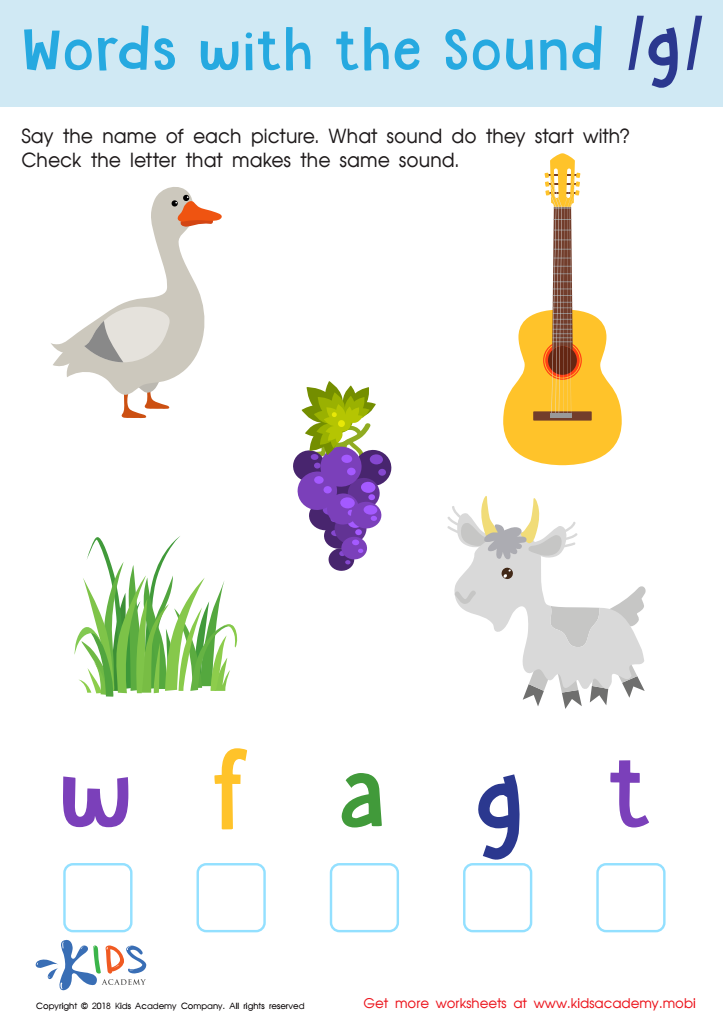
Words with sound g Reading Worksheet
 Assign to My Students
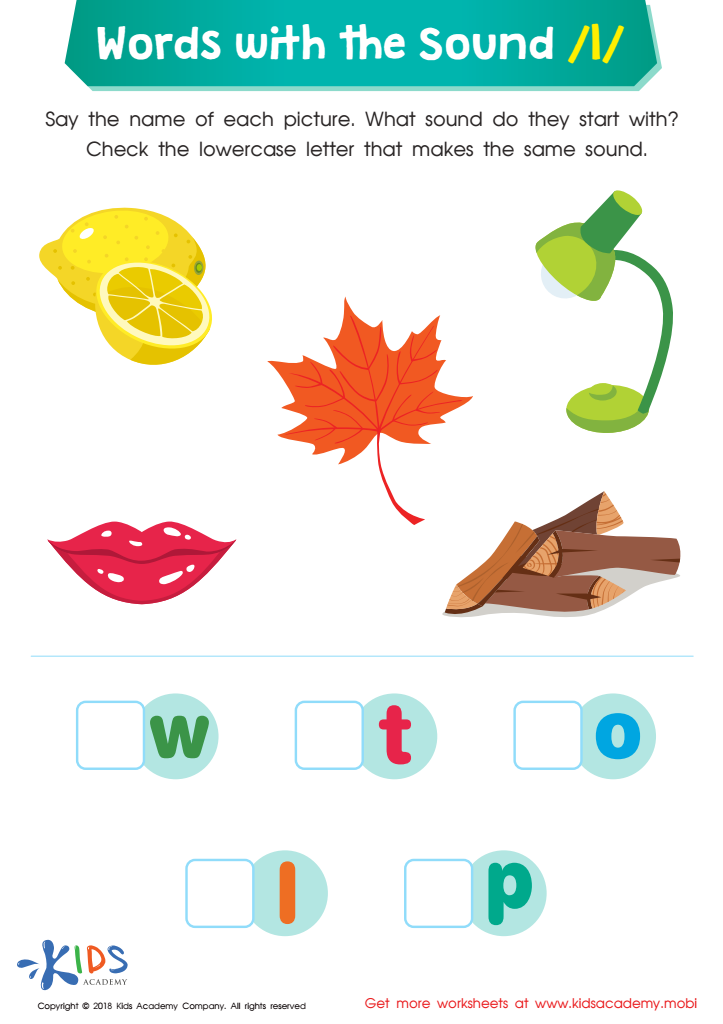
Words with Sound L Reading Worksheet
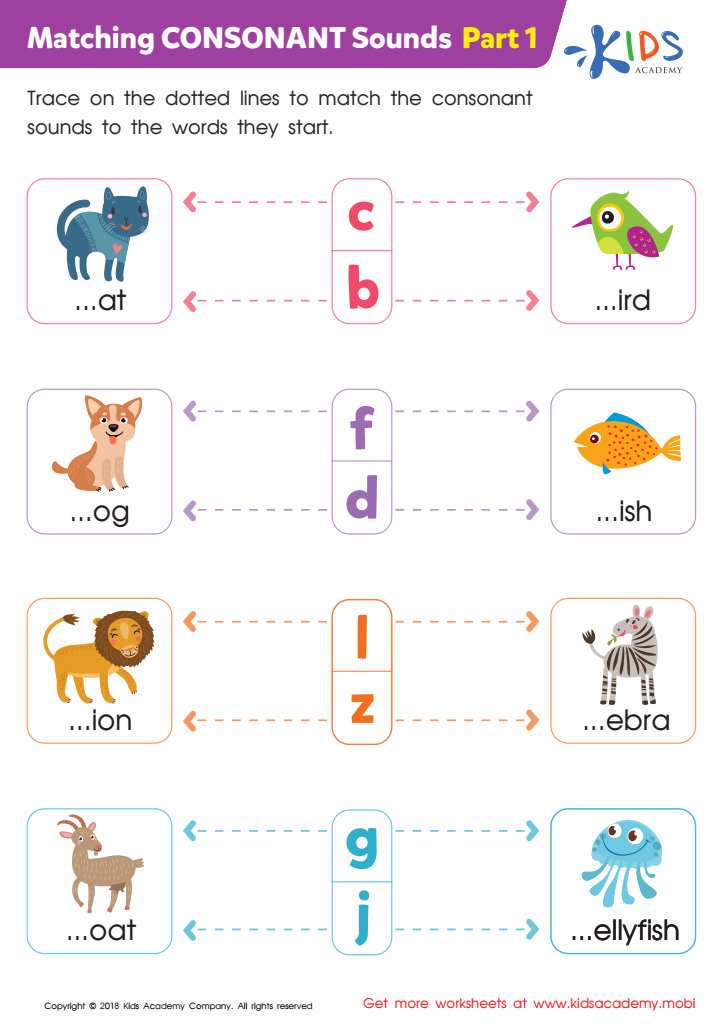
Matching Consonant Sounds: Part 1 Worksheet


Sound recognition, particularly beginning consonants, is a crucial skill for children aged 6-8 as it lays the foundation for reading and language development. Understanding the sounds of consonants is an essential stepping stone for children to decode words efficiently. When children can recognize the initial sounds in words, they enhance their phonemic awareness, which significantly contributes to their ability to read and write.
Parents and teachers play a vital role in this process. They can create a supportive learning environment by incorporating engaging activities, such as phonics games, rhyming exercises, and songs that emphasize beginning consonants. This active participation not only makes learning enjoyable but also nurtures a love for literacy.
Furthermore, beginning consonants serve as key indicators for spelling patterns and word families, enabling children to take their reading skills further. When children feel confident in identifying these sounds, their vocabulary expands, and they can better express themselves, leading to improved communication skills.
By prioritizing sound recognition of beginning consonants, parents and teachers are investing in their children's ongoing academic success, promoting lifelong language skills that will support them in all areas of learning. Cultivating these foundational skills will have long-term benefits as children progress through their education.