Vocabulary expansion Beginning Sounds Worksheets for Ages 6-8
5 filtered results
-
From - To
Enhance your child's language skills with our Vocabulary Expansion Beginning Sounds Worksheets for Ages 6-8. These engaging, printable worksheets are designed to help young learners recognize and practice beginning sounds, building a strong foundation for reading and vocabulary development. Through fun activities and exercises, children will boost their phonemic awareness and improve their ability to identify initial sounds in words. Perfect for early grade teachers and parents, these resources support your kids' educational journey, ensuring they become confident readers and effective communicators. Explore our collection to give your child a head start in language learning.
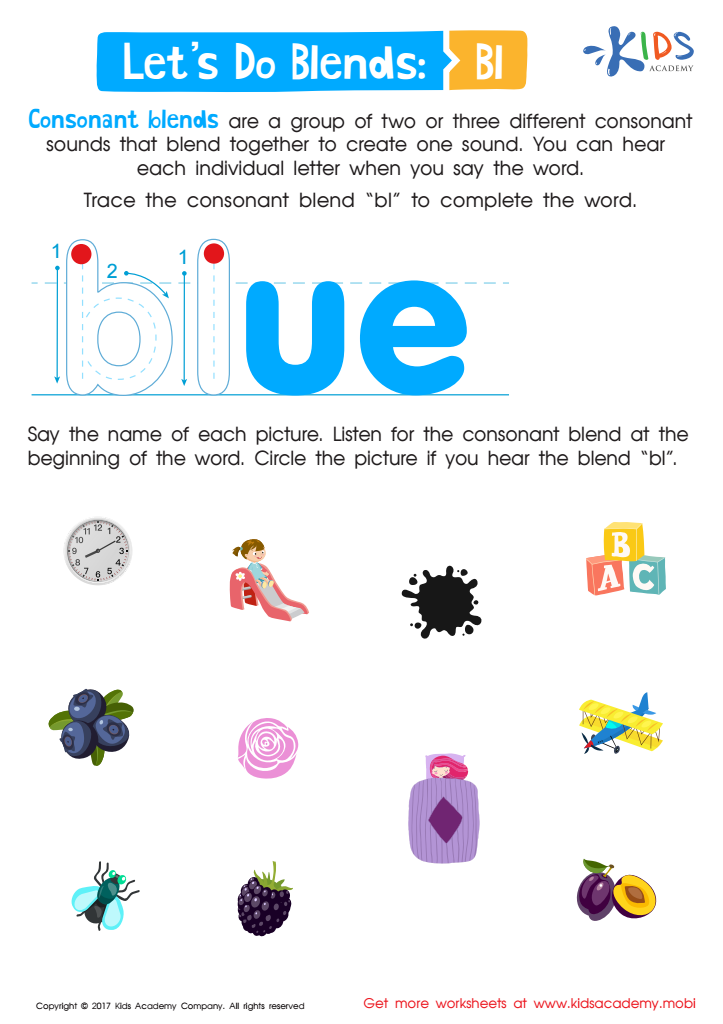
Beginning Blends: "Bl" Words Worksheet
 Assign to My Students
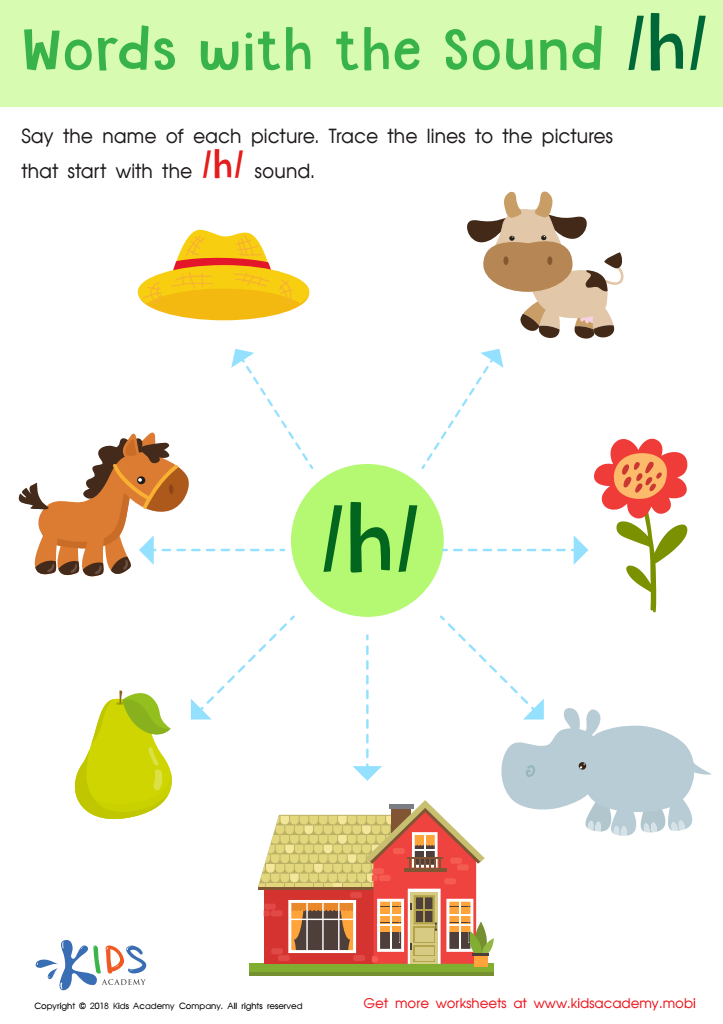
Words with sound h Reading Worksheet
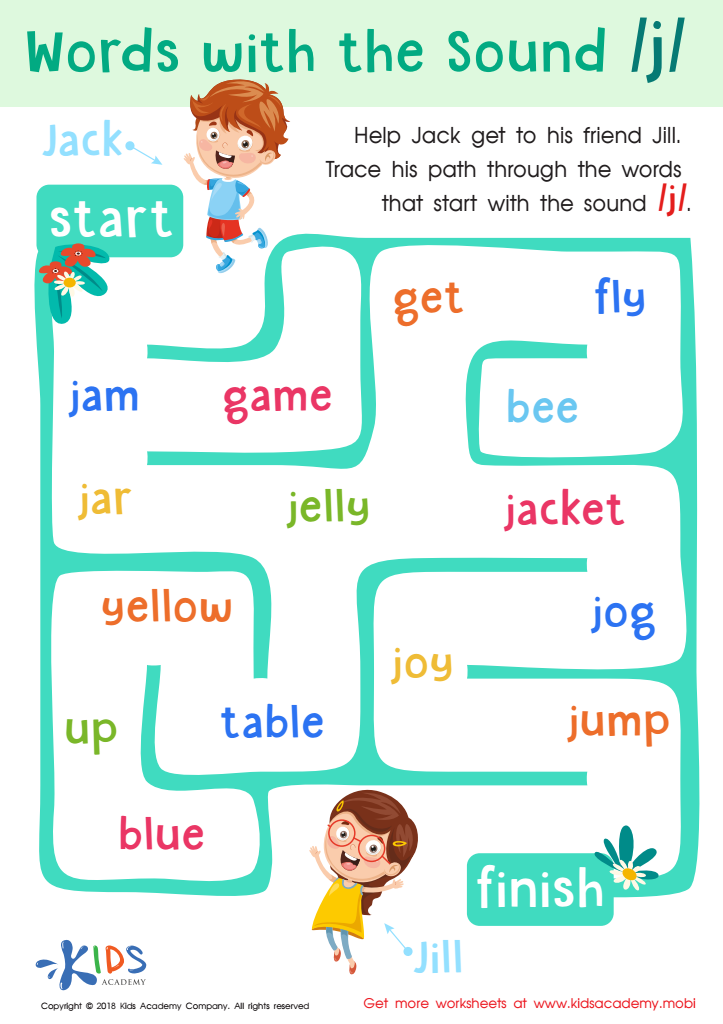
Words with sound j Reading Worksheet
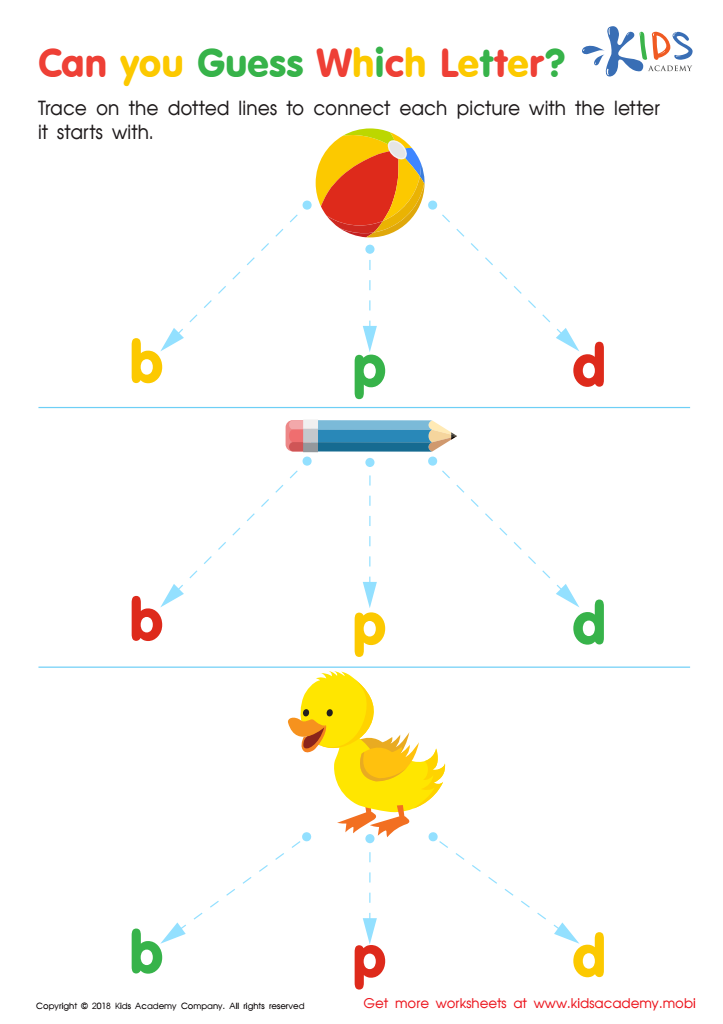
Can you Guess Which Letter? Worksheet
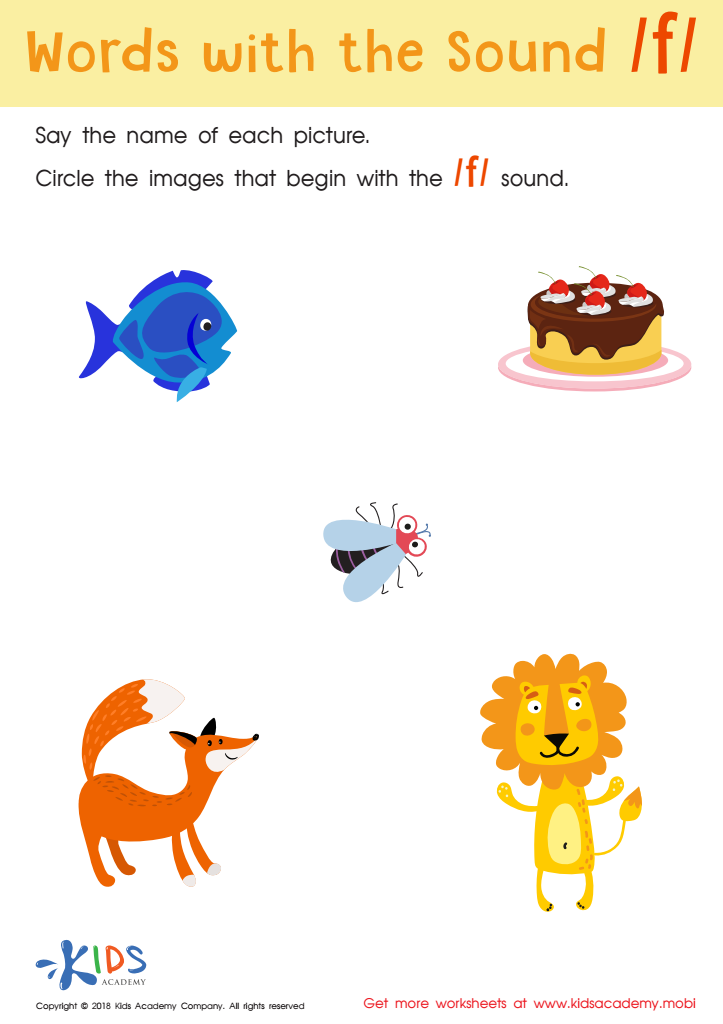
Words with sound f Reading Worksheet








Vocabulary expansion and knowledge of beginning sounds are crucial areas to focus on for children aged 6-8 because they lay the foundational building blocks for effective communication and academic success. During these formative years, children are in a critical period for language development. A strong vocabulary helps enhance their reading comprehension, which is essential for learning across all subjects. It empowers them to understand and articulate their thoughts and ideas more effectively.
Understanding beginning sounds, or phonemic awareness, is an essential component of learning to read. Phonemic awareness helps children recognize the sounds associated with each letter or group of letters, which is crucial for decoding new words when they read. This skill not only improves their reading fluency but also aids their spelling abilities. Mastery of these areas boosts their confidence, fostering a positive attitude towards learning.
Parents and teachers should integrate engaging, age-appropriate activities like word games, reading aloud, and phonics exercises to nurture these skills. This ensures children develop a love for words and reading early on, setting them on a path for lifelong literacy. Prioritizing vocabulary expansion and phonemic awareness effectively equips youngsters for more challenging academic tasks and helps close any learning gaps before they widen.







