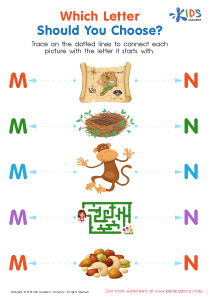
Lowercase letter writing Lowercase/Small Letters Worksheets for Ages 6-8
3 filtered results
-
From - To
Enhance your child's writing skills with our Lowercase/Small Letters Worksheets designed for ages 6-8. These engaging activities focus on helping young learners master the alphabet in a fun and interactive way. Each worksheet provides clear, guided practice for tracing and writing lowercase letters, ensuring children develop excellent handwriting from an early age. Perfect for both classroom and home use, these worksheets support essential learning skills, such as letter recognition, fine motor skills, and hand-eye coordination. Boost your child's confidence and set them up for academic success with our expertly crafted lowercase letter writing resources.
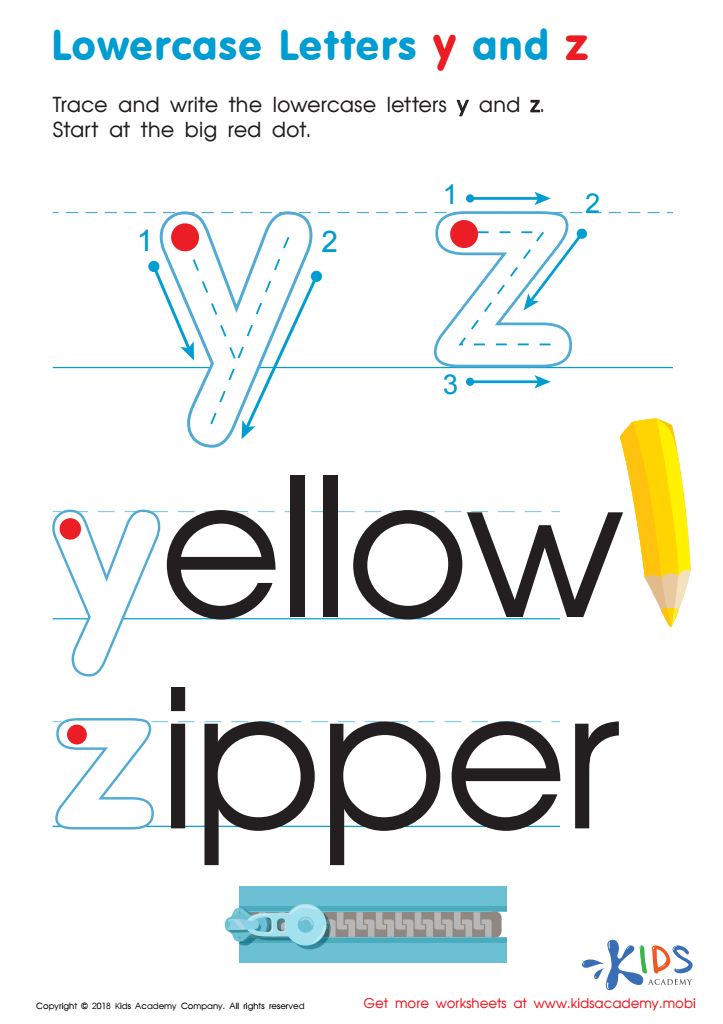
Lowercase Letters y z Worksheet
 Assign to My Students
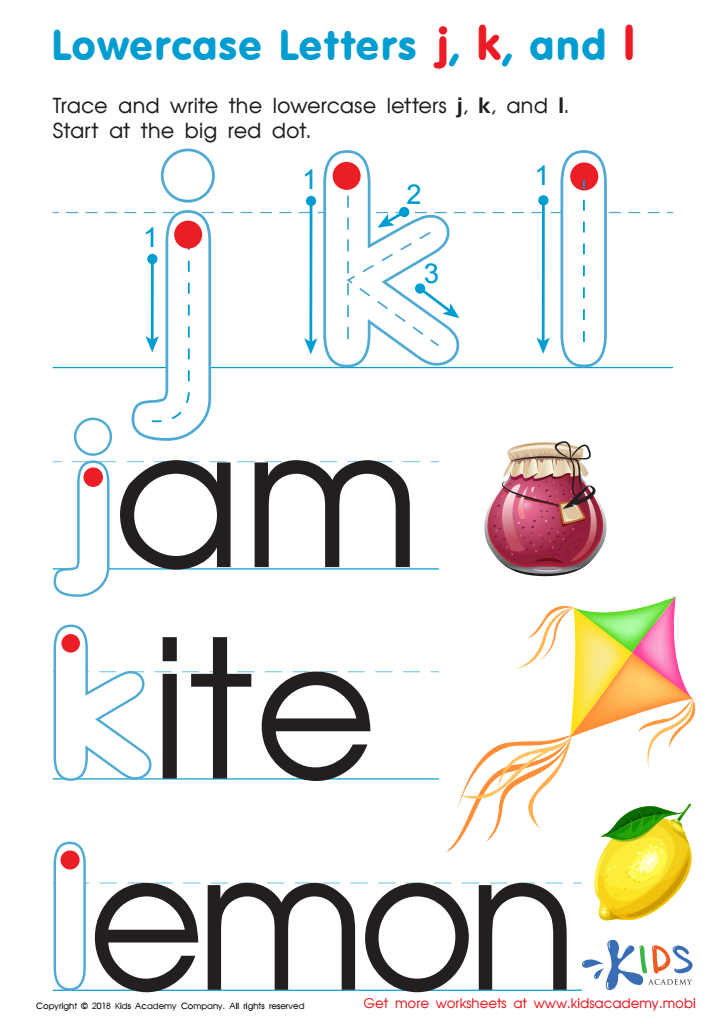
Lowercase Letters j k l Worksheet
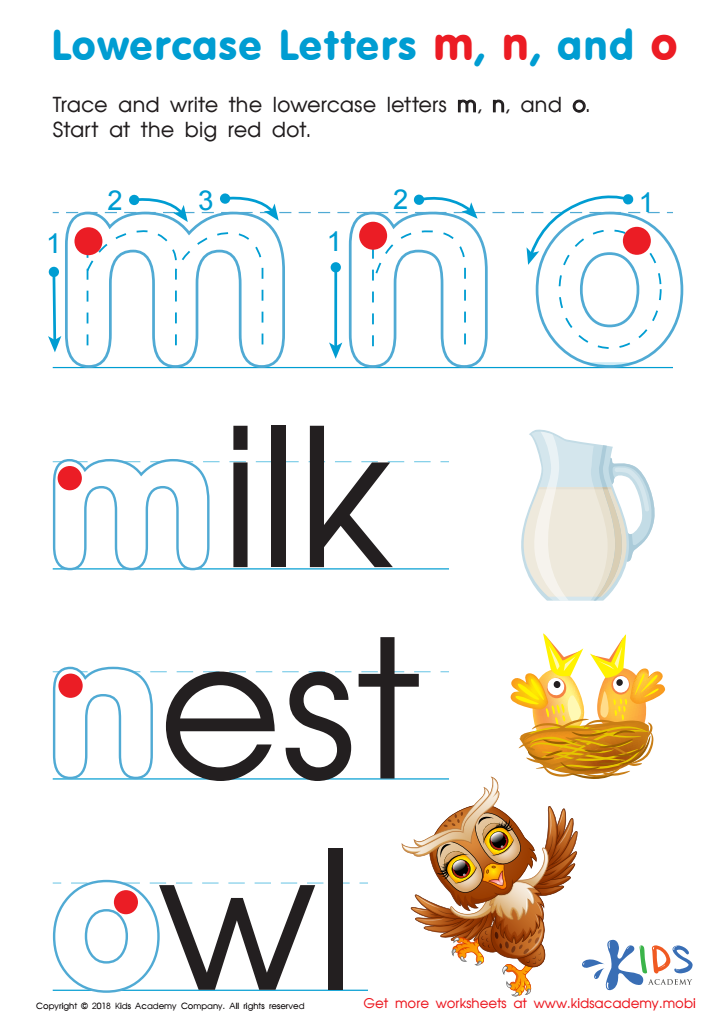
Lowercase Letters m n o Worksheet


Parents and teachers should place significant importance on teaching lowercase letter writing to children aged 6-8 because mastering this foundational skill is crucial for several aspects of academic development. Firstly, lowercase letters are more frequently used in text compared to uppercase letters, making familiarity with them essential for both reading fluency and comprehension. When children become adept at writing lowercase letters, they can more easily recognize and read words in their textbooks and other reading materials.
Secondly, writing in lowercase promotes fine motor skills and hand-eye coordination. These small letters, often requiring more delicate and precise movements than their uppercase counterparts, help children refine their motor control. This skill set is crucial not only in handwriting but also in daily activities and future academic tasks requiring precision.
Furthermore, learning lowercase letters aids in the transition to cursive writing, which some educational systems introduce at later stages. This continuity in learning ensures that children do not face unnecessary hurdles as their writing demands become more complex.
Lastly, building confidence in writing proficiency at an early age fosters a positive attitude towards language arts as a whole. Children who feel competent in their writing abilities are more likely to enjoy expressing themselves and engage actively in school.
In sum, early mastery of lowercase letter writing serves as a cornerstone for literacy, motor development, and academic confidence, warranting dedicated attention from both parents and educators.