
Rhyming skills Rhyming Worksheets for Ages 6-8
3 filtered results
Difficulty Level
Grade
Age
-
From - To
Subject
Activity
Standards
Unlock the power of rhyming with our engaging Rhyming Worksheets tailored for children ages 6-8! These fun and interactive worksheets are designed to bolster phonemic awareness and enhance literacy skills. By exploring colorful illustrations and engaging activities, children will learn to identify rhyming words, complete rhymes, and discover patterns in language. Our resources promote critical thinking while making learning enjoyable through playful prompts and challenging exercises. Perfect for home or classroom use, these worksheets support young learners on their journey to becoming confident readers and writers. Foster a love for language and boost early reading skills today with our delightful rhyming resources!
Favorites
With answer key
Interactive
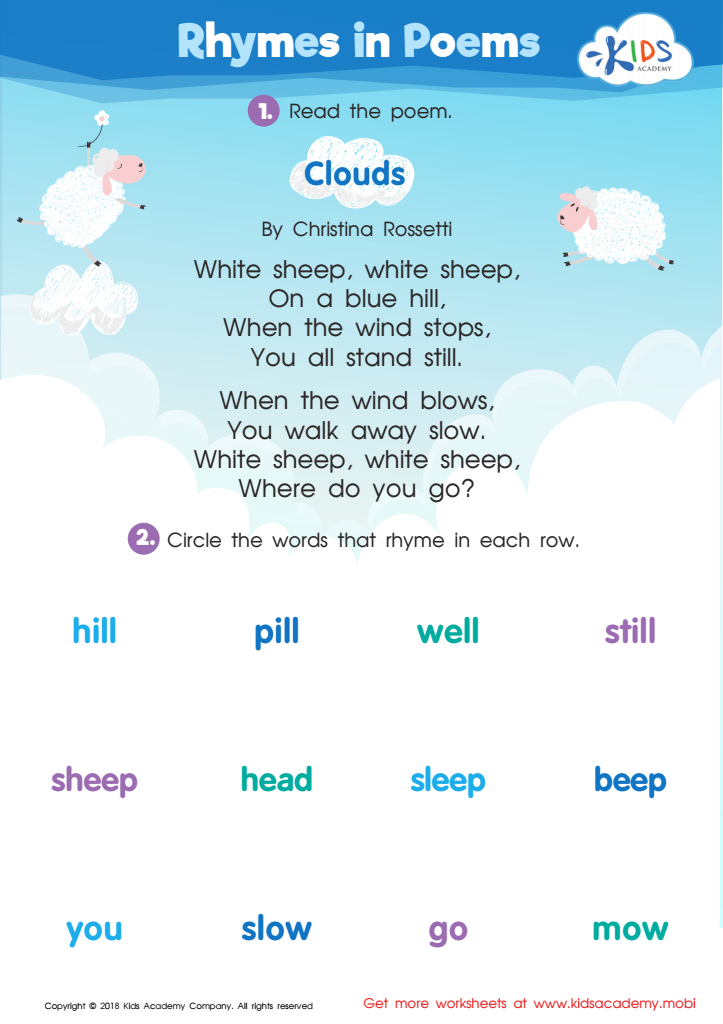
Rhymes in Poems Worksheet
Poems are lovely works of literature; some with rhymes, and some without. This poem for kids is full of rhymes and tells the tale of a sheep. Read it aloud to your kids, then help them circle the rhyming words.
 Assign to My Students
Rhymes in Poems Worksheet
Worksheet
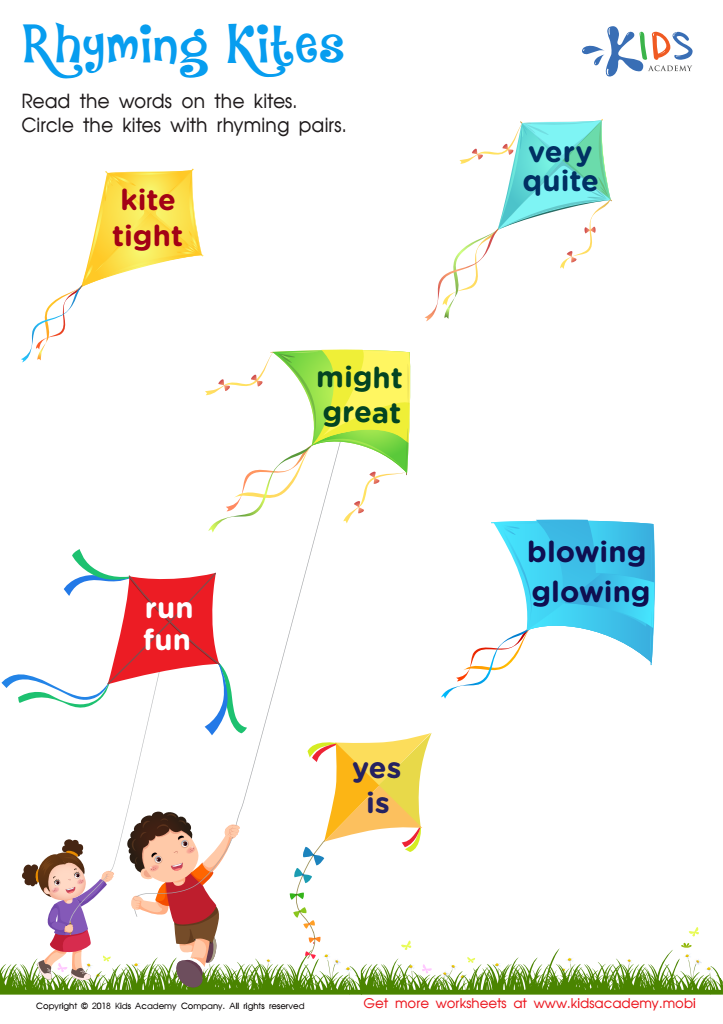
Rhyming Kites Worksheet
On a spring day, fly a kite! Kids Academy has a rhyming worksheet to boost your child's skills. Read the pairs of words aloud. Circle the kites if they rhyme, leave them blank if they don't. Listen carefully and find all the rhyming word pairs to complete this sheet!
Rhyming Kites Worksheet
Worksheet
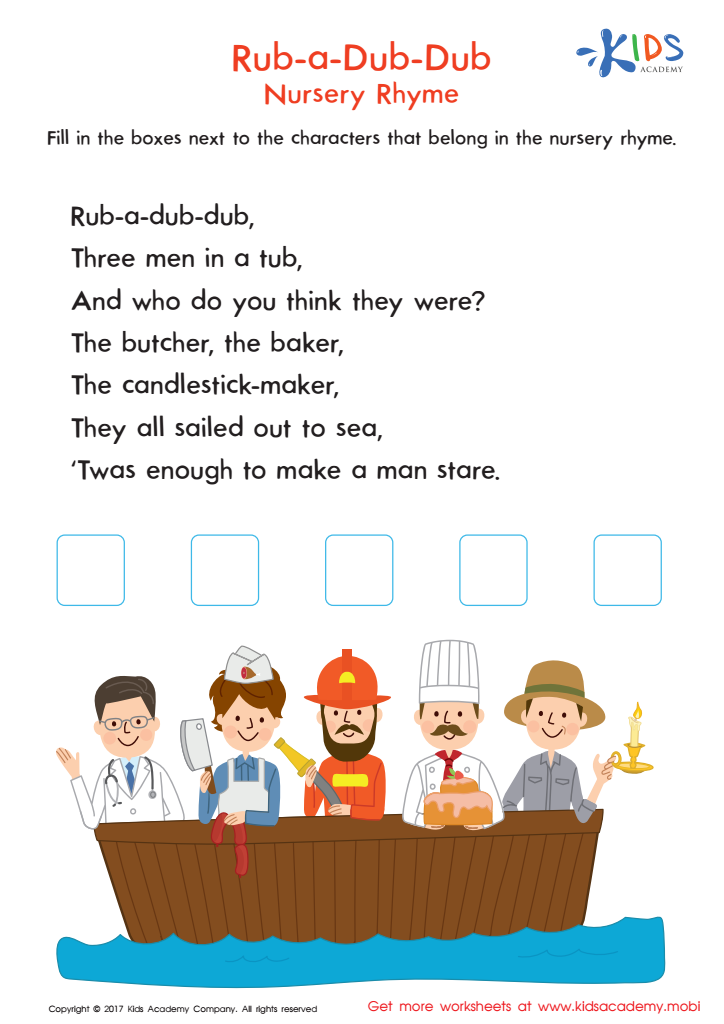
Rub a Dub Dub Printable
Delight your child and foster early reading skills with this printable nursery rhyme, Rub a Dub Dub! Let your little reader select the three men in the tub and practice important reading comprehension skills.
Rub a Dub Dub Printable
Worksheet
Join Kids Academy for Free
Who is primarily going to use this learning content?








Rhyming skills are essential for children aged 6 to 8 as they form the foundation of literacy and phonemic awareness. These skills enhance children's ability to understand sound patterns in language, which is crucial for reading and writing. When children engage in rhyming activities, they learn to recognize similar sounds, which facilitates decoding words when reading. This awareness helps in developing vocabulary and enhances spelling abilities as children become more attuned to word structures.
Furthermore, rhyming encourages creativity and language play. Through nursery rhymes, songs, and games, children express themselves and explore language in fun and engaging ways. This playful engagement fosters a love for language, making reading a more enjoyable experience.
Moreover, strong rhyming skills contribute to listening skills and memory retention. As children practice reciting rhymes, they improve their auditory discrimination – the ability to distinguish between sounds – which is critical for overall language development.
Parents and teachers should prioritize rhyming activities in education because these skills not only prepare children for academic achievements but also promote cognitive development, social skills, and emotional connections through shared singing and storytelling experiences. Encouraging rhyming thus lays a solid groundwork for lifelong literacy and communication skills.







