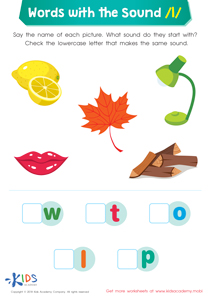
Alphabet familiarity Uppercase Letters Worksheets for Ages 6-8
4 filtered results
-
From - To
Discover our engaging "Alphabet Familiarity Uppercase Letters Worksheets" designed for children aged 6-8! These interactive worksheets aim to enhance your child's recognition and understanding of uppercase letters through fun activities. Each worksheet features vibrant illustrations, clever prompts, and diverse exercises ranging from tracing and matching to coloring. Perfect for boosting letter familiarity, these resources help reinforce foundational literacy skills in a playful manner. Tailored for early learners, our worksheets promote independent learning while keeping your child entertained. Explore our collection today and watch your child's confidence in mastering uppercase letters soar! Perfect for home or classroom use.
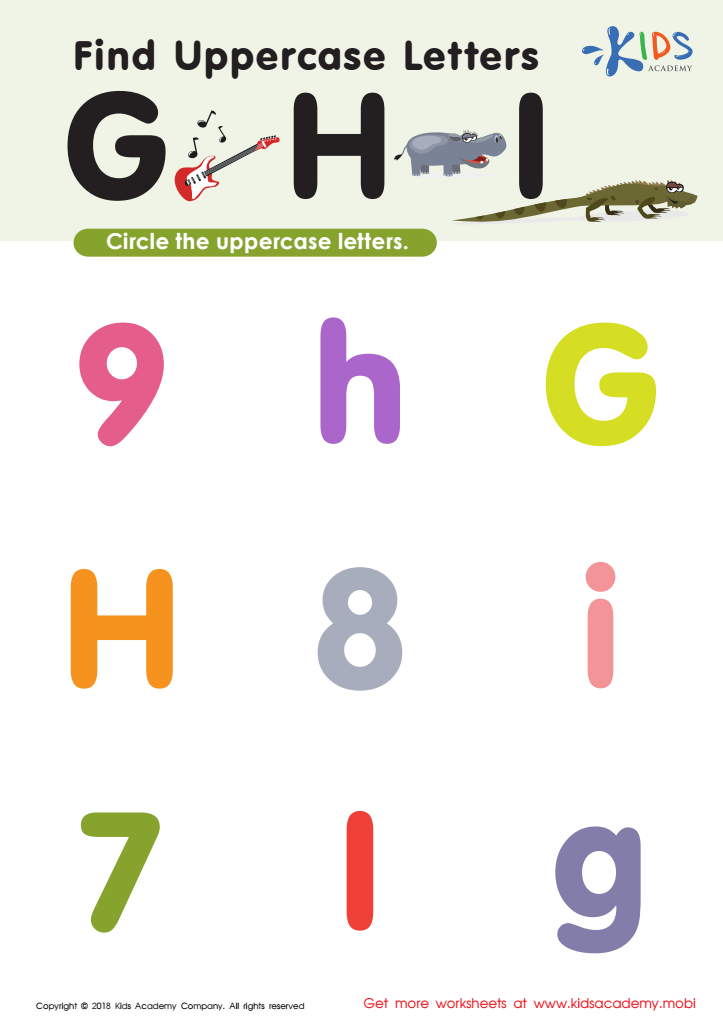
Find Uppercase Letters G, H, and I Worksheet
 Assign to My Students
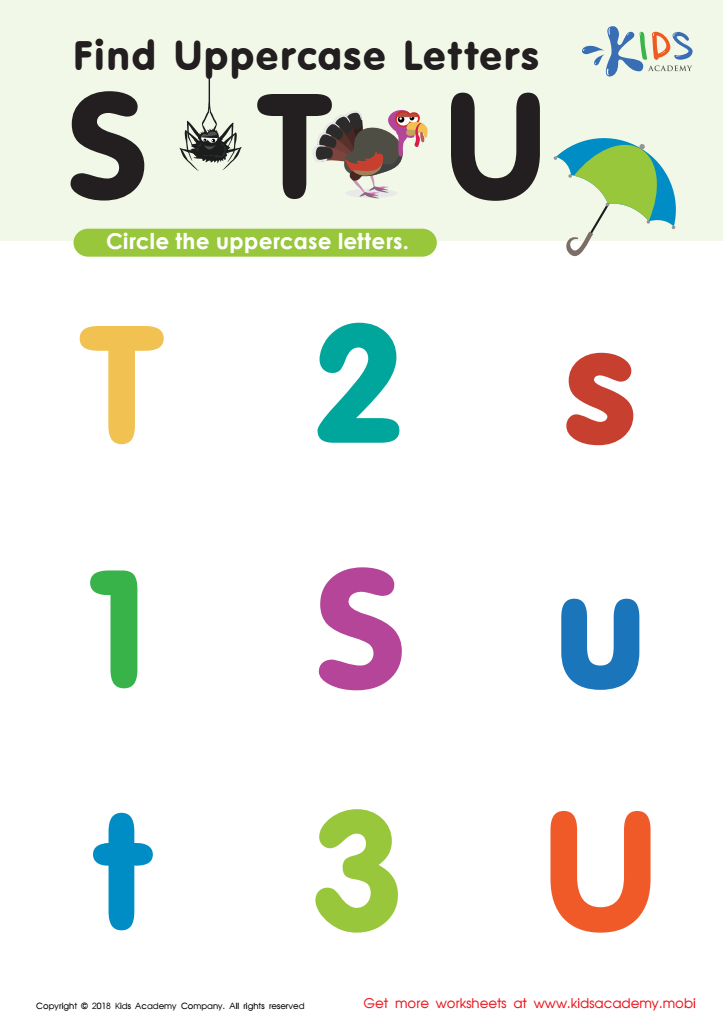
Find Uppercase Letters Worksheet
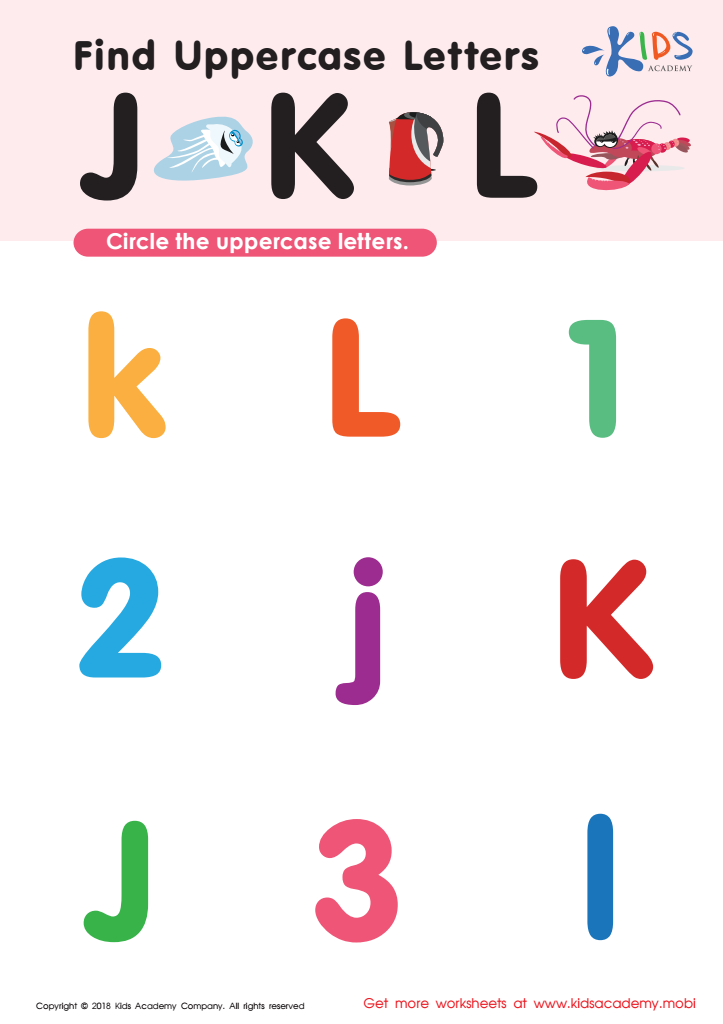
Find Uppercase Letters J, K, and L Worksheet
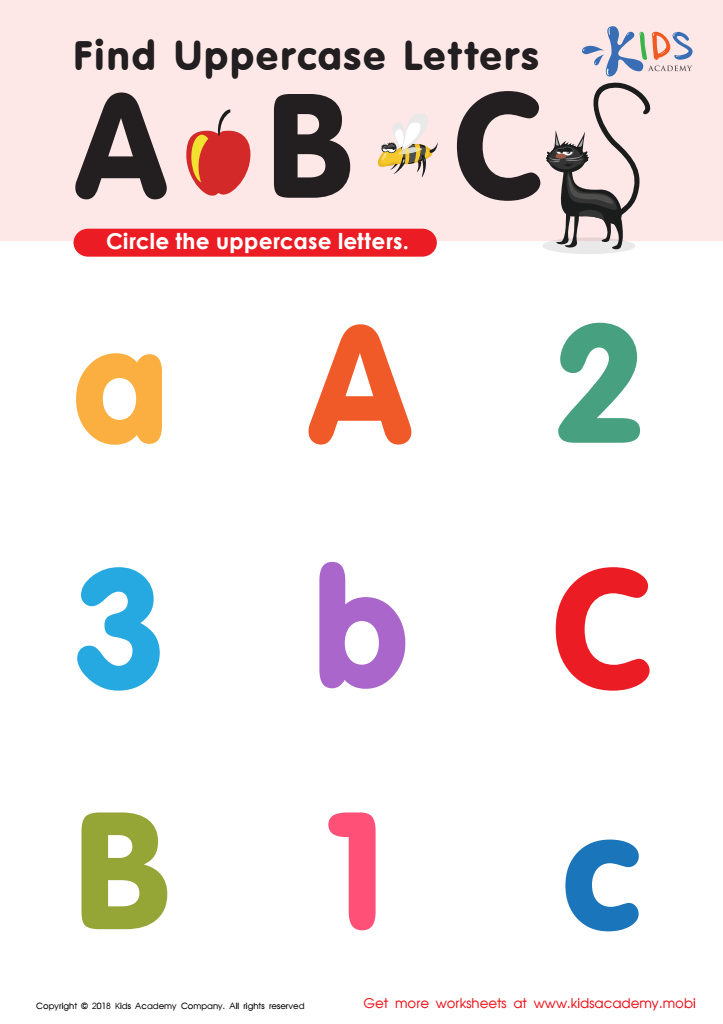
Find Uppercase Letters A, B, and C Worksheet








Alphabet familiarity, particularly with uppercase letters, is crucial for children ages 6–8 as it lays the foundation for their reading and writing skills. At this stage, children are often transitioning from learning to read to reading to learn. Recognizing and understanding uppercase letters is vital for comprehension, as many texts, especially in literature and signage, prominently feature capitals.
Moreover, uppercase letters serve various functions in language, such as indicating the beginning of sentences and proper nouns. Familiarity with these letters enhances children's ability to decode and take meaning from text, which is essential for academic success.
For parents and teachers, promoting uppercase letter familiarity also fosters confidence in written communication. Children are more likely to engage with writing activities if they feel secure in their ability to form and identify uppercase letters. Activities that include games, storytelling, and writing can make learning engaging, making the learning process enjoyable and meaningful.
Investing time in upper-case letter familiarity paves the way for more advanced literacy skills, equipping children not only for subsequent grades but for lifelong learning. In emphasizing this aspect of literacy, parents and teachers are giving children vital tools to navigate an increasingly text-rich world.