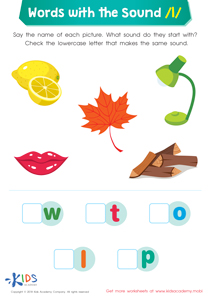
Uppercase identification Uppercase Letters Worksheets for Ages 6-8
5 filtered results
-
From - To
Enhance your child's literacy skills with our engaging Uppercase Letters Identification Worksheets, specially designed for ages 6-8! These printable activities provide a fun and interactive way for young learners to recognize and differentiate uppercase letters. Each worksheet is loaded with colorful illustrations and creative tasks that promote letter recognition and fine motor skills. Perfect for home or classroom use, these worksheets encourage independent learning while building foundational literacy skills. Parents and educators can tailor lessons to meet individual needs, ensuring every child gains confidence in their alphabet knowledge. Start exploring the world of uppercase letters today with our engaging resources!
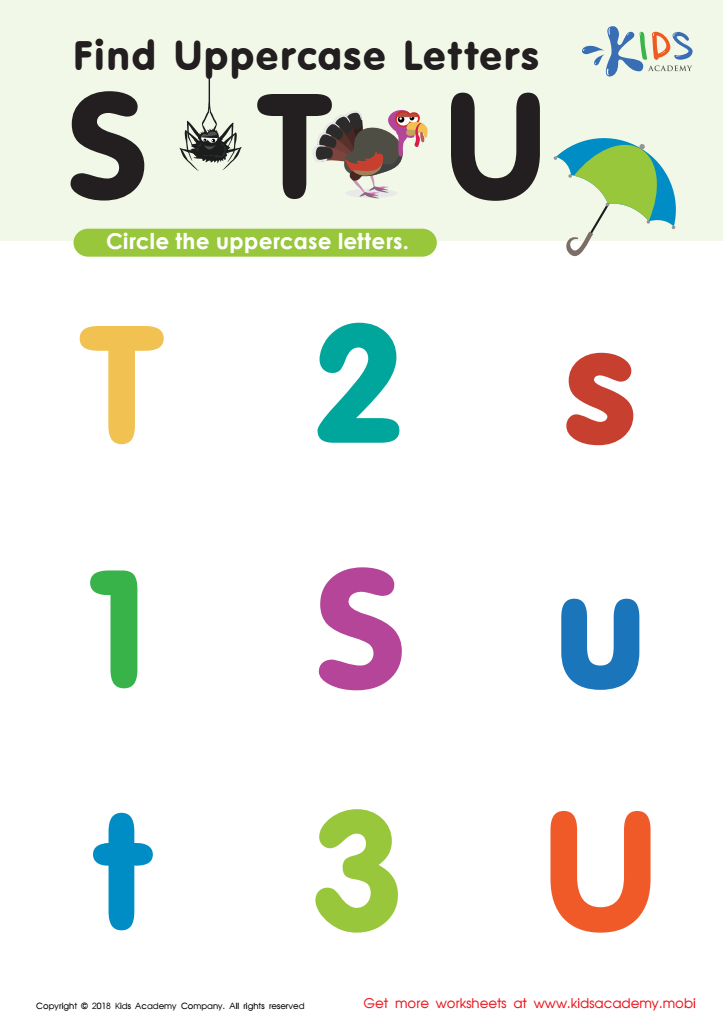
Find Uppercase Letters Worksheet
 Assign to My Students
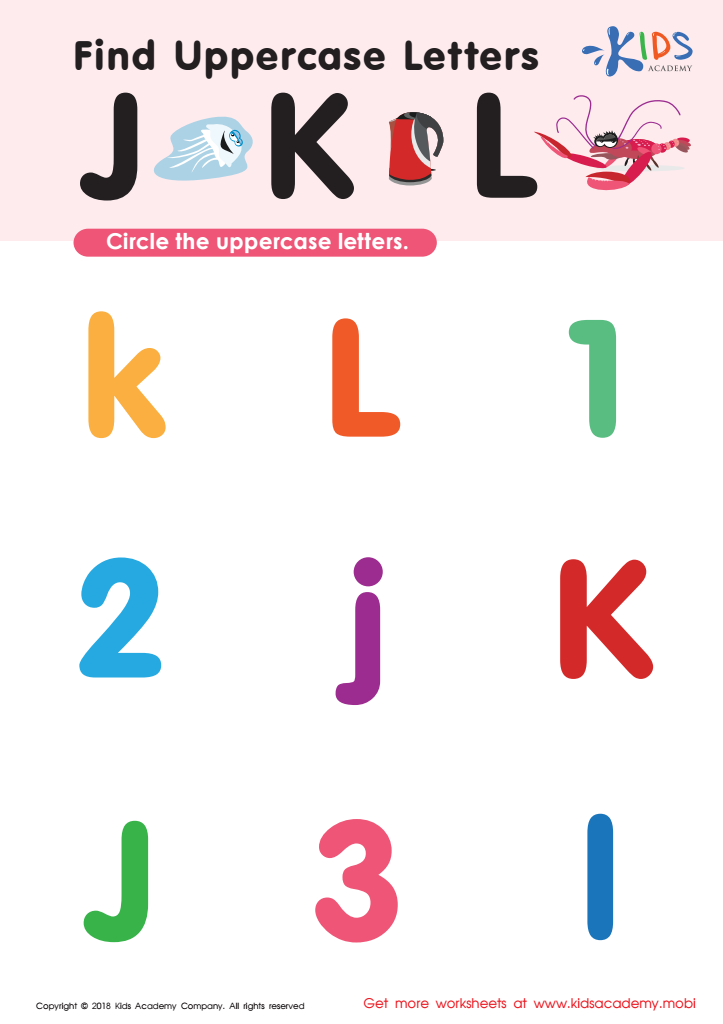
Find Uppercase Letters J, K, and L Worksheet
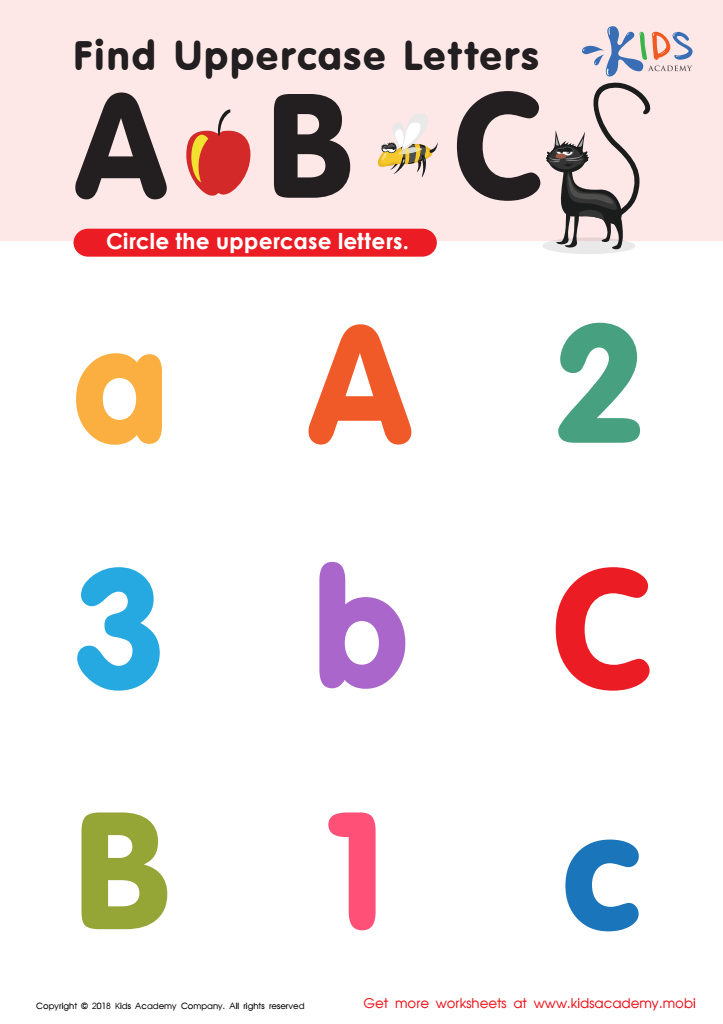
Find Uppercase Letters A, B, and C Worksheet
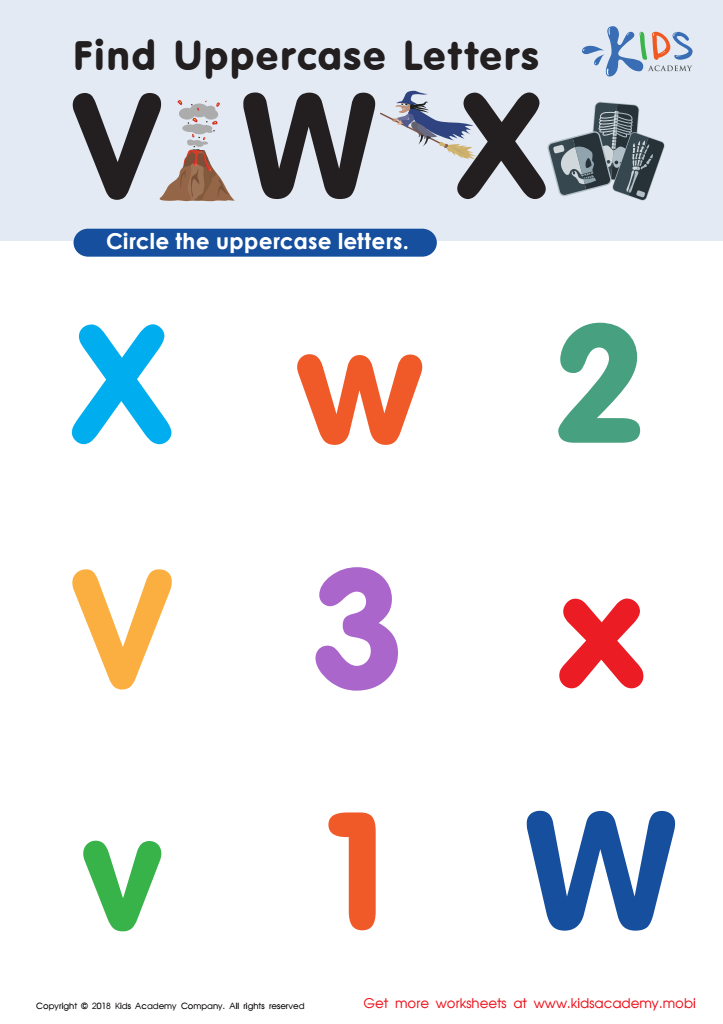
Find Uppercase Letters V, W, X Worksheet
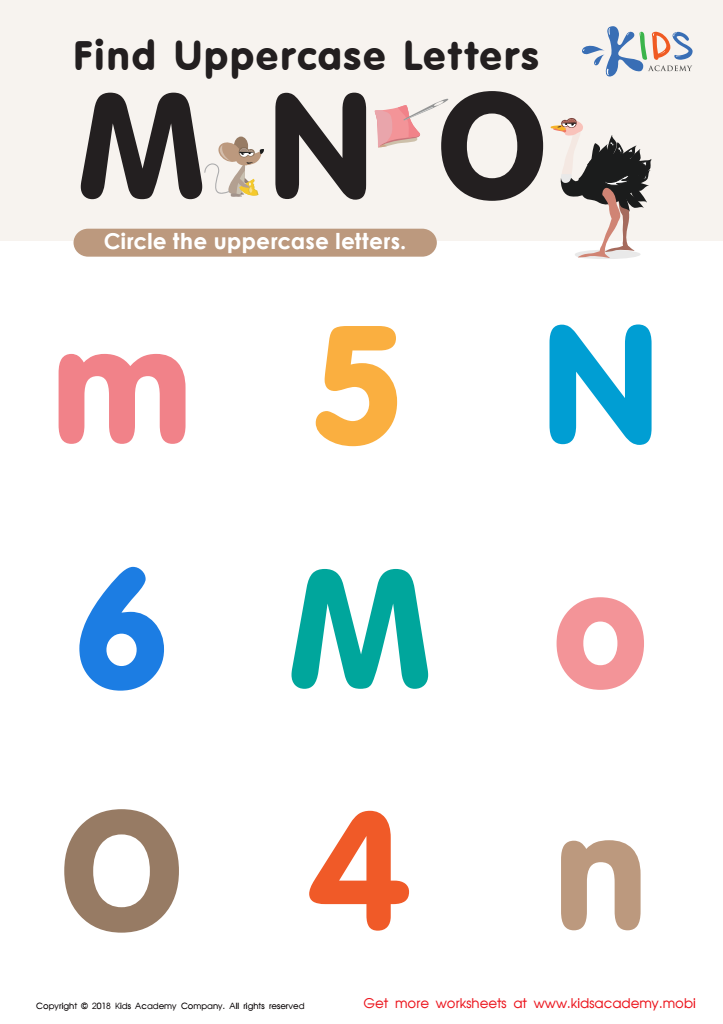
Find Uppercase Letters M, N, and O Worksheet








Uppercase letter identification is crucial for children ages 6-8 as it serves as a foundational skill for literacy development. At this age, children are actively learning to read and write, and uppercase letters are often the first in a multitude of print they encounter. Mastery of uppercase letters fosters phonics skills, enabling children to recognize familiar words and properly decode unfamiliar ones.
Uppercase letters frequently appear in important contexts, such as the beginnings of sentences and proper nouns. Understanding their use helps children become proficient readers and writers. Additionally, uppercase letters can boost confidence in young learners as they begin to see their reading skills improving and can contribute to their self-esteem.
Furthermore, recognizing uppercase letters assists with visual discrimination—helping children differentiate between similar-looking letters like 'B' and 'D.' This skill helps prevent confusion and errors in reading and writing. Parents and teachers should prioritize uppercase letter identification to nurture robust literacy skills, setting the stage for academic success. Engaging young learners through interactive activities like flashcards or creative writing that incorporates uppercase letters can foster enthusiasm and enhance their learning experience. Overall, uppercase letter identification is an essential building block for lifelong literacy.