Long vowel recognition Vowels and Consonants Worksheets for Ages 6-8
3 filtered results
-
From - To
Discover our engaging "Long Vowel Recognition: Vowels and Consonants Worksheets" designed specifically for children aged 6-8! These interactive worksheets help young learners identify long vowel sounds while reinforcing their knowledge of consonants. Each activity promotes reading fluency and phonemic awareness through enjoyable exercises, including matching, fill-in-the-blank, and word sorting. Our thoughtfully curated materials support educational goals and enhance differentiation by catering to various learning styles. Foster a love of language and boost your child's confidence with these colorful, easy-to-use worksheets. Perfect for in-class or at-home practice, they will enrich your child's reading experience and elevate their foundational skills!
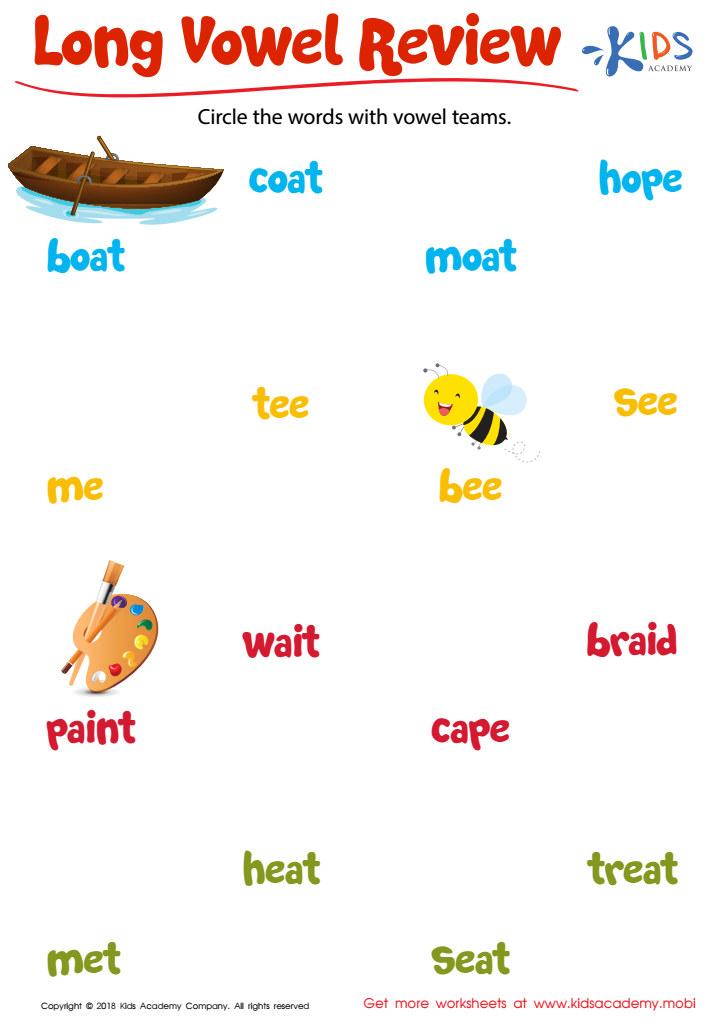
Long Vowel Review Worksheet
 Assign to My Students
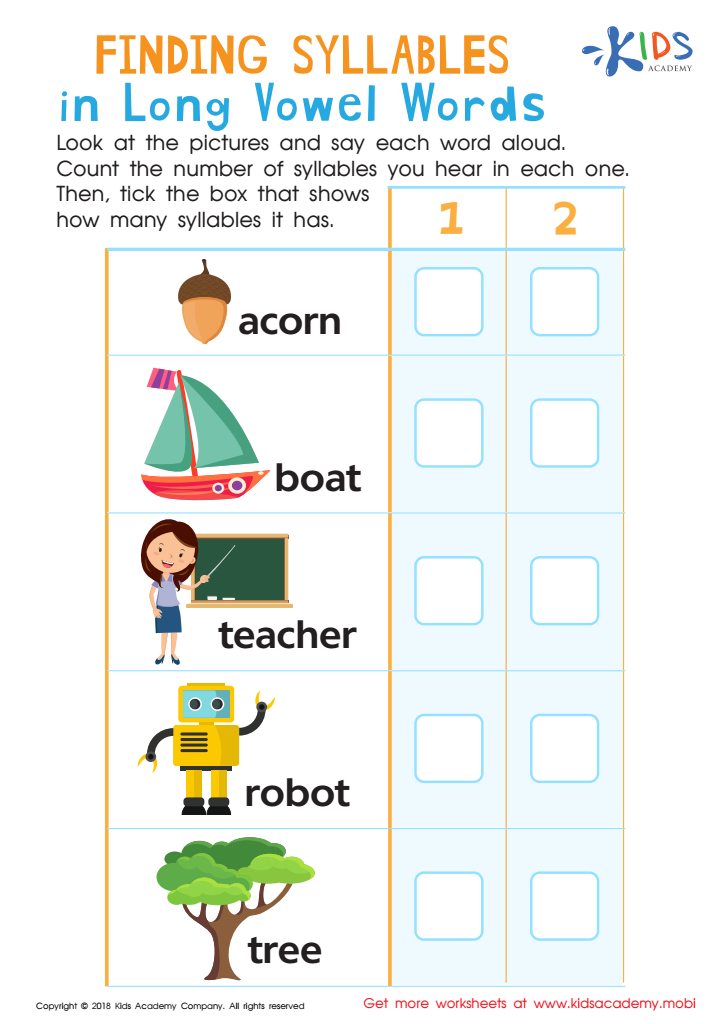
Finding Syllables in Long Vowel Words Worksheet
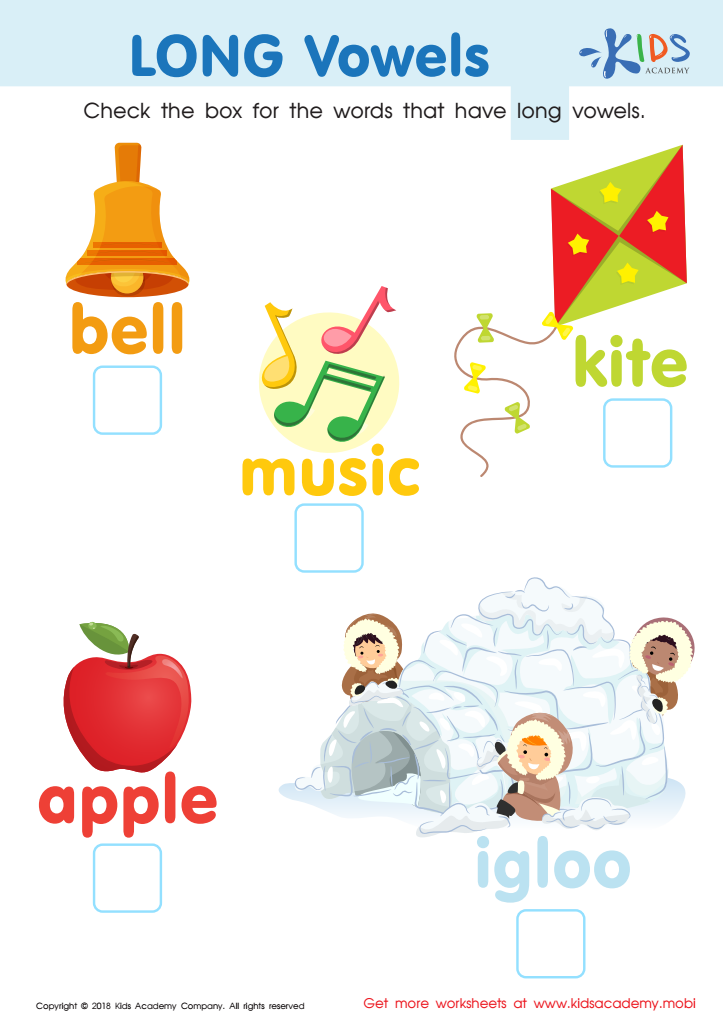
long vowels Worksheet



Long vowel recognition is a crucial component of early literacy development for children aged 6-8, making it essential for parents and teachers to prioritize this skill. Understanding long vowels helps kids decode words effectively, leading to improved reading fluency. Long vowels, such as those in "cake" or "bike," differ from short vowels and play a significant role in phonics, which is foundational for spelling as well.
As children progress through their primary education, strong vowel awareness can enhance their vocabulary and comprehension skills. Recognizing the relationship between letters and sounds helps young learners identify patterns in words, boosting their confidence and motivation. When parents and teachers emphasize the importance of distinguishing between long and short vowels, they foster an environment conducive to learning, supporting the development of other critical literacy skills.
Additionally, understanding consonants alongside long vowels reinforces phonetic recognition, enabling kids to blend sounds effectively and read more complex words. This foundational literacy skill lays the groundwork for academic success, ultimately influencing a child's ability to tackle more advanced reading and writing tasks in the future. By prioritizing long vowel recognition, adults can empower children to thrive in their educational journey and instill a lifelong love for reading.







