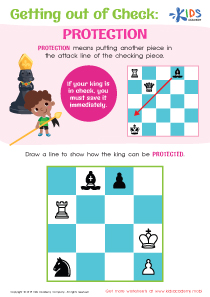
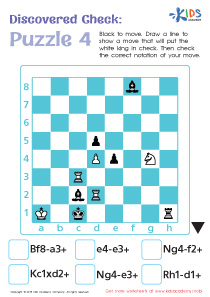
Chess knowledge Chess Worksheets for Ages 6-8
3 filtered results
-
From - To
Welcome to our Chess Knowledge Worksheets for ages 6-8! Designed to introduce young learners to the fascinating world of chess, these engaging and educational worksheets help children develop essential chess skills and strategies. Each worksheet encourages critical thinking, problem-solving, and concentration as kids navigate through fun puzzles and activities focused on chess pieces, moves, and basic rules. Our resources support early cognitive development, making learning enjoyable for little chess enthusiasts. Perfect for home or classroom use, these worksheets are a fantastic way to foster a love for chess while enriching young minds. Discover the excitement of chess today!
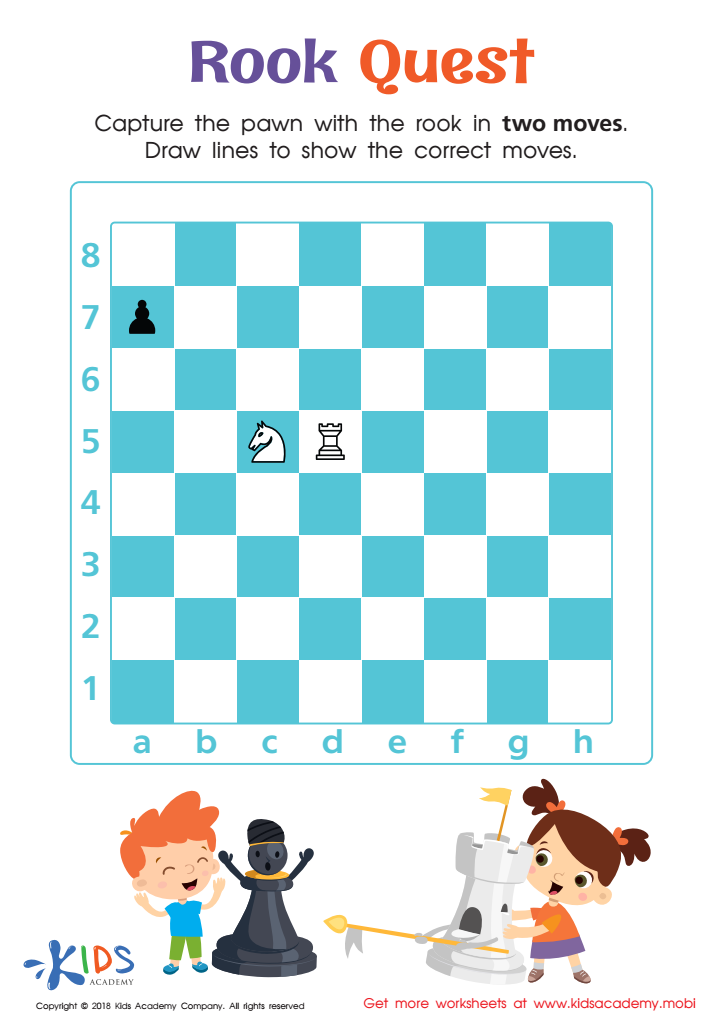
Rook Quest Worksheet
 Assign to My Students
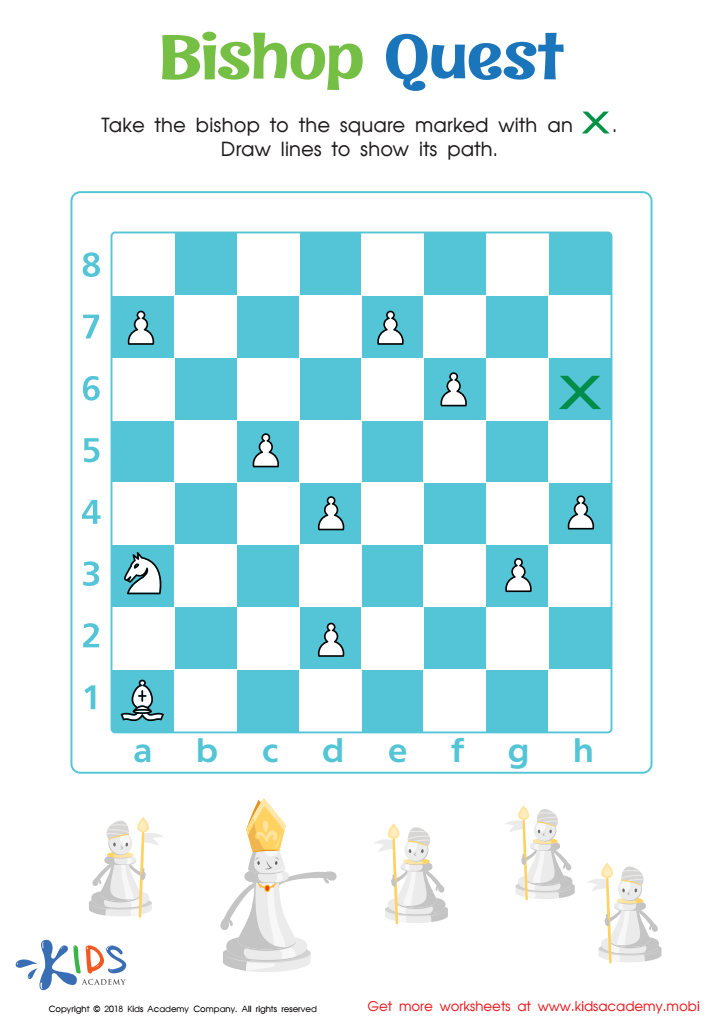
Bishop Quest Worksheet
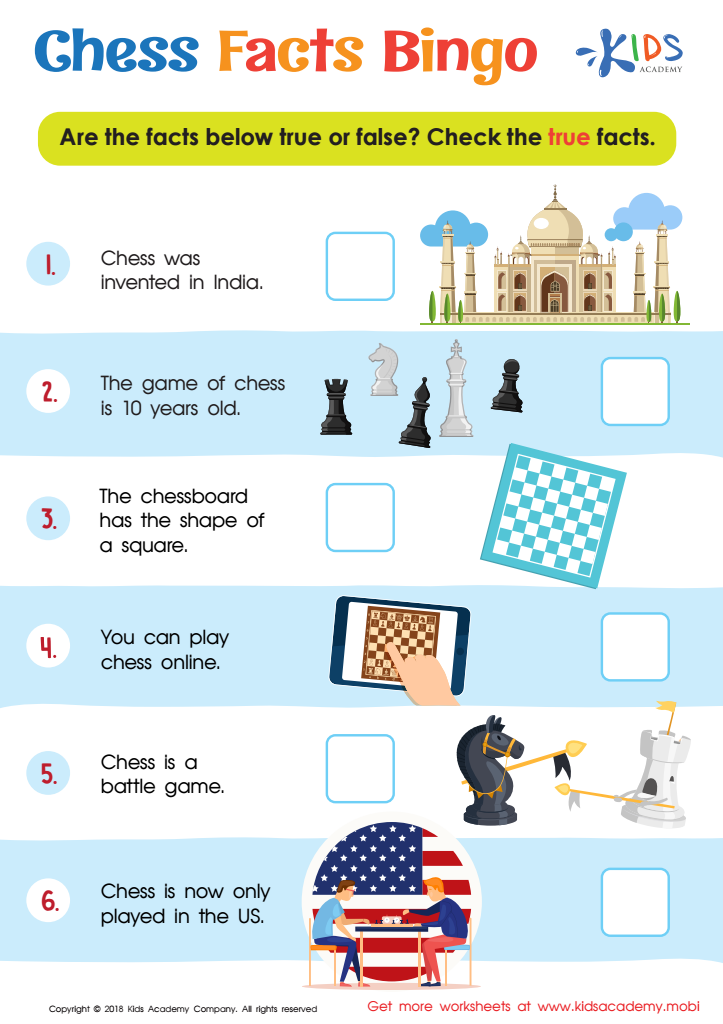
Chess Facts Bingo Worksheet






Chess is an invaluable tool for cognitive development in children aged 6 to 8, making it essential for parents and teachers to foster this skill. First and foremost, chess enhances critical thinking and problem-solving abilities. As children learn to strategize and anticipate their opponent's moves, they cultivate analytical skills that are beneficial not only in games but also in academic pursuits.
Moreover, chess promotes patience and perseverance. Children must learn to think several moves ahead and to handle defeat gracefully, which builds resilience. These life skills are crucial as kids navigate challenges in school and personal life. Additionally, playing chess hones concentration skills; the focus required to play can translate into improved attention spans in other learning activities.
Socially, chess offers opportunities for interaction. It can build friendships and improve communication skills, as children discuss strategies and engage in friendly competition.
Lastly, incorporating chess into educational curricula can make learning enjoyable, allowing for a break from traditional teaching methods while offering a different approach to problem-solving. Overall, understanding and promoting chess not only enriches children’s minds but also prepares them for various life experiences. Thus, parents and teachers should embrace chess as a beneficial tool for holistic development.