Animal recognition Worksheets for Ages 6-8 - Page 2
26 filtered results
-
From - To
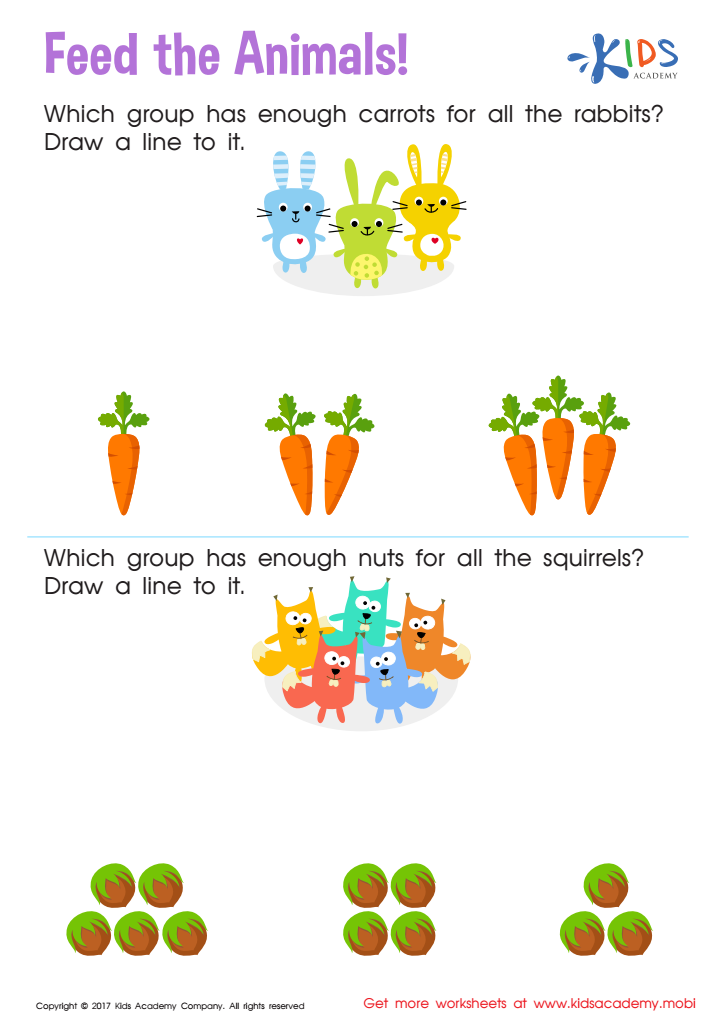
Count and Match: Feed the Animals Worksheet
 Assign to My Students
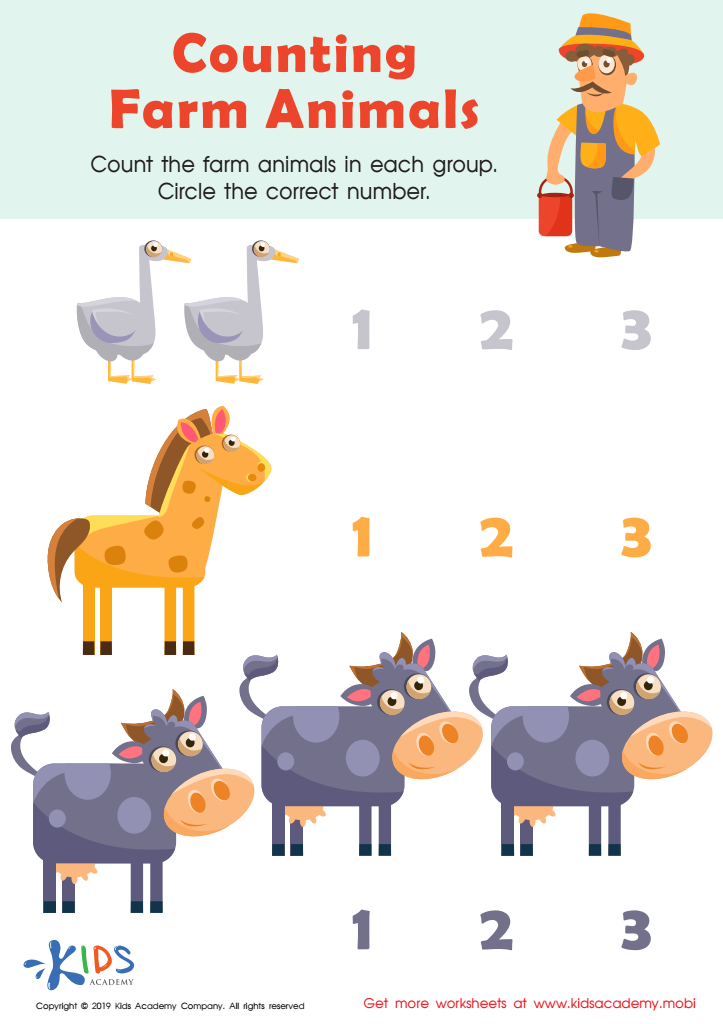
Counting Farm Animals Worksheet







Animal recognition is a crucial educational component for children ages 6-8, as it fosters their cognitive, social, and emotional development. At this age, children are naturally curious about their environment, and recognizing different animals enhances this curiosity while promoting observation skills and critical thinking. Learning to identify various animals encourages children to explore biological diversity, which helps them appreciate the natural world and develop an understanding of ecosystems.
For parents and teachers, animal recognition supports language development through new vocabulary related to animal characteristics and habitats. Engaging children in discussions about animals cultivates communication skills and stimulates their imagination, which is vital during these formative years.
Furthermore, understanding and recognizing animals can promote empathy and compassion. By learning about different species and their roles in the ecosystem, children can understand the significance of wildlife conservation and the responsibility humans have towards animals.
In a broader sense, activities related to animal recognition can promote teamwork and collaborative learning through interactive group projects or outings to zoos and nature centers, enhancing social skills. Therefore, parents and teachers should prioritize animal recognition as it enriches children's educational experience, nurturing curious and caring individuals.








