Attention to Detail Worksheets for Ages 6-8 - Page 2
25 filtered results
-
From - To
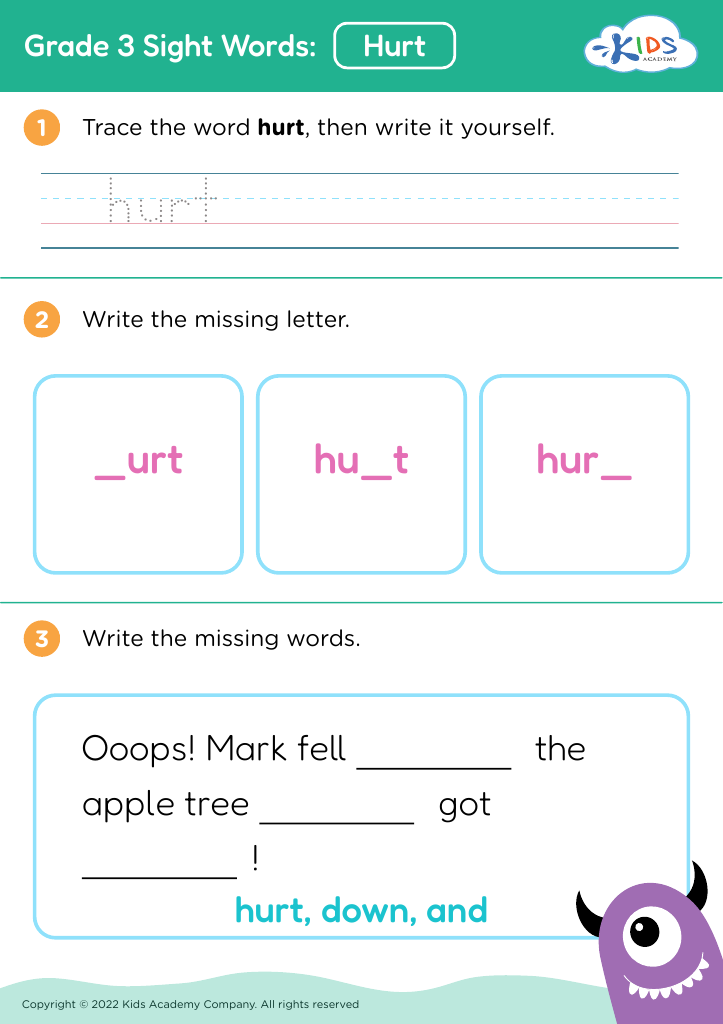








Attention to detail is crucial for children aged 6-8 as it lays the foundation for their cognitive, academic, and social development. During these formative years, children are not only mastering foundational skills in reading, writing, and arithmetic, but they are also learning how to observe and interpret the world around them. When parents and teachers encourage attention to detail, they help children develop critical thinking and problem-solving skills, enabling them to analyze information effectively and make informed decisions.
Moreover, attention to detail fosters a sense of responsibility and accountability. Children who learn to pay attention to the specifics, whether in completing assignments or following instructions for tasks, are more likely to take pride in their work, leading to improved self-esteem and motivation. Additionally, this skill can enhance communication, as children learn to articulate their thoughts clearly and precisely.
Socially, attention to detail can help children navigate friendships and classroom dynamics by promoting empathy – understanding subtle social cues is vital for positive interactions. When parents and teachers prioritize this skill, they create an enriching environment where children not only thrive academically but also develop meaningful relationships, essential for lifelong success. Integrating attention to detail into everyday activities provides invaluable practice for young learners.








