Basic arithmetic skills Worksheets for Ages 6-8 - Page 2
28 filtered results
-
From - To


.jpg)



.jpg)

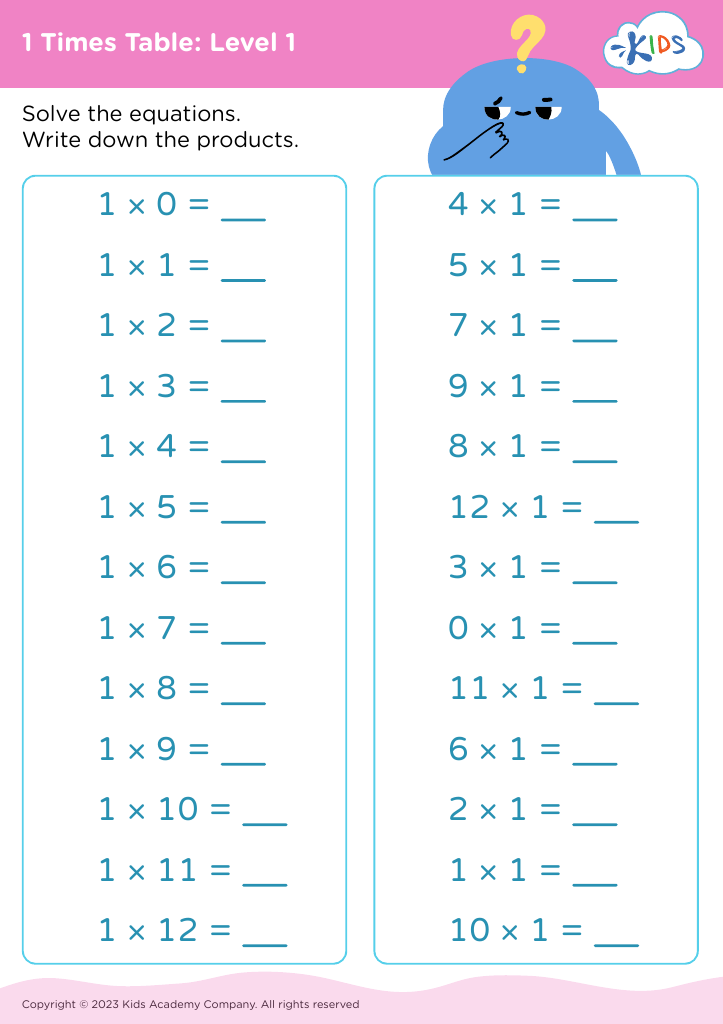
Basic arithmetic skills form the cornerstone of a child's future learning, making it crucial for parents and teachers to focus on this area, especially for children aged 6-8. At this stage, children's brains are developmentally primed to absorb fundamental concepts that will shape their cognitive abilities. Proficiency in basic arithmetic — including addition, subtraction, multiplication, and division — lays the groundwork for more complex mathematical concepts that they will encounter later in their academic journey.
First, arithmetic skills enhance problem-solving abilities, enabling children to approach challenges logically and systematically. This skill is not only applicable in math-related subjects but in real-life scenarios that require critical thinking.
Second, early competence in arithmetic builds confidence. Children who experience success in math at an early age are more likely to develop a positive attitude towards learning and school in general. This positive reinforcement is crucial for their educational journey.
Third, arithmetic skills are intertwined with everyday activities. Whether it's telling time, understanding money, or measuring ingredients for a recipe, these early math skills are practical tools that children use daily.
Lastly, a strong foundation in arithmetic can lead to better opportunities in STEM (science, technology, engineering, and math) fields in the future. Therefore, investing in the development of basic arithmetic skills from a young age sets children up for both academic and real-world success.








