
Basic geometry skills Worksheets for Ages 6-8
4 filtered results
Difficulty Level
Grade
Age
-
From - To
Subject
Activity
Standards
Discover our engaging Basic Geometry Skills Worksheets designed for children aged 6-8. Tailored to ignite a passion for learning, these printable resources introduce young learners to fundamental concepts such as shapes, area, and perimeter. Featuring colorful graphics and interactive exercises, our worksheets foster creativity while building essential spatial awareness skills. Ideal for supplementing classroom learning or for home practice, these activities make geometry enjoyable and accessible. Help your child develop confidence in their math abilities through hands-on experiences that promote critical thinking and problem-solving. Explore our collection and watch your young scholar's geometry skills flourish!
Favorites
With answer key
Interactive
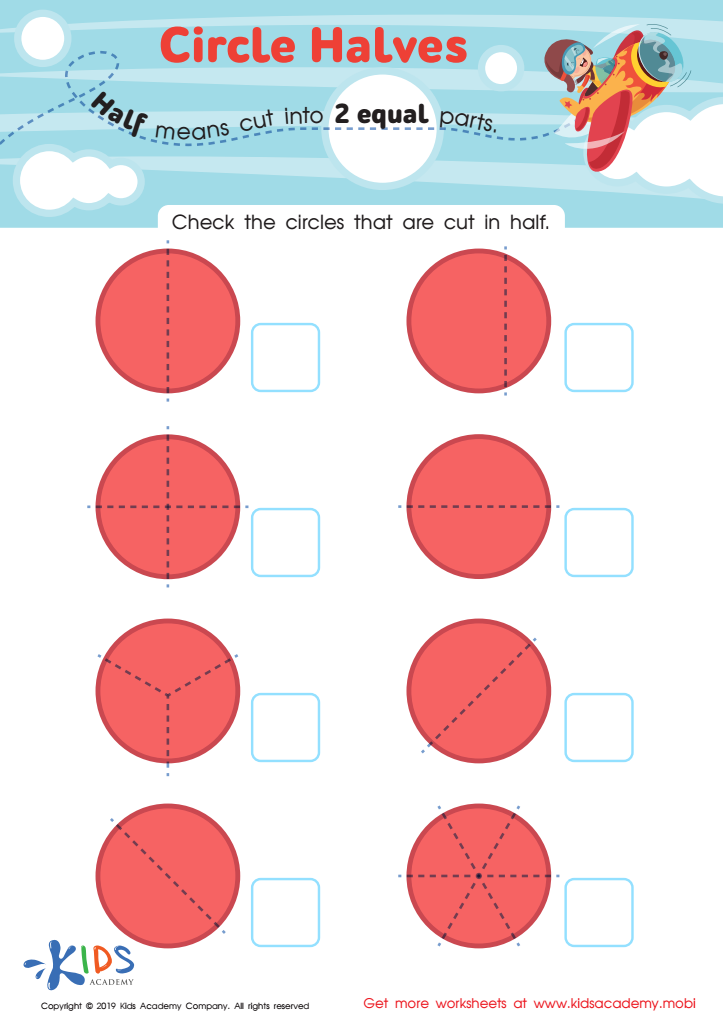
Circle Halves Worksheet
Remind your kindergartners that objects can be divided into halves, thirds and fourths. Now, look at this worksheet with your students and help them check the circles cut in half.
 Assign to My Students
Circle Halves Worksheet
Worksheet
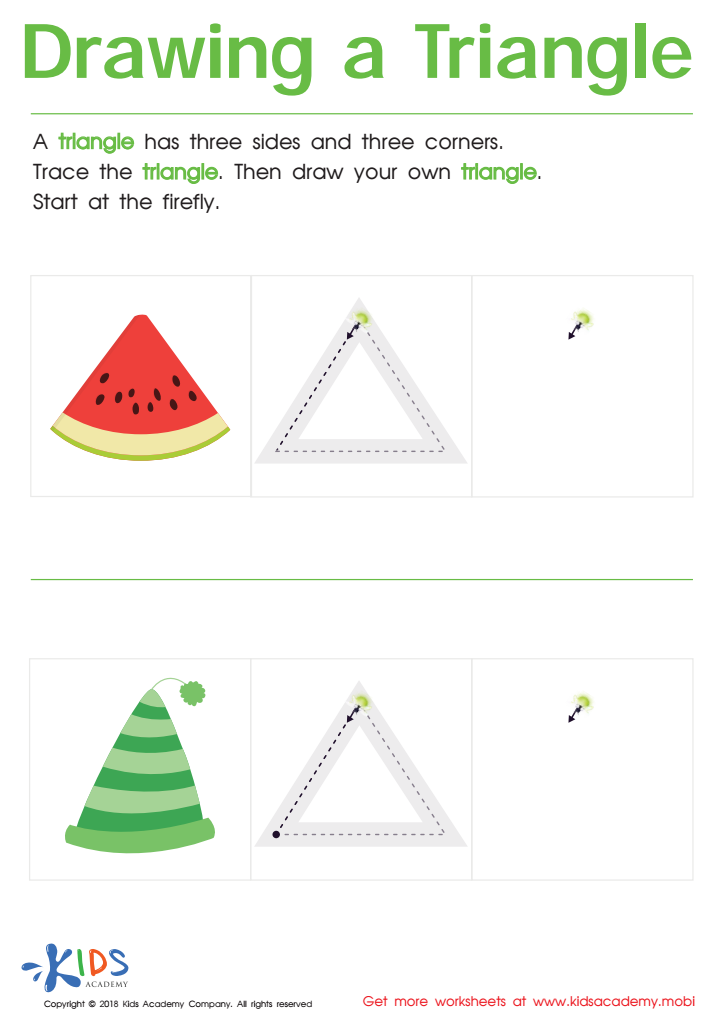
Drawing a Triangle Worksheet
Help your child develop fine motor skills with this fun, traceable printable! It teaches them how to draw a triangle, with easy steps and cute picture motivation. They'll work on pre-writing skills, pencil position, and grip control without even realizing it. With this basic shape, they'll gain a foundation for strong writing and drawing skills.
Drawing a Triangle Worksheet
Worksheet
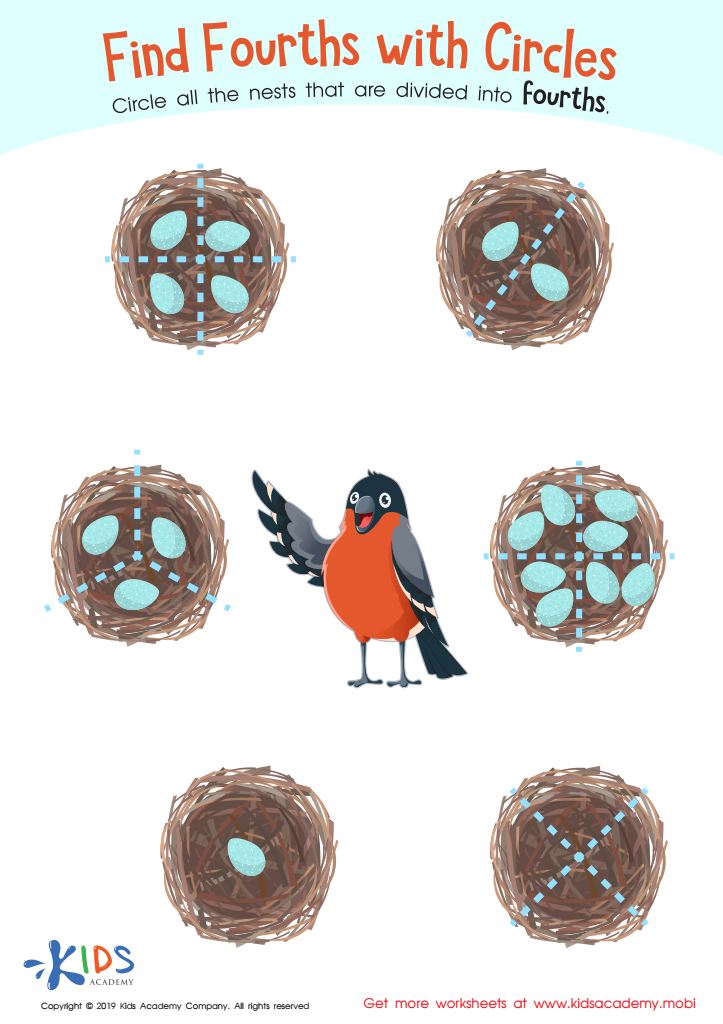
Find Fourths Circles Worksheet
Finding fractions with this Find Fourths with Circles worksheet can be fun! Your child will see a picture of circles divided into different fractions and circle the nests divided into fourths. With the help of their cheery bird friend, they can look for nests with four equal parts and be successful in finding the correct nest.
Find Fourths Circles Worksheet
Worksheet
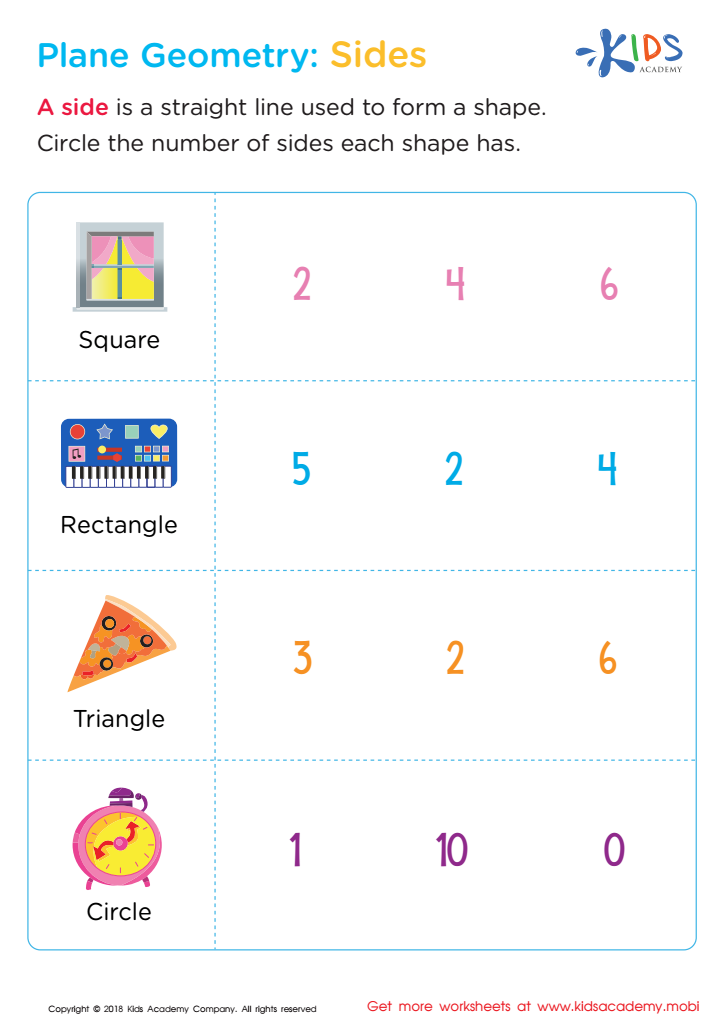
Plane Geometry: Sides Worksheet
Knowing the properties of basic geometric shapes is a great skill to have. Download this free worksheet and let your kids learn about sides and shapes using colorful pictures. They'll see each shape has its own number of sides, laying the groundwork for identifying and recognizing shapes in the future.
Plane Geometry: Sides Worksheet
Worksheet
Join Kids Academy for Free
Who is primarily going to use this learning content?








Basic geometry skills are crucial for children aged 6-8 as they form the foundation for a wide range of mathematical concepts and real-world applications. Understanding basic shapes, spatial relationships, and measurements not only enhances a child's cognitive abilities but also boosts their problem-solving skills. At this age, children are naturally curious and often explore their environments. Recognizing shapes and their properties helps in fostering spatial awareness, which is essential for later skills in geometry, science, and engineering.
Moreover, mastering geometry contributes to the development of critical thinking and reasoning skills. When children learn to categorize, describe, and compare geometric shapes, they engage in processes that enhance their analytical abilities. This is not only beneficial in math but translates to better performance in various subjects.
Additionally, incorporating geometry in everyday experiences helps bridge the gap between academic learning and practical application. For instance, understanding shapes can enrich activities like cooking, art, and even outdoor games.
For parents and teachers, supporting the development of basic geometry skills sets the stage for children's future learning, making math a more accessible and enjoyable subject, and prepares them for more complex concepts and problem-solving tasks as they grow.








