
Counting money Worksheets for Ages 6-8
3 filtered results
Difficulty Level
Grade
Age
-
From - To
Subject
Activity
Standards
Welcome to our Counting Money Worksheets for Ages 6-8! Designed to build essential math skills, these engaging worksheets help young learners master the art of counting money. With fun and interactive exercises, students will enjoy practicing coin identification, adding values, and making change. Each worksheet fosters a deeper understanding of currency while enhancing their math confidence. Our resources are tailored to match the developmental stage of children aged 6 to 8, making learning both educational and enjoyable. Prepare your child for real-world financial skills with our comprehensive counting money worksheets—perfect for home or classroom use! Start counting money with us today!
Favorites
With answer key
Interactive
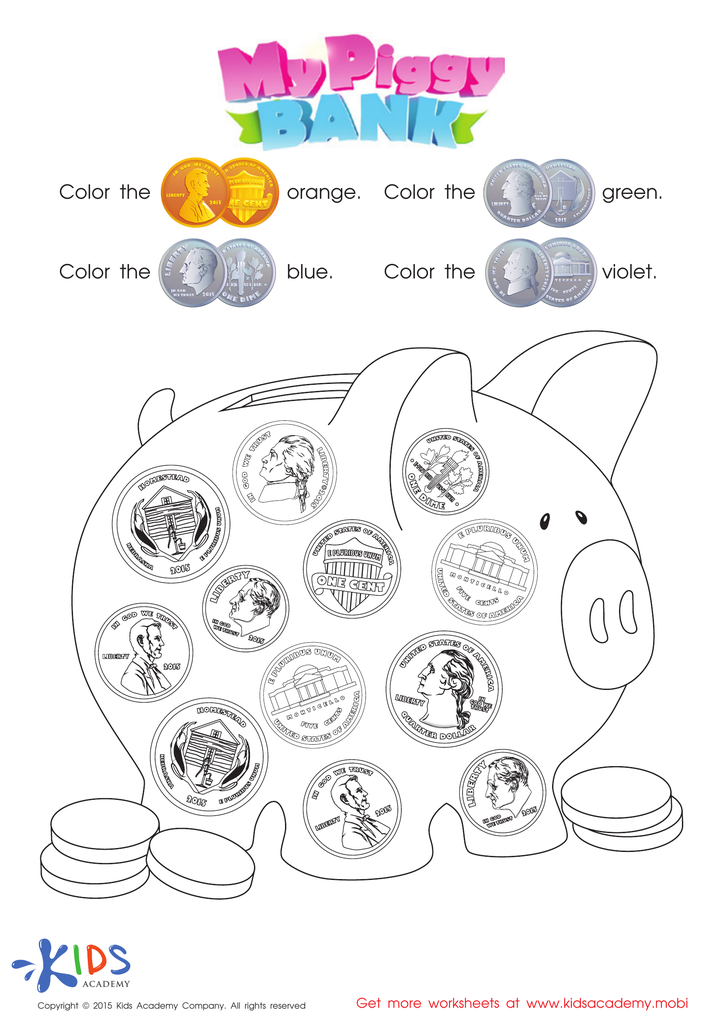
Recognizing Money Money Worksheet
Help the piggy bank by coloring its coins with Kids Academy's free money worksheets! Learn the different coins and their values with your kids. Printable worksheets are available to continue the lesson. Let's learn and have fun!
Recognizing Money Money Worksheet
Worksheet
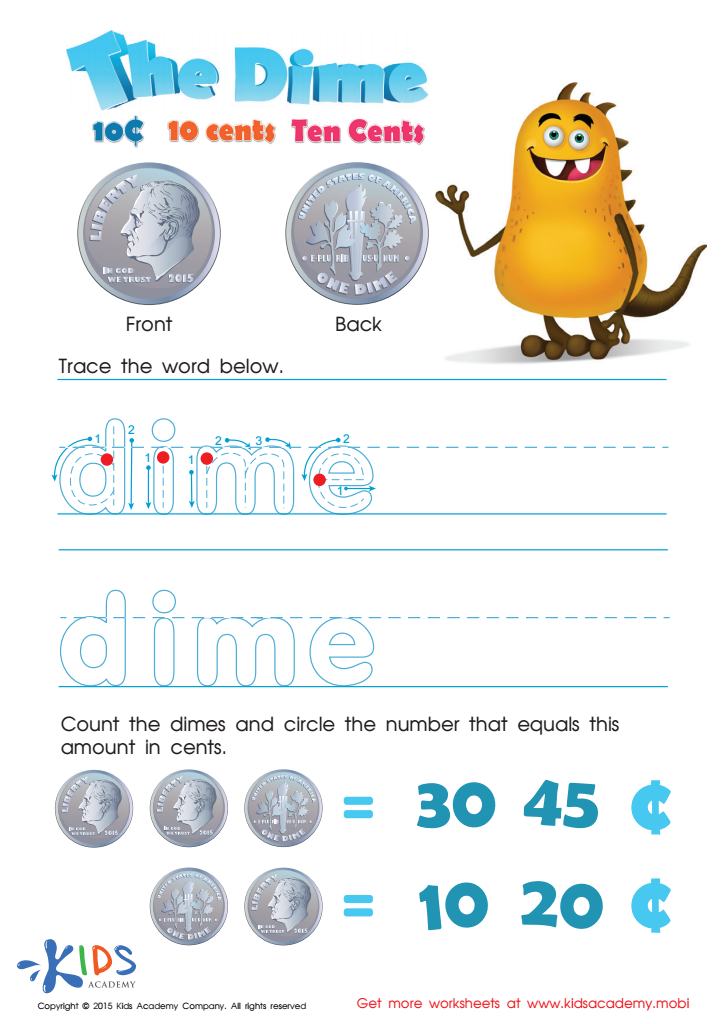
Ten Cents or the Dime Money Worksheet
Introduce your kids to coin games! Start with a dime: trace the word on both sides and count the dimes. Kids Academy has printable worksheets to help your kids learn how to count money.
 Assign to My Students
Ten Cents or the Dime Money Worksheet
Worksheet
Join Kids Academy for Free
Who is primarily going to use this learning content?







Counting money is a crucial skill for children ages 6-8, as it lays a strong foundation for financial literacy. At this age, children are naturally curious and eager to learn about the world around them, making it an ideal time to introduce concepts related to money. Understanding how to count money fosters numerical skills, enhances problem-solving abilities, and supports the development of critical thinking.
By teaching children to count money, parents and teachers can instill a sense of responsibility and independence in their young learners. The ability to manage money encourages budgeting practices, and allows children to grasp the value of items, which promotes smarter purchasing decisions in the future. Moreover, these experiences foster confidence, helping children feel secure in their ability to handle monetary transactions.
Additionally, counting money offers practical opportunities for hands-on learning. It can be easily integrated into everyday activities such as grocery shopping or playing store, making the learning process engaging and enjoyable. Ultimately, embracing the lessons of counting money empowers children to become informed consumers and conscientious decision-makers, essential life skills they will carry well into adulthood. Thus, prioritizing counting money is vital for fostering lifelong financial competence.








