Counting skills Worksheets for Ages 6-8 - Page 17
389 filtered results
-
From - To
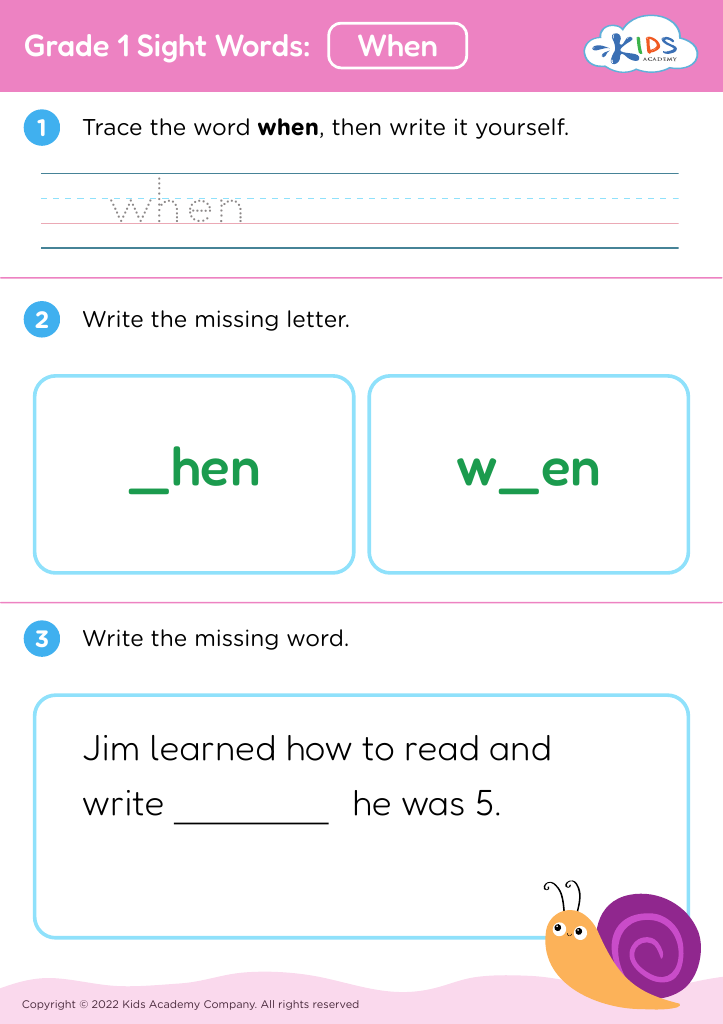








Counting skills are fundamental for children aged 6-8, as they lay the groundwork for later mathematical understanding and overall cognitive development. At this age, children transition from simple counting to understanding numerical concepts such as addition, subtraction, and even basic problem-solving. Strong counting skills enhance children’s ability to manipulate numbers, recognize patterns, and develop number sense, which are crucial for more advanced mathematical operations.
Parents and teachers should prioritize counting because it fosters critical thinking and analytical skills. Proficiency in counting enables children to handle real-world situations, such as telling time, making change, or measuring ingredients in cooking. Additionally, counting supports language development by introducing concepts of sequence and quantity, often used in daily conversations.
Moreover, mastering counting can boost a child’s confidence in math. A positive experience in these early stages can create a lifelong appreciation for mathematics, reducing fear or anxiety associated with the subject. Ultimately, by nurturing counting skills, parents and teachers not only help students succeed academically but also prepare them for practical life skills, promoting overall well-rounded development. Investing time and resources in building these foundational skills can greatly influence a child’s future learning trajectory and confidence.








