Cultural Understanding Worksheets for Ages 6-8
3 filtered results
-
From - To
Discover engaging and educational Cultural Understanding Worksheets designed for children ages 6-8 at Kids Academy! Our worksheets help young learners explore diverse cultures, traditions, and global perspectives through fun activities. By fostering early cultural awareness, kids can develop empathy, respect, and open-mindedness. Each worksheet features age-appropriate content that enhances learning skills such as reading, writing, and critical thinking. Perfect for classrooms or home use, these resources ensure children enjoy a rich, multicultural educational experience. Visit Kids Academy and start your child's global journey today with our carefully curated selection of printable cultural understanding worksheets!
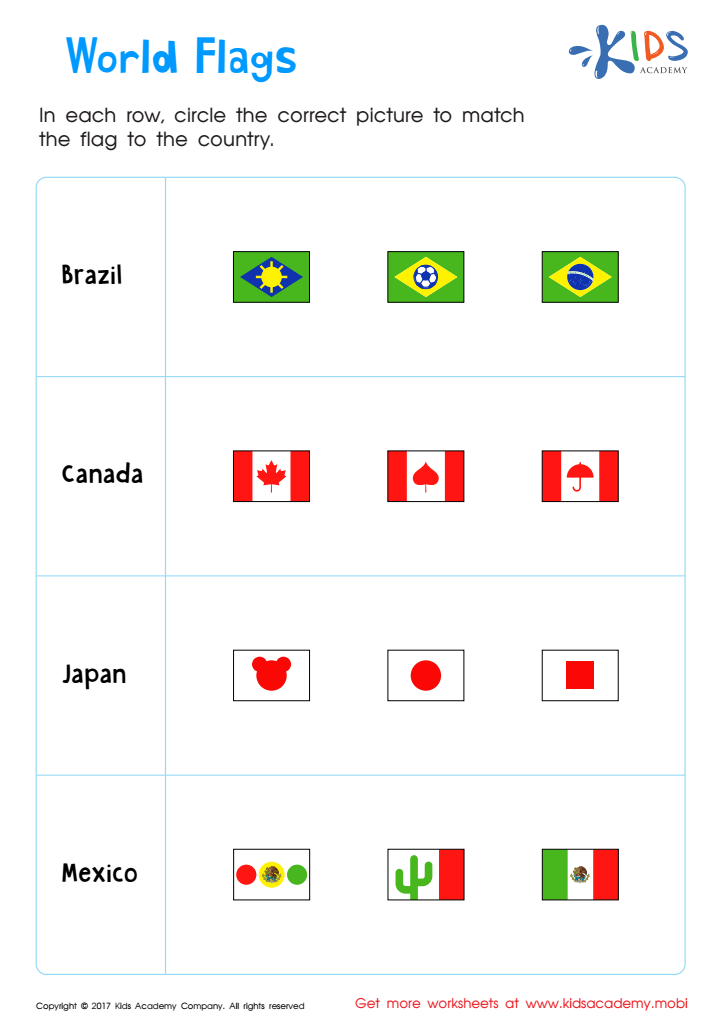
World Flags Printable
 Assign to My Students
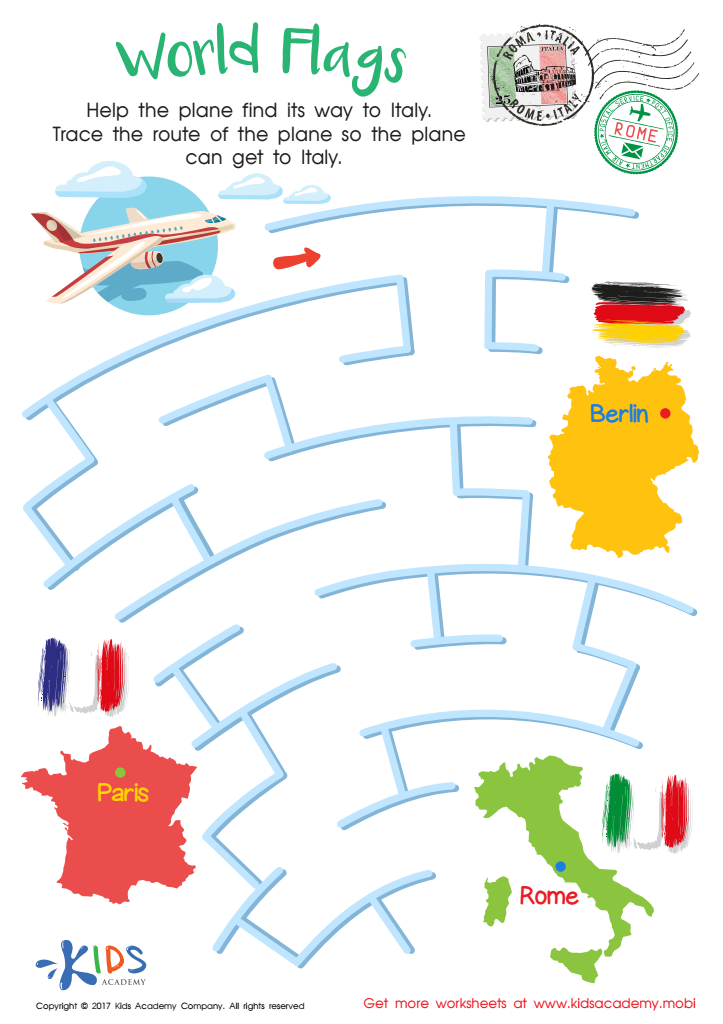
World Flags Maze Worksheet







Parents and teachers should deeply care about cultural understanding for children aged 6-8 because these early years are foundational for shaping perceptions and attitudes. When children are exposed to diverse cultures, traditions, and perspectives, they begin to cultivate empathy, respect, and open-mindedness. At this impressionable age, introducing cultural understanding helps prevent the development of biases or stereotypes that can arise from ignorance or misinformation.
Furthermore, cultural understanding enriches a child’s learning experience by broadening their worldview. It enhances cognitive development by challenging children to think beyond their immediate environment, fostering critical thinking, and problem-solving skills. For instance, learning tales and customs from different cultures enhances language skills and comprehension, making the child’s educational journey more engaging and enlightening.
For parents and teachers, nurturing cultural awareness also promotes inclusivity and social harmony in classrooms and communities. Children learn to celebrate differences and find commonalities, leading to stronger social connections and cooperative behaviors.
Ultimately, instilling cultural understanding in children aged 6-8 prepares them to become compassionate, informed, and globally-minded individuals. It is a crucial investment in their social development and emotional intelligence, laying the groundwork for a more inclusive and respectful society in the future.








