Differentiating push/pull Worksheets for Ages 6-8
3 filtered results
-
From - To
Discover our engaging "Differentiating Push/Pull Worksheets" designed for children aged 6-8! These interactive resources help young learners explore fundamental concepts of understanding motion in a fun, hands-on way. Our worksheets feature a variety of activities that cater to diverse learning styles, allowing educators to effectively address individual needs. Each sheet focuses on developing critical thinking and problem-solving skills by encouraging students to observe, categorize, and analyze different push and pull scenarios. Perfect for classrooms or at-home learning, these worksheets support essential skill-building while fostering a love for learning. Download today and inspire young minds to discover the world of motion!
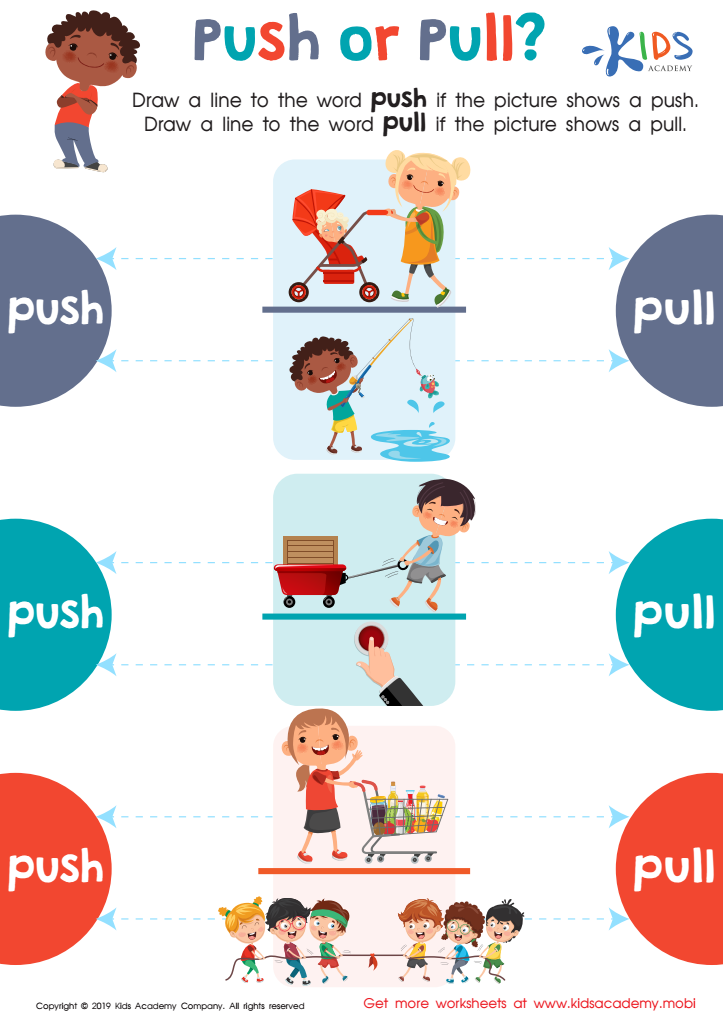
Push or Pull? Worksheet
 Assign to My Students
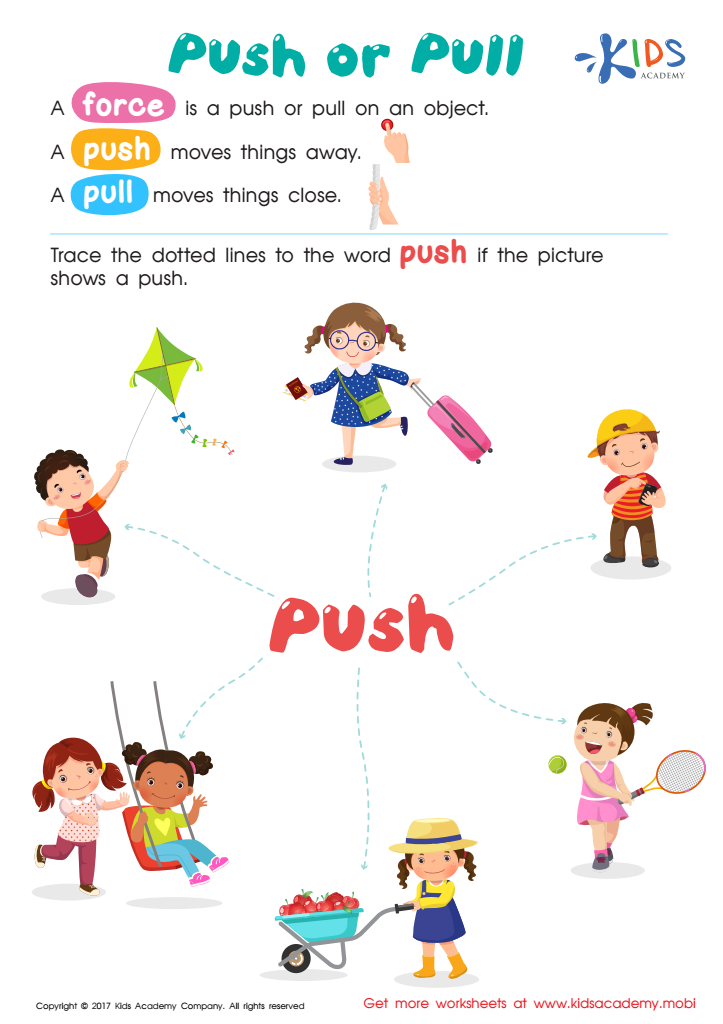
Push or Pull Worksheet
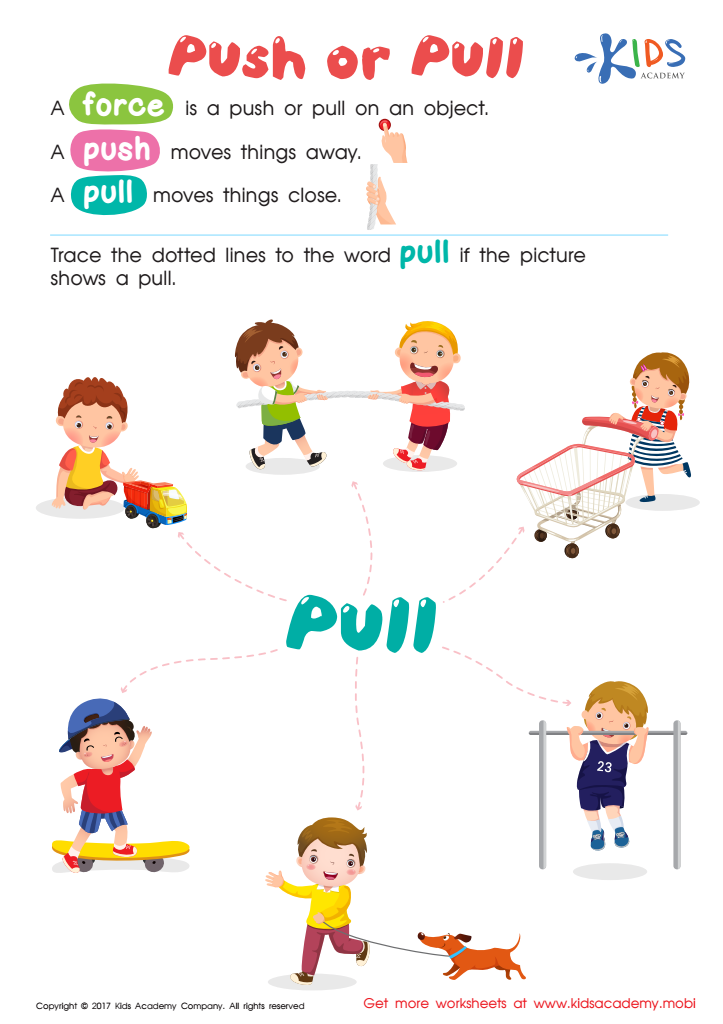
Pull or Push Worksheet








Differentiating push/pull in an educational context is essential for children aged 6-8, as it nurtures their unique learning styles and developmental needs. During this formative stage, children exhibit diverse abilities, interests, and paces in their learning. "Push" differentiation involves adapting the curriculum to challenge advanced learners, ensuring they remain engaged and aren’t held back by the pace of their peers. Conversely, "pull" differentiation provides additional support to those who may struggle, offering tailored interventions that foster confidence and mastery of skills.
Parents and teachers should care about these strategies because they promote equity and inclusivity in the classroom. When educators implement differentiated approaches, they foster a stimulating environment where all children can thrive. This not only enhances academic achievements but also nurtures social-emotional development, as students learn to respect individual differences and work collaboratively. By recognizing and responding to the unique needs of each child, adults can cultivate a love for learning, build resilience, and lay a solid foundation for lifelong educational journeys. Ultimately, effective differentiation honors each child's individuality, making learning both accessible and enjoyable, which is vital during these critical early years.








