
History knowledge Worksheets for Ages 6-8
5 filtered results
Difficulty Level
Grade
Age
-
From - To
Subject
Activity
Standards
Explore our engaging History knowledge worksheets designed for children ages 6-8! These worksheets provide a fun and interactive way to introduce young learners to important historical concepts and events. With age-appropriate activities, kids will develop their understanding of history while enhancing their critical thinking and comprehension skills. Each worksheet features colorful illustrations and easy-to-follow instructions, making learning enjoyable and effective. Whether at home or in the classroom, our History knowledge worksheets foster a love for learning and curiosity about the past. Empower your child's educational journey today with these valuable resources tailored specifically for early learners!
Favorites
With answer key
Interactive
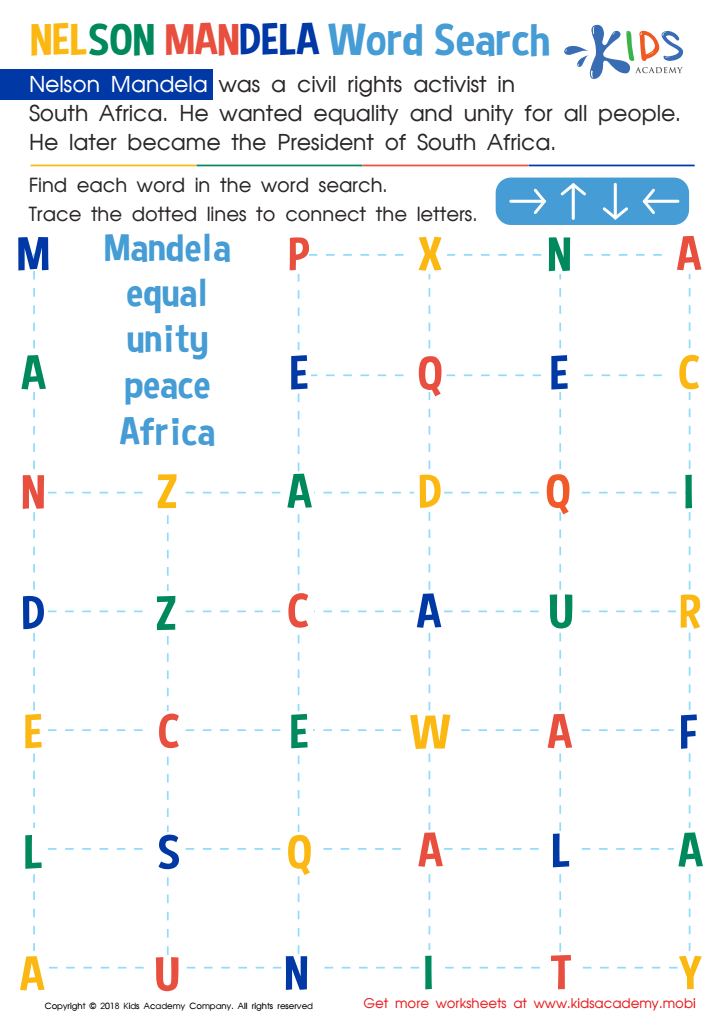
Nelson Mandela Word Search Worksheet
Kids love word searches! This fun, free worksheet teaches about the civil rights activist Nelson Mandela. It includes traceable lines and words related to him, helping improve fine motor skills. A great way to learn about a great man!
 Assign to My Students
Nelson Mandela Word Search Worksheet
Worksheet
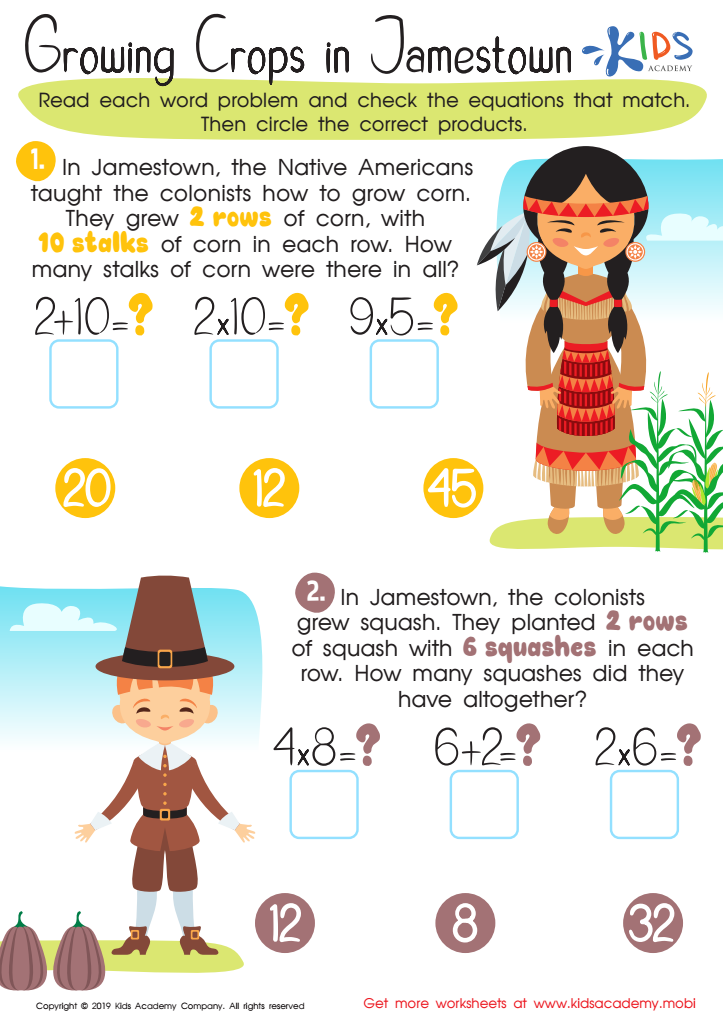
Growing Jamestown Worksheet
This exciting multiplication worksheet from Kids Academy uses American history facts as its theme. Kids learn about Native Americans helping early Americans at Jamestown, then read the word problems, match the equations and solve for the product. Finally, circle the correct answer!
Growing Jamestown Worksheet
Worksheet
Join Kids Academy for Free
Who is primarily going to use this learning content?






.jpg)

Understanding history is vital for children aged 6-8 as it lays the foundation for their knowledge of the world. Teaching history at this age fosters curiosity and critical thinking skills, allowing children to make sense of their own experiences and the society around them. History introduces young learners to important concepts like cause and effect, timelines, and the significance of different cultures and perspectives.
Moreover, history helps develop empathy by enabling children to understand the lives and challenges faced by others throughout different eras. By learning about historical figures, events, and movements, students draw connections between the past and present, which fosters a sense of belonging and identity.
For parents and teachers, instilling a passion for history encourages children to ask questions and think analytically. It empowers them to engage with current events and understand their roles as responsible citizens. Furthermore, the knowledge gained from history can enrich students' social studies, language arts, and even art discussions, making learning holistic. Encouraging young children to explore the past builds a foundation for lifelong learning and appreciation of the diverse tapestry of human experiences, ultimately shaping well-rounded individuals who can contribute thoughtfully to society.








