
Long vowel recognition Worksheets for Ages 6-8
3 filtered results
Difficulty Level
Grade
Age
-
From - To
Subject
Activity
Standards
Discover our engaging Long Vowel Recognition Worksheets designed specifically for children aged 6-8! These interactive resources support young learners in mastering long vowel sounds, an essential skill for reading fluency and comprehension. Each worksheet features fun activities, such as word matching, fill-in-the-blanks, and colorful illustrations, making learning enjoyable and effective. Our carefully crafted exercises encourage independent practice while reinforcing phonetic awareness. Enhance your child’s literacy skills and boost their confidence with our carefully curated worksheets, perfect for both classroom use and at-home learning. Explore our collection and help your child unlock the power of long vowels today!
Favorites
With answer key
Interactive
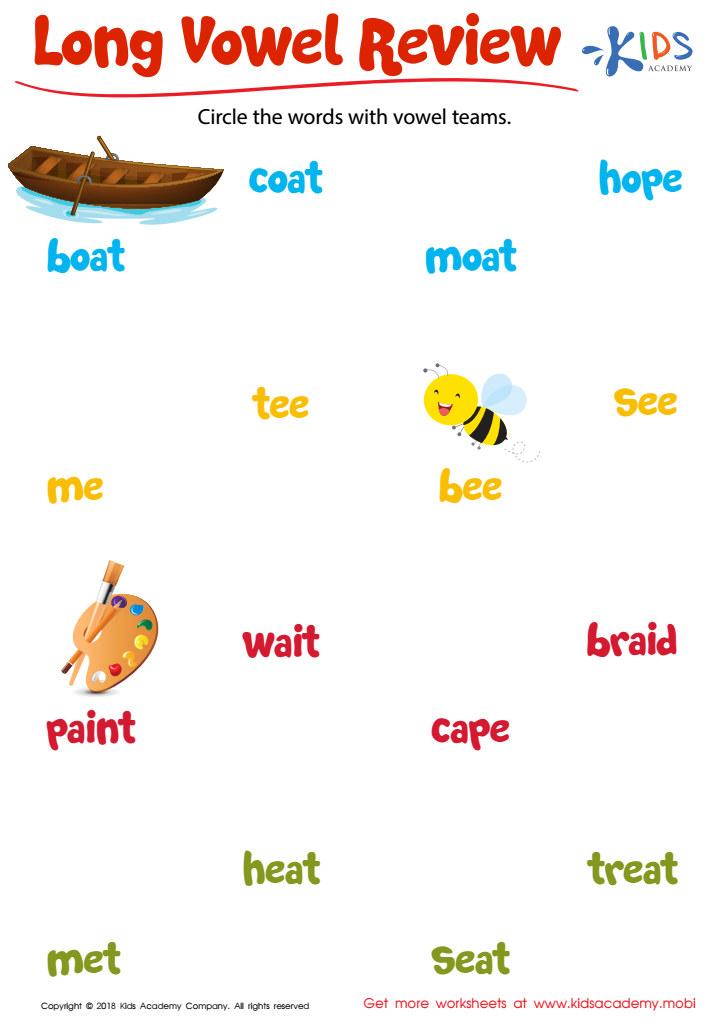
Long Vowel Review Worksheet
Vowel teams like "ea" and "ai" help us make words, and understanding these patterns aids emerging readers in becoming more fluent. This review worksheet has students finding words with vowel teams that make the long vowel sound, and helps them recognize high-frequency words.
 Assign to My Students
Long Vowel Review Worksheet
Worksheet
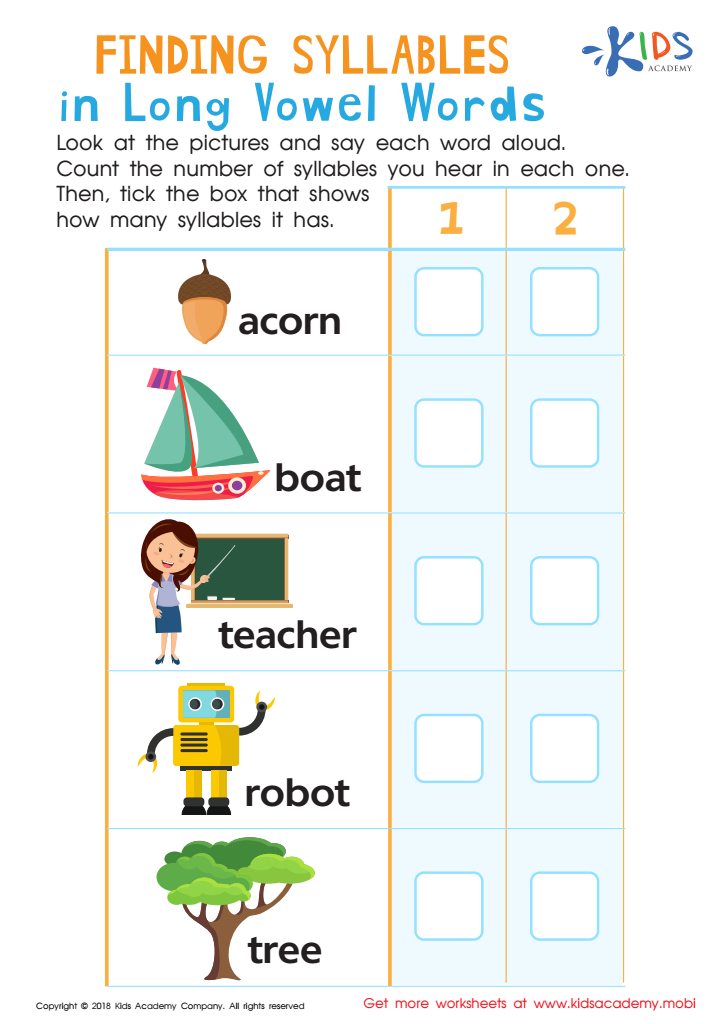
Finding Syllables in Long Vowel Words Worksheet
Help your kids identify objects and better count syllables in words. Look at the printout images with them and have them say each word out loud. Ask them to count syllables and tick the box with the correct number. With this worksheet, your kids will become more skilled.
Finding Syllables in Long Vowel Words Worksheet
Worksheet
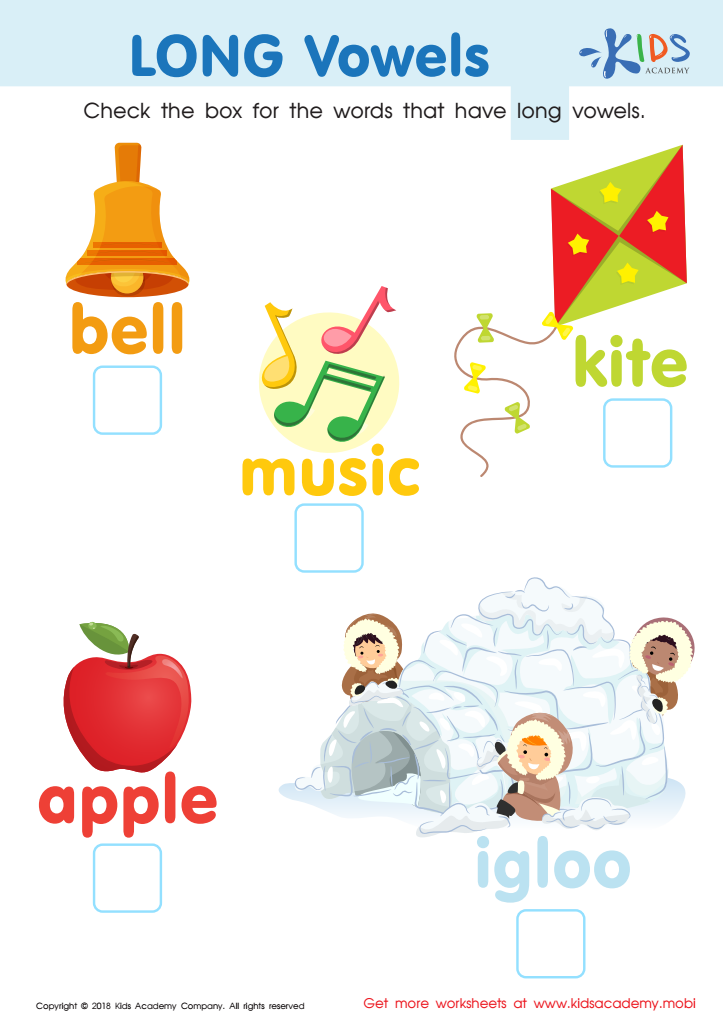
long vowels Worksheet
Have your early learner identify long vowels with this quick review. Ask them to name each picture aloud and listen out for the long vowel sounds to separate them from the shorter ones. Circle the ones that are long! Watch out for words with two vowels - they can be tricky!
long vowels Worksheet
Worksheet
Join Kids Academy for Free
Who is primarily going to use this learning content?






.jpg)
Long vowel recognition is crucial for children aged 6-8 as it serves as a foundational skill in developing reading and writing abilities. At this age, children are transitioning from learning to read to reading to learn. Long vowels, which can change the meaning of a word (e.g., "hit" vs. "height"), are essential for vocabulary expansion and comprehension.
Understanding long vowel sounds helps children decode unfamiliar words, promoting confidence and fluency in reading. When children correctly identify long vowel sounds, they can make connections with other words, enhancing their phonological awareness—an essential component of effective literacy skills.
Moreover, a solid grasp of long vowel patterns facilitates spelling and writing proficiency. This knowledge guides children in properly constructing words, reducing frustration when expressing their thoughts on paper and enabling clearer communication.
Additionally, fostering long vowel recognition supports overall academic success. Research shows that early literacy skills correlate with later achievement in various subjects. Therefore, parents and teachers should prioritize activities that emphasize long vowel recognition—such as reading exercises, interactive games, and phonemic awareness activities. This investment aids in building a strong literacy base that will benefit children throughout their educational journey and beyond.








