Number pattern recognition Worksheets for Ages 6-8
3 filtered results
-
From - To
Enhance your child's math skills with our Number Pattern Recognition Worksheets designed specifically for ages 6-8. These engaging printable worksheets help young learners identify and understand numerical sequences, fostering critical thinking and problem-solving abilities. With a variety of fun activities, children will practice recognizing patterns in numbers, strengthening their mathematical foundation while developing confidence in their abilities. Perfect for classroom use or at-home learning, our resources align with early-grade curricula and cater to diverse learning styles. Explore our vast collection and watch your child thrive as they master number patterns in an enjoyable and interactive way!
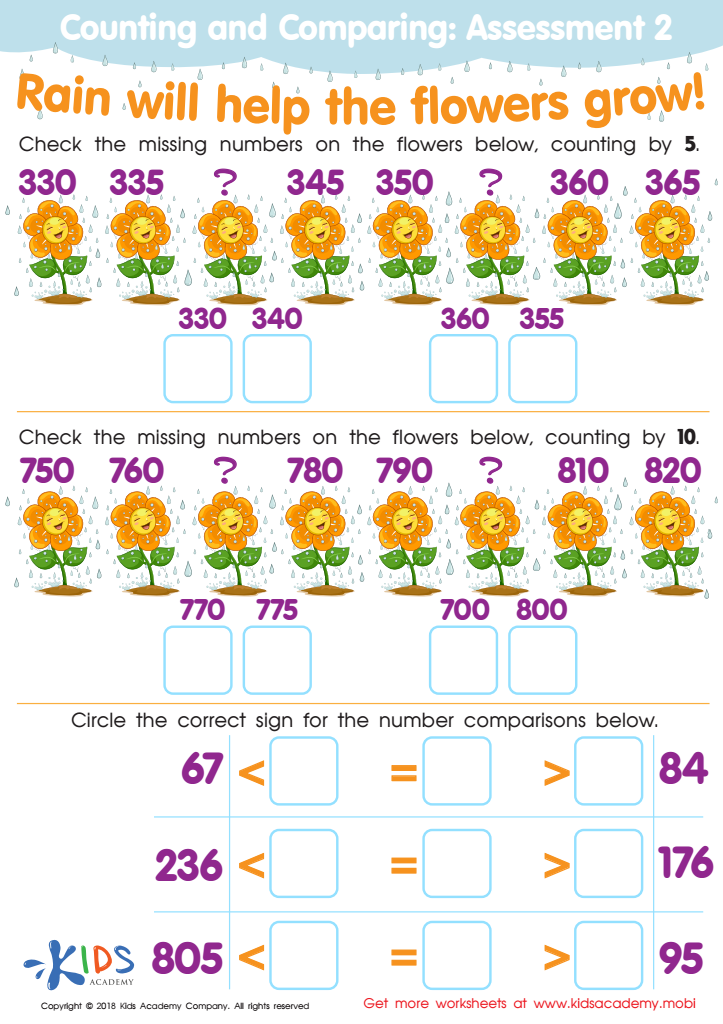
Counting and Comparing: Assessment 2 Worksheet
 Assign to My Students
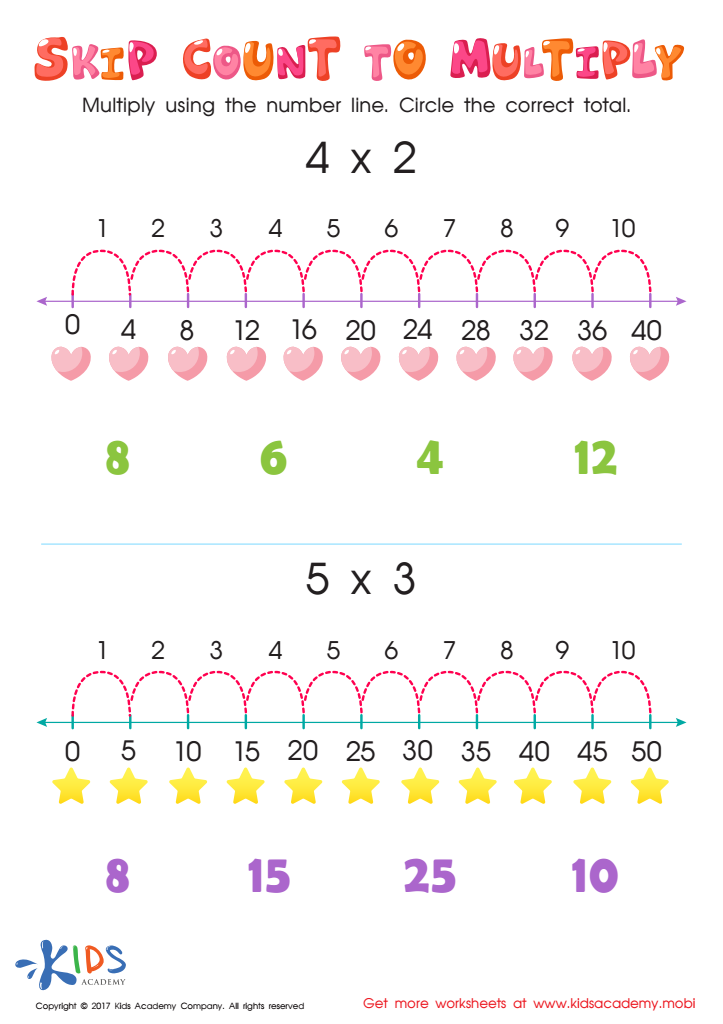
Skip Count Multiplication Worksheet
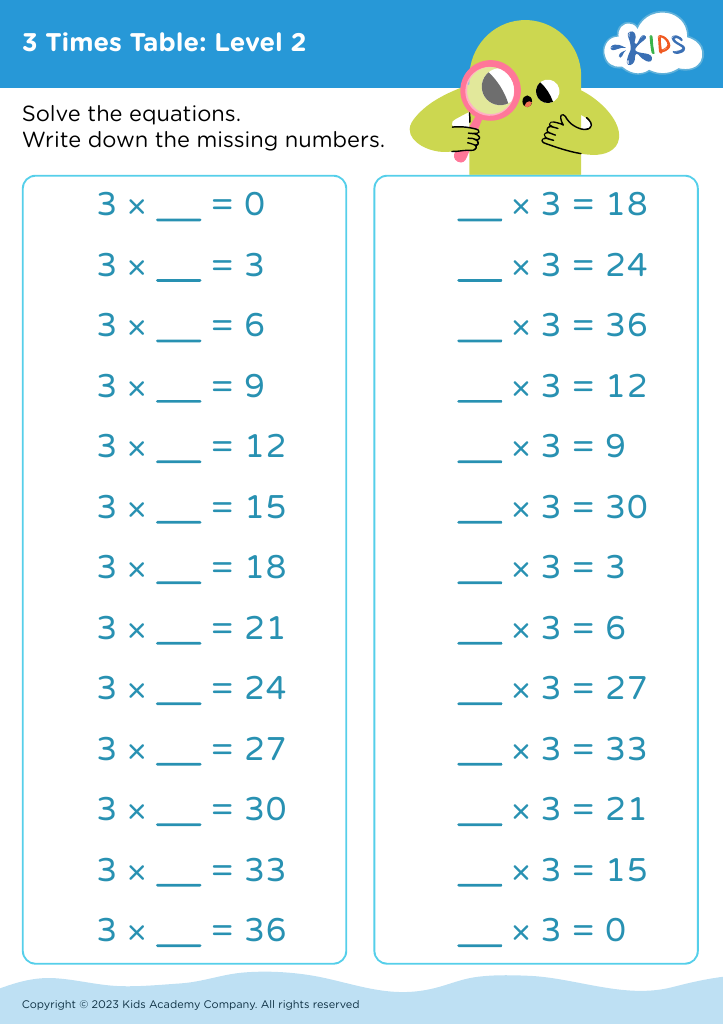







Number pattern recognition is a crucial skill for children aged 6-8, laying the foundation for future mathematical understanding. At this developmental stage, children begin to identify relationships among numbers, which enhances their problem-solving abilities and boosts their confidence in mathematics. Recognizing patterns encourages logical thinking and helps kids understand addition, subtraction, and even more complex concepts like multiplication and division later on.
Parents and teachers should care about fostering this skill because it contributes to overall cognitive development. Patterns are not just fundamental in math; they appear in everyday life, from nature to art and music. When children learn to spot and create patterns, they develop critical observation skills that can be applied across various subjects, including science and literacy.
Furthermore, pattern recognition can enhance social skills. Collaborative learning opportunities around patterns often involve group discussions and shared discoveries, promoting teamwork and communication. By nurturing this skill, adults can help children become more adaptable and proficient in mathematical thinking, setting them up for academic success and instilling a lifelong love for learning. In short, encouraging number pattern recognition is an investment in a child's holistic development and future achievement.








