Number sequence learning Worksheets for Ages 6-8
3 filtered results
-
From - To
Enhance your child's mathematical skills with our engaging number sequence learning worksheets, designed specifically for ages 6-8. These worksheets offer a fun and interactive way to help young learners understand and practice number patterns and sequences. With colorful illustrations and varied activities, your child will develop essential counting skills, recognize patterns, and improve problem-solving abilities. Tailored to meet educational standards, each worksheet encourages critical thinking and boosts confidence in mathematics. Perfect for classroom use or at-home learning, our worksheets make number sequencing an enjoyable experience. Discover the joy of math with our thoughtfully crafted resources today!
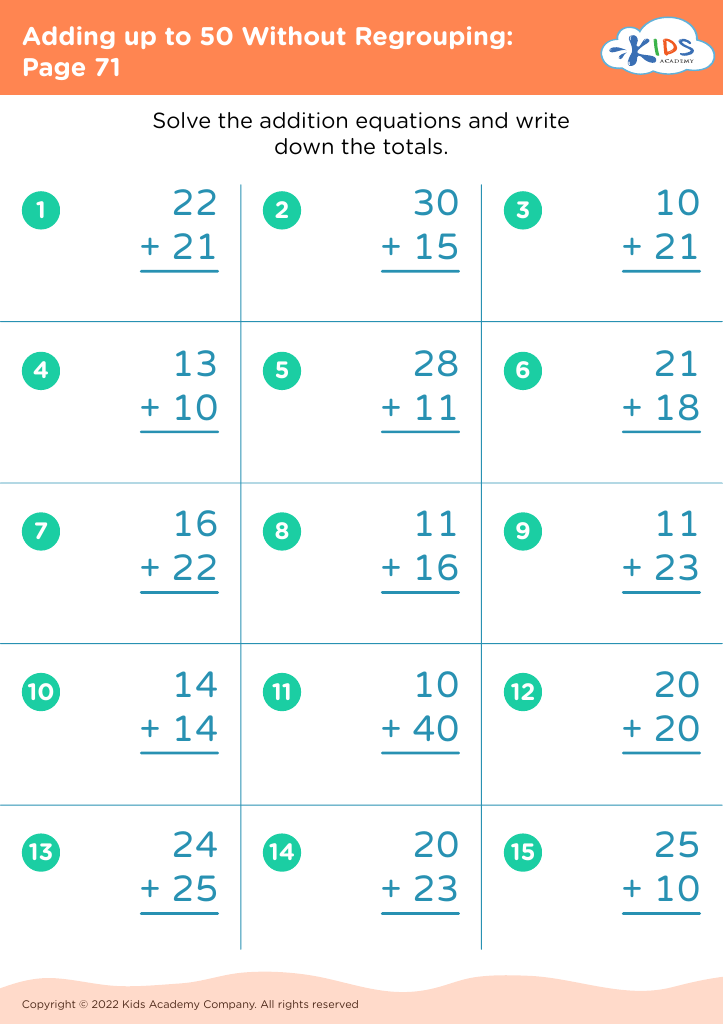
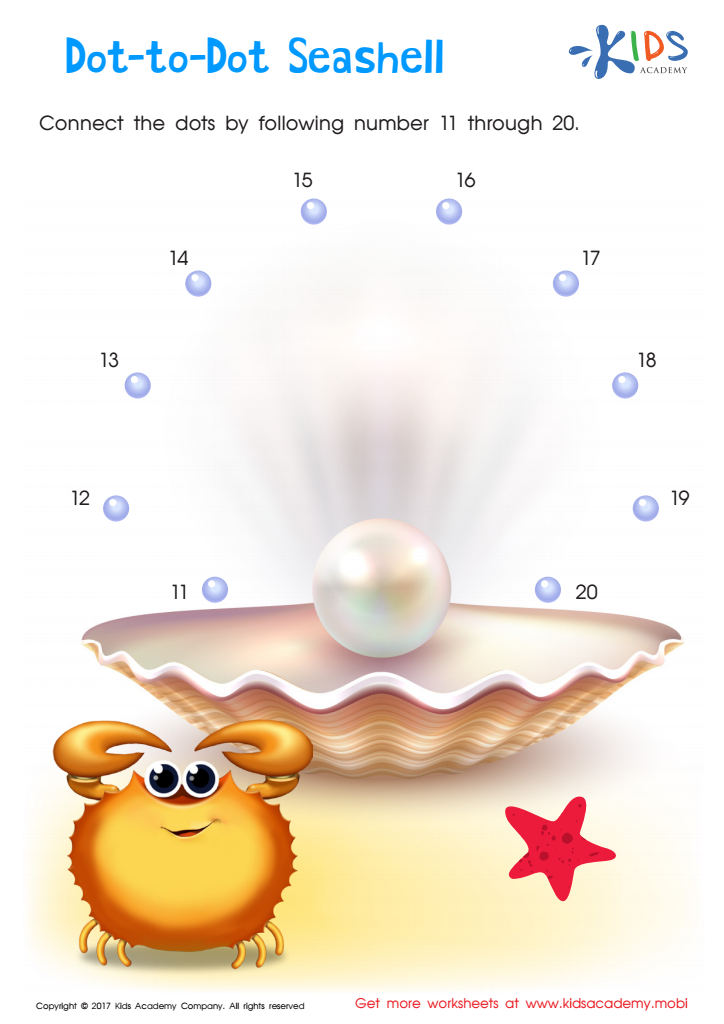
Ordering 11–20: Dot–to–dot Seashell Printable
 Assign to My Students

Counting on the City Skyline: Dot-to-Dot Worksheet


.jpg)



.jpg)

Number sequence learning is crucial for children ages 6-8 as it lays the foundation for their mathematical understanding and overall cognitive development. At this age, children are transitioning from concrete to more abstract thinking, and a strong grasp of number sequences helps them comprehend patterns, relationships, and organizational structures within mathematics.
Understanding number sequences aids in skills such as addition and subtraction, enabling young learners to predict results and solve problems more effectively. Recognizing patterns in sequences, such as skip counting or counting by twos and fives, can enhance their ability to understand multiplication and division later on.
Moreover, number sequences foster critical thinking and problem-solving skills, essential competencies not just for mathematics but for everyday life. They encourage perseverance and logical reasoning, qualities that contribute to academic success.
Parents and teachers play a vital role in facilitating this learning. By integrating number sequences into everyday conversations and playful activities, they can make learning engaging and fun. Ultimately, nurturing strong sequence skills in early learners sets them up for future success in mathematics and boosts their confidence, instilling a positive attitude towards learning. Investing time in number sequence education is investing in a child's overall educational journey.








