Real-life application Worksheets for Ages 6-8
9 filtered results
-
From - To
Discover our engaging Real-life Application Worksheets designed for 6 to 8-year-olds! These carefully crafted resources empower young learners to connect classroom concepts to their everyday experiences. From practical math exercises involving cash transactions to reading comprehension practiced through grocery shopping scenarios, our worksheets foster critical thinking and problem-solving skills. Each activity promotes independent learning while making education enjoyable and relevant. Perfect for home or classroom use, these printable worksheets will help your child build essential skills that remain valuable throughout life. Explore our collection today and watch your child's confidence soar as they apply their knowledge in real-world situations!
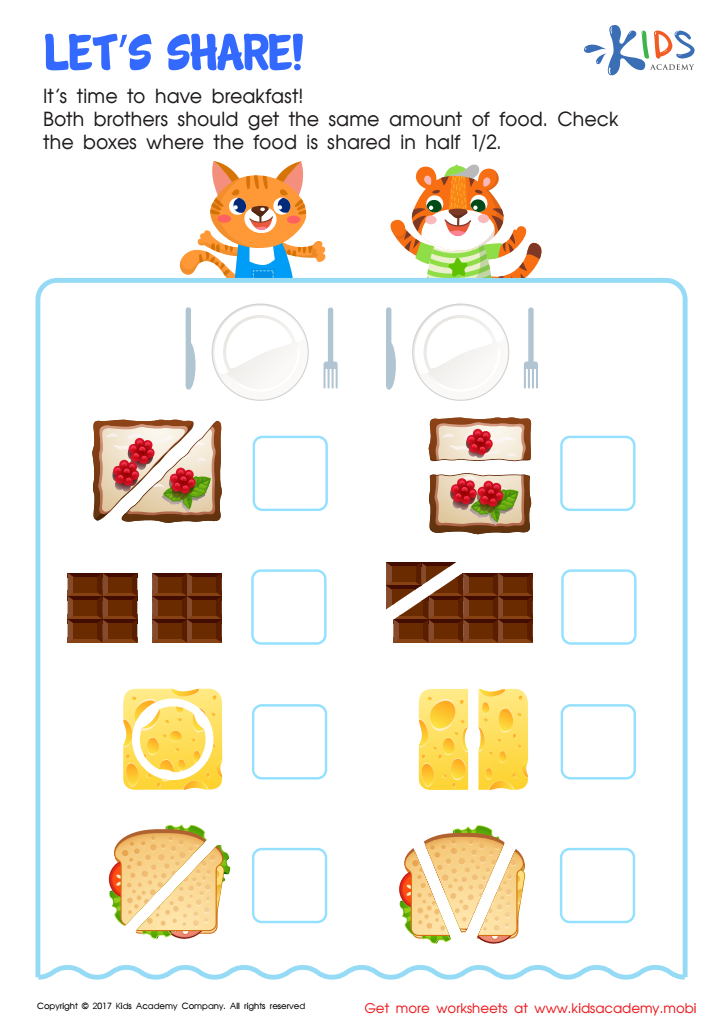
Let's Share Worksheet
 Assign to My Students
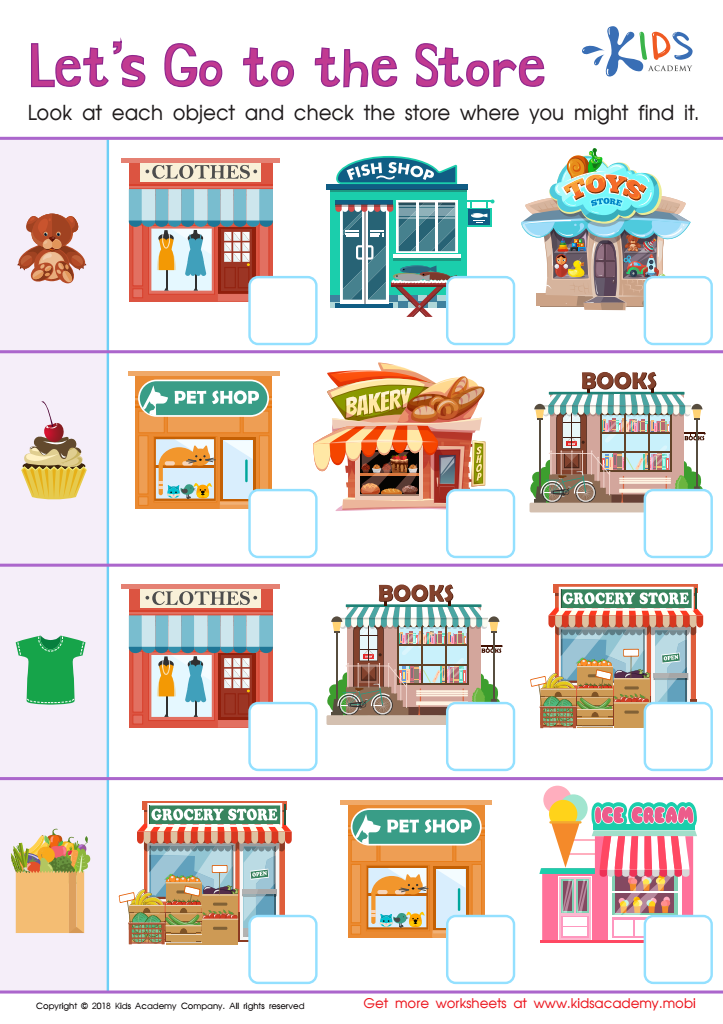
Let's Go to the Store! Worksheet
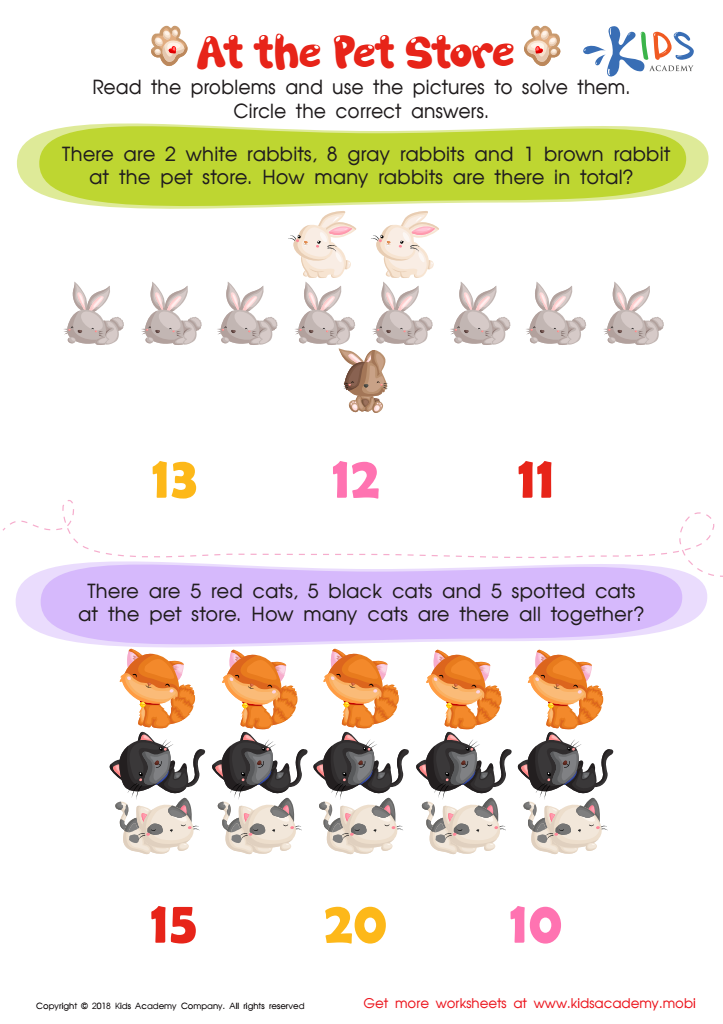
At the Pet Store Word Problems Worksheet
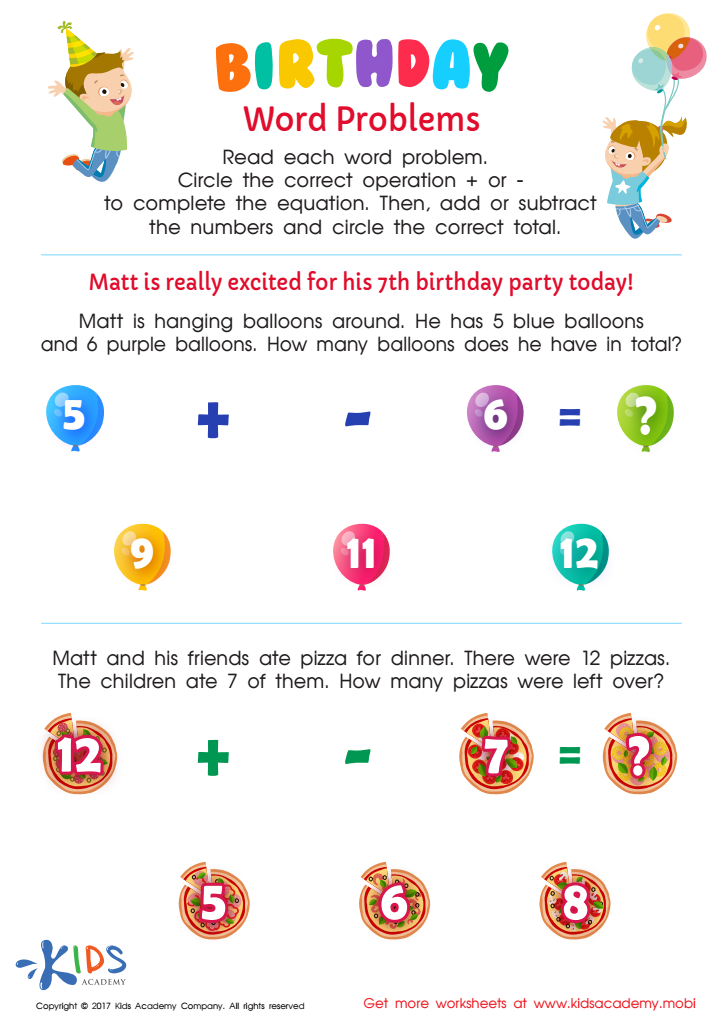
Birthday Word Problems Substraction Worksheet
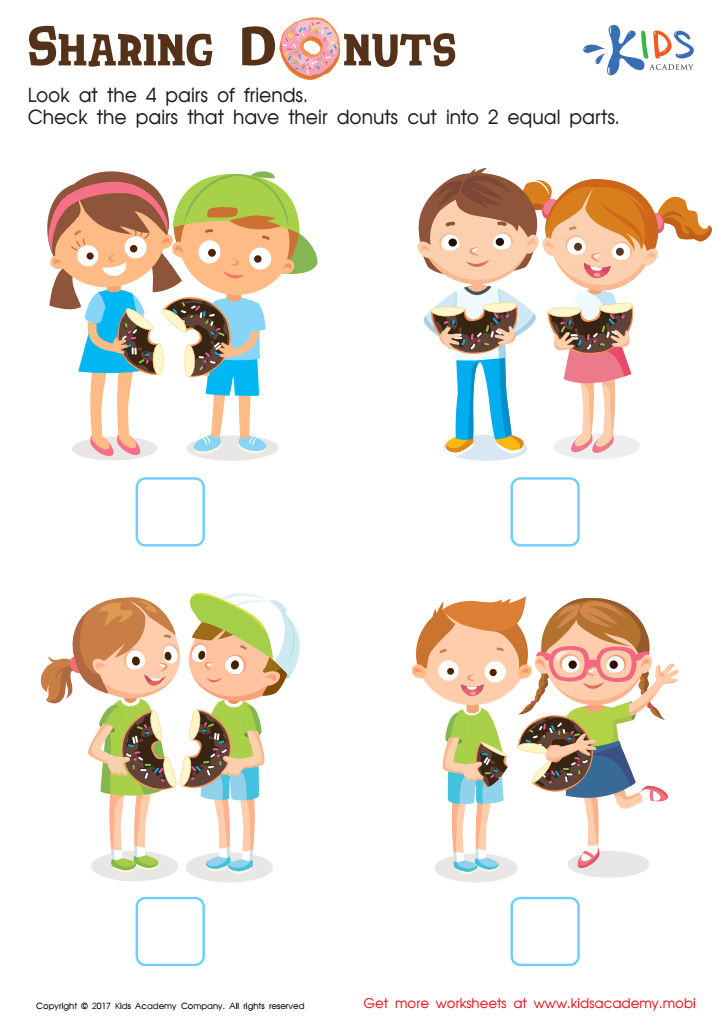
Sharing Donuts Worksheet
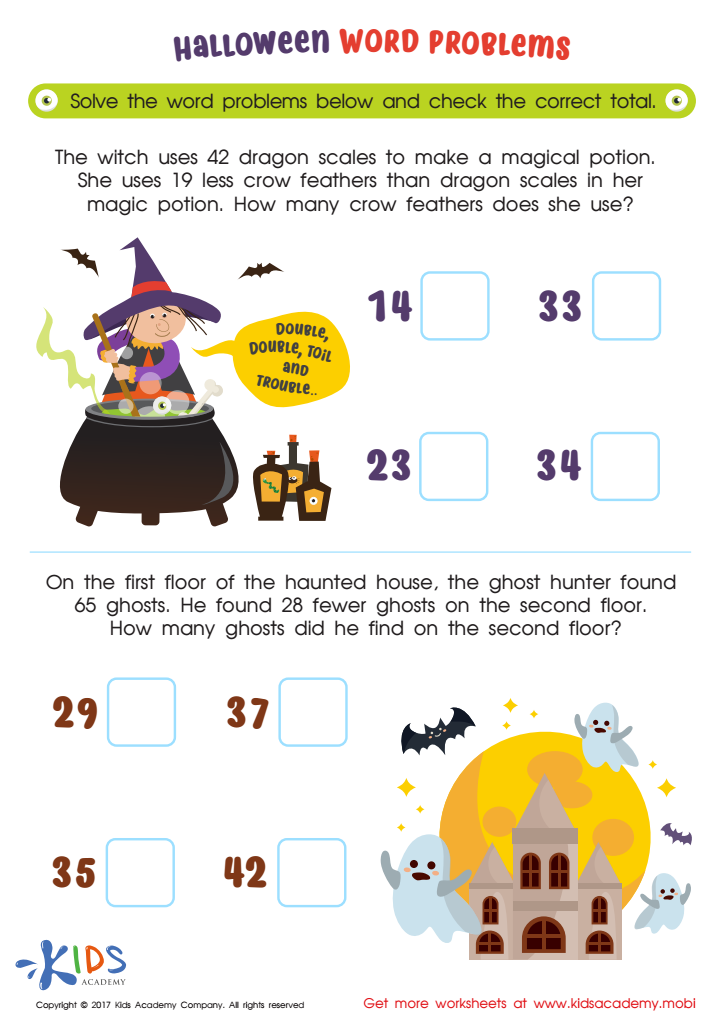
Halloween Word Problems Printable
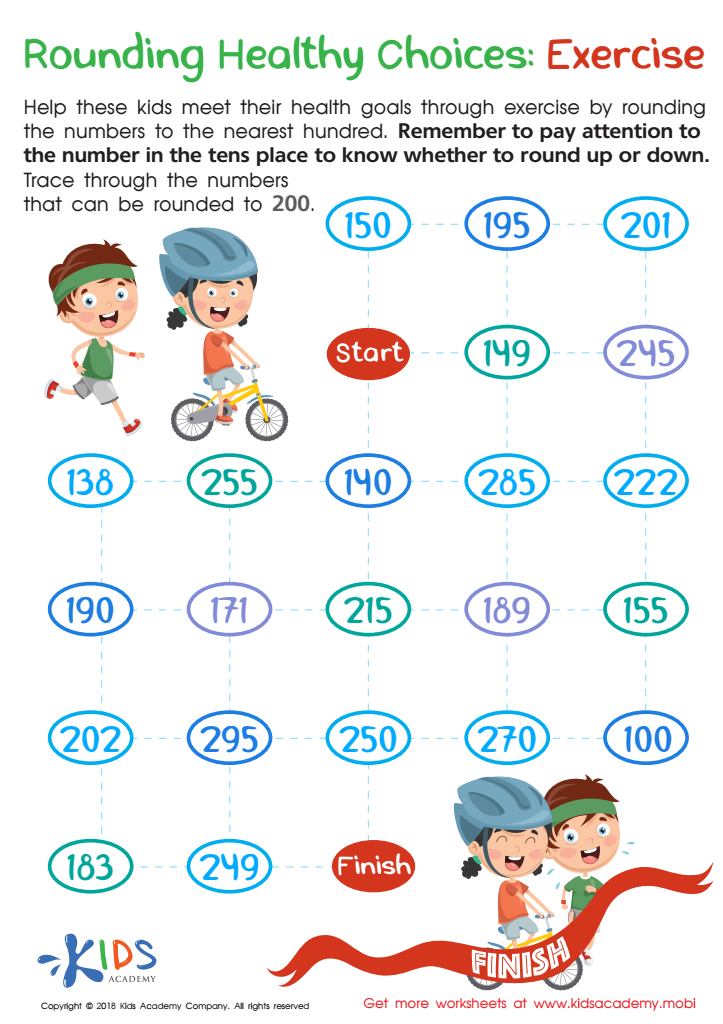
Rounding Healthy Choices Exercise Worksheet
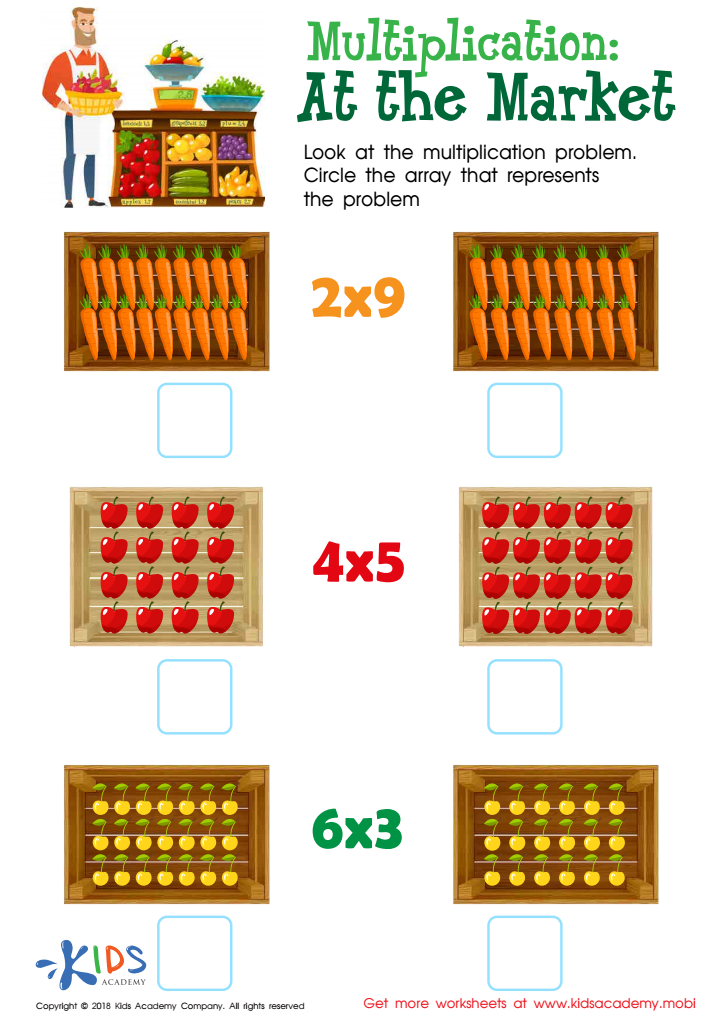
At the Market Worksheet
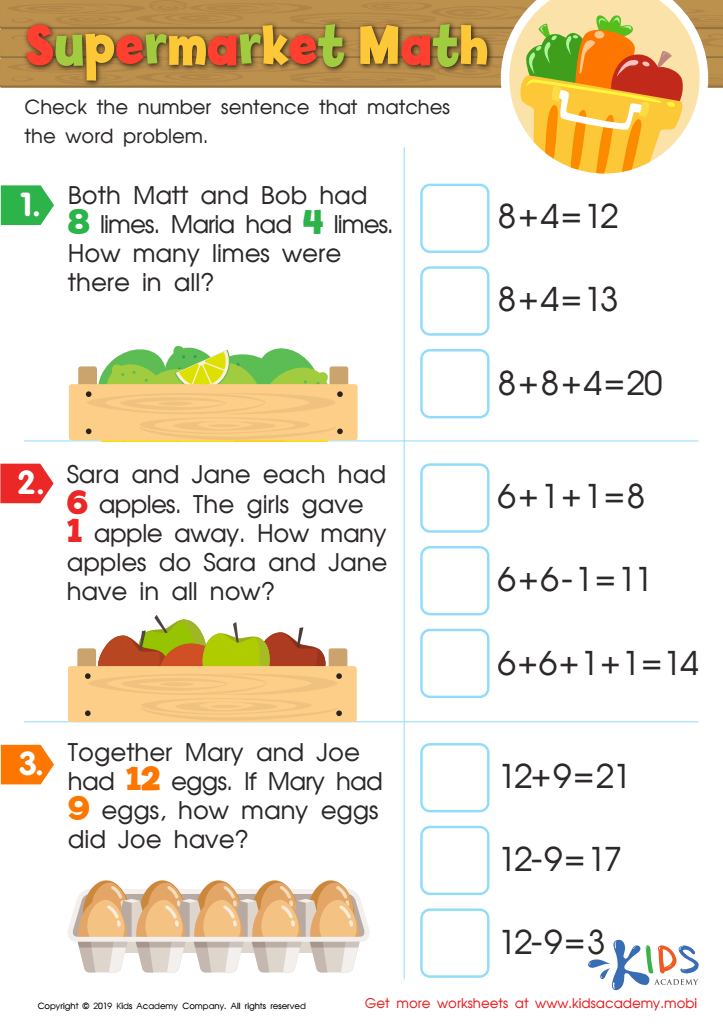
Supermarket Math Worksheet








Parents and teachers should prioritize real-life application for children ages 6-8 because it enhances learning by making concepts relevant and engaging. At this stage, children are naturally curious and eager to explore the world around them. Incorporating real-life scenarios into lessons helps them connect theoretical ideas to everyday experiences, making learning more impactful and memorable.
Applying lessons to real life fosters critical thinking and problem-solving skills. For instance, when teaching math, using examples like shopping or cooking allows children to see the value in understanding measurements, addition, or budgeting. This hands-on approach not only reinforces academic skills but also builds confidence, as children can practice and apply what they've learned in practical situations.
Moreover, real-life applications strengthen social and emotional skills. Collaborative projects or community-based learning encourage teamwork and communication, essential traits for personal development. As children see how their education impacts their community and everyday lives, they become more motivated and invested in their learning.
In summary, integrating real-life applications in education for young children aids in retention, develops essential skills, and nurtures a sense of relevance and excitement about learning. It sets a solid foundation for lifelong educational engagement and curiosity.








