
Rhyme identification Worksheets for Ages 6-8
3 filtered results
Difficulty Level
Grade
Age
-
From - To
Subject
Activity
Standards
Rhyme identification worksheets for ages 6-8 are essential tools for developing early literacy skills. These fun and engaging activities help children recognize and produce rhyming words, an important step in phonemic awareness. Each worksheet features colorful illustrations and a variety of exercises designed to keep young learners excited about learning to read. Rhyming activities not only enhance vocabulary and spelling but also foster creativity and critical thinking. Ideal for classroom or home use, these worksheets provide a solid foundation for reading success, turning learning into a joyful experience. Spark your child’s curiosity and watch their language skills thrive!
Favorites
With answer key
Interactive
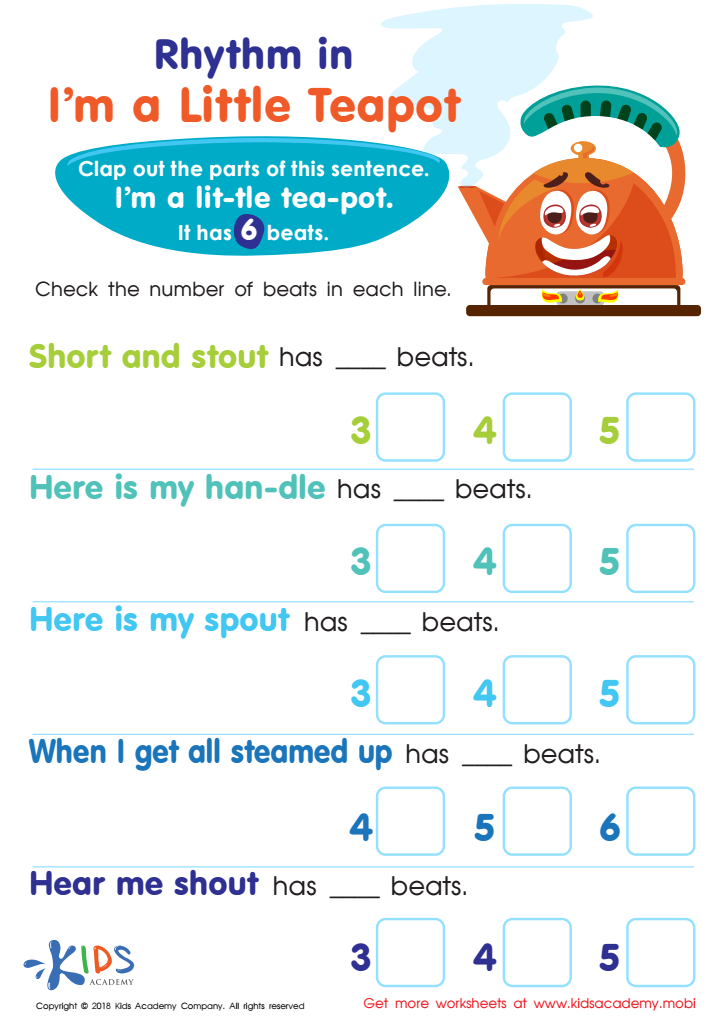
Rhythm in I'm a Little Teapot Worksheet
Clap along and count the beats of this classic children's song! With this worksheet, help your child read and clap out each phrase. Check the boxes for the correct number of syllables in each word. Have fun counting and learning with this cute ELA activity!
 Assign to My Students
Rhythm in I'm a Little Teapot Worksheet
Worksheet
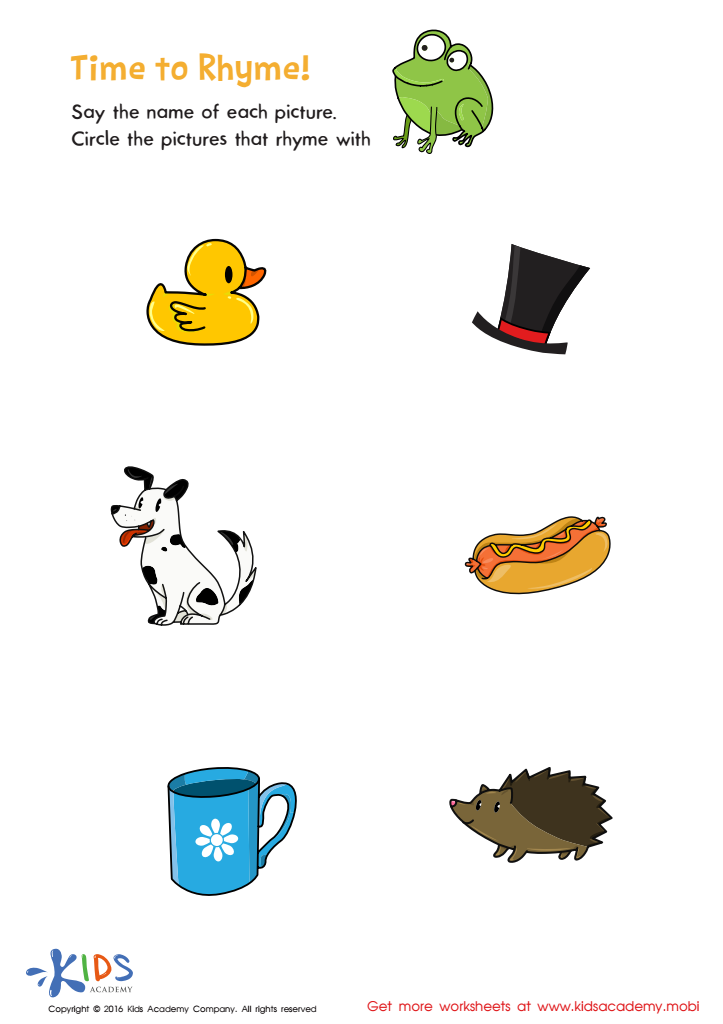
Rhyming Worksheet: Time to Rhyme Rhyming Worksheet
This worksheet offers learning, cognition and creative fun! It recognizes and identifies rhyming words, encourages mental tasks to improve focus and lets your child express their creativity through coloring. Writing the word for each picture adds to the fun and helps them identify rhyming words. Have them circle matching rhyming words for more coloring fun!
Rhyming Worksheet: Time to Rhyme Rhyming Worksheet
Worksheet
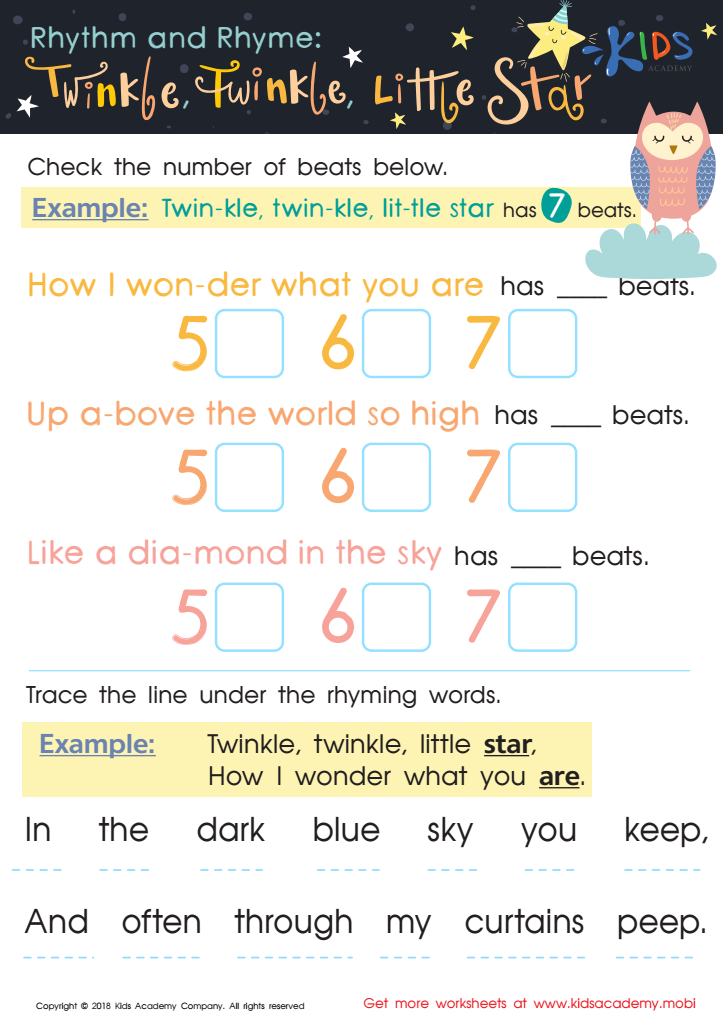
Rhythm and Rhyme: Twinkle, Twinkle, Little Star Worksheet
Kids will love learning about syllables in words with a fun children's song! Use the song Twinkle, Twinkle, Little Star to explain that each word has at least one beat. Have them clap out the beats in each word and check the boxes on this cute worksheet to identify the syllables.
Rhythm and Rhyme: Twinkle, Twinkle, Little Star Worksheet
Worksheet
Join Kids Academy for Free
Who is primarily going to use this learning content?





.jpg)


Rhyme identification is an essential skill for young children, particularly those aged 6-8, because it lays the foundation for future reading and writing abilities. When children recognize rhyming patterns, they enhance their phonemic awareness, which is the understanding that words are made up of individual sounds. This awareness is crucial for decoding new words while reading.
For example, if a child knows that "cat," "bat," and "hat" rhyme, they can quickly learn to read these words and others that follow a similar pattern. Rhyming also aids in the development of memory and cognitive skills because the repetition and predictability of rhyming sounds make it easier for children to remember words and sounds. Additionally, rhymes often make learning more engaging and fun, which can motivate young learners to practice their skills more frequently.
Teachers and parents should care because proficiency in reading is strongly linked to academic success across all subjects. Early difficulties with reading can lead to long-term academic challenges, so it's vital to build a solid foundation. Incorporating rhyming games, songs, and books into daily routines can make a significant impact on a child's early literacy education, setting them on a path to becoming confident and skilled readers.








