Sentence structuring Worksheets for Ages 6-8
8 filtered results
-
From - To
Unlock your child’s potential with our Sentence Structuring Worksheets for Ages 6-8! Designed to foster early literacy skills, these engaging worksheets help young learners understand and form proper sentences. With a variety of interactive exercises, children will practice sequencing, identifying parts of sentences, and using punctuation correctly. Our worksheets are crafted to enhance reading comprehension and writing proficiency, ensuring a strong foundation for future language skills. Perfect for classroom use or at-home learning, these tools make sentence structuring fun and educational. Set your child on the path to language mastery with Kids Academy’s expertly designed materials!
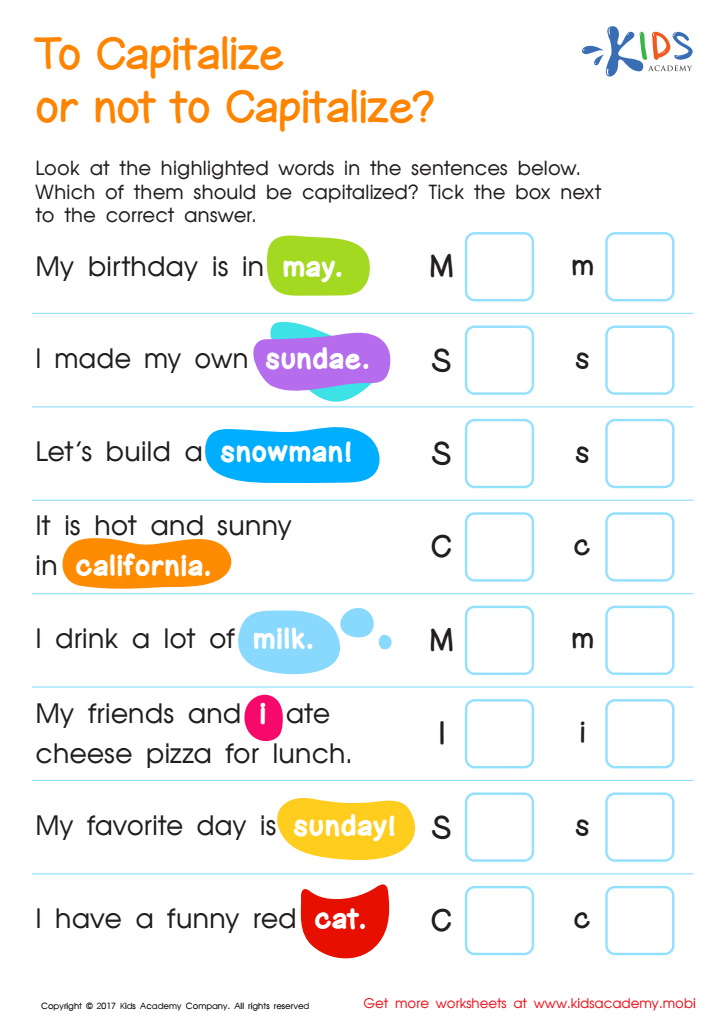
Capitalization: To Capitalize or Not? Printable
 Assign to My Students
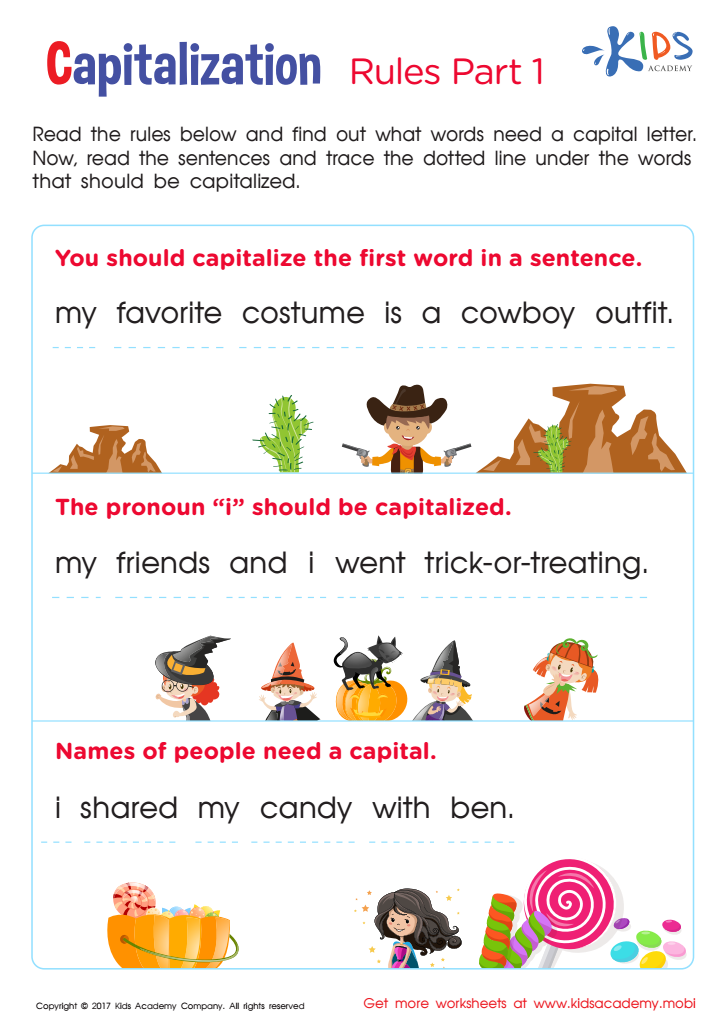
Capitalization Rules: Part 1 Worksheet
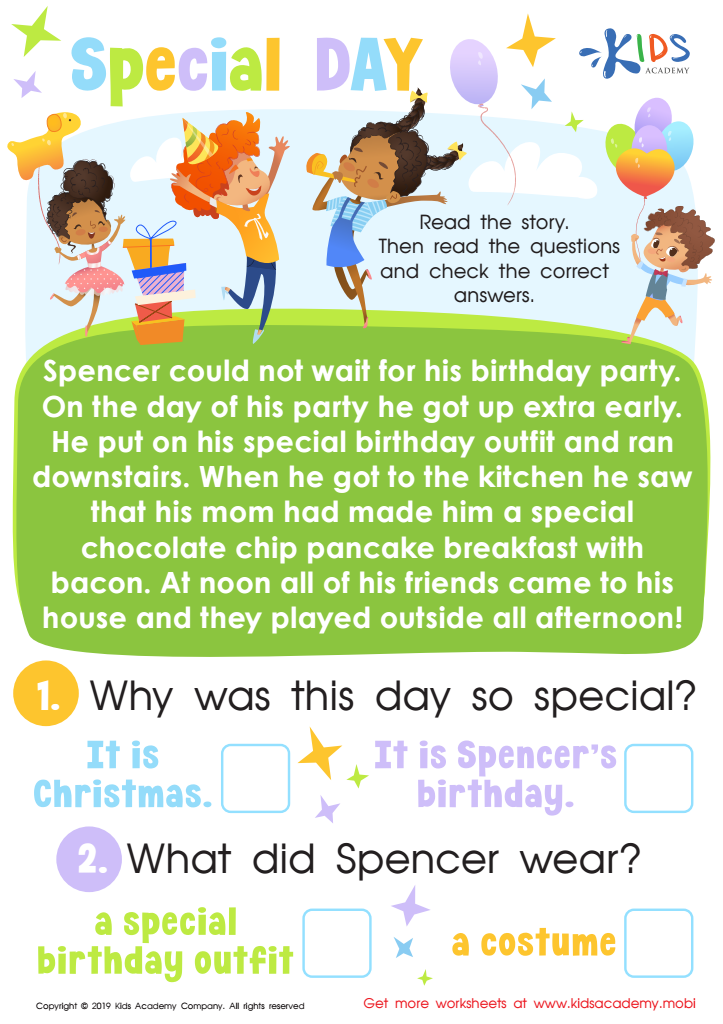
Special Day Worksheet
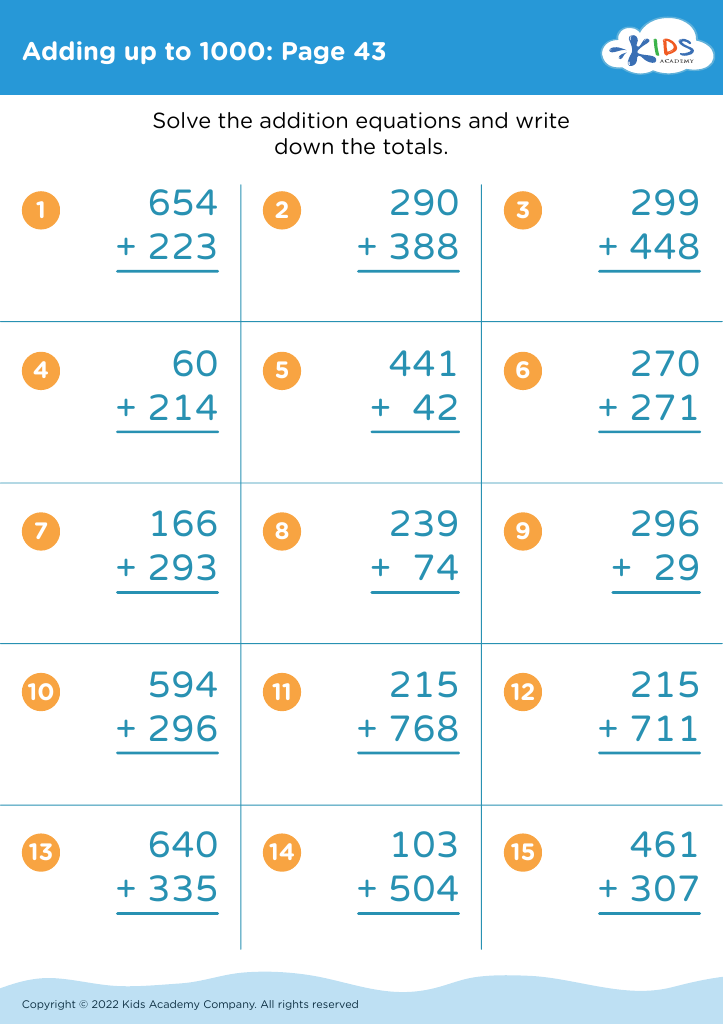
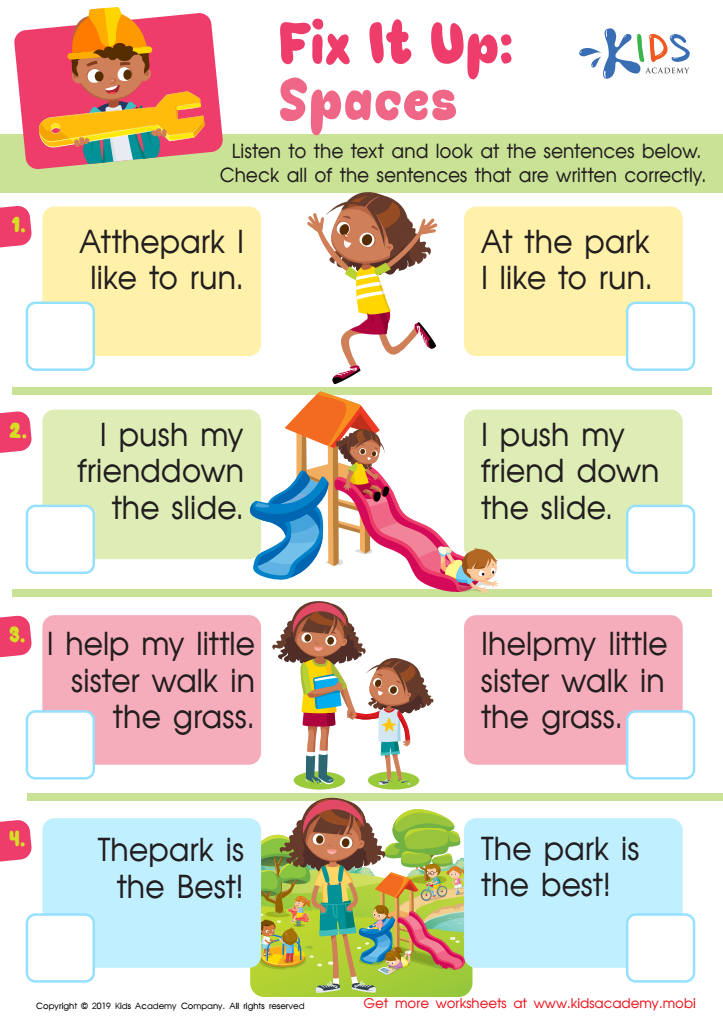
Fix Spaces Worksheet
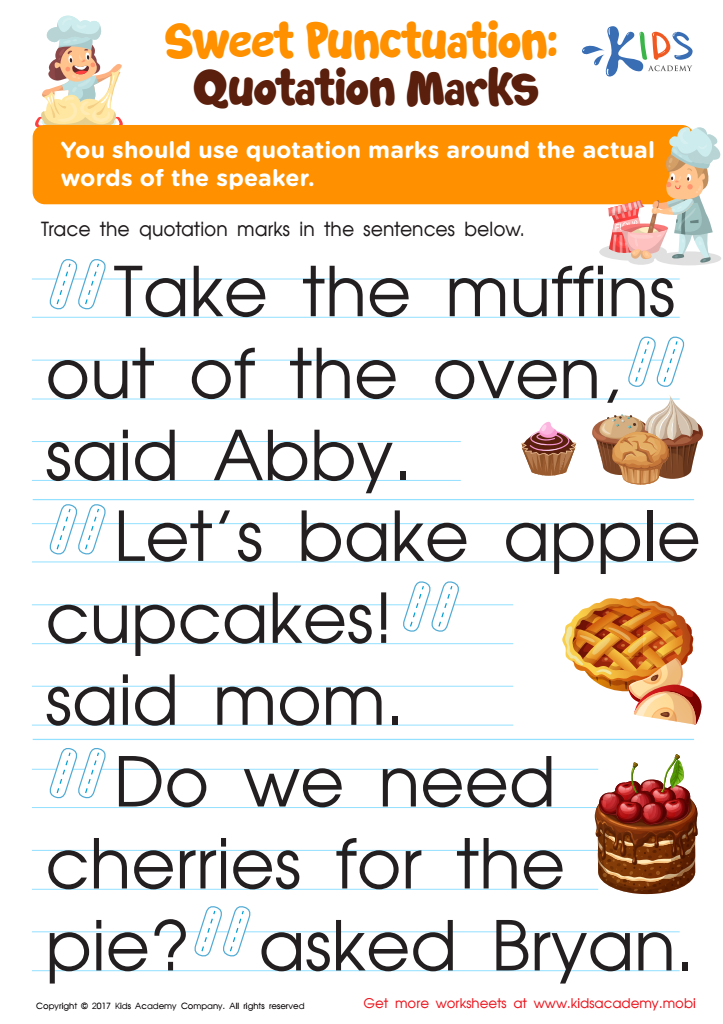
Commas and Quotation Marks Worksheet
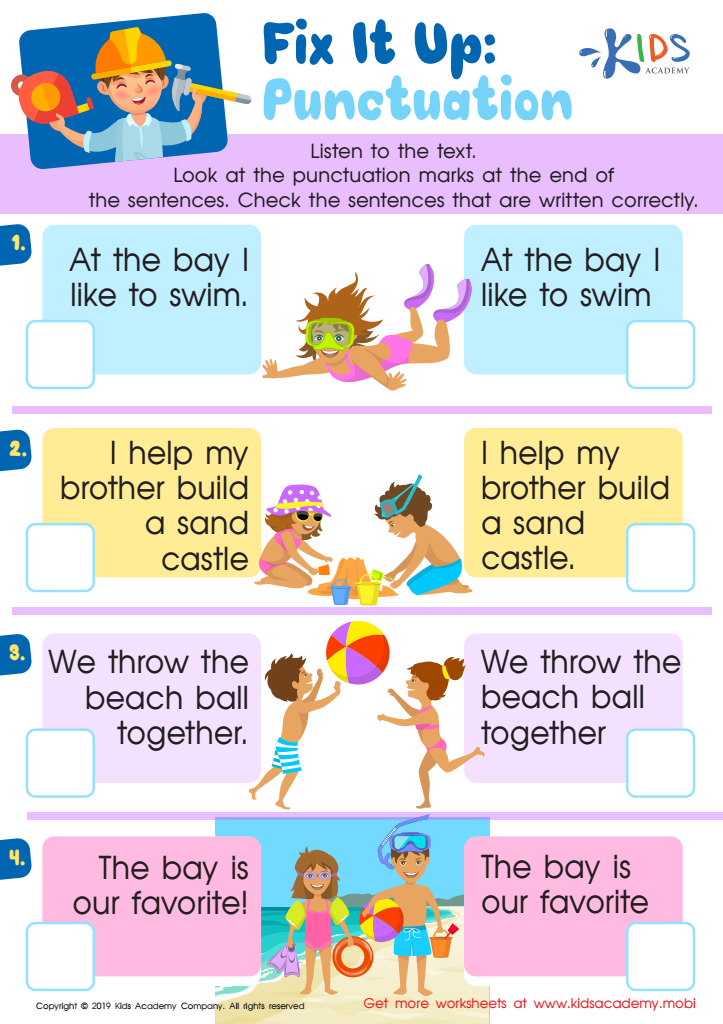
Fix Punctuation Worksheet








Sentence structuring is a critical skill for children ages 6-8, as it forms the foundation for effective communication and literacy development. At this stage, kids transition from simple to more complex sentence formations, a key progression that enhances their ability to express ideas clearly and coherently. Parents and teachers should prioritize sentence structuring to foster better reading comprehension, writing proficiency, and overall academic performance.
When children understand how to construct sentences properly, they can articulate their thoughts more effectively, making it easier for them to engage in meaningful conversations and express emotions. This skill directly impacts their performance in school subjects beyond language arts, bringing cohesion to how they document their understanding in science, social studies, and even math.
Moreover, a strong grasp of sentence structure can boost a child's confidence. When they can convey ideas accurately, they're more likely to participate in classroom discussions, ask insightful questions, and enjoy storytelling. The earlier these skills are honed, the more adept children become at analytical thinking and problem-solving.
Ultimately, investing time in teaching sentence structuring supports broader cognitive development and communication skills, preparing children for more advanced learning and social interactions as they grow. Both parents and teachers play crucial roles in guiding children through these foundational language skills, which benefit them academically and personally.








