
Understanding forces Worksheets for Ages 6-8
7 filtered results
Difficulty Level
Grade
Age
-
From - To
Subject
Activity
Standards
Discover our "Understanding Forces Worksheets" designed for kids ages 6-8! These engaging resources help young learners explore the fundamental concepts of force and motion. With a variety of activities, such as puzzles, mazes, and coloring pages, students will grasp essential scientific principles in a fun and interactive way. Whether you're teaching at home or in the classroom, these worksheets promote critical thinking and encourage kids to apply their knowledge through hands-on learning. Perfect for reinforcing science lessons, our worksheets make learning about forces exciting and accessible. Dive into the world of science with our captivating teaching tools today!
Favorites
With answer key
Interactive
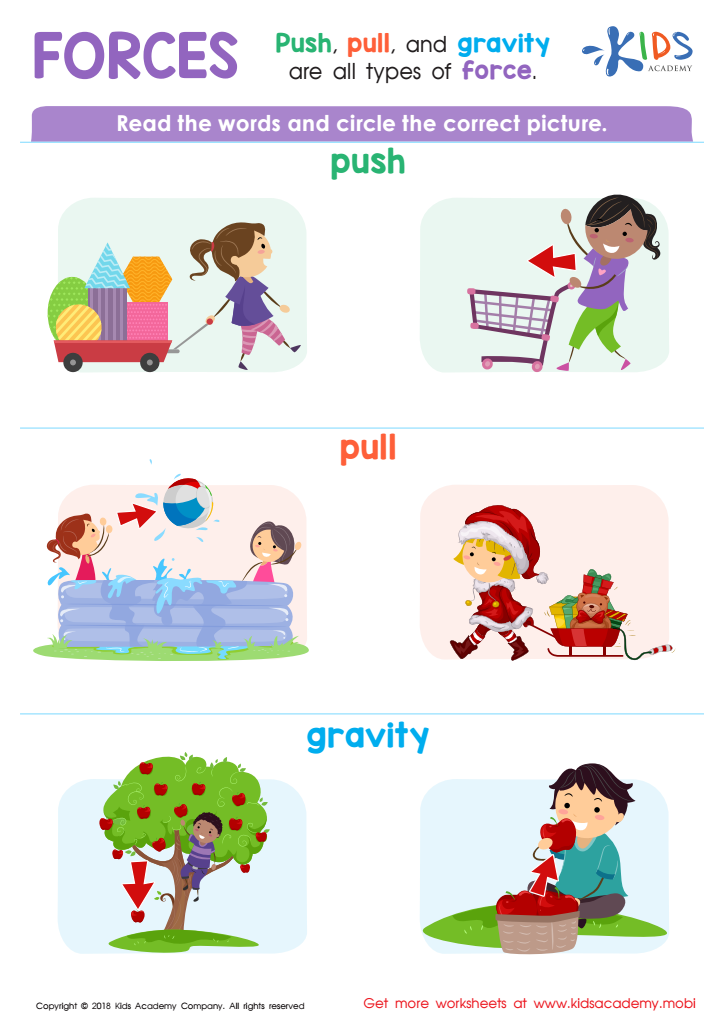
Forces Worksheet
Teach your child about forces! Ask them to identify which of six pictures shows push, pull or gravity. Read the words beside each picture and have them circle the correct one. It's a great way to learn about forces; push, pull and gravity!
 Assign to My Students
Forces Worksheet
Worksheet
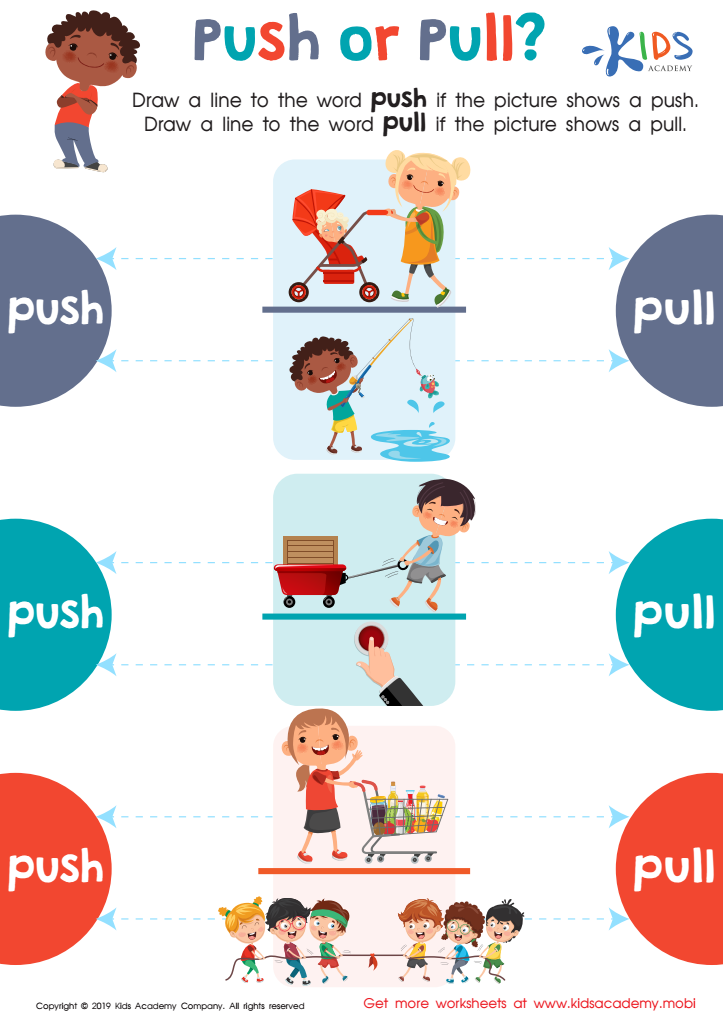
Push or Pull? Worksheet
Young kids may struggle to differentiate push and pull. When they start writing, they may use them interchangeably and wrongly. This worksheet clarifies the concepts: pushing means moving something away, pulling means bringing something closer. It provides pictures and traceable lines for kids to connect each image to the correct word. This helps them understand and remember the difference for future writing and reading.
Push or Pull? Worksheet
Worksheet
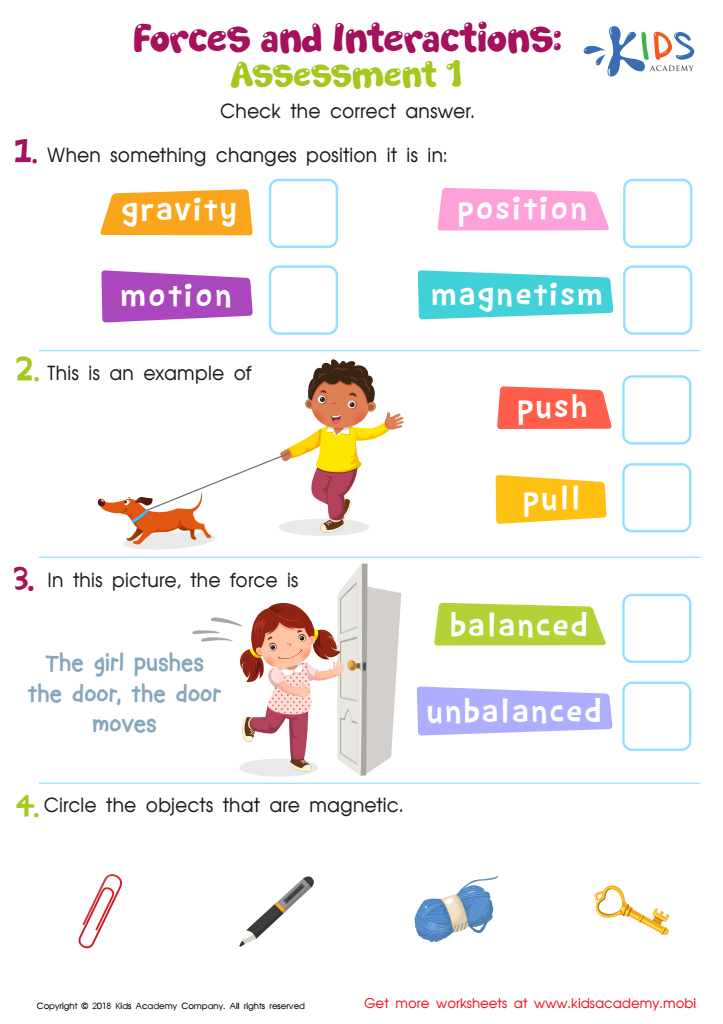
Forces and Interactions Printable
Test your child's physics know-how with this vibrant forces and interactions printable worksheet! Kids can assess their understanding of the different types of forces while they complete it. Read each example and check the boxes to show what they know!
Forces and Interactions Printable
Worksheet
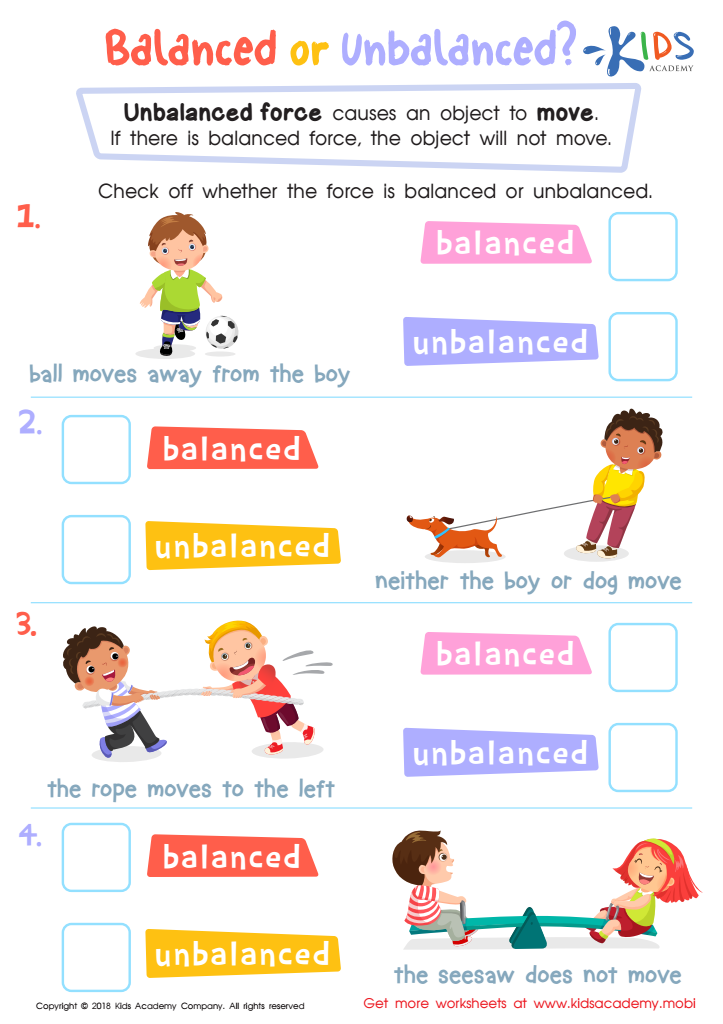
Balanced or Unbalanced Science Worksheet
Check out the kids on the worksheet. Is the force equal or unbalanced? This science worksheet helps little learners evaluate forces and understand physics - in a fun way! Have them explore the forces behind movement and see the results!
Balanced or Unbalanced Science Worksheet
Worksheet
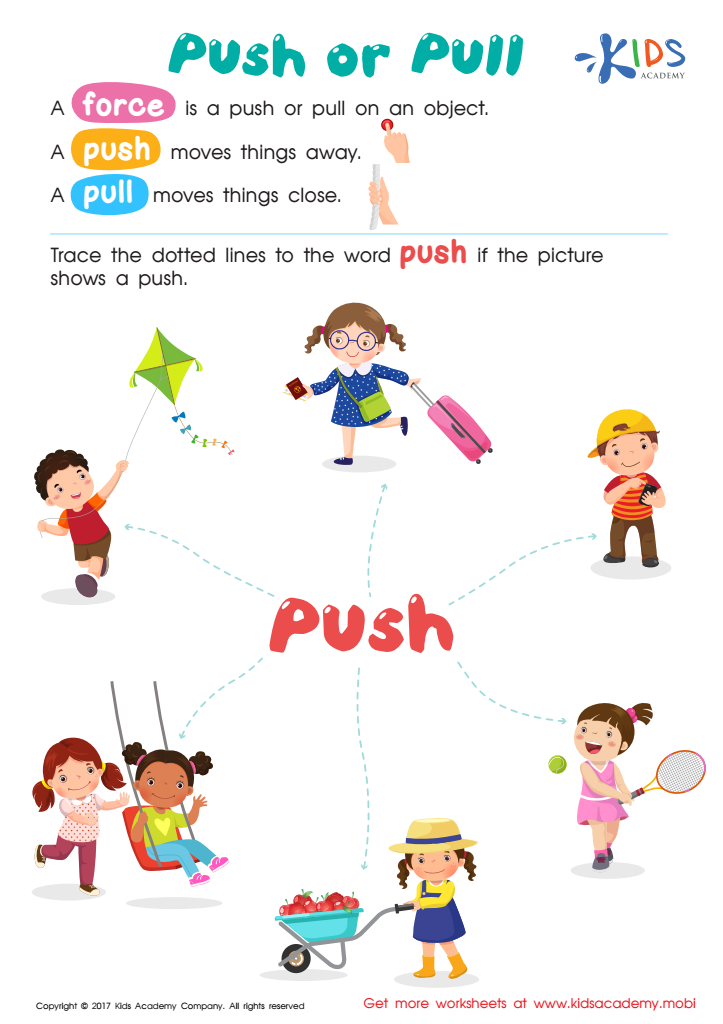
Push or Pull Worksheet
and which involve pulling! With this fun worksheet, your child will learn about force and its simple application in everyday activities. Get them started with Push or Pull! (80 words)
Push or Pull Worksheet
Worksheet
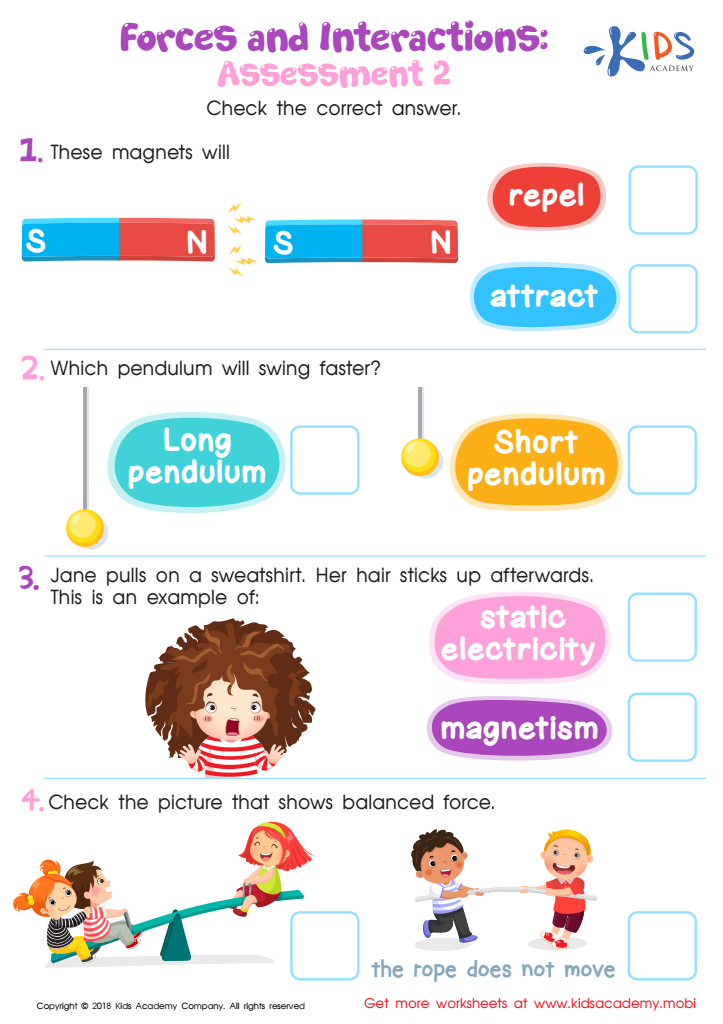
Forces and Interactions Worksheet For 3rd Grade
Review forces and interactions with your 3rd grader! This worksheet helps them recall key concepts like static, magnetic attraction, and pull. Repetition through similar illustrations from previous worksheets aids comprehension of the topic before moving on to other fun physics topics.
Forces and Interactions Worksheet For 3rd Grade
Worksheet
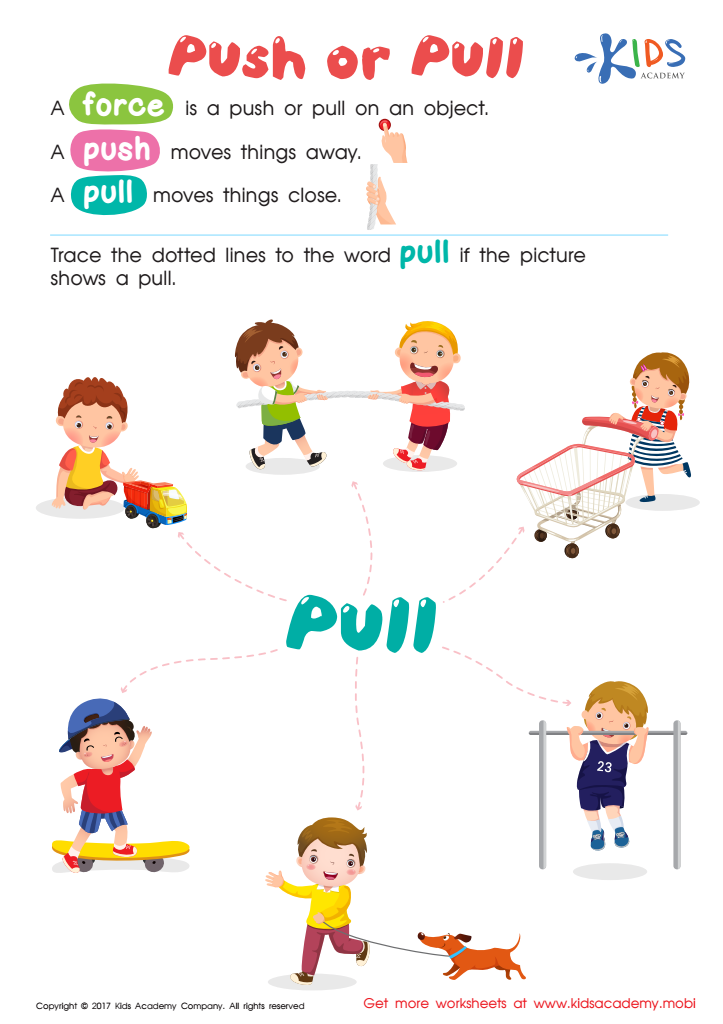
Pull or Push Worksheet
With this fun worksheet, they'll explore physics by sorting objects into categories according to their mode of motion. It's a great way to get them interested in science.
Pull or Push Worksheet
Worksheet
Join Kids Academy for Free
Who is primarily going to use this learning content?






Understanding forces is crucial for children ages 6-8 as it lays the foundation for their comprehension of the physical world. At this age, children are naturally curious about how things move and interact, making it an ideal time to introduce concepts like push, pull, gravity, and friction. Grasping these basic principles helps children develop critical thinking skills and fosters a sense of wonder about the universe.
Recognizing forces contributes to practical life skills. For instance, when children learn about gravity, they begin to understand why objects fall or behave in certain ways, enhancing their ability to navigate their environment safely. Additionally, exploring forces through play, such as pushing a toy or rolling a ball, encourages hands-on learning and enhances motor skills.
Engaging with forces also promotes problem-solving abilities, as children experiment with what happens when forces are applied differently, stimulating their creativity and innovation. Moreover, in a world increasingly influenced by science and technology, early exposure to these concepts prepares young minds for future learning in STEM fields.
Therefore, by prioritizing an understanding of forces, parents and teachers play a vital role in fostering curiosity, critical thinking, and foundational knowledge necessary for lifelong learning.








