Check out this FREE "Understanding fractions" Trial Lesson for age 6-8!

My Family

Favorites
With answer key
Interactive
  • 6-8
  • Understanding fractions
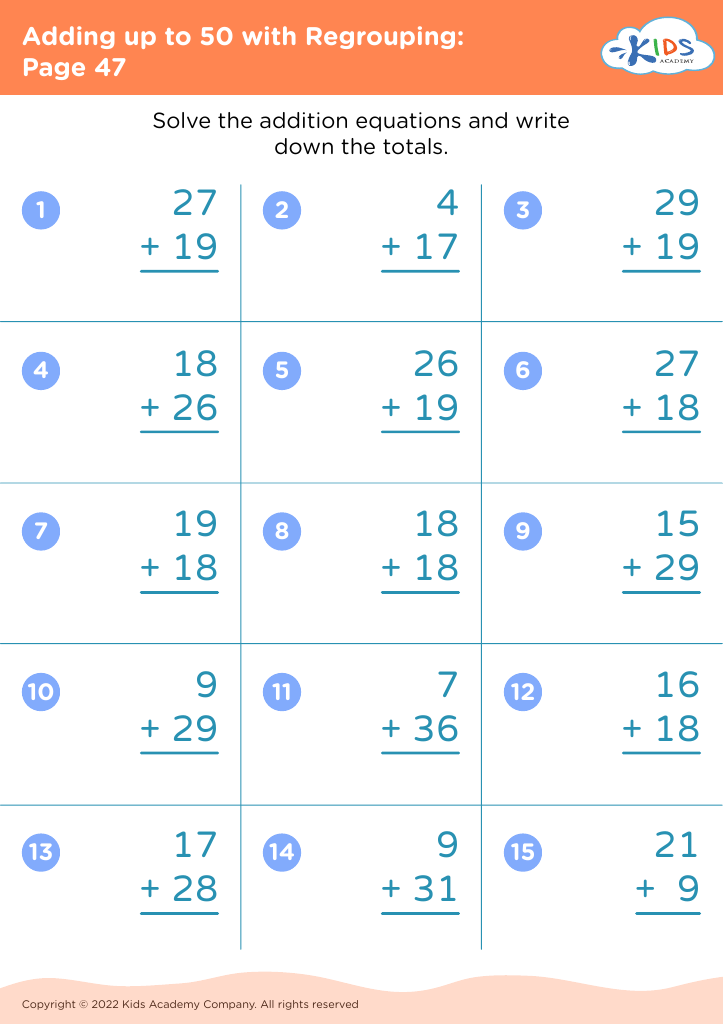
Adding up to 50 with Regrouping: Page 47
Worksheet
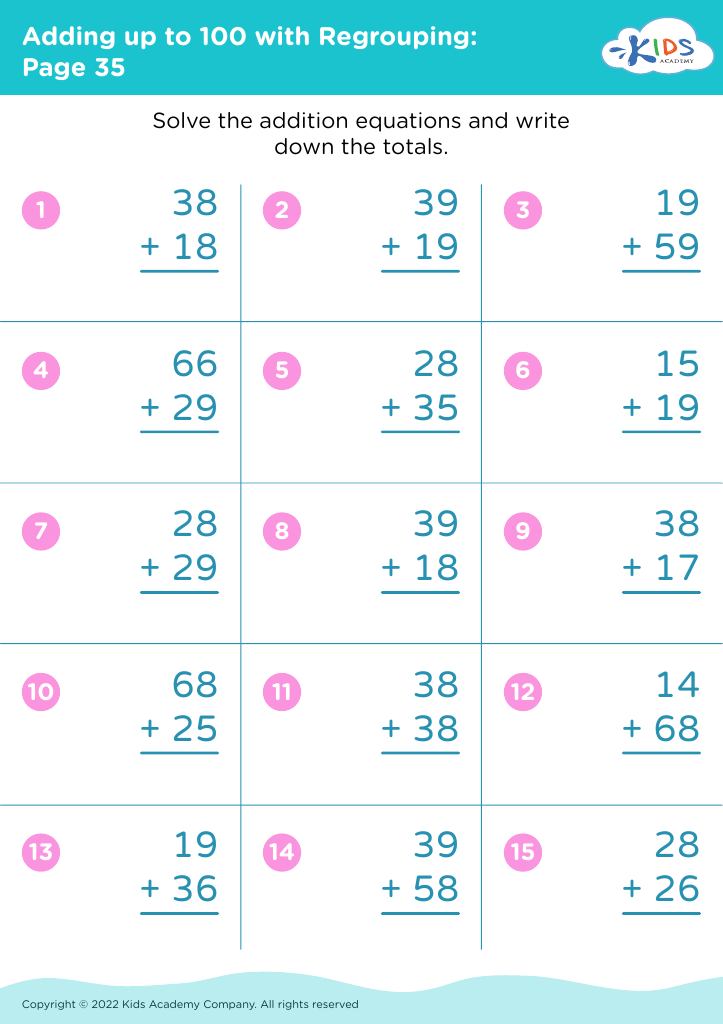
Adding up to 100 with Regrouping: Page 35
Worksheet
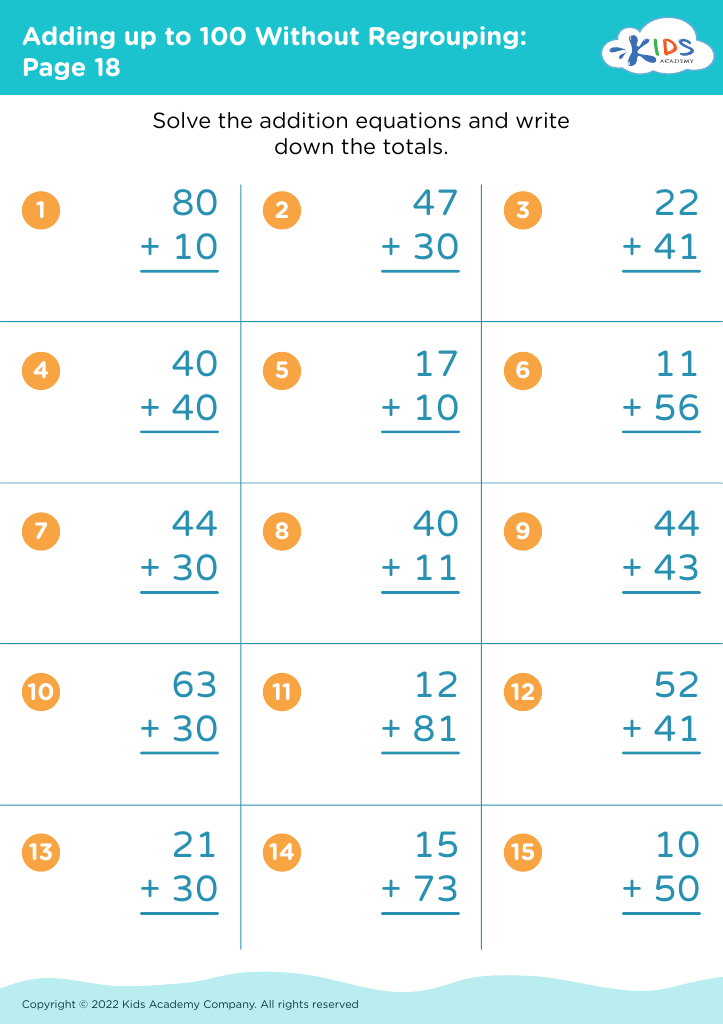
Adding up to 100 Without Regrouping: Page 18
Worksheet
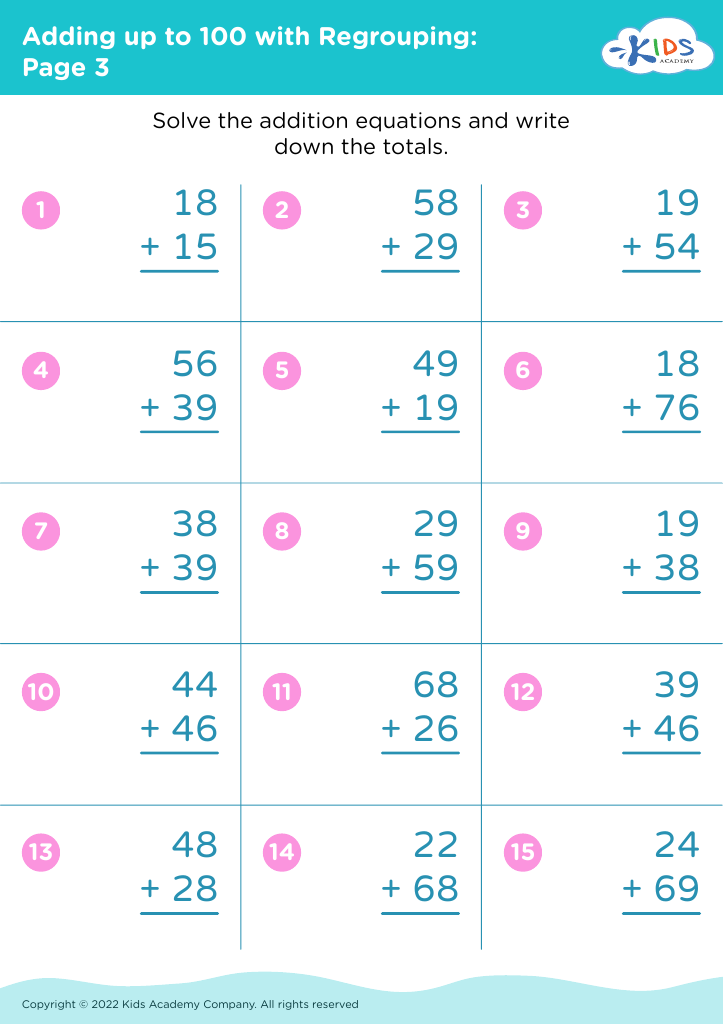
Adding up to 100 with Regrouping: Page 3
Worksheet
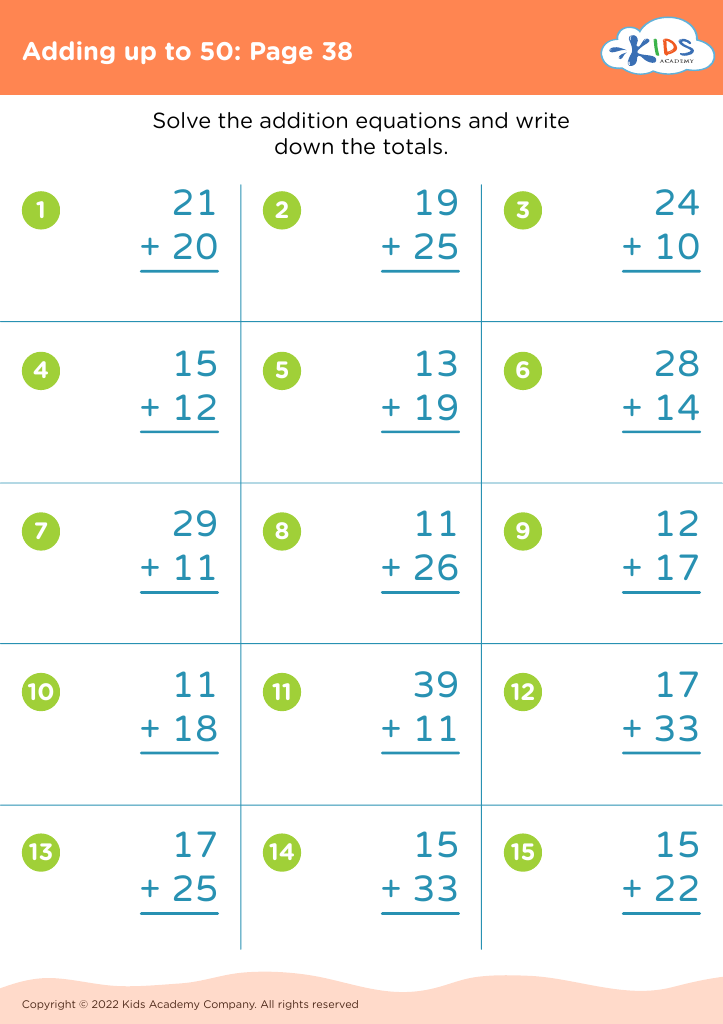
Adding up to 50: Page 38

Adding up to 50: Page 38

Adding up to 50: Page 38
Worksheet
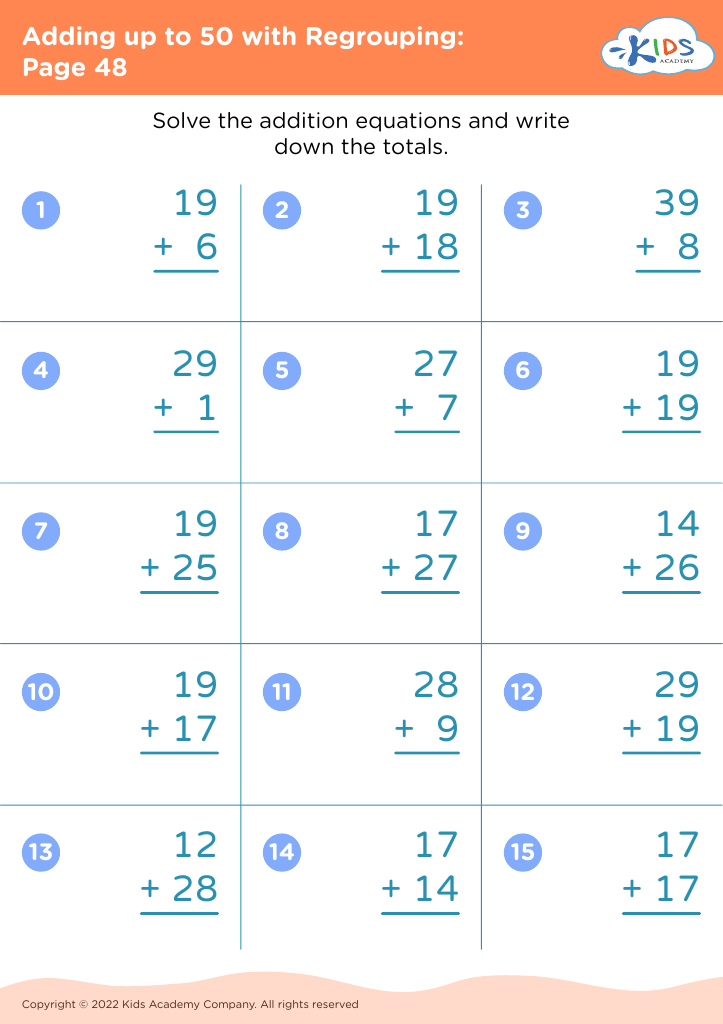
Adding up to 50 with Regrouping: Page 48
Worksheet
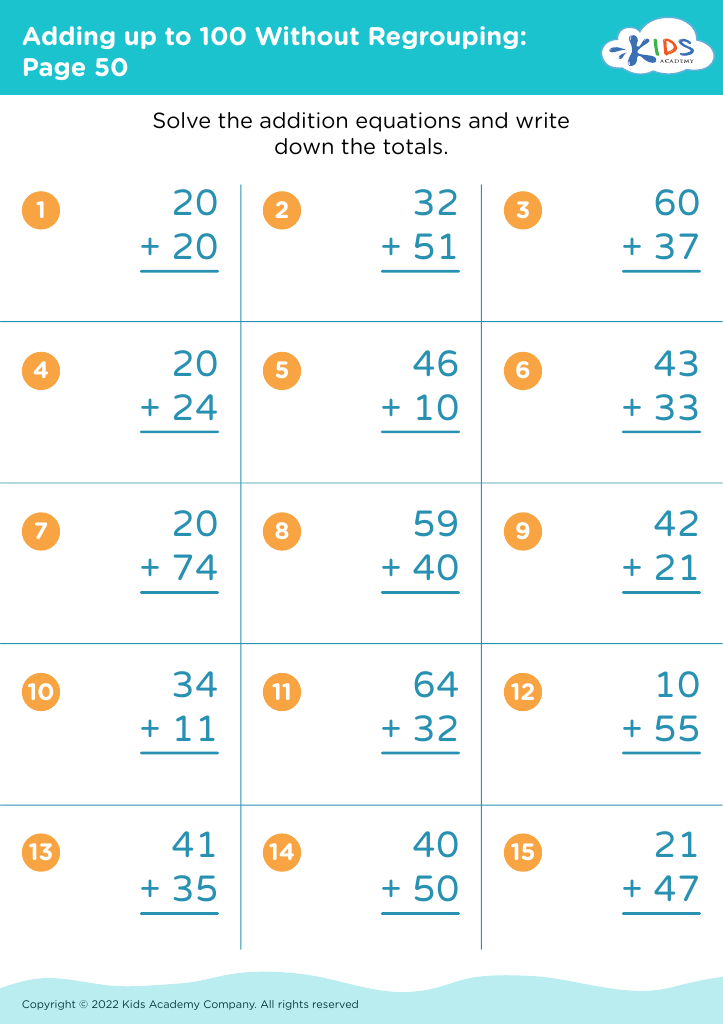
Adding up to 100 Without Regrouping: Page 50
Worksheet
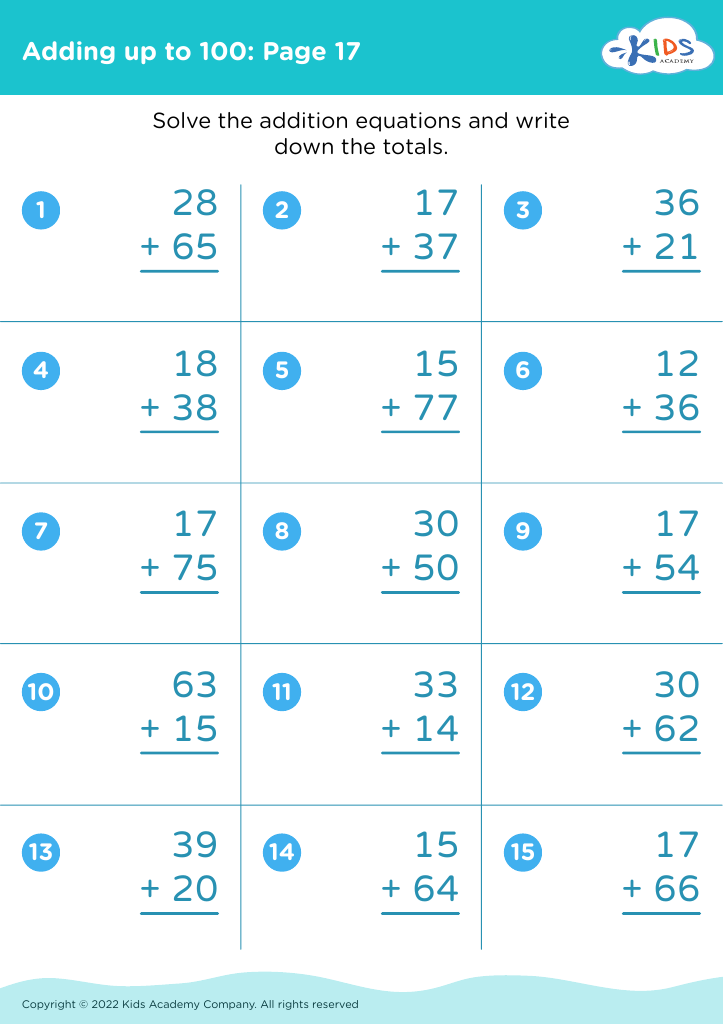
Adding up to 100: Page 17

Adding up to 100: Page 17

Adding up to 100: Page 17
Worksheet
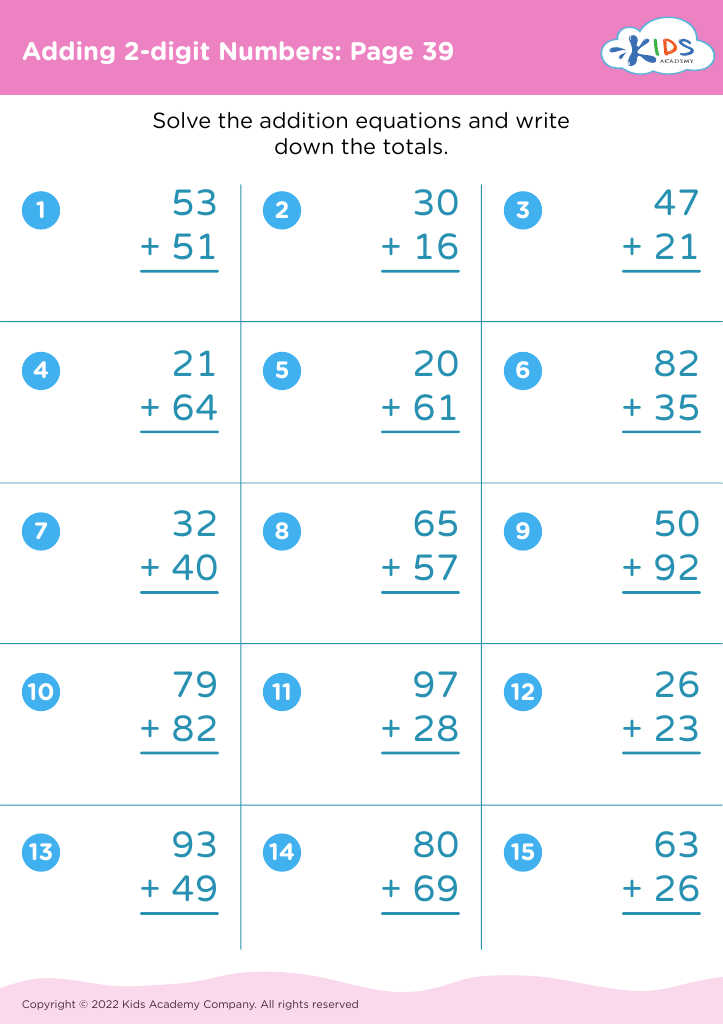
Adding 2-digit Numbers: Page 39

Adding 2-digit Numbers: Page 39

Adding 2-digit Numbers: Page 39
Worksheet
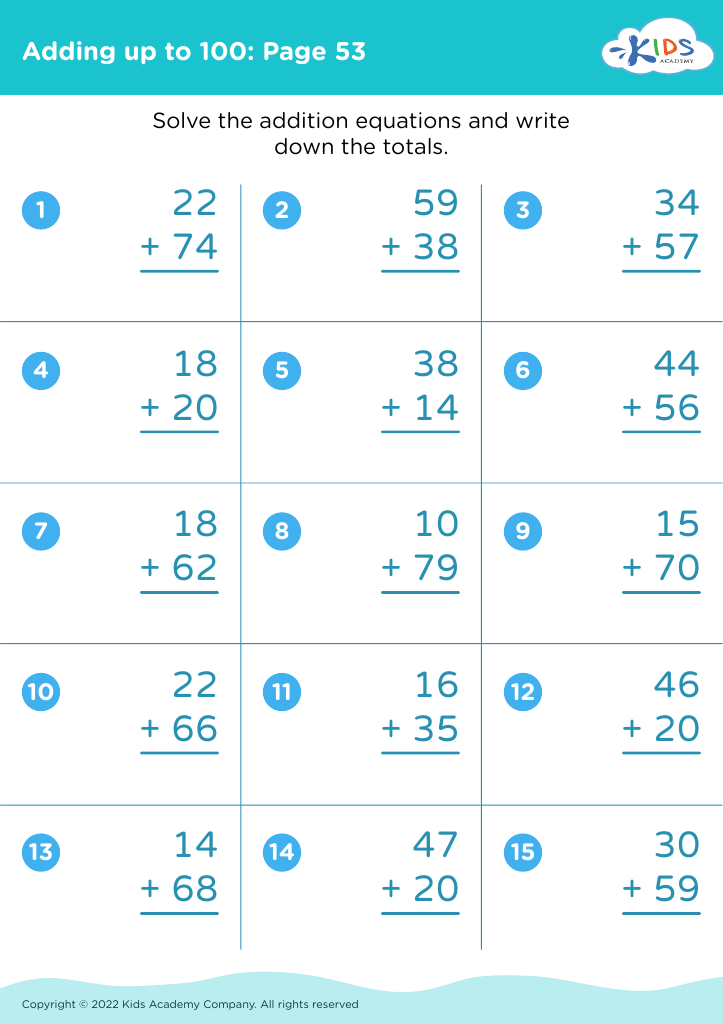
Adding up to 100: Page 53

Adding up to 100: Page 53

Adding up to 100: Page 53
Worksheet
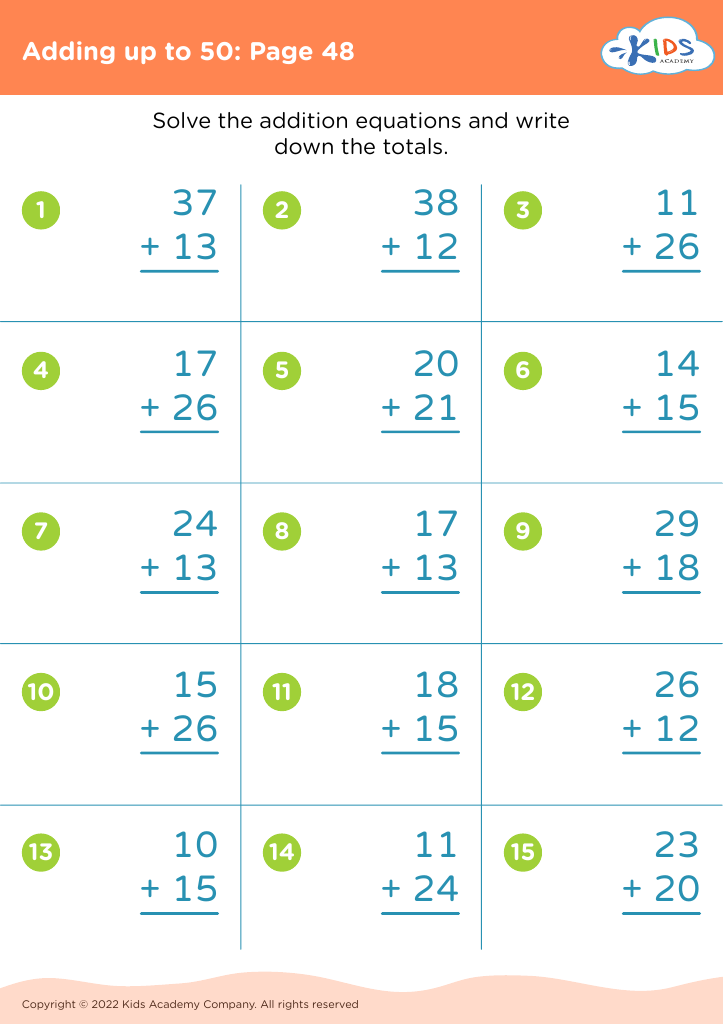
Adding up to 50: Page 48

Adding up to 50: Page 48

Adding up to 50: Page 48
Worksheet
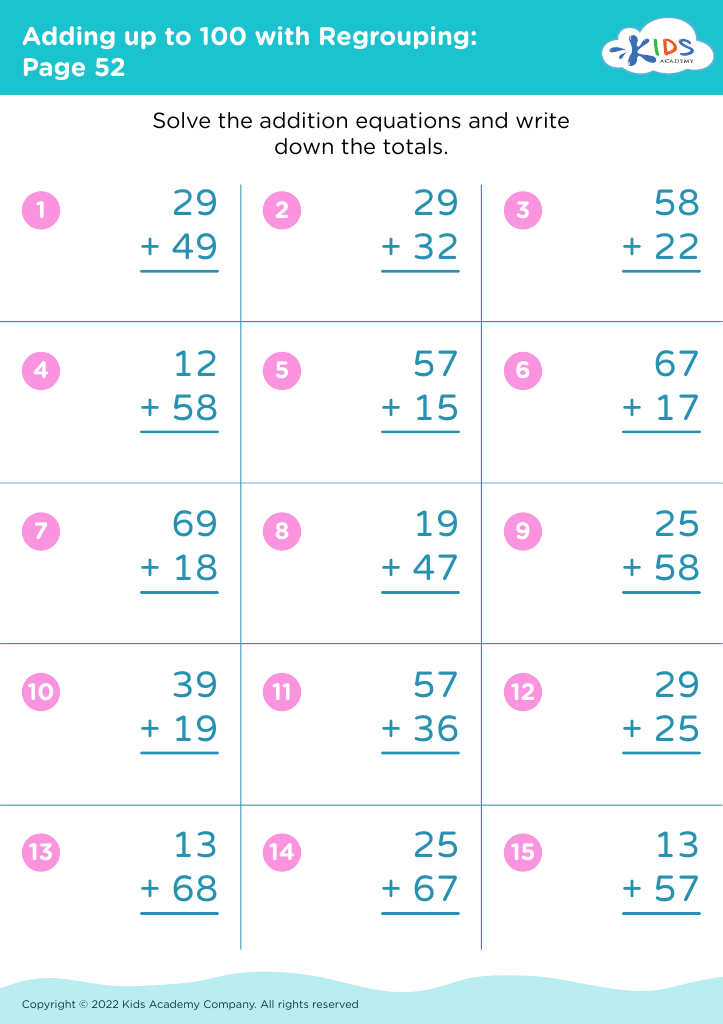
Adding up to 100 with Regrouping: Page 52
Worksheet
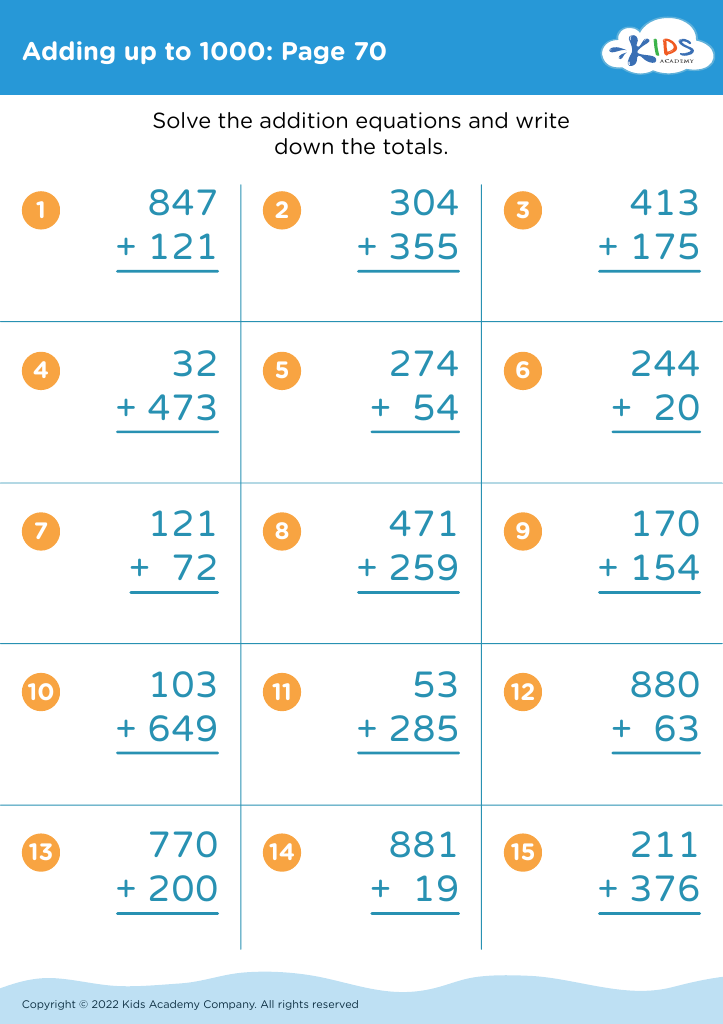
Adding up to 1000: Page 70

Adding up to 1000: Page 70

Adding up to 1000: Page 70
Worksheet
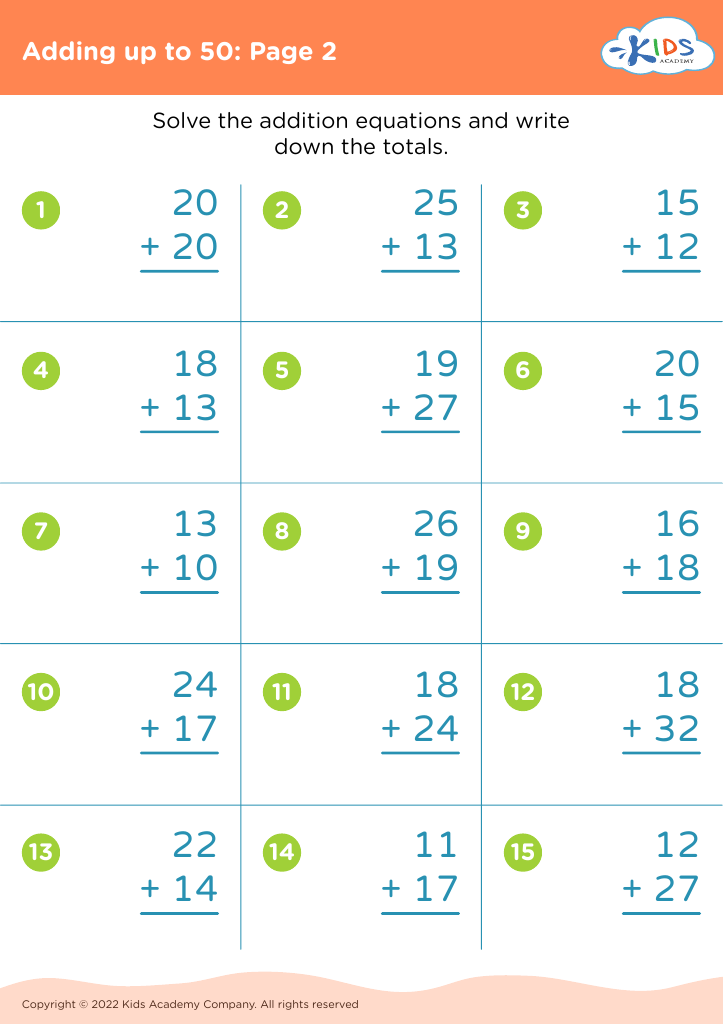
Adding up to 50: Page 2

Adding up to 50: Page 2

Adding up to 50: Page 2
Worksheet
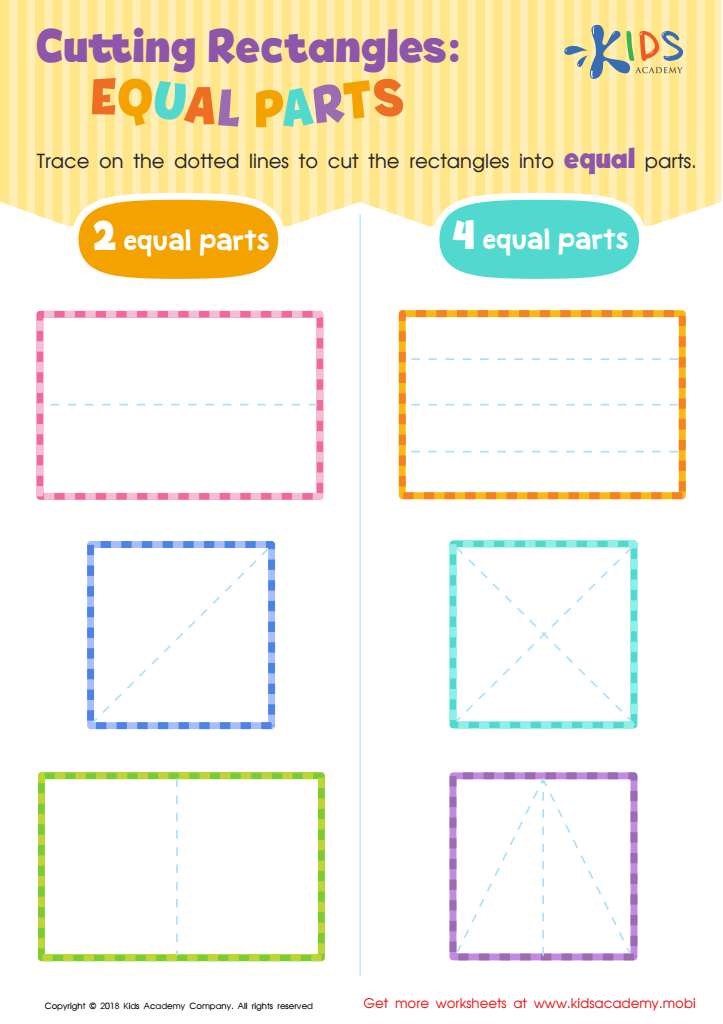
Cutting Rectangles: Equal Parts Worksheet

Cutting Rectangles: Equal Parts Worksheet

Help your child learn to divide shapes into two or four equal parts with this worksheet. It has six rectangles that need to be cut up as directed, following the dotted lines. Show it to your child and watch them gain confidence in mastering this skill.
Cutting Rectangles: Equal Parts Worksheet
Worksheet
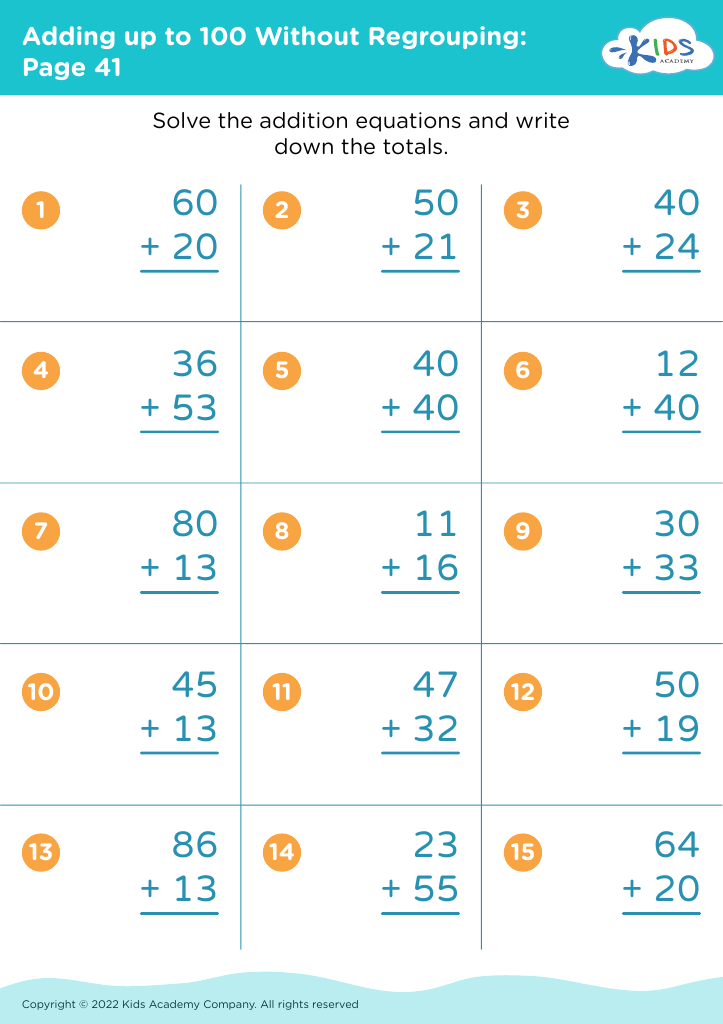
Adding up to 100 Without Regrouping: Page 41
Worksheet
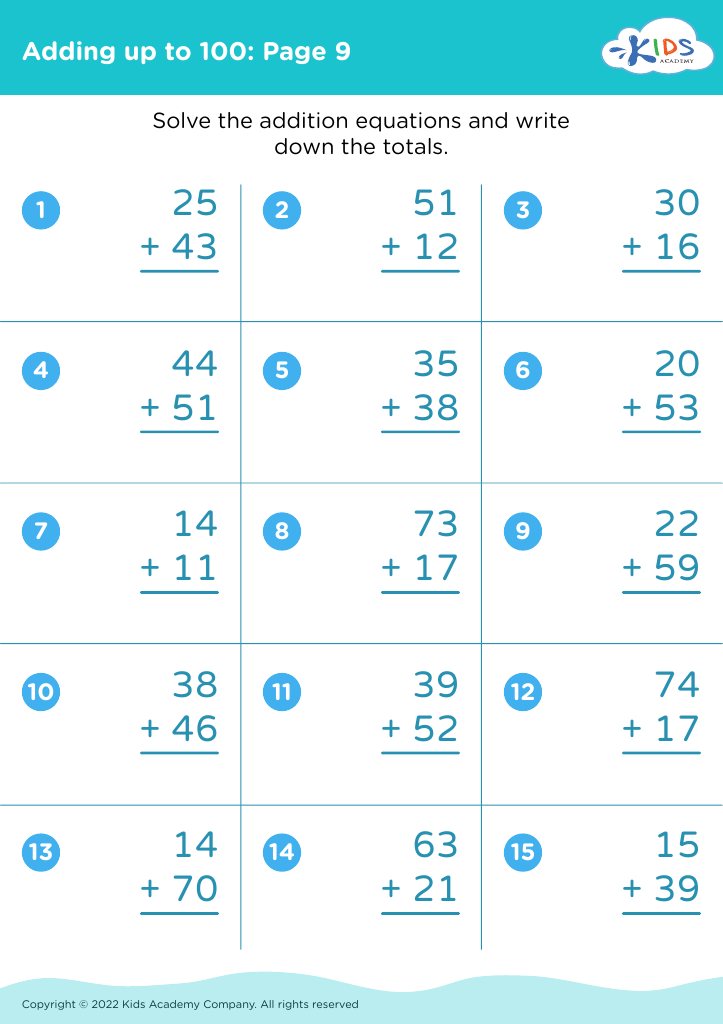
Adding up to 100: Page 9

Adding up to 100: Page 9

Adding up to 100: Page 9
Worksheet
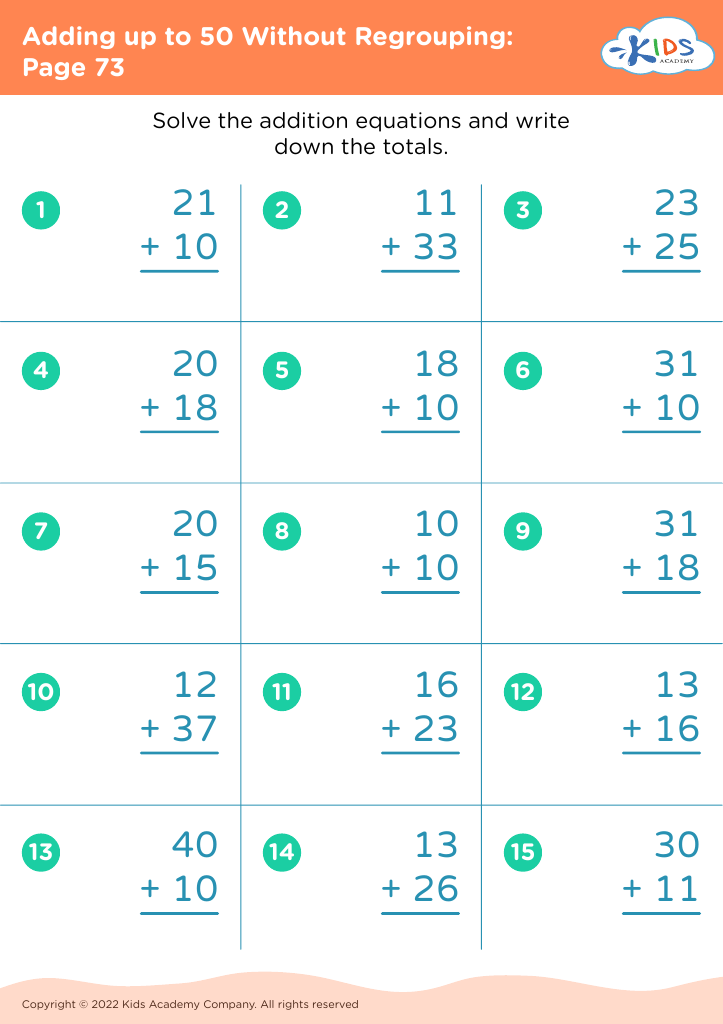
Adding up to 50 Without Regrouping: Page 73
Worksheet
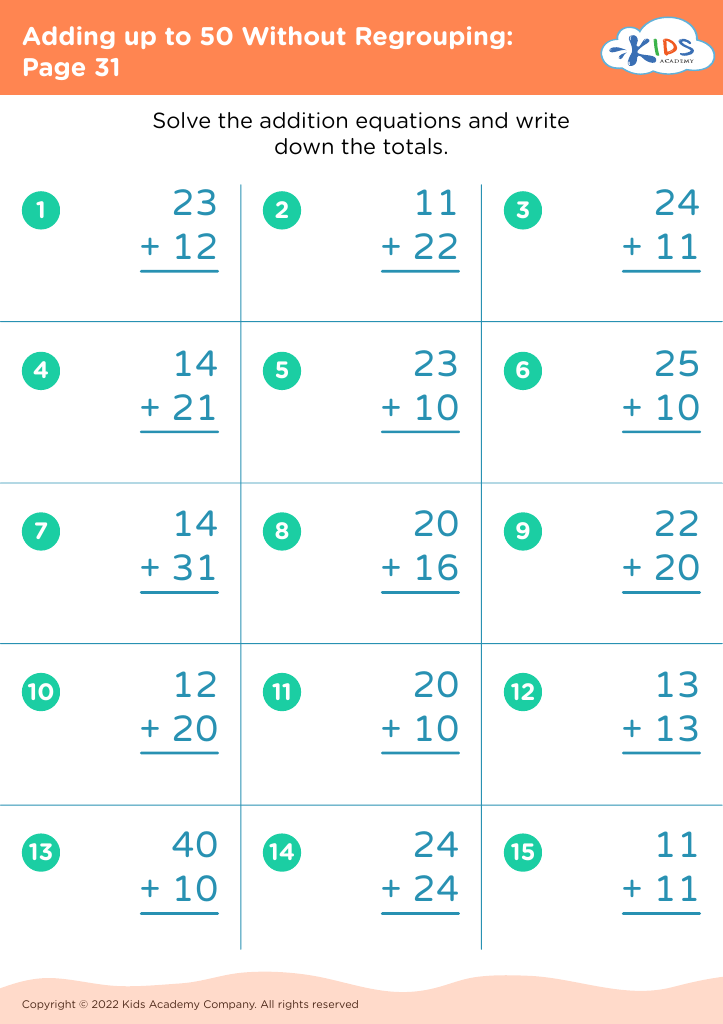
Adding up to 50 Without Regrouping: Page 31
Worksheet
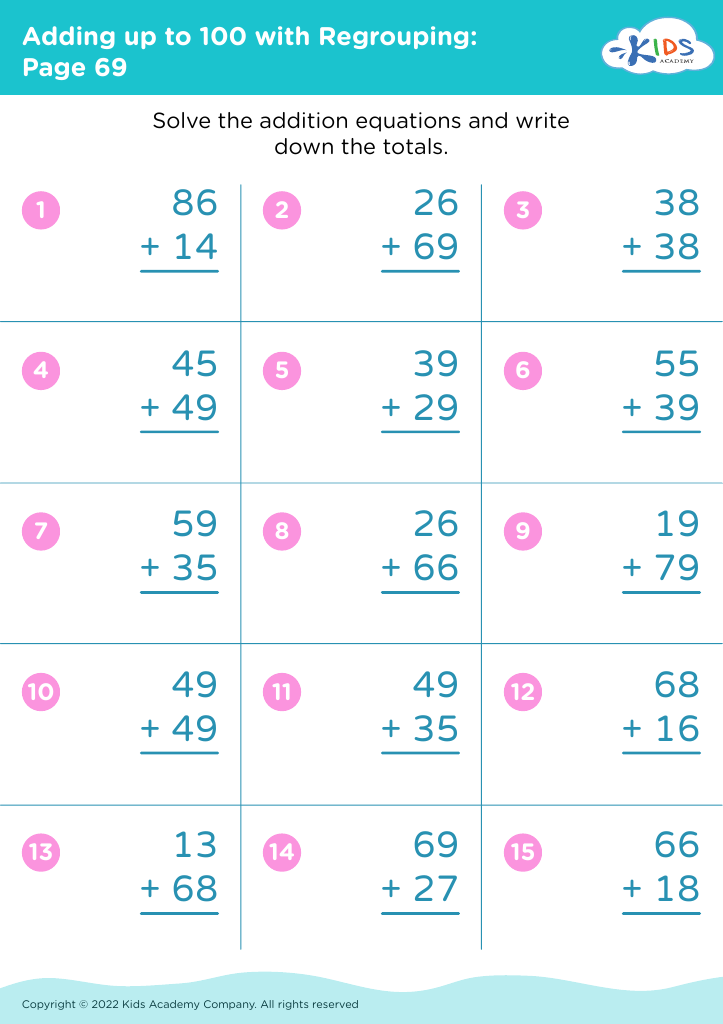
Adding up to 100 with Regrouping: Page 69
Worksheet
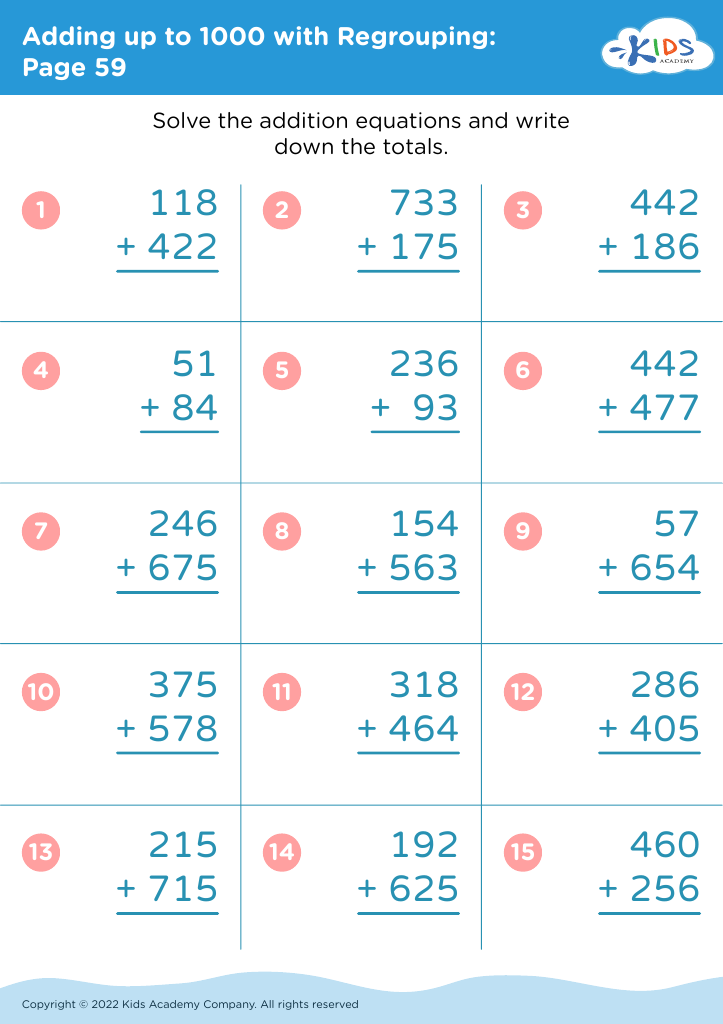
Adding up to 1000 with Regrouping: Page 59
Worksheet
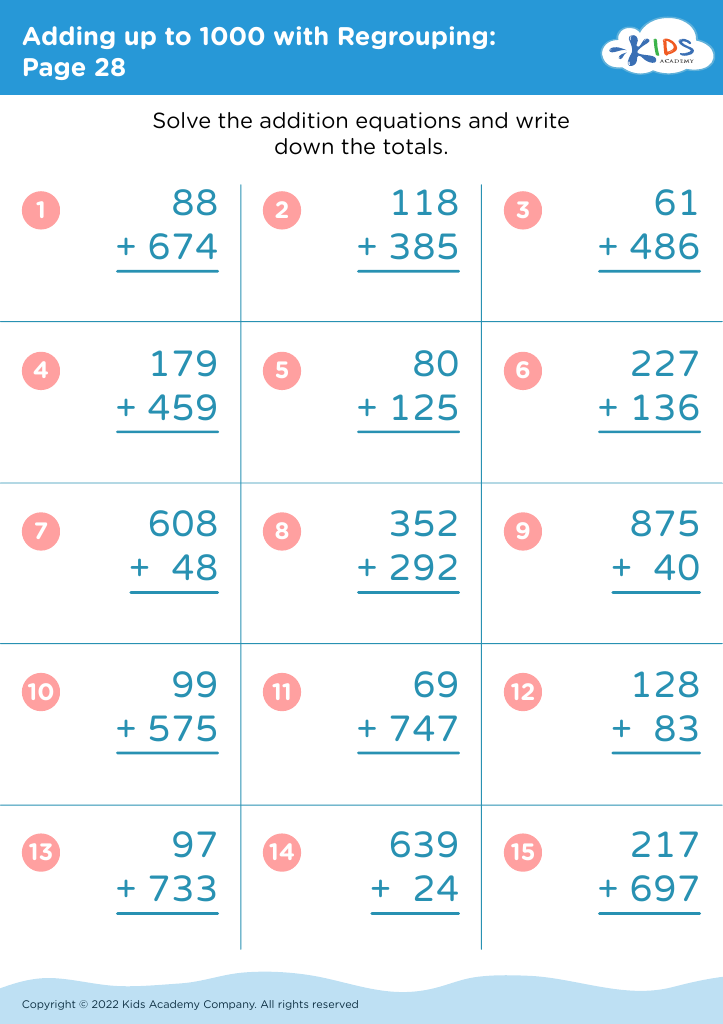
Adding up to 1000 with Regrouping: Page 28
Worksheet
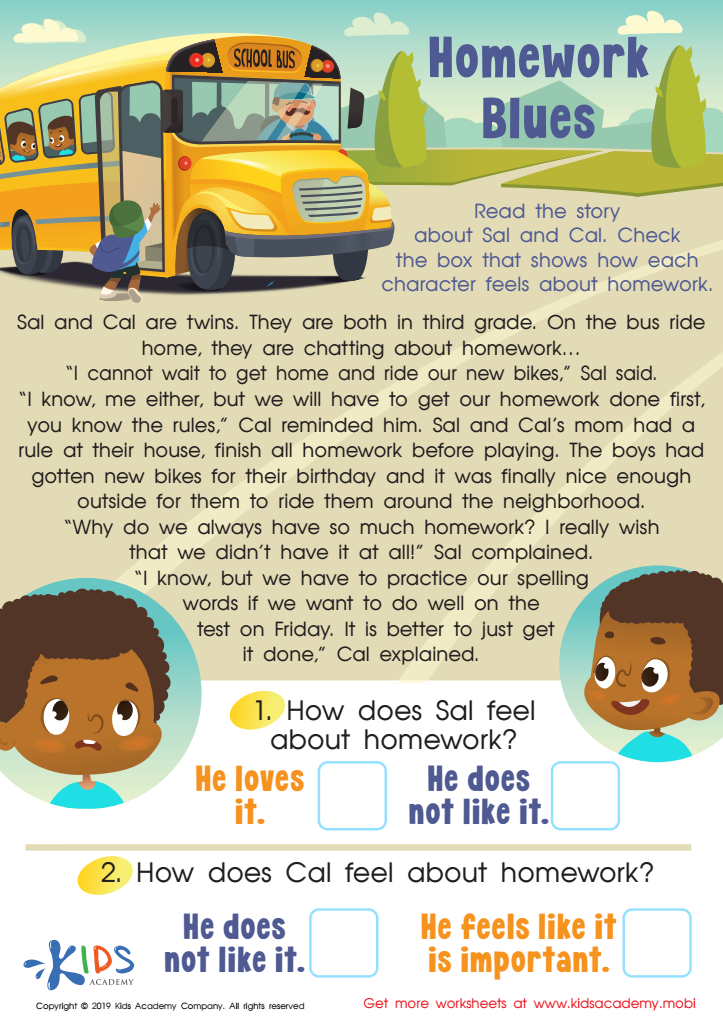
Homework Blues Worksheet

Homework Blues Worksheet
Cal and Sal don't love doing homework, just like your kids. Use this worksheet to help your children understand why homework is important. Read the passage together and then answer the questions at the bottom of the page. It's a fun way to learn together!
Homework Blues Worksheet
Worksheet
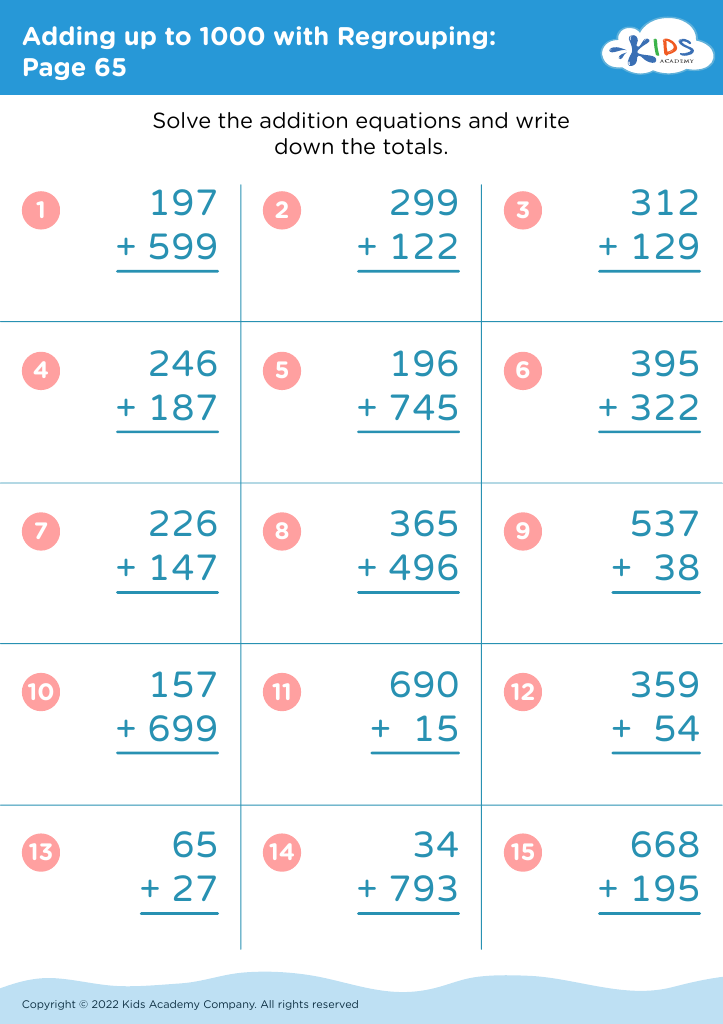
Adding up to 1000 with Regrouping: Page 65
Worksheet


Understanding fractions is crucial for children aged 6-8, as it lays a foundational skill set for more advanced mathematical concepts. At this age, children are developing their number sense, and mastering fractions enhances their ability to understand relationships between numbers. Fractions introduce children to division and the concept of parts of a whole, helping them visualize and model everyday situations, such as sharing food or measuring ingredients in cooking.

Moreover, grasping the concept of fractions promotes critical thinking and problem-solving skills. Children learn to recognize and interpret fractions in different contexts, which encourages them to make connections and apply their knowledge beyond the classroom. By caring about this concept, parents and teachers can guide children through hands-on activities that make learning fun and engaging, fostering a positive attitude toward math.

Additionally, early mastery of fractions can ease future learning in numerous areas of mathematics, such as ratios, decimals, and percentages. By supporting children in understanding fractions at a young age, adults can help build confidence and competence, paving the way for academic success in math and related disciplines. In essence, comprehension of fractions is not just about numbers; it nurtures a child's overall cognitive and emotional development.