Understanding landforms Worksheets for Ages 6-8
3 filtered results
-
From - To
Explore our "Understanding Landforms Worksheets for Ages 6-8" to foster your child's curiosity about the natural world. These engaging, printable worksheets make learning about various landforms, such as mountains, valleys, and plains, both fun and educational. Specially designed for young learners, ages 6 to 8, these activities incorporate colorful illustrations and interactive tasks to help children grasp key concepts about our planet's diverse landscapes. Perfect for classroom use or homeschooling, these worksheets aim to bolster comprehensive learning skills, including critical thinking, observation, and vocabulary development. Visit Kids Academy to spark your child's eternal love for geography!
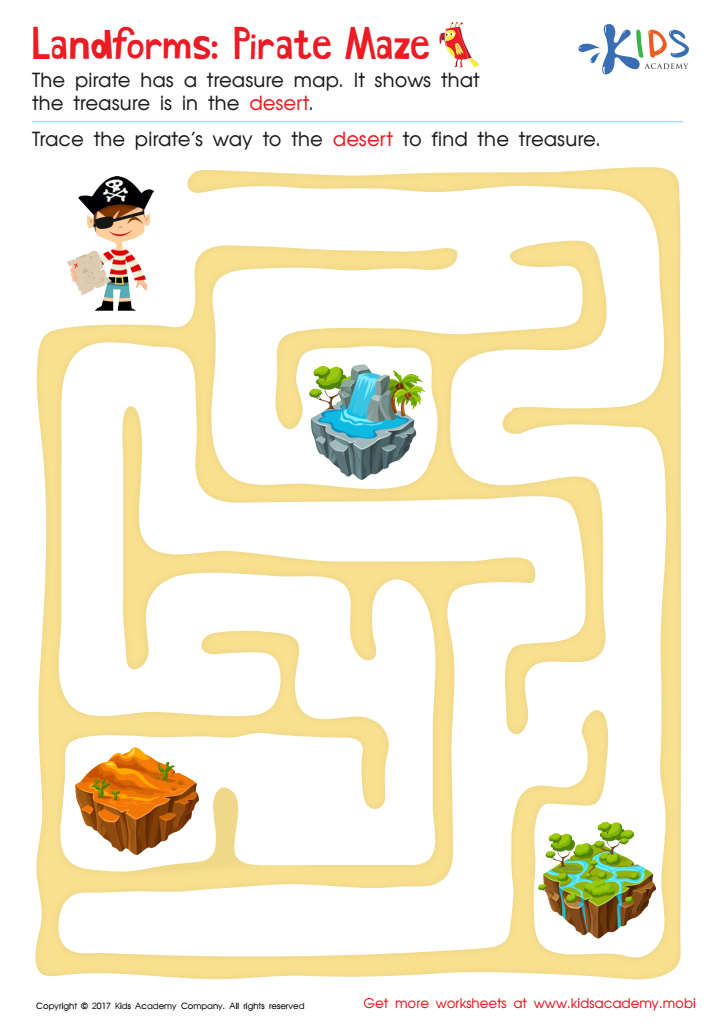
Landforms: Pirate Maze Printable
 Assign to My Students
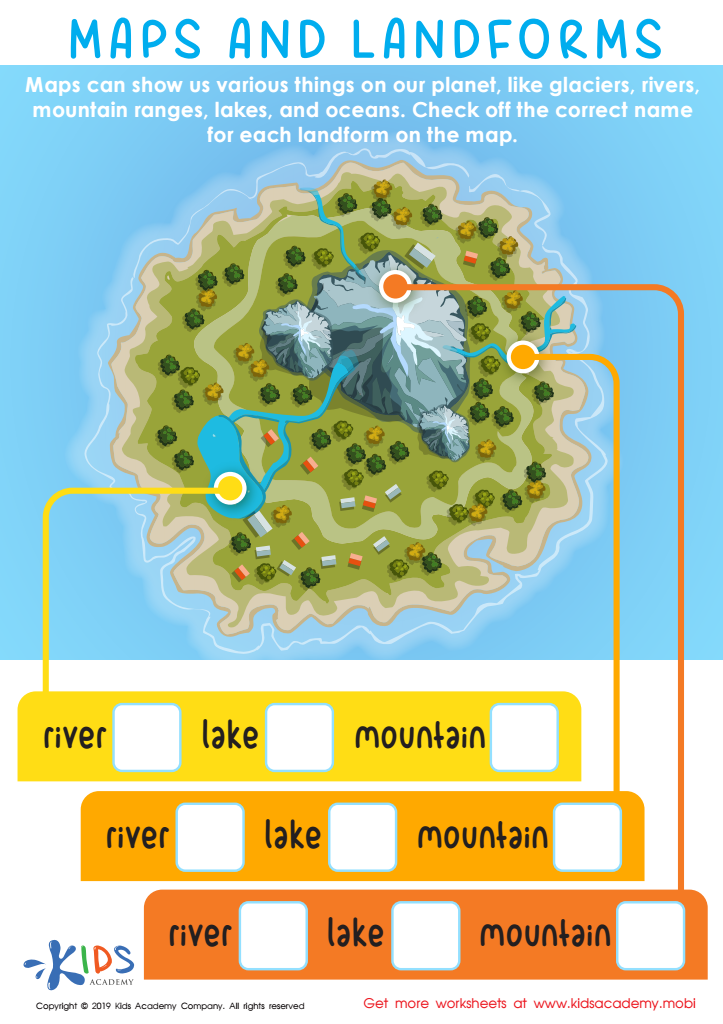
Maps and Landforms Worksheet
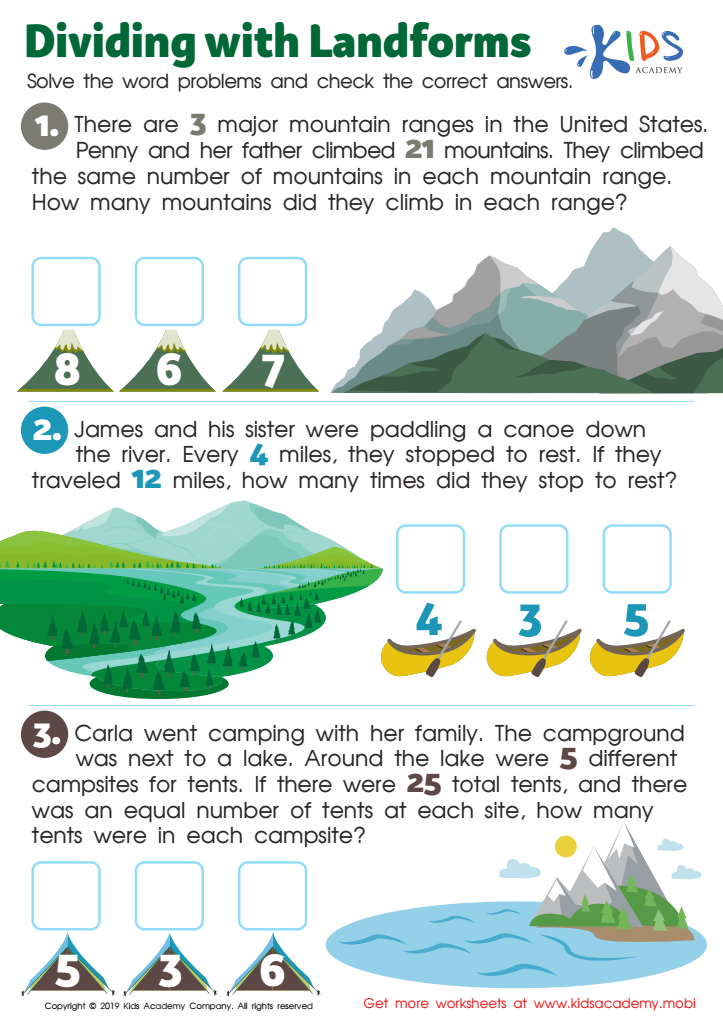
Dividing with Landforms








Understanding landforms is vital for young children because it lays the foundation for geographic literacy and fosters an early appreciation of the natural world. For ages 6-8, introducing concepts like mountains, valleys, rivers, and plains helps children develop an understanding of how their environment is shaped and functions. This knowledge is fundamental in building curiosity about Earth sciences, promoting environmental stewardship, and encouraging outdoor exploration.
Moreover, learning about landforms can enhance essential cognitive and analytical skills. As children identify and classify different landforms, they are practicing observation, pattern recognition, and critical thinking. These activities help improve their spatial awareness and can be integrated into other subjects such as reading, writing, and art, making learning cohesive and multidisciplinary.
For parents and teachers, embedding landform education into the curriculum also opens doors to engaging activities like model building, drawing maps, and interactive storytelling, which can make learning fun and memorable. It allows children to physically connect to abstract concepts, using modeling clay to build mountains or creating river systems with water and sand, which aids in deeper comprehension and retention.
Understanding landforms fosters a holistic view of the planet that can spark a child's lifelong interest in geography, science, and the environment, important aspects in nurturing well-rounded, knowledgeable individuals.








