Understanding measurement units Worksheets for Ages 6-8
3 filtered results
-
From - To
Discover our engaging "Understanding Measurement Units Worksheets for Ages 6-8" designed to help young learners grasp fundamental measurement concepts. These printable worksheets offer a variety of activities to teach kids about length, weight, and volume using everyday items. Tailored to suit first, second, and third graders, our worksheets make learning measurement fun and engaging through interactive exercises that encourage exploration and practical application. Help your child or students develop strong math skills and confide доступноеntly measure the world around them with our expertly crafted resources. Perfect for both classroom and at-home learning!
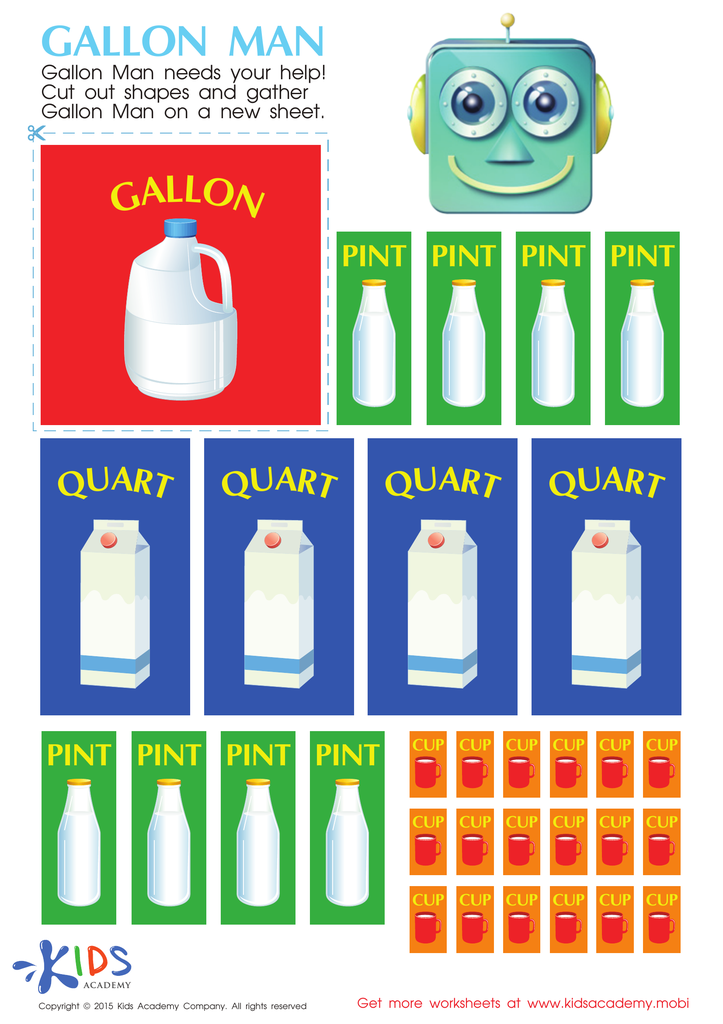
Cups, Pints and Quarts With Gallon Man Worksheet
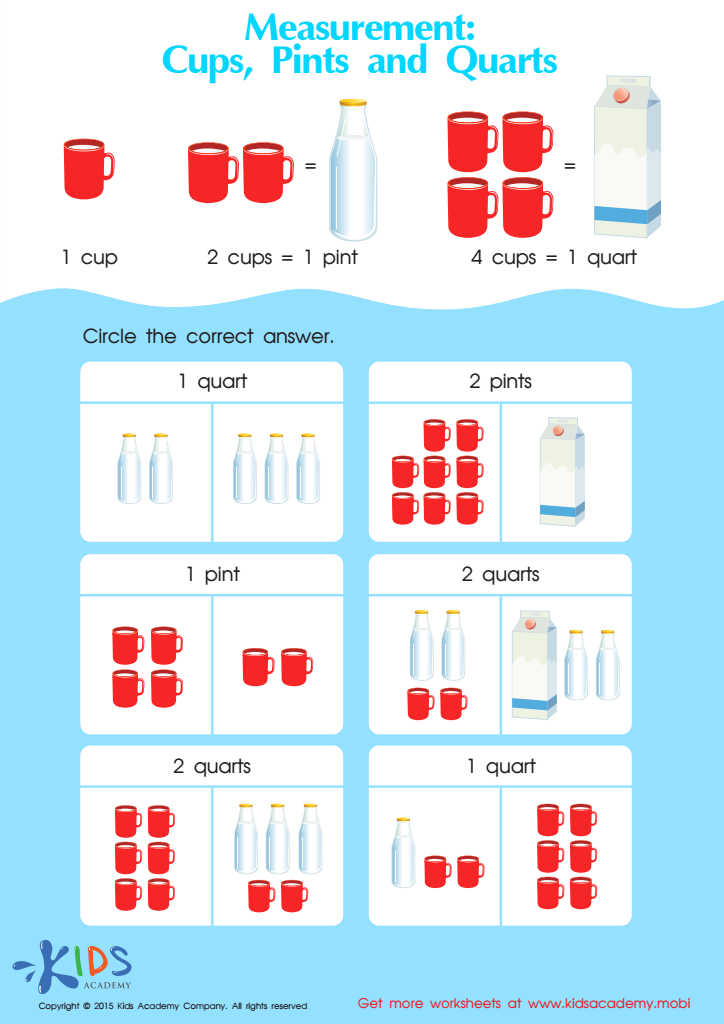
Cups, Pints and Quarts Worksheet
 Assign to My Students
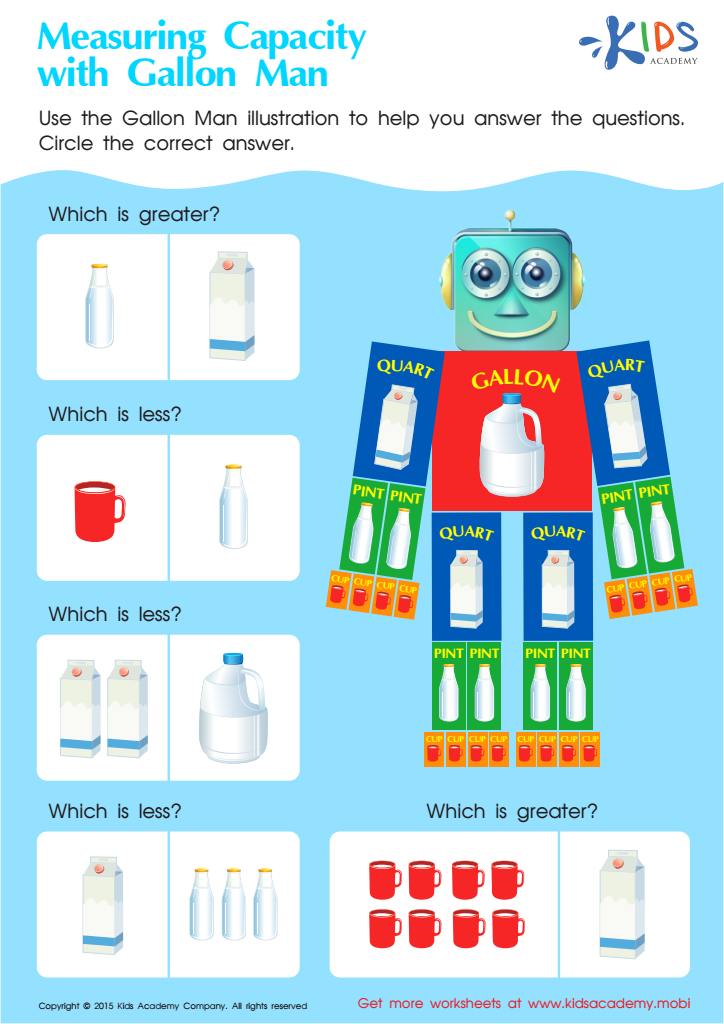
Measurement: Measuring Capacity with Gallon Man Worksheet








Understanding measurement units at an early age is crucial for children between the ages of 6-8. It's not just about learning numbers; it's about developing essential life skills. Measurement helps kids make sense of the world around them. Whether they are figuring out how tall they are, baking cookies with a parent, or determining whether a toy will fit in a box, measurement concepts are used in everyday tasks.
For parents and teachers, emphasizing measurement can enhance a child's cognitive development. This age group is when kids start to build a foundation in number sense, which is critical for future math success. Concepts like length, weight, and volume directly relate to their understanding of arithmetic, addition, and subtraction. Real-world applications help solidify abstract concepts, making learning more meaningful and enjoyable for children.
Moreover, early exposure to measurement fosters problem-solving and critical-thinking skills. When kids compare lengths or volumes, they aren't just learning math; they're learning to analyze and reason. These skills are transferable to other subjects and are valuable in real-life situations.
Finally, understanding measurement units can boost a child’s confidence. Mastery of these concepts allows them to participate more actively in classroom activities and homework assignments, laying a strong foundation for academic success. So, fostering an understanding of measurements at a young age sets the stage for lifelong learning and everyday competence.








