Understanding punctuation Worksheets for Ages 6-8
5 filtered results
-
From - To
Enhance your child’s writing skills with our engaging "Understanding Punctuation Worksheets" designed for ages 6-8. These worksheets provide fun and interactive exercises that help young learners grasp the importance of punctuation in enhancing clarity and expression in their writing. Kids will explore various punctuation marks, including periods, commas, question marks, and exclamation points, through playful activities tailored to their developmental level. Our resources encourage critical thinking and creativity, allowing students to practice identifying and using punctuation correctly. Support your child’s literacy journey while making learning enjoyable with these thoughtfully crafted worksheets that promote essential punctuation skills. Perfect for home or classroom use!
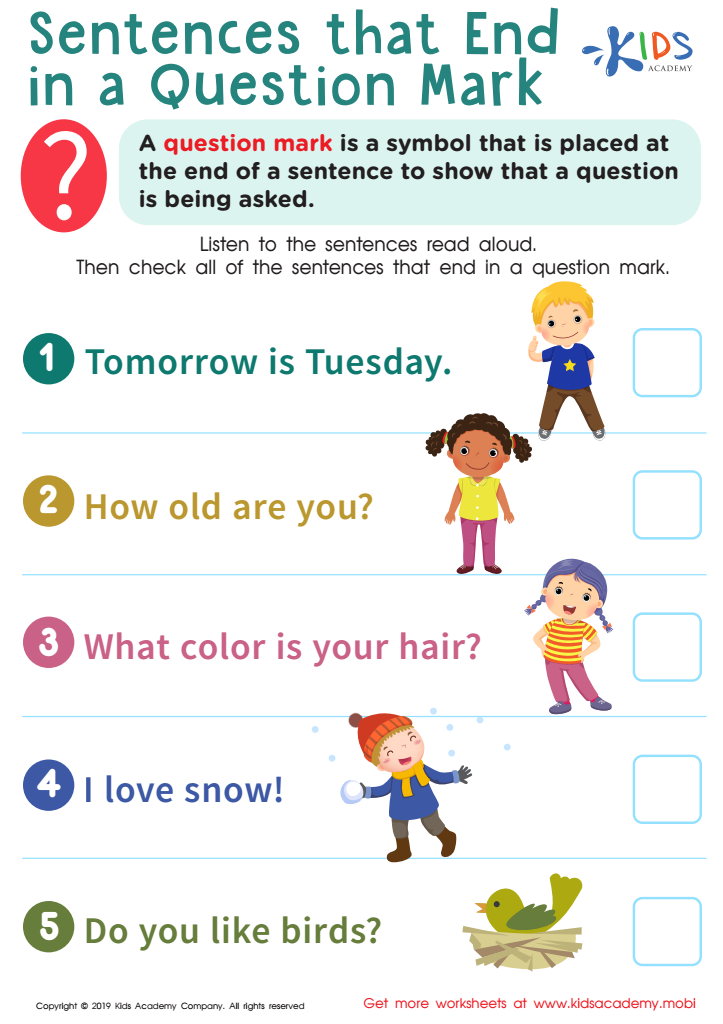
Sentences That End in an Question Mark Worksheet
 Assign to My Students
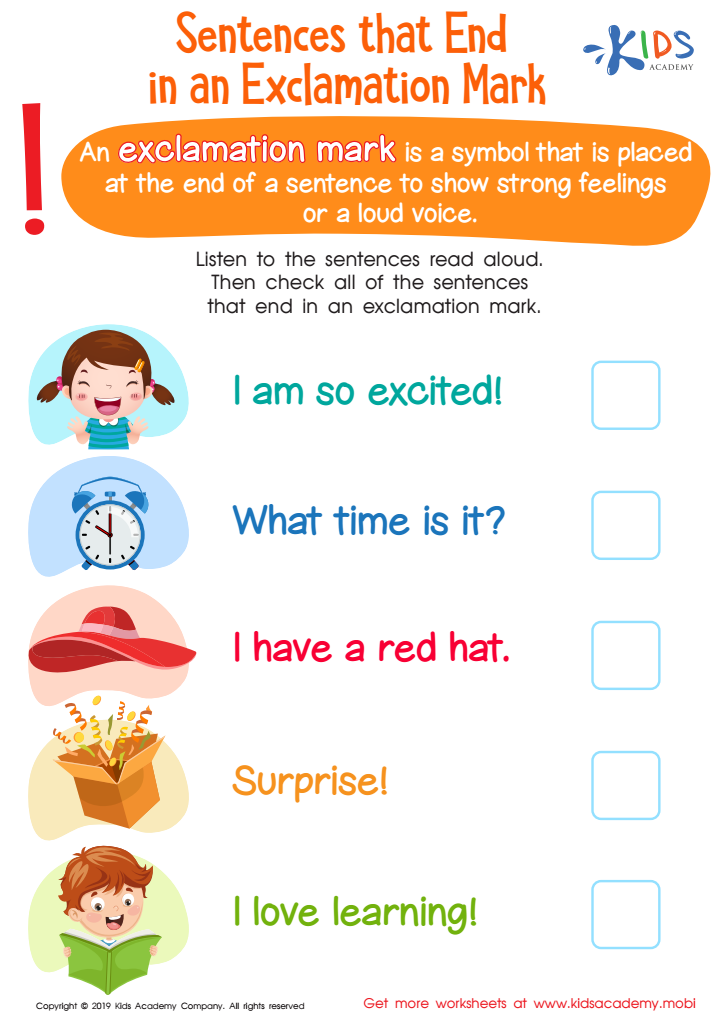
Sentences That End in an Exclamation Mark Worksheet
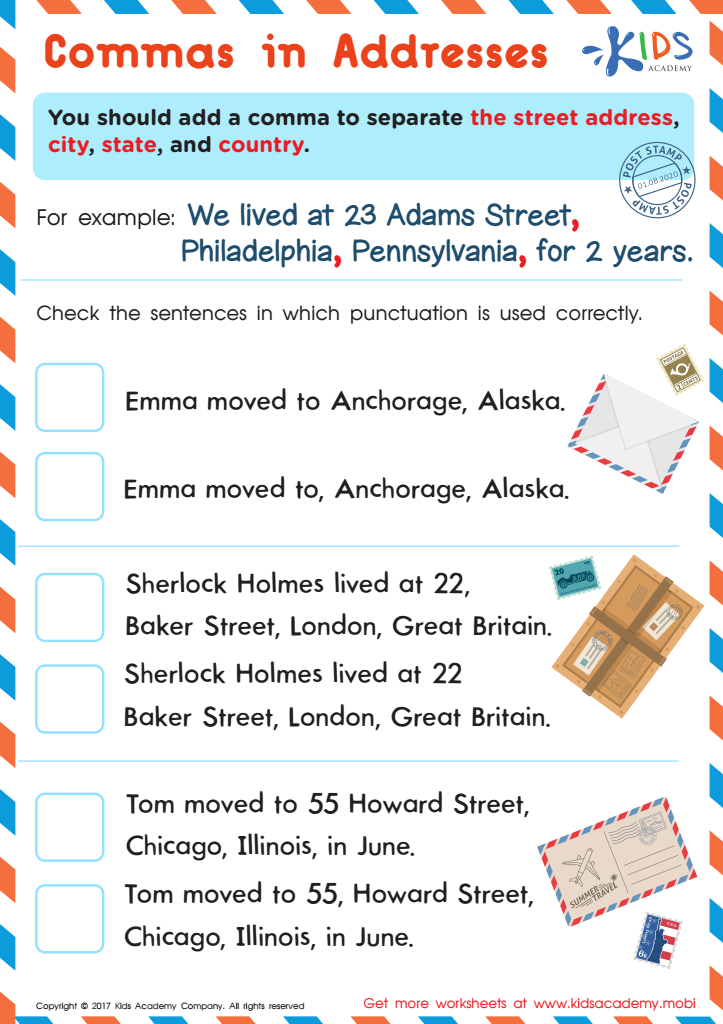
Commas in Addresses Worksheet




.jpg)
Understanding punctuation is crucial for children aged 6-8 as it lays the foundation for effective communication and literacy skills. At this age, children begin to explore writing beyond simple sentences, and punctuation serves as the roadmap for their reading and writing efforts.
Punctuation helps children grasp the meaning of sentences. For instance, a sentence like "Let's eat, Grandma!" conveys a different sentiment than "Let's eat Grandma!" Learning the nuances of punctuation assists children in expressing their thoughts clearly and prevents misunderstandings.
Moreover, mastering punctuation aids in reading fluency. Children learn to pause, intonate, and emphasize particular parts of sentences, which enhances their comprehension and enjoyment of reading. When they understand where to place commas, periods, question marks, and exclamation points, they can bring stories to life and engage more meaningfully with texts.
Encouraging an understanding of punctuation also prepares children for future academic endeavors. As they progress in their education, these skills become increasingly essential for writing essays, reports, and narratives. By fostering punctuation awareness now, parents and teachers can support confident communication and literacy development, ultimately setting children up for ongoing success in both academic and social settings.








