Uppercase identification Worksheets for Ages 6-8
5 filtered results
-
From - To
Discover our engaging Uppercase Identification Worksheets designed specifically for children ages 6-8! These printable activities provide a fun and interactive way for young learners to recognize and differentiate uppercase letters. Each worksheet combines colorful illustrations and creative exercises, enabling children to practice identifying letters in various contexts, enhancing their reading and writing skills. Ideal for both classroom and home learning, these resources support literacy development while fostering a love for learning. Perfect for independent study or as a reinforcing tool in guided lessons, our worksheets tailor the learning experience to suit each child's unique pace. Start building strong foundational skills today!
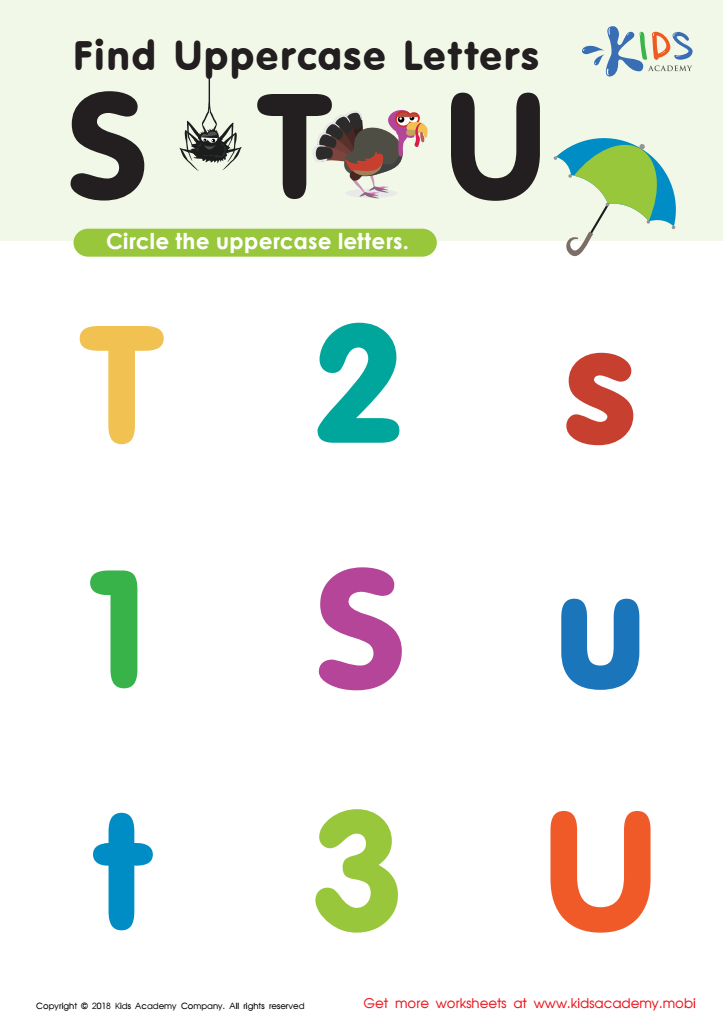
Find Uppercase Letters Worksheet
 Assign to My Students
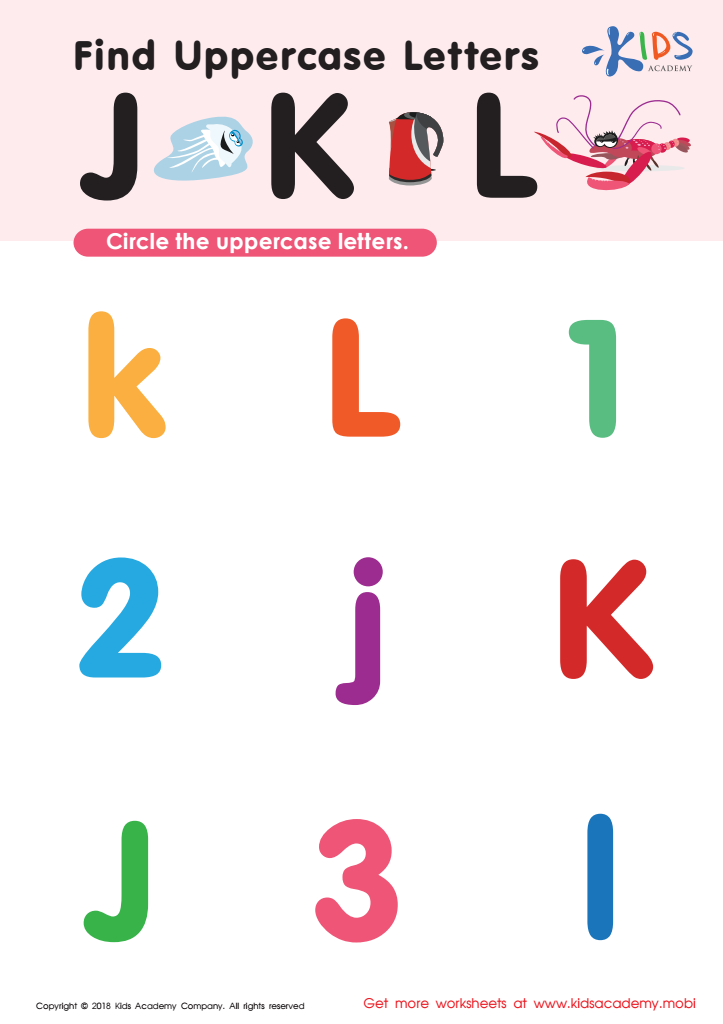
Find Uppercase Letters J, K, and L Worksheet
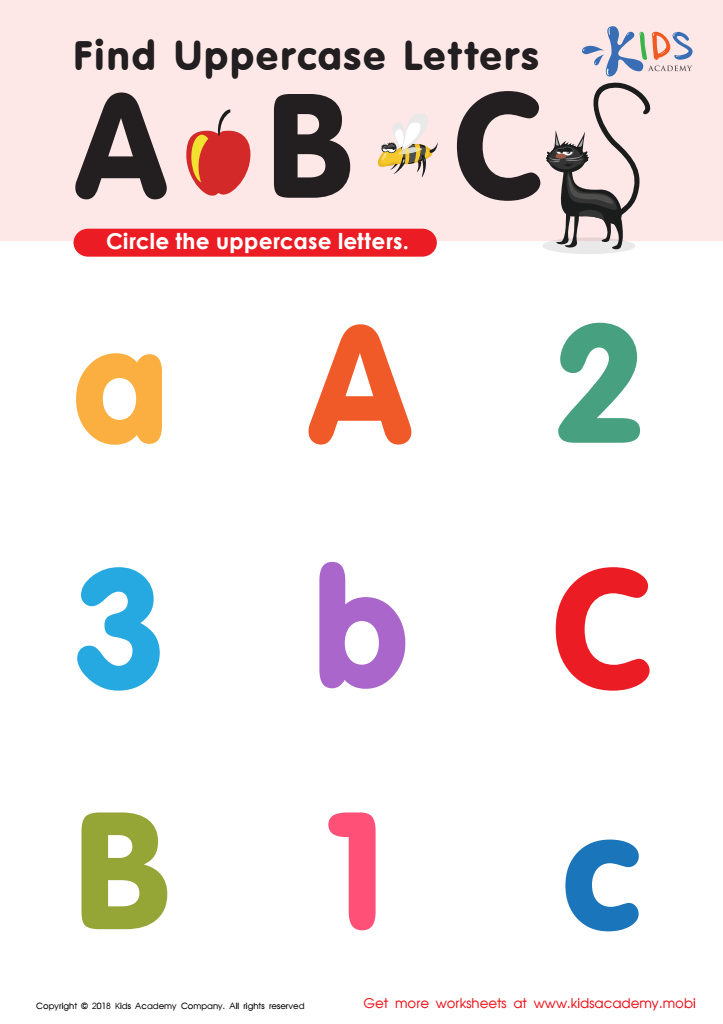
Find Uppercase Letters A, B, and C Worksheet
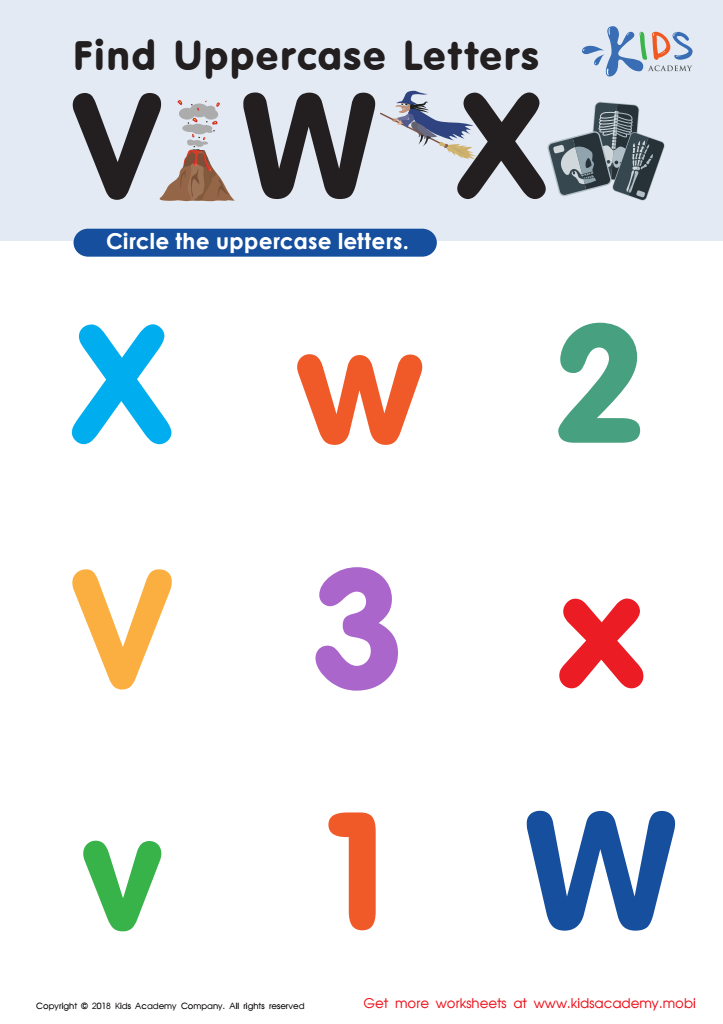
Find Uppercase Letters V, W, X Worksheet
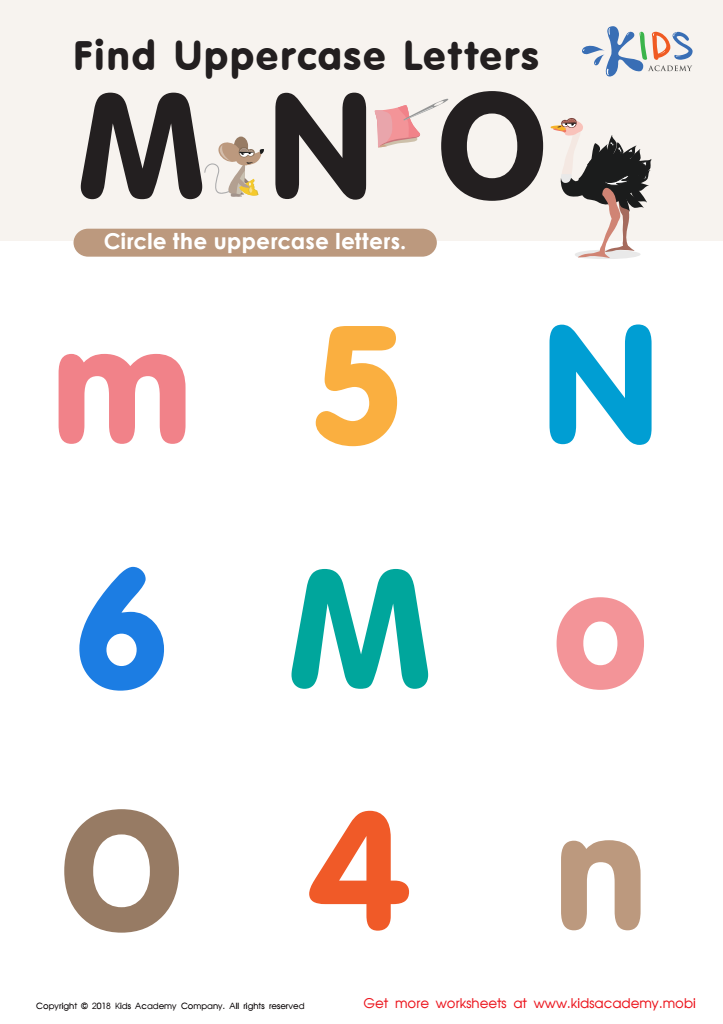
Find Uppercase Letters M, N, and O Worksheet






.jpg)

Uppercase letter identification is a fundamental skill for children aged 6 to 8, making it essential for parents and teachers to prioritize. This age group is typically in the early stages of literacy development, and recognizing uppercase letters is crucial as it lays the groundwork for reading and writing proficiency. Uppercase letters are used in the initial words of sentences, proper nouns, and titles, making their identification vital for comprehension.
For parents, understanding and reinforcing uppercase letter identification can provide children with the confidence and skills needed for everyday reading interactions, whether it's in books, signs, or labels. By encouraging activities that involve uppercase letters, such as playing letter recognition games or involving children in writing their names, parents help reinforce this skill in meaningful ways.
Teachers also play a critical role in promoting uppercase identification through structured lessons, interactive reading sessions, and engaging classroom activities. By fostering this skill, educators not only support reading fluency but also enhance overall literacy development, paving the way for success in more advanced language arts skills. Collectively, actively focusing on uppercase identification contributes significantly to children's academic journeys, ensuring they have the necessary tools to communicate effectively and build a strong foundation for lifelong learning.








