Vocabulary Enrichment Worksheets for Ages 6-8 - Page 2
27 filtered results
-
From - To
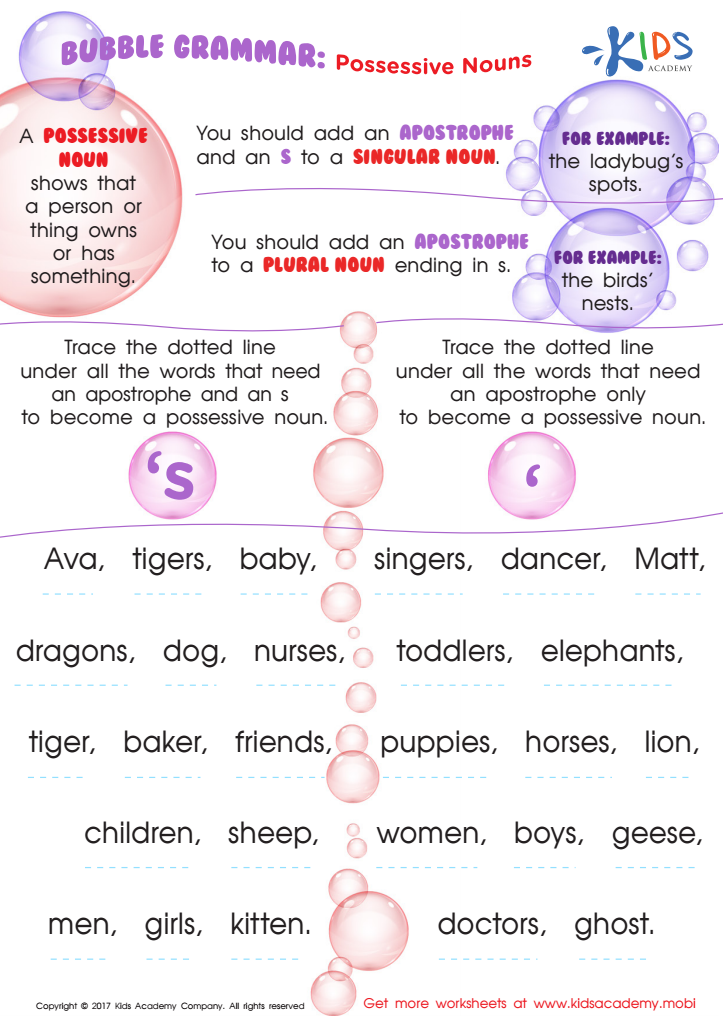
Possessive Nouns Worksheet for Grade 3 PDF
 Assign to My Students







Vocabulary enrichment for children ages 6-8 is crucial for their cognitive and linguistic development. At this age, children are rapidly expanding their language skills, and a rich vocabulary enhances their ability to communicate effectively, articulate their thoughts, and engage in discussions. Strong vocabulary is directly linked to reading comprehension, meaning that when children possess a wide range of words, they will better understand the texts they encounter.
Furthermore, vocabulary enrichment facilitates academic success across subjects, as language proficiency influences performance in both math and science, where verbal comprehension of problems and concepts is key. It also fosters confidence; children with a robust vocabulary are more likely to participate in classroom discussions, express themselves clearly, and develop higher self-esteem.
From a social perspective, children equipped with an enriched vocabulary can navigate social situations more adeptly, building stronger relationships with peers. This is vital for emotional intelligence development.
In summary, parents and teachers should prioritize vocabulary enrichment as it not only supports academic achievement but also contributes to a child's overall growth, helping them become more effective communicators and confident individuals as they transition into more complex stages of learning and socialization.








