
Word formation skills Worksheets for Ages 6-8
3 filtered results
Difficulty Level
Grade
Age
-
From - To
Subject
Activity
Standards
Boost your child's vocabulary and reading abilities with our "Word Formation Skills Worksheets for Ages 6-8." Specifically designed for young learners, these engaging activities help kids understand how words are created and used in different contexts. Each worksheet offers fun and innovative exercises that encourage children to explore prefixes, suffixes, compound words, and more. Our expertly crafted materials make learning playful and interactive, paving the way for improved language skills and confidence in reading and writing. Ideal for home or classroom use, these worksheets support critical early educational development in a captivating and effective way.
Favorites
With answer key
Interactive
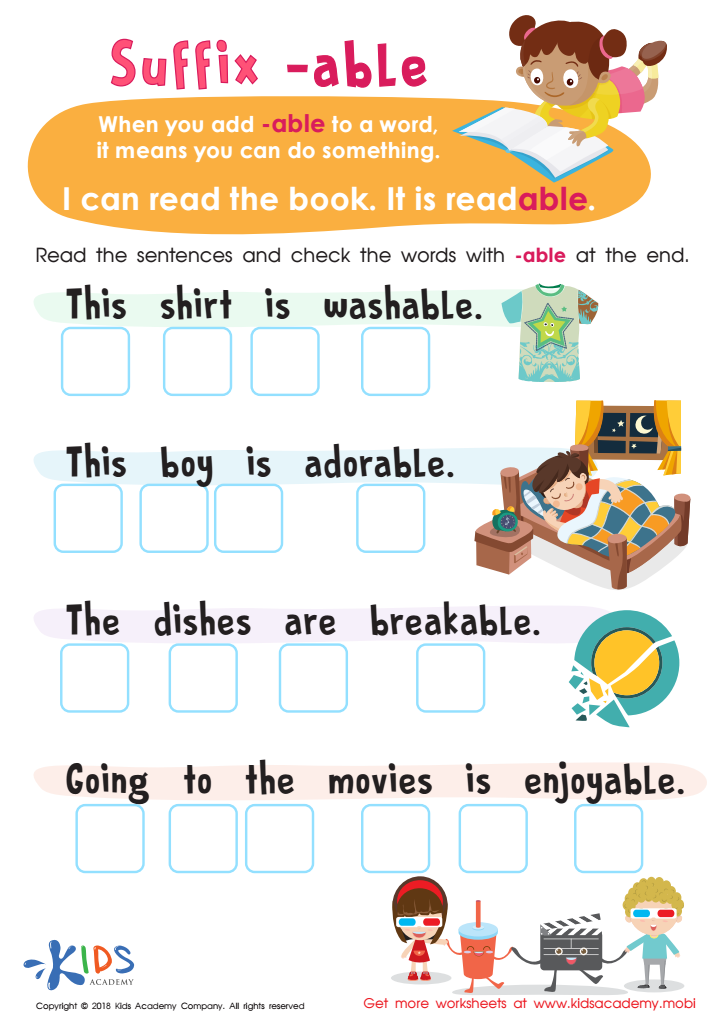
Suffix -Able Worksheet
Suffix -able means you can do something. Example: readable - means you can read it. Give kids examples then check this worksheet. Read sentences with kids, looking for words with -able at the end.
 Assign to My Students
Suffix -Able Worksheet
Worksheet
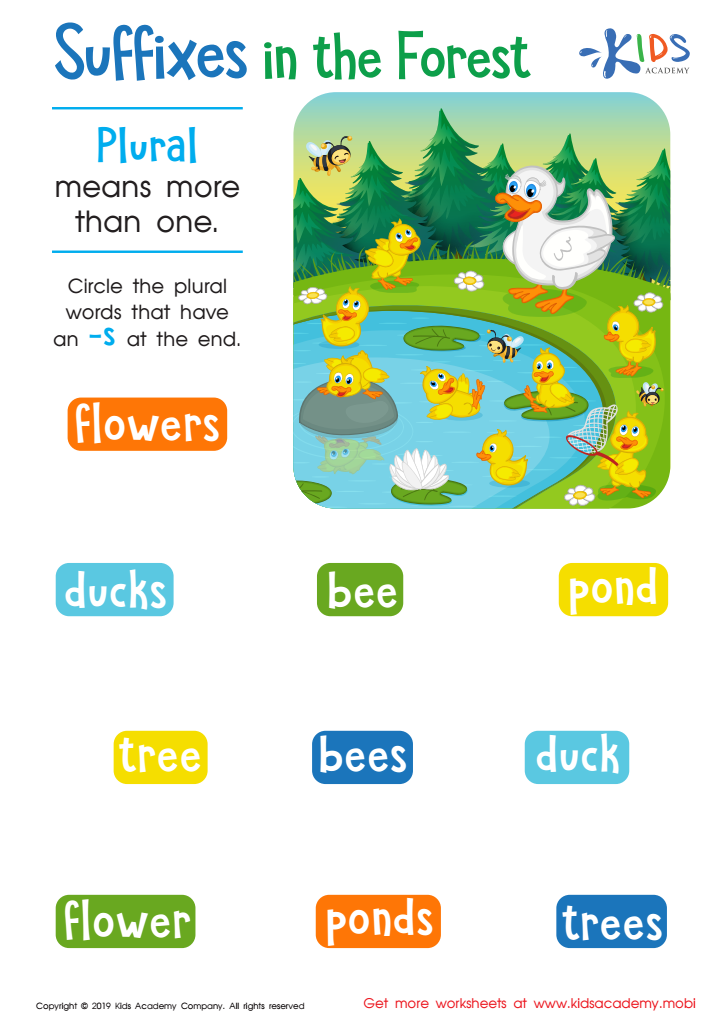
Suffixes in the Forest Worksheet
Suffixes are letters added to the end of words to form new words. These can be used to denote one who does something (e.g. reader) or more than one (e.g. adding -s). This worksheet helps kids practice pluralizing words they know by circling the plural words ending with -s.
Suffixes in the Forest Worksheet
Worksheet
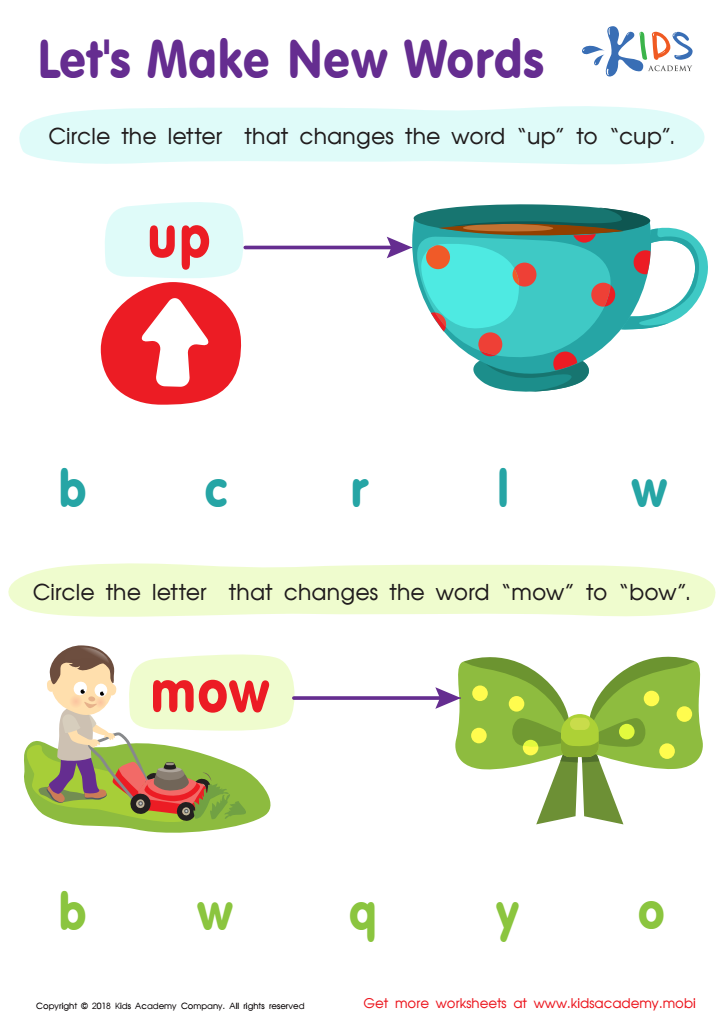
Let's Make New Words Worksheet
This fun and colorful downloadable worksheet is perfect for helping young readers to build confidence and practice their skills. They'll circle the letters to magically make new words, while developing fine motor skills. It'll be so much fun, they won't even realize they're honing their reading skills!
Let's Make New Words Worksheet
Worksheet
Join Kids Academy for Free
Who is primarily going to use this learning content?








Word formation skills are critical for children aged 6-8 because these skills lay the foundation for effective communication, reading comprehension, and academic success. During this formative stage, children are rapidly expanding their vocabulary and beginning to understand the mechanics of language. By learning how words are formed through roots, prefixes, and suffixes, children enhance their ability to decode unfamiliar words, making them more confident and proficient readers.
Effective word formation skills also promote better spelling and writing abilities. Children who understand these principles are more likely to spell words correctly and use them accurately in sentences. This, in turn, contributes to clearer and more expressive written and verbal communication, which is essential for success in and out of the classroom.
Moreover, developing these skills early helps children become more independent learners. They gain strategies to figure out the meanings of new words on their own, fostering curiosity and a love for learning. This independence supports long-term academic achievement, as children become adept at interpreting complex texts across various subjects.
In summary, nurturing word formation skills in children aged 6-8 is crucial because it equips them with fundamental tools for effective literacy, fosters academic success, and cultivates a lifelong love of learning.








