Word formation understanding Worksheets for Ages 6-8
3 filtered results
-
From - To
Discover our engaging Word Formation Understanding Worksheets designed specifically for ages 6-8! These interactive resources enhance children's vocabulary and language skills through playful activities that introduce concepts like prefixes, suffixes, and root words. Our thoughtfully created worksheets encourage critical thinking and help young learners grasp the relationships between words. With fun exercises tailored to this age group, kids will enjoy practicing word formation while building confidence in their reading and writing abilities. Perfect for home or classroom use, these worksheets are a valuable tool for fostering a love of language in young learners. Start your child's journey to word mastery today!
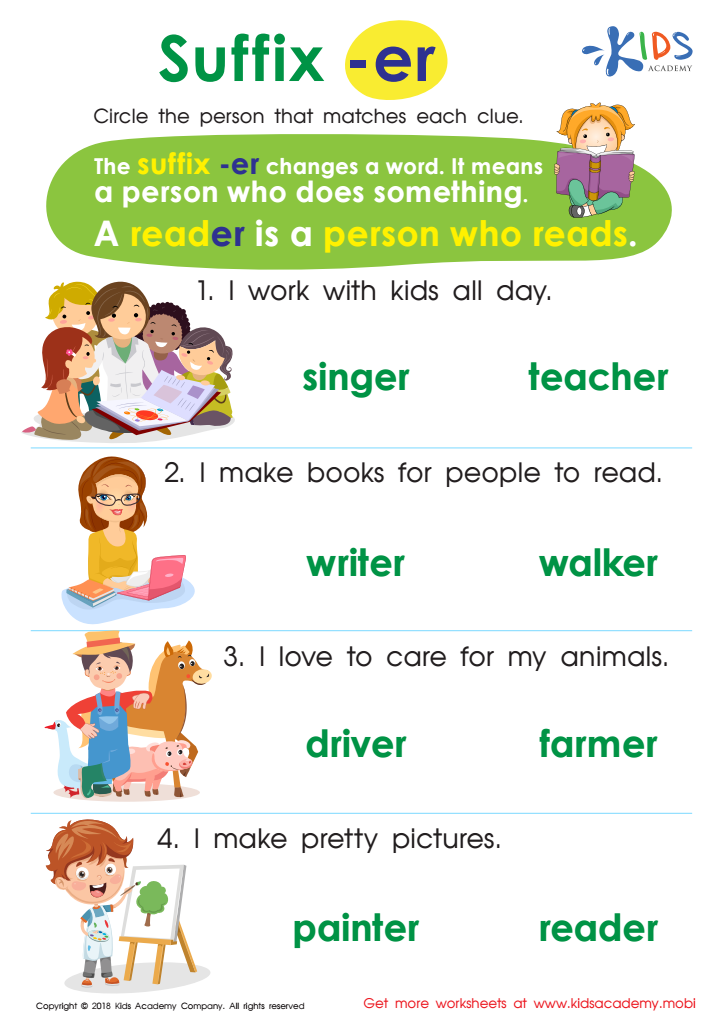
Suffix –er Printable Worksheet
 Assign to My Students
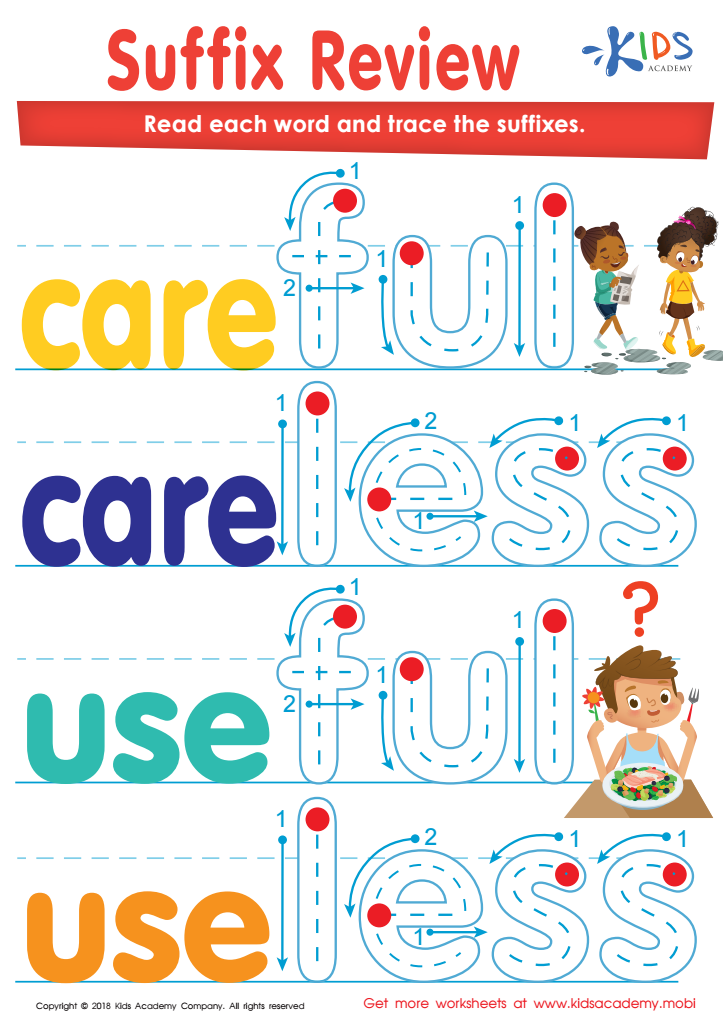
Suffix Review Worksheet
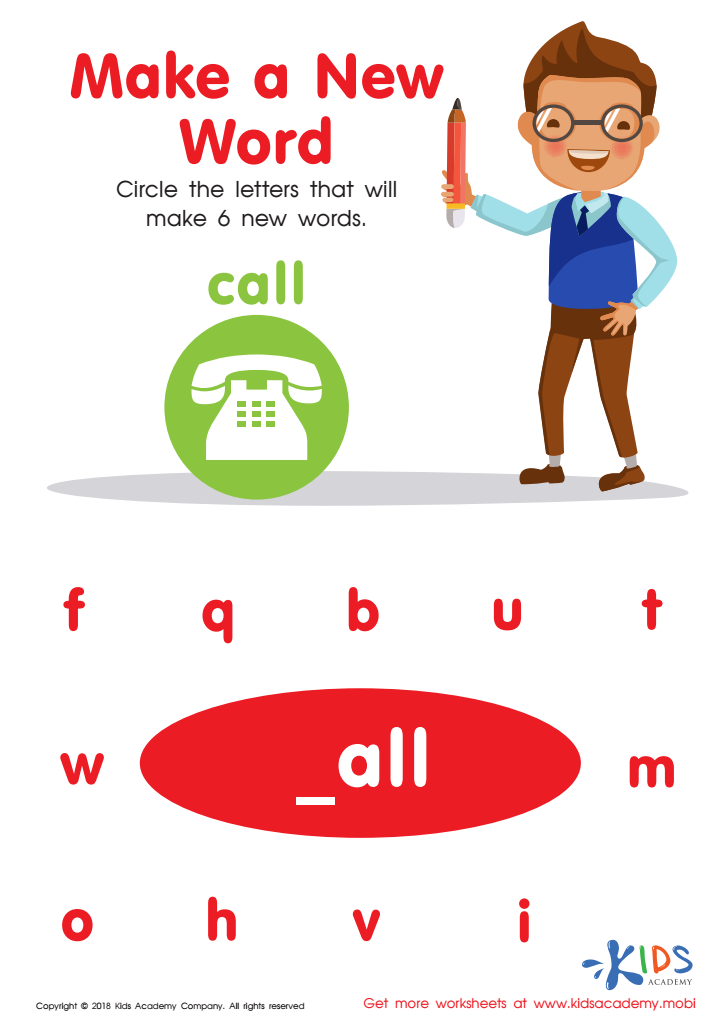
Make a New Word Worksheet








Word formation understanding is crucial for children aged 6 to 8, as it lays the foundation for their literacy development and overall language skills. During these formative years, children are actively building their vocabulary and grappling with the structure of language. By grasping how words are formed—through prefixes, suffixes, and root words—students gain insights into pronunciation, spelling, and meaning, which supports reading comprehension.
Furthermore, understanding word formation enhances critical thinking. Children learn to make connections between words, enabling them to infer meanings and recognize patterns in language. This skill is particularly useful in developing their writing abilities, as they become more adept at crafting sentences and using varied vocabulary.
Moreover, a solid grasp of word formation principles fosters a sense of confidence in young learners. As they encounter new words, they are better equipped to decode and understand them, making reading less daunting and more enjoyable.
In contrast, if a child's understanding of word formation is overlooked, they may struggle with reading and writing proficiency, impacting their academic performance. Thus, it becomes essential for parents and teachers to prioritize word formation activities in their teaching strategies to support children's linguistic growth and nurtures a lifelong love for language.








