Comparing Fractions Adding up to 100 Misc Worksheets for Ages 6-8
10 filtered results
-
From - To
Explore our collection of "Comparing Fractions Adding up to 100" worksheets designed for children ages 6-8. These engaging pages helps young learners understand the concepts of fractions and addition, fostering essential math skills in comparison and problem-solving. Each worksheet is crafted to make learning fun and interactive, ensuring that children can grasp and apply fractional value comparisons effectively. Our printable resources are perfect for use at home or in the classroom, supporting your child’s journey towards math proficiency. Enhance their confidence with our easy-to-follow and thoughtfully designed practice exercises. Join us to make math enjoyable for kids!
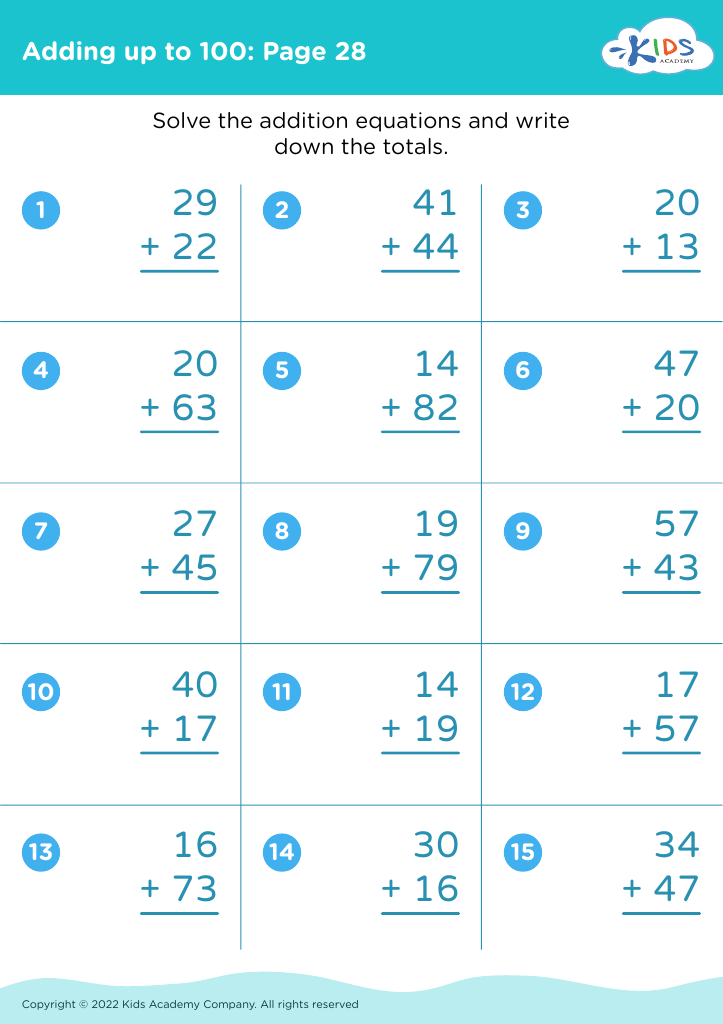
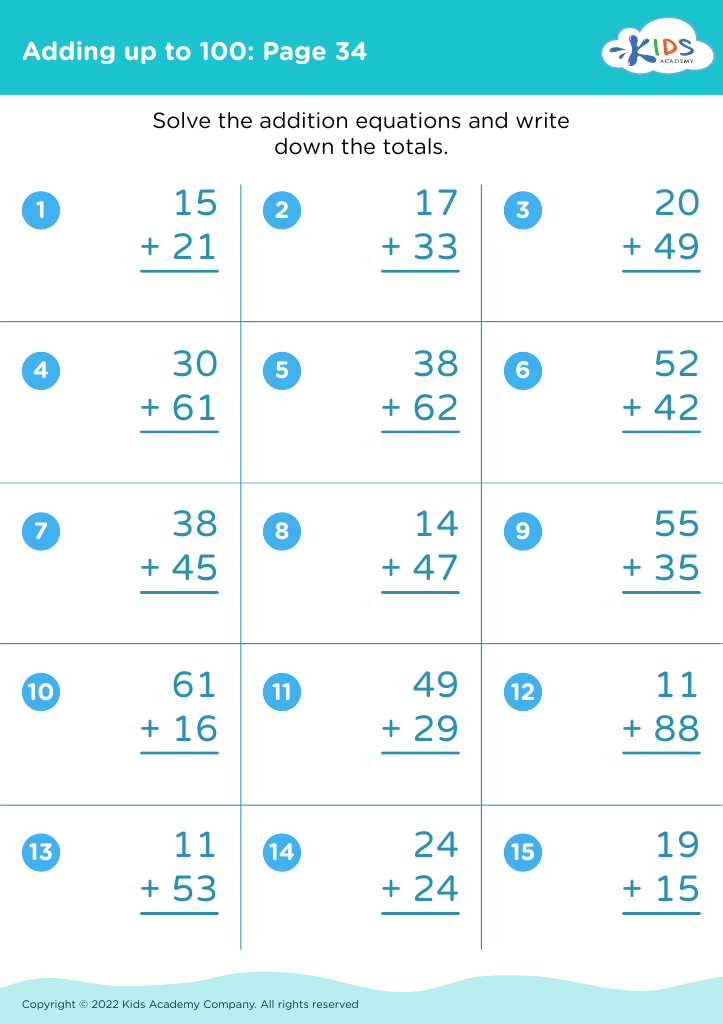
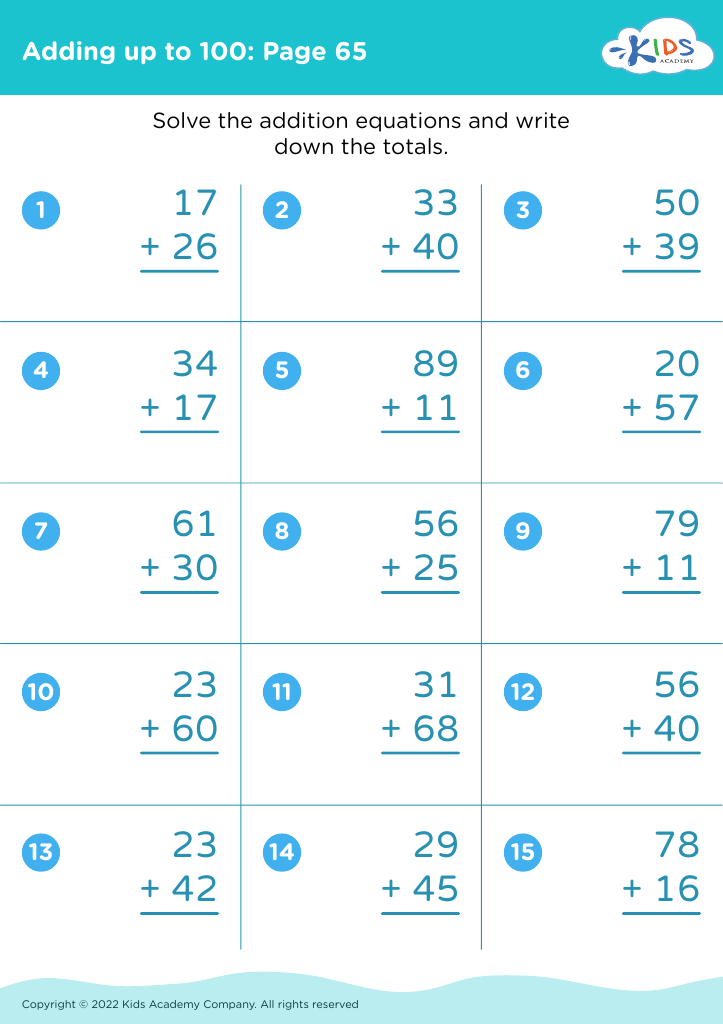
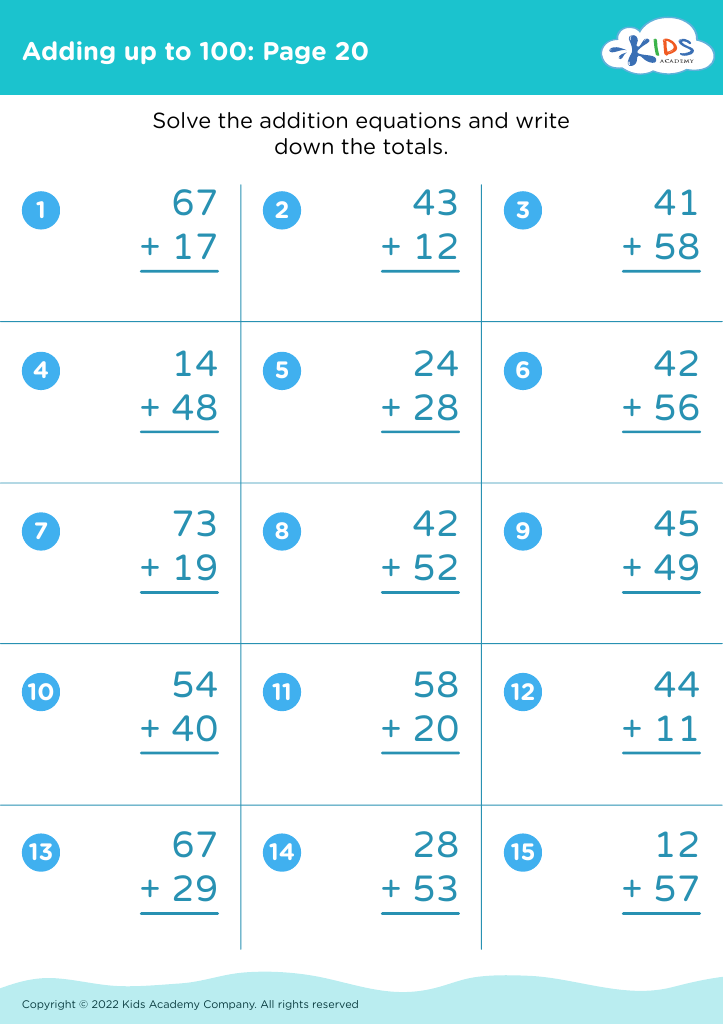
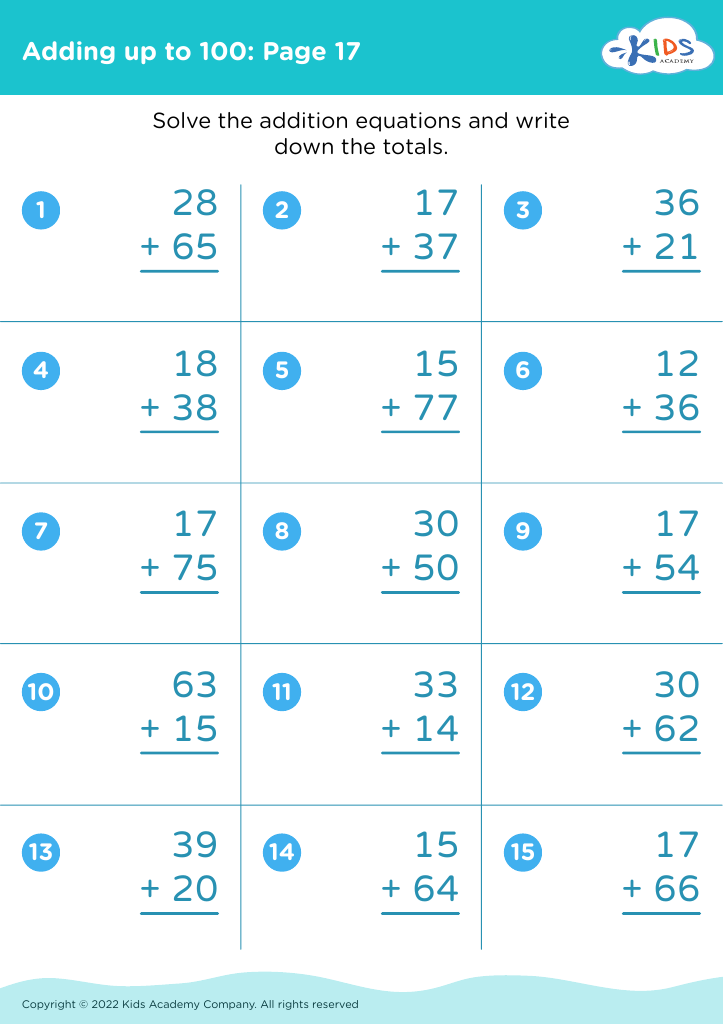
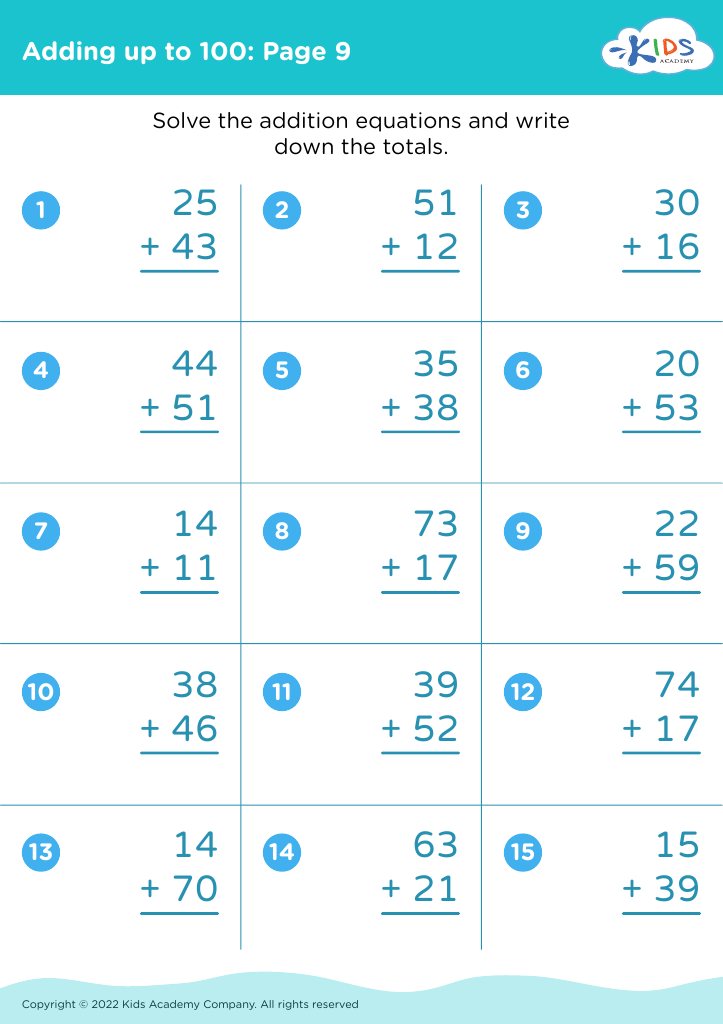
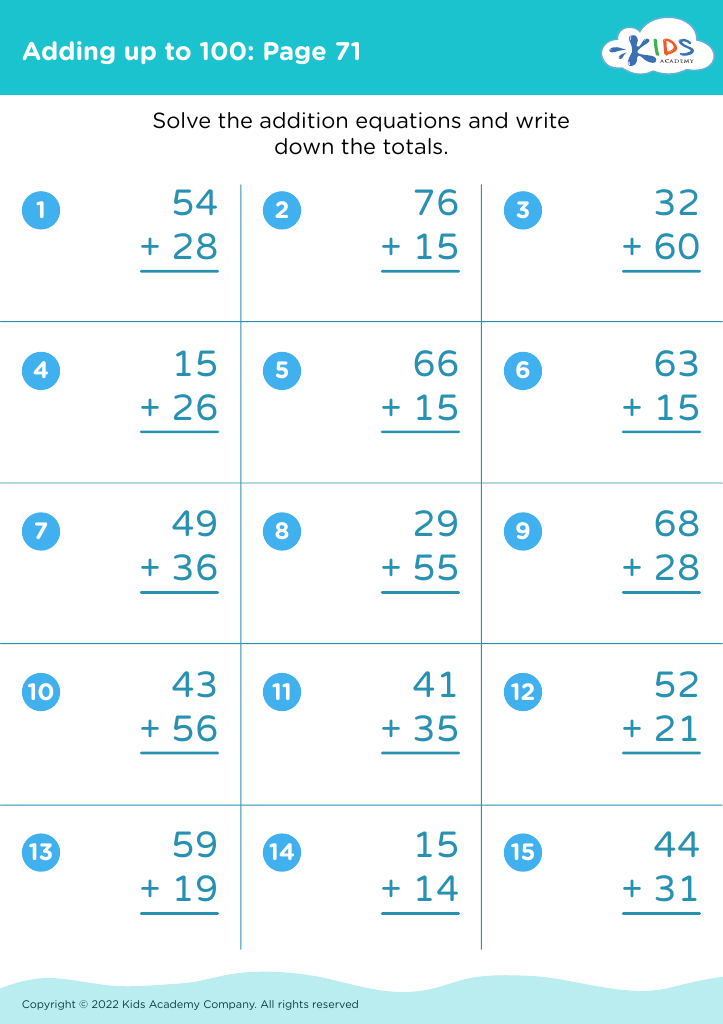
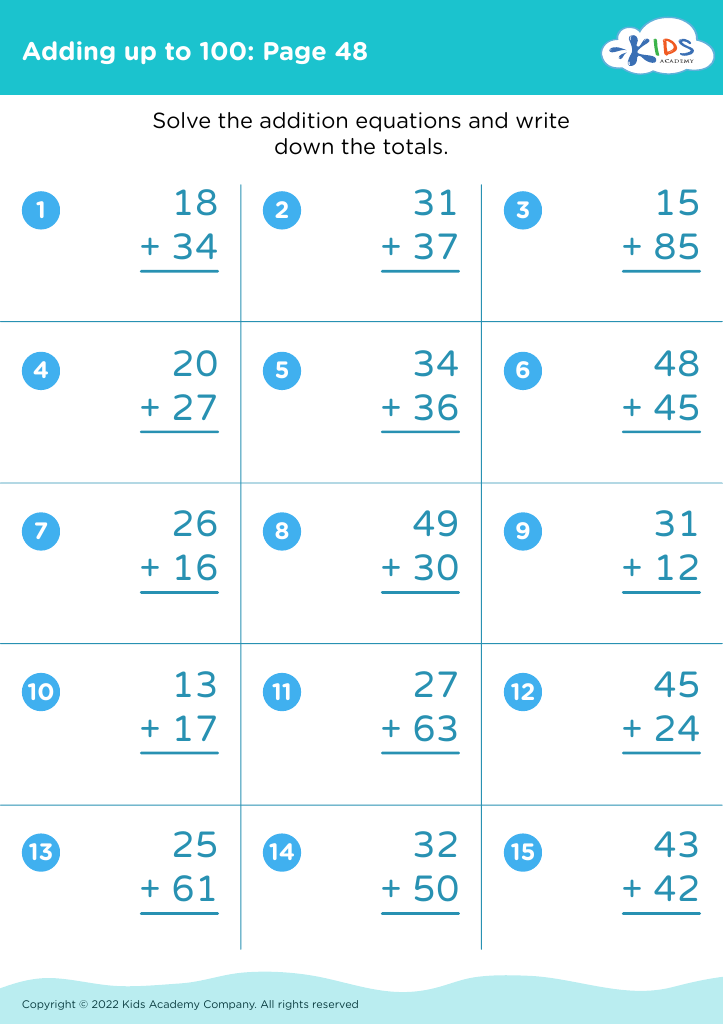
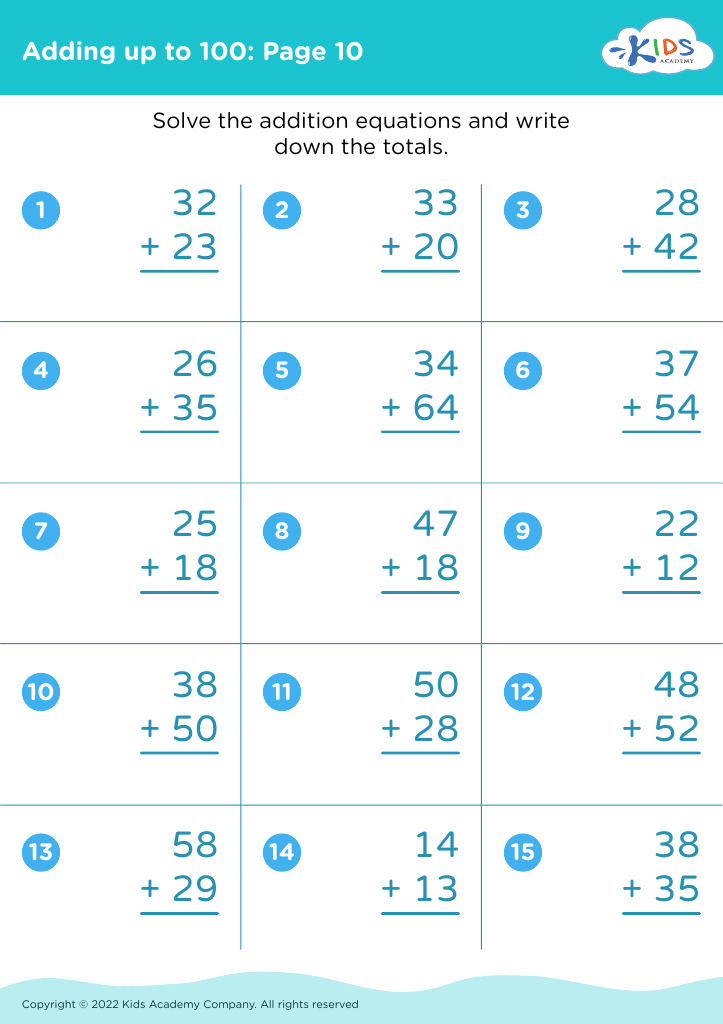
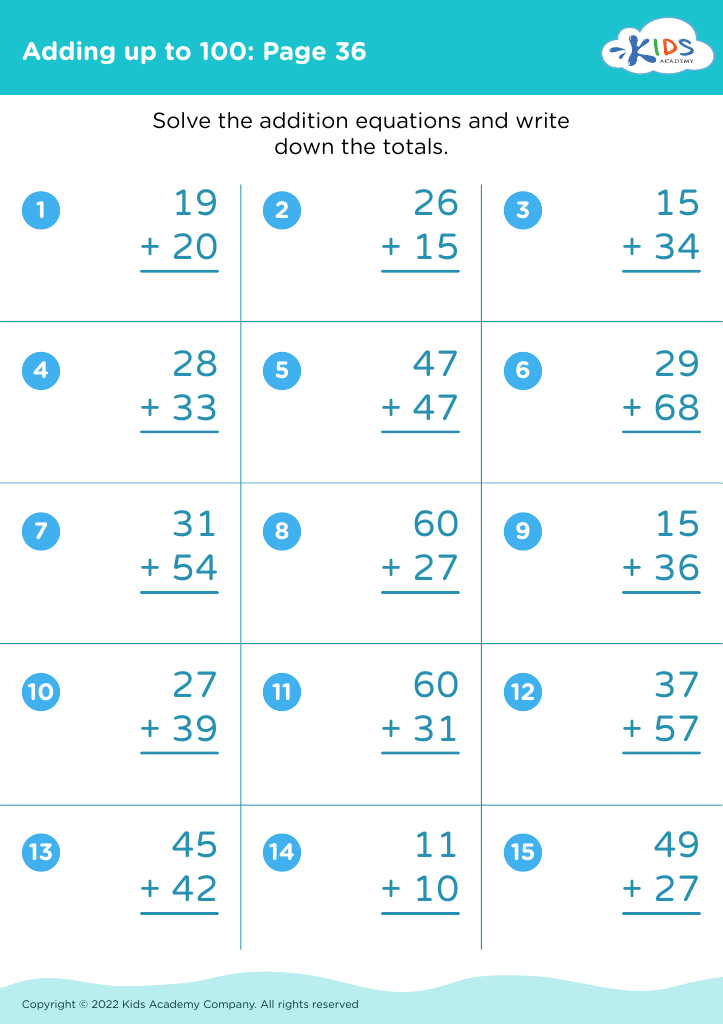


Comparing fractions and understanding how to add numbers up to 100 are foundational skills in early mathematics, essential for children aged 6-8. These concepts form the building blocks for advanced mathematical topics and are critical for everyday practical applications—parents and teachers should prioritize them.
Firstly, comparing fractions helps children grasp the concept of proportionality, which is vital for understanding ratios, percentages, and even basic concepts in probability. Recognizing that 1/2 is larger than 1/4 forms the basis for more complex mathematical reasoning later on.
Secondly, adding numbers up to 100 instills a sense of number familiarity and fluency. Mastery of simple addition lays the groundwork for tackling more advanced arithmetic, such as subtraction, multiplication, and division. This skill ensures that children can handle higher-level math problems with confidence.
Additionally, proficiency in these areas boosts problem-solving abilities and critical thinking. Children learn logical sequencing, patience, and attention to detail—skills transferable to other academic subjects and real-life scenarios.
Parents and teachers play a crucial role in reinforcing these foundational concepts through engaging activities and consistent practice. Engaging with these topics early ensures that children build a strong, resilient mathematical foundation, empowering them to excel in later educational stages and in everyday life.