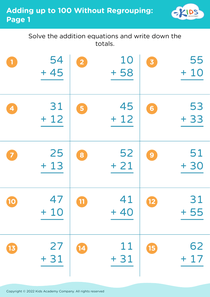
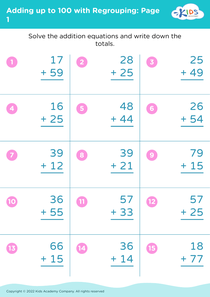
Counting skills Adding up to 100 Misc Worksheets for Ages 6-8
7 filtered results
-
From - To
Enhance your child's counting skills with our engaging "Adding Up to 100 Misc Worksheets" designed for ages 6-8. These printable resources are perfect for young learners as they practice essential math concepts while building confidence in their abilities. Each worksheet includes a variety of fun tasks that promote counting, addition, and number recognition, ensuring your child stays motivated and excited to learn. Our comprehensive worksheets cater to different learning styles, making math accessible and enjoyable. Equip your child with the foundational skills they need to succeed in math by exploring our collection of thoughtful and interactive counting worksheets today!
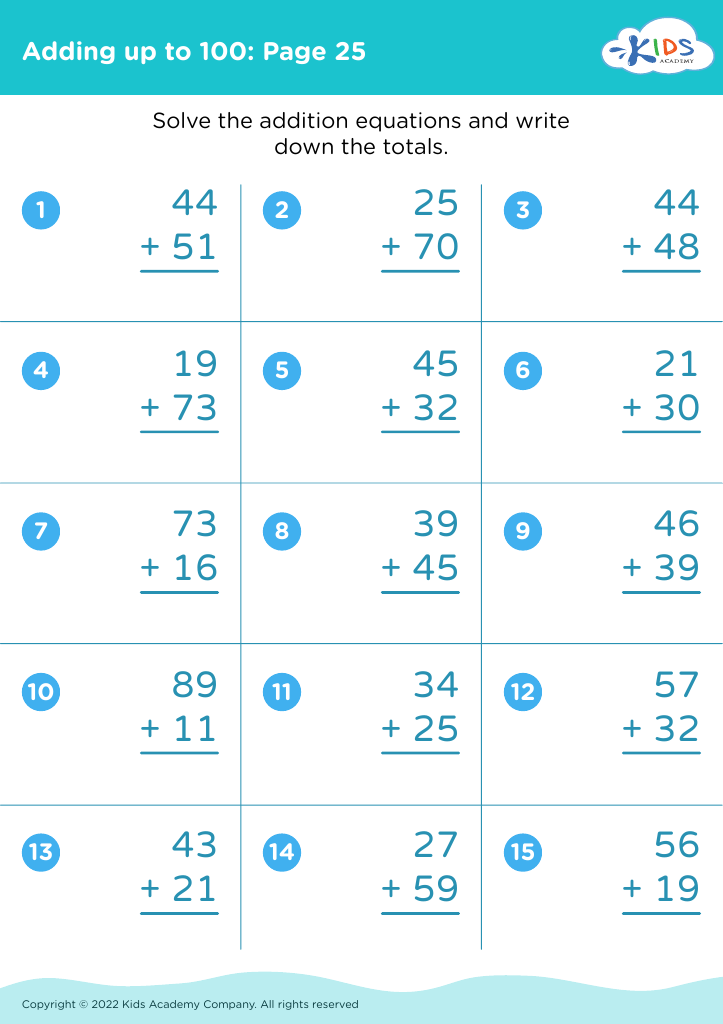
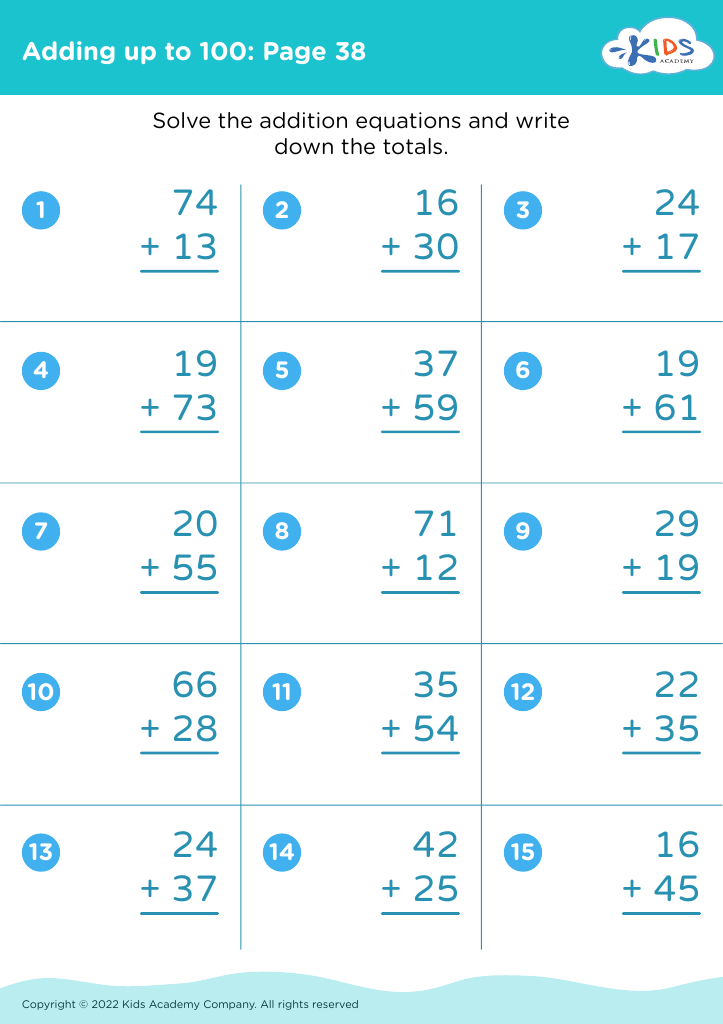
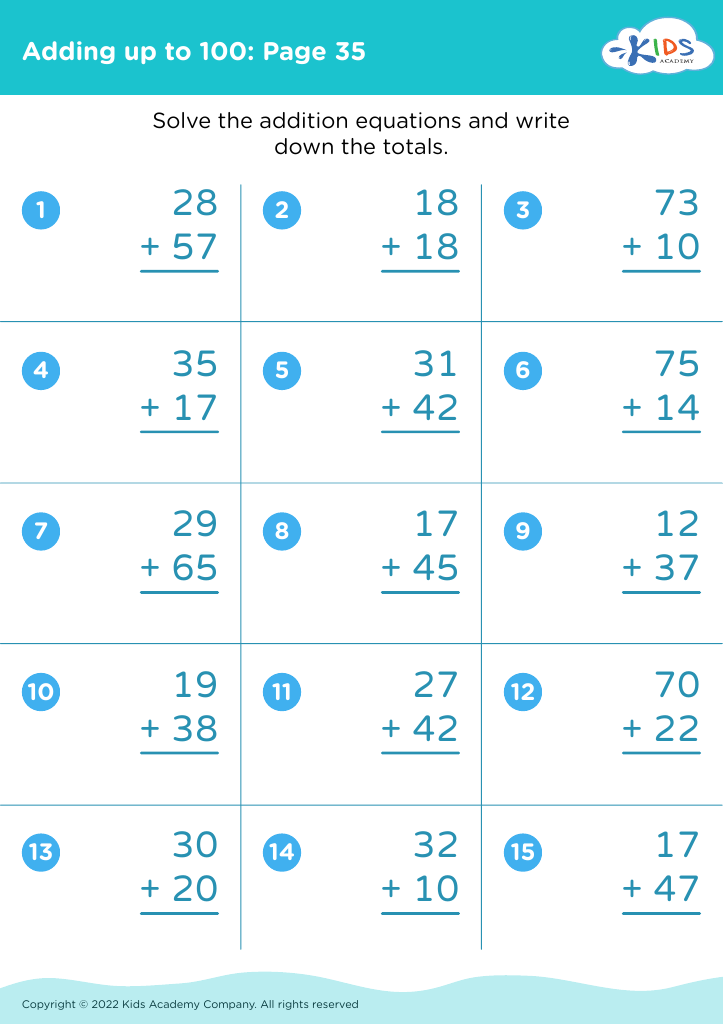
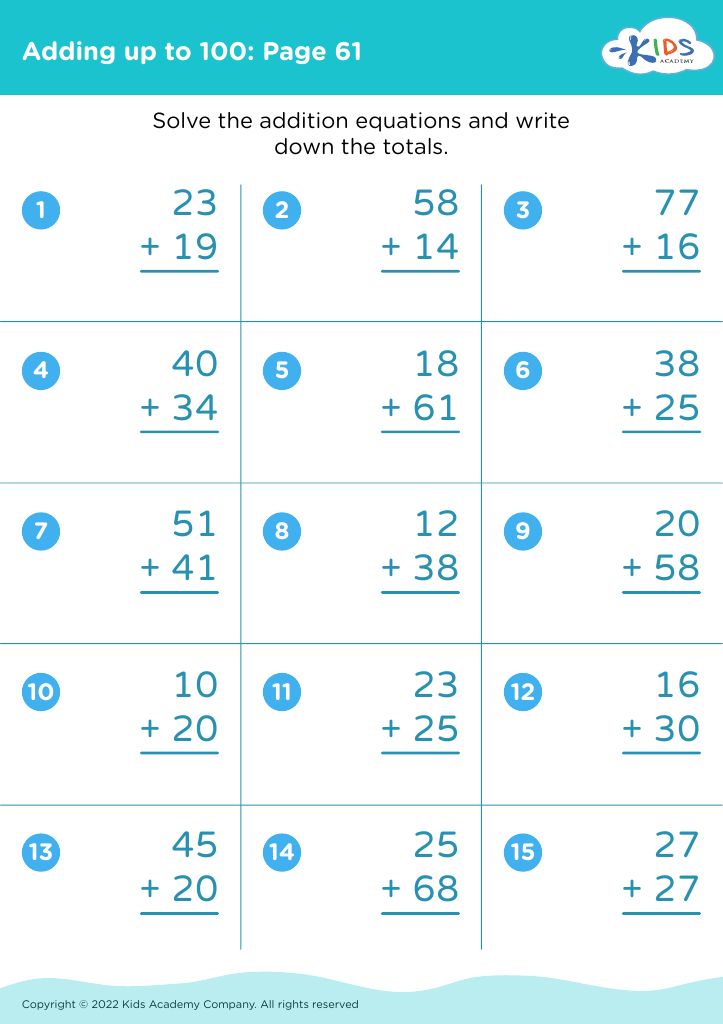
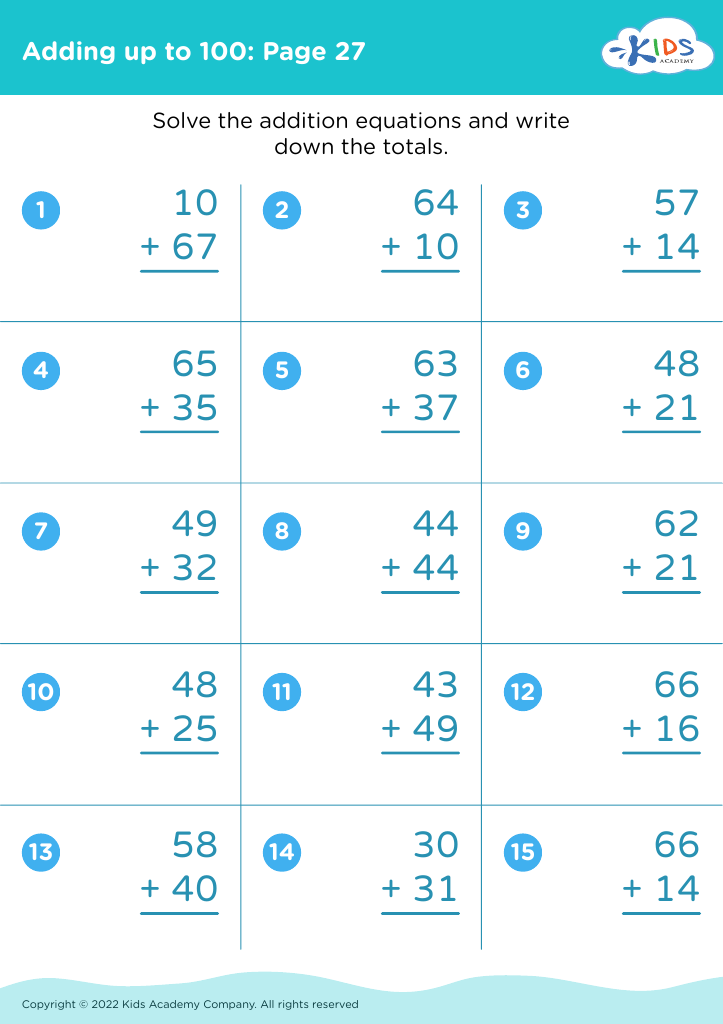
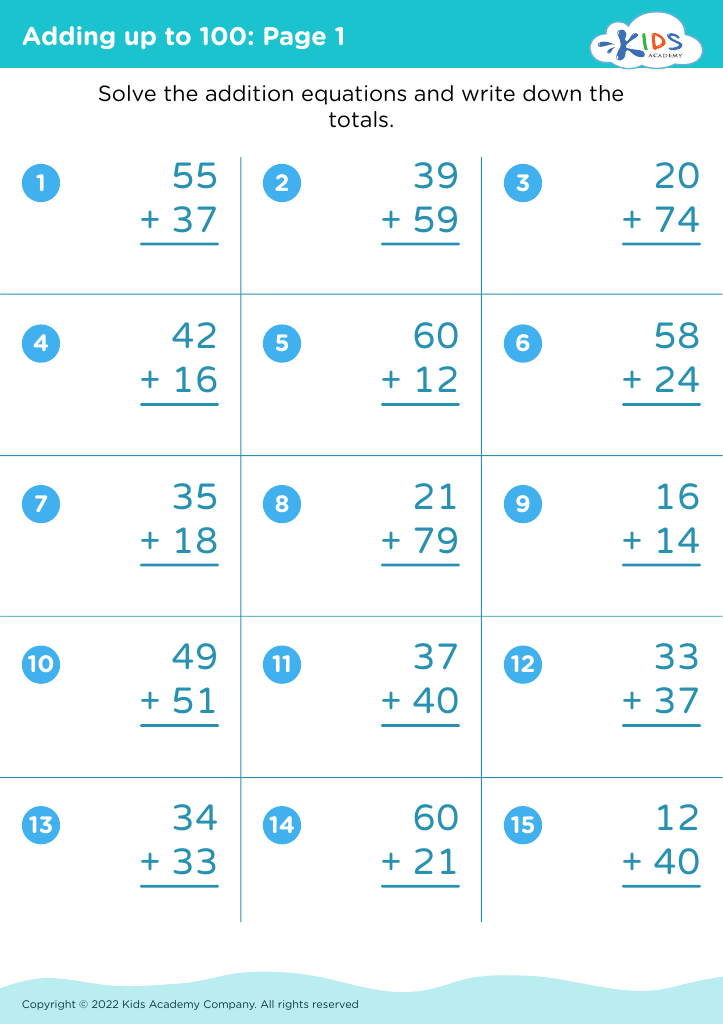
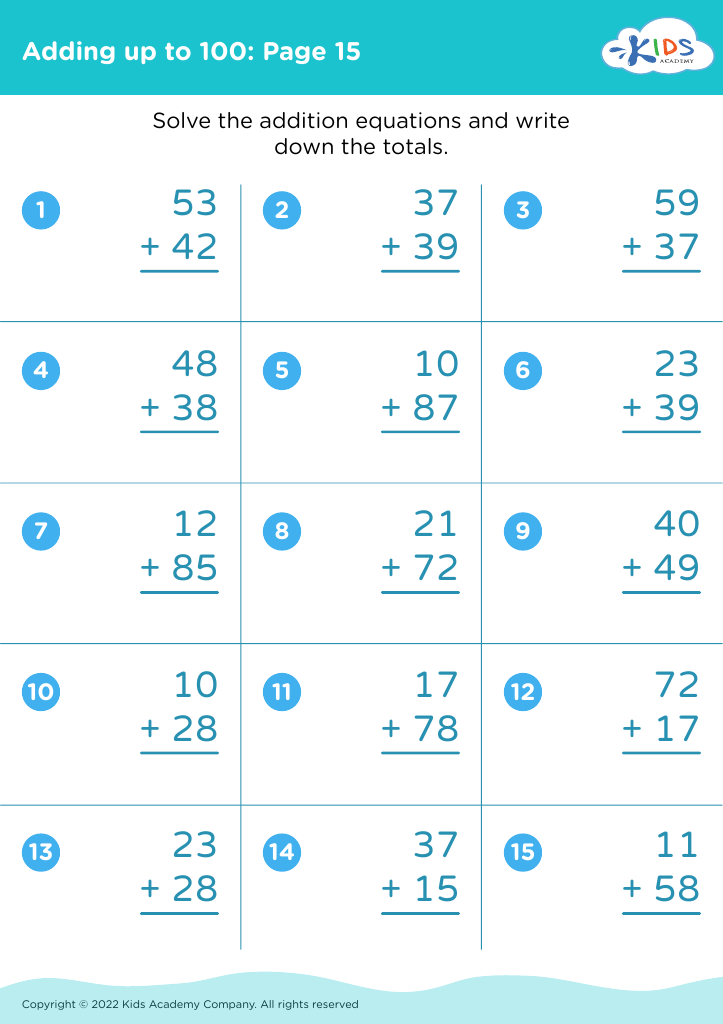


Counting skills are foundational for a child’s mathematical development and essential for their overall cognitive growth. For children aged 6-8, mastering counting, especially adding up to 100, enhances their ability to understand larger numbers and more complex mathematical concepts. This skill helps them advance from simple addition and subtraction to more abstract problems, paving the way for success in both math and everyday life.
Moreover, strong counting skills foster critical thinking, problem-solving abilities, and logical reasoning. When children can confidently manage numbers, they gain self-esteem and a positive attitude towards mathematics, reducing anxiety associated with math-related tasks later on. This age group is also at a key developmental stage where they are moving from concrete to abstract thinking, making it crucial for them to develop these skills through engaging, hands-on practice.
Parents and teachers should engage children with fun counting games, visual aids, and practical scenarios that make learning interactive. By emphasizing counting in various contexts, we not only bolster their mathematical proficiency but also equip them with the skills they need for real-world situations, establishing a strong foundation for lifelong learning and success.