Enhance number recognition Adding up to 100 Misc Worksheets for Ages 6-8
5 filtered results
-
From - To
Enhance your child's number recognition skills with our engaging "Adding up to 100" miscellaneous worksheets designed for ages 6-8. These expert-crafted exercises help young learners master adding numbers up to 100 through a variety of fun and interactive activities. Whether in the classroom or at home, these worksheets are perfect for reinforcing basic math concepts and improving number fluency. Each worksheet combines educational lessons with engaging games to keep your child interested and enthusiastic. Boost their confidence in mathematics and lay a solid foundation for future learning with our effective and age-appropriate resources.
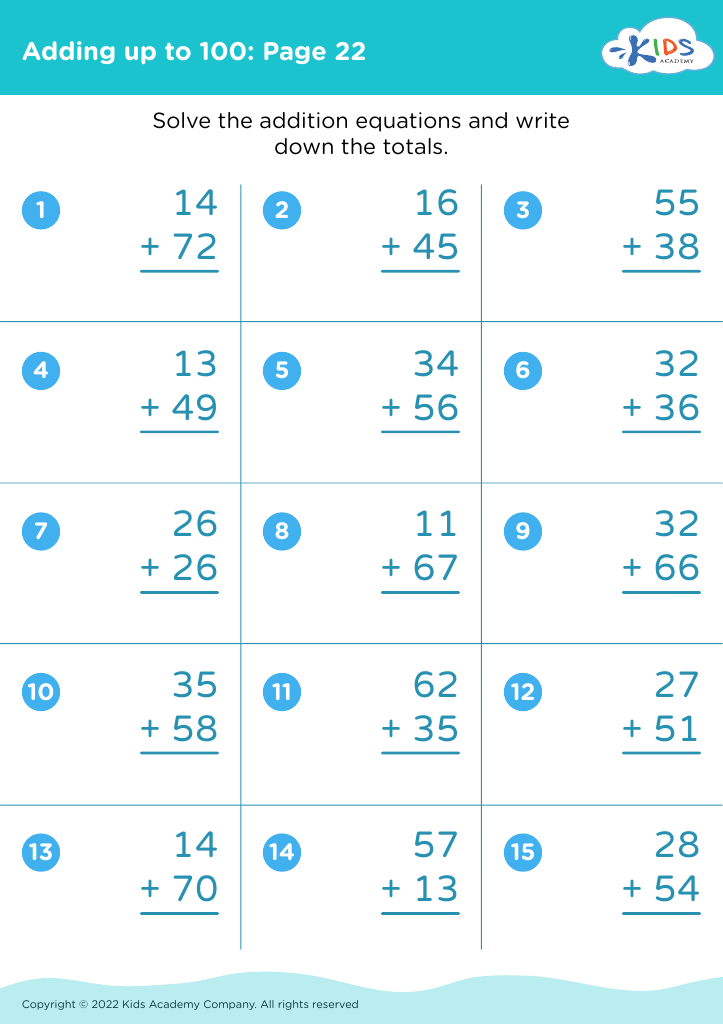
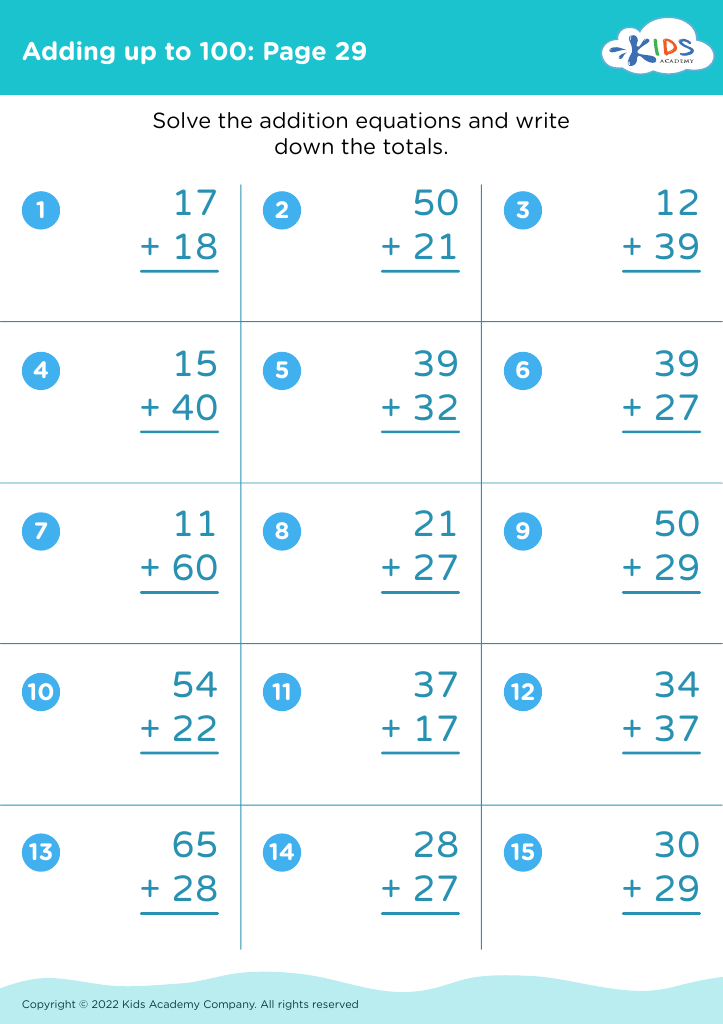
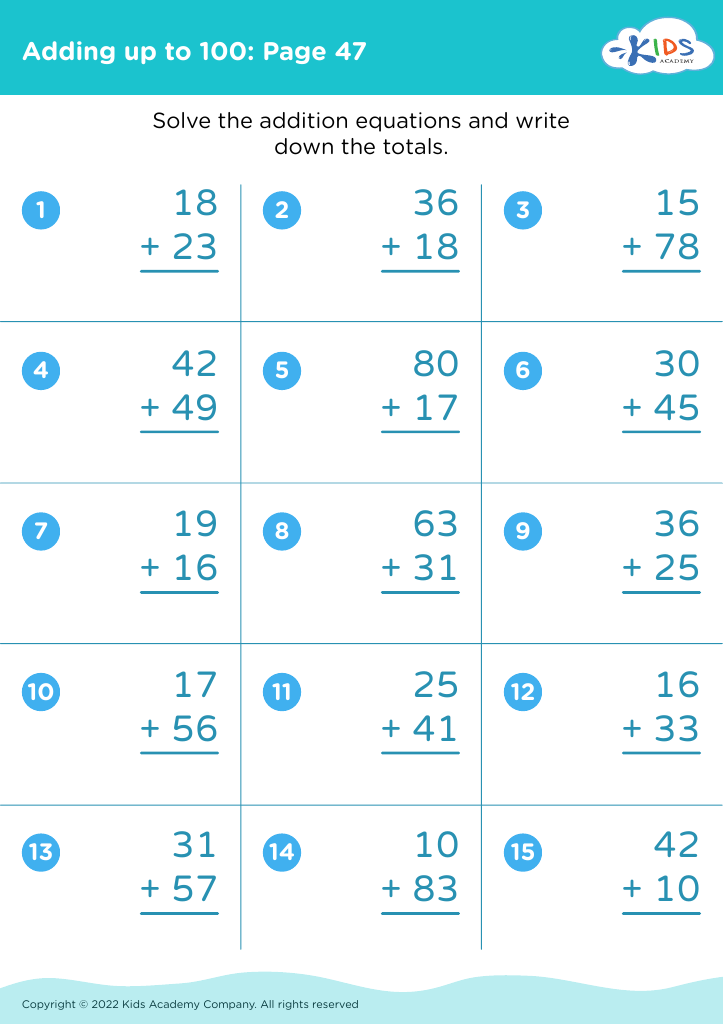
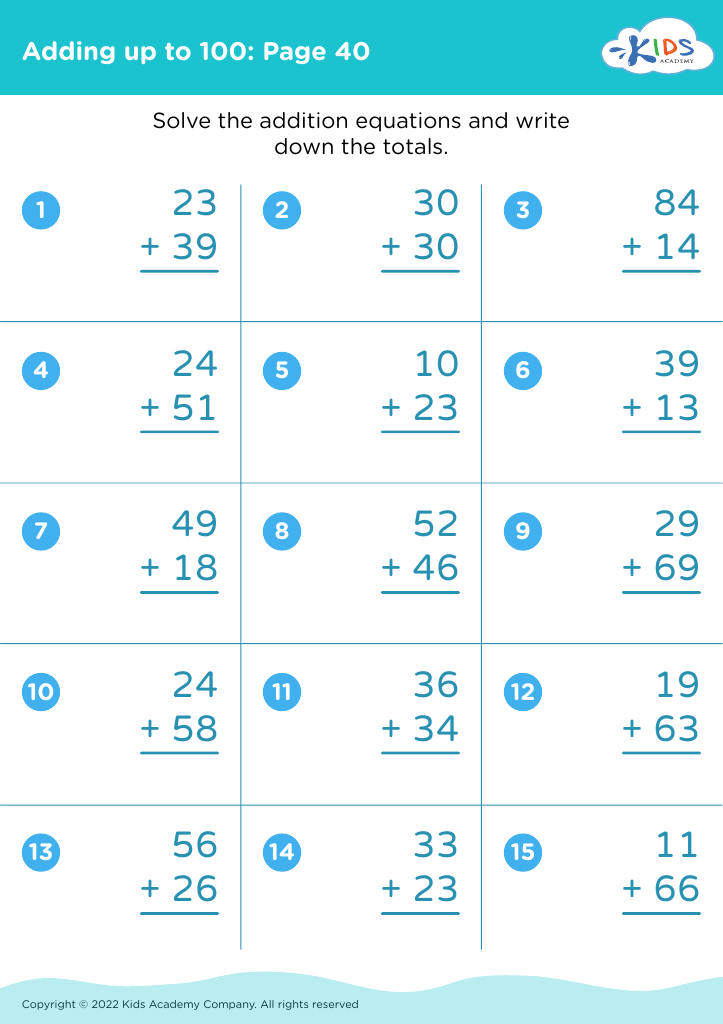
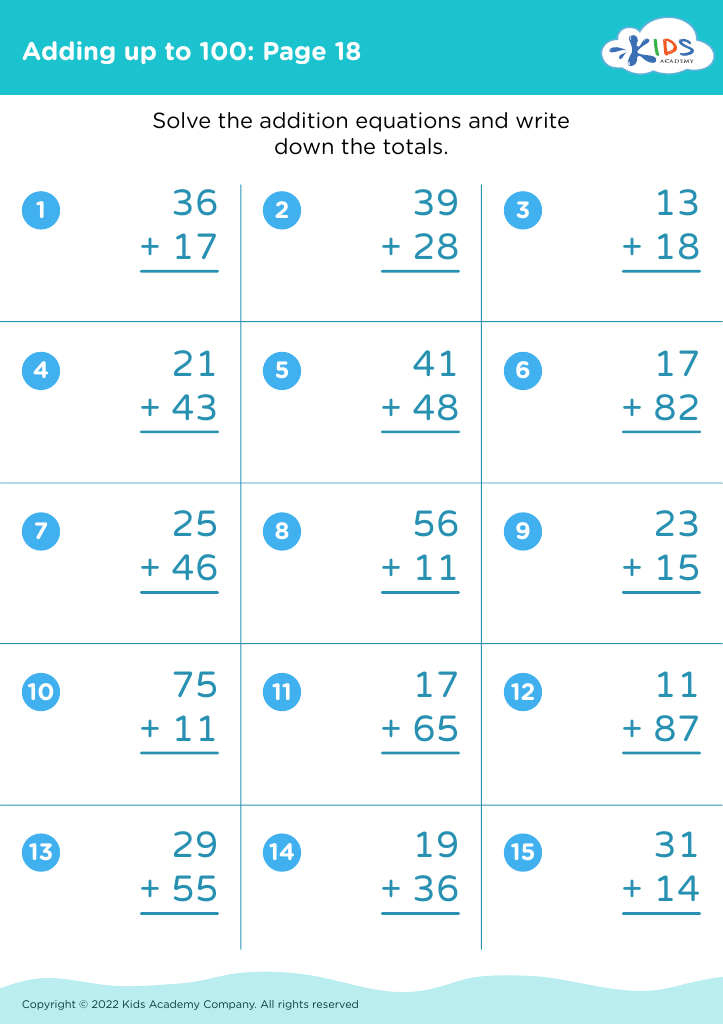


Enhancing number recognition and addition skills up to 100 in children ages 6-8 is foundational for their overall mathematical development and academic success. At this young age, kids are in the crucial stages of cognitive development where they begin to understand and internalize basic arithmetic principles. By strengthening their ability to recognize and add numbers up to 100, parents and teachers create a solid base for more complex mathematical concepts.
Number recognition is a key precursor to numeracy skills, enabling children to understand the meaning behind numbers they see and converse about. It also bolsters their confidence, making them more likely to participate actively in classroom activities and discussions. Adding numbers up to 100 is not just about basic arithmetic but develops problem-solving skills and logical thinking. This type of practice encourages children to start seeing patterns, make connections, and develop computational fluency.
Additionally, these skills are vital for everyday activities like telling time, handling money, and measuring ingredients in cooking, which ensures children gain practical life skills. Effective parental and educational support during this formative period lays down a lifelong positive attitude towards mathematics, significantly enhancing future academic performance and leading to greater opportunities as the child matures. Therefore, emphasizing these numerical foundations at ages 6-8 is instrumental for cognitive, practical, and academic growth.