Fine Motor Skills Adding up to 100 Misc Worksheets for Ages 6-8
5 filtered results
-
From - To
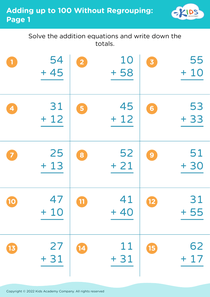
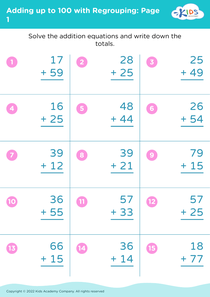
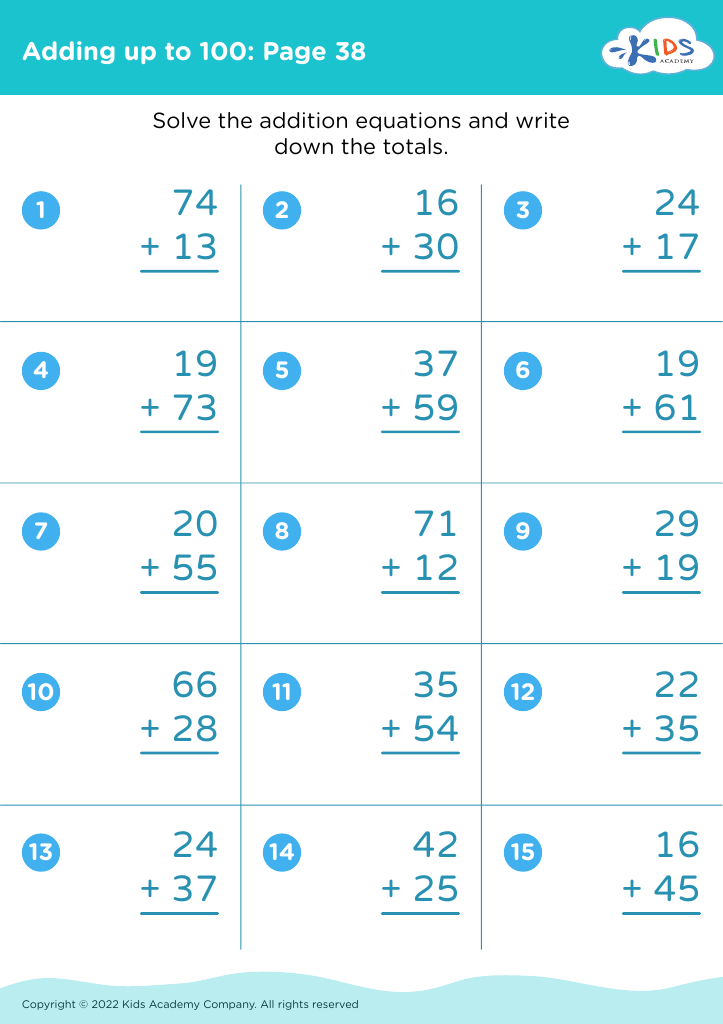
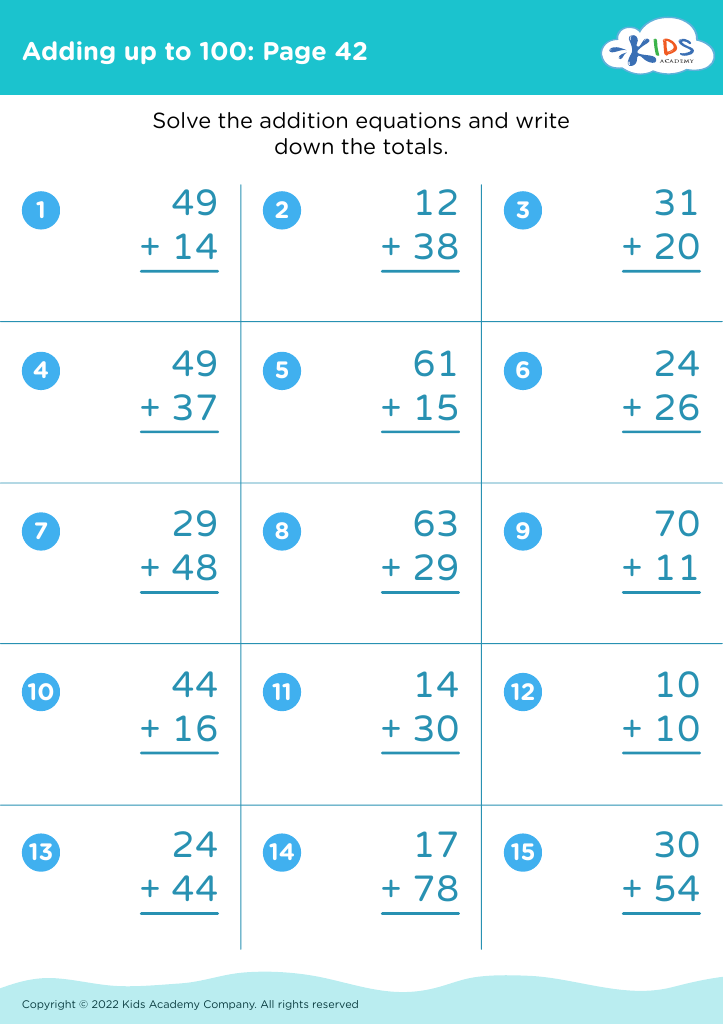
Boost your child's fine motor skills and math abilities with our engaging misc worksheets designed for ages 6-8. Kids Academy offers a diverse collection of printable sheets that focus on adding up to 100. Each worksheet is crafted to enhance precision and dexterity, alongside strengthening your child's grasp of basic addition. By combining fun activities with essential math practice, these worksheets cater to various learning styles, making math both manageable and enjoyable. Perfect for at-home practice or classroom use, our resources empower young learners to build confidence and succeed in their educational journey. Explore, download, and start the learning adventure today!
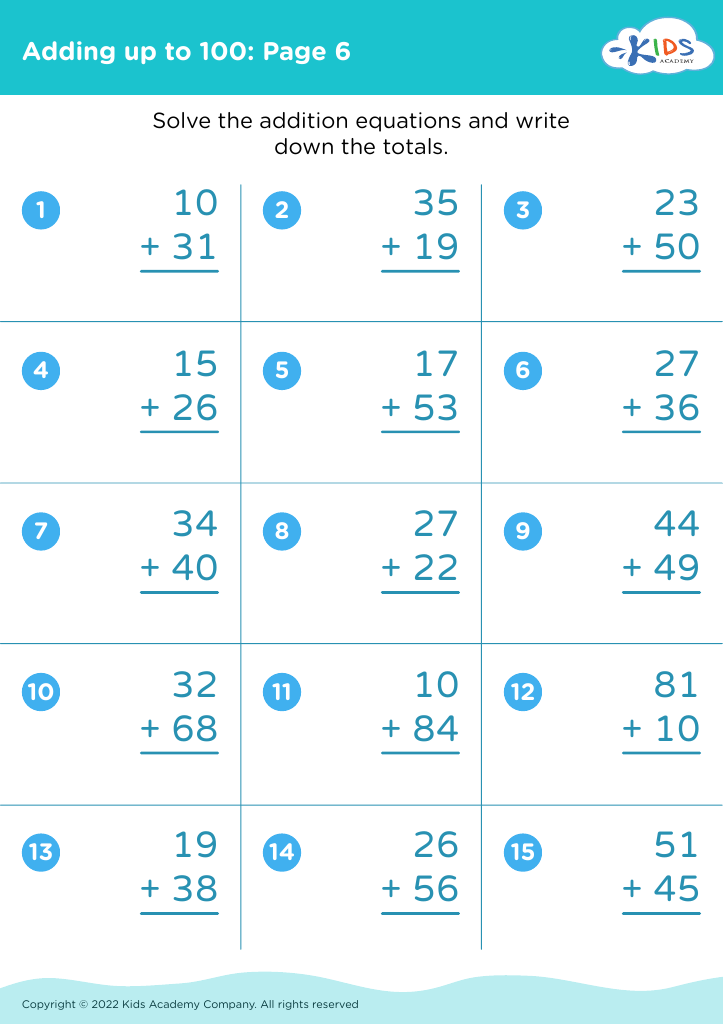
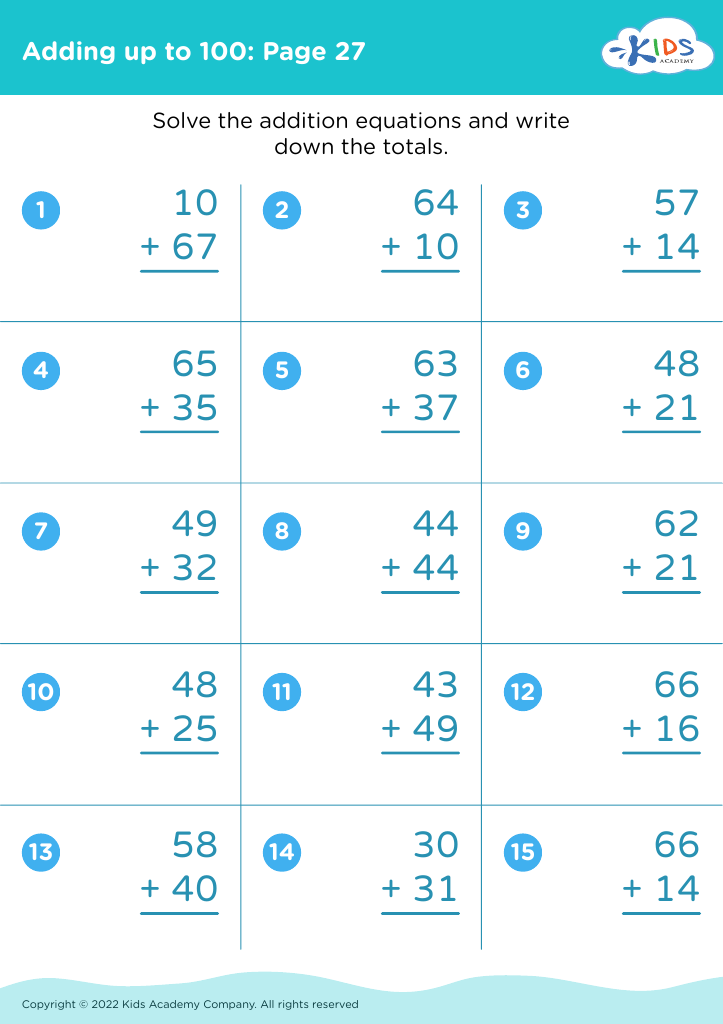
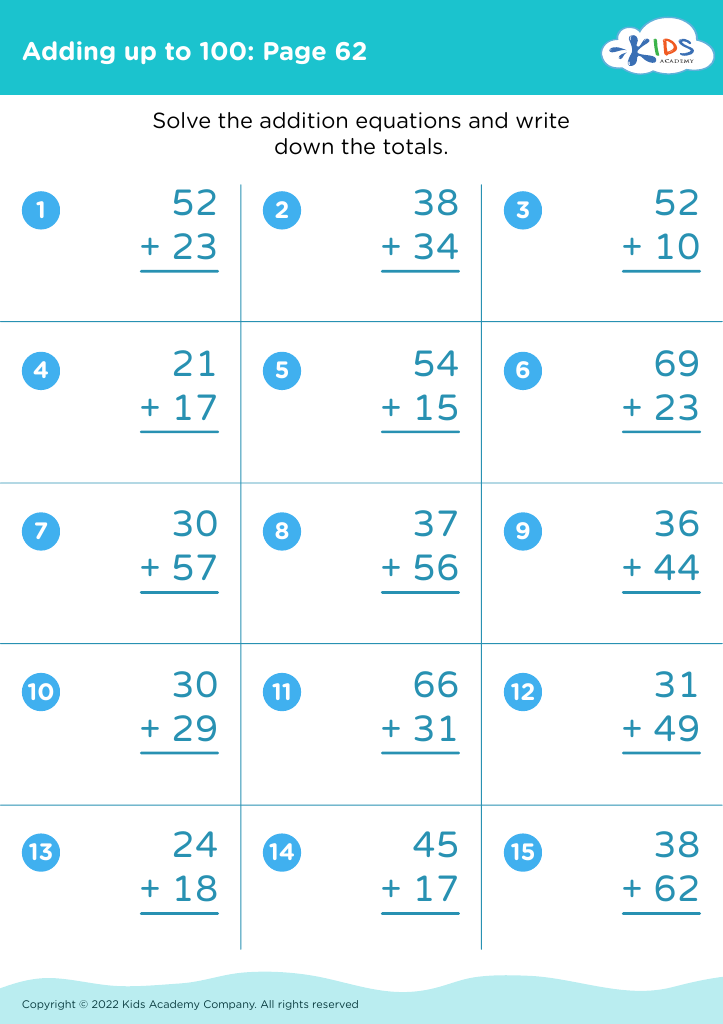


Fine motor skills are crucial for children aged 6-8 because they directly enable important daily activities and academic tasks. At this developmental stage, children refine the dexterity in their hands and fingers which is essential for writing, cutting, and manipulating small objects. Mastery in fine motor skills directly translates to better handwriting, improved art projects, and more effective use of school tools, fostering academic success.
when learning to add up to 100, tasks such as counting small objects, using a number line, or writing numbers repetitively reinforce the connection between their cognitive understanding and muscle memory. Engaging in activities that combine fine motor skills with mathematical practice, like drawing number lines or handling counters, enhances both areas simultaneously.
Parents and teachers should care because strong fine motor skills build confidence and independence in children. By focusing on these abilities, adults can support a child’s handwriting strength and accuracy, essential for fulfilling school requirements and self-expression. Providing varied and consistent opportunities for fine motor skill development—through play, structured activities, and daily tasks—ensures comprehensive development during a critical period. These foundational abilities contribute significantly to a child’s overall academic performance and skill growth, influencing how they engage with increasingly complex tasks in future educational pursuits.