Fraction simplification Adding up to 100 Misc Worksheets for Ages 6-8
6 filtered results
-
From - To
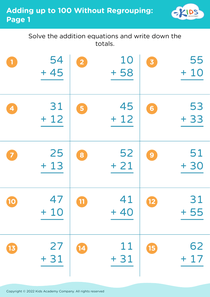
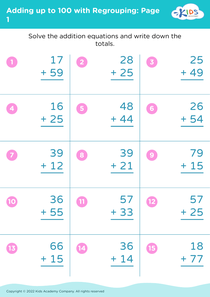
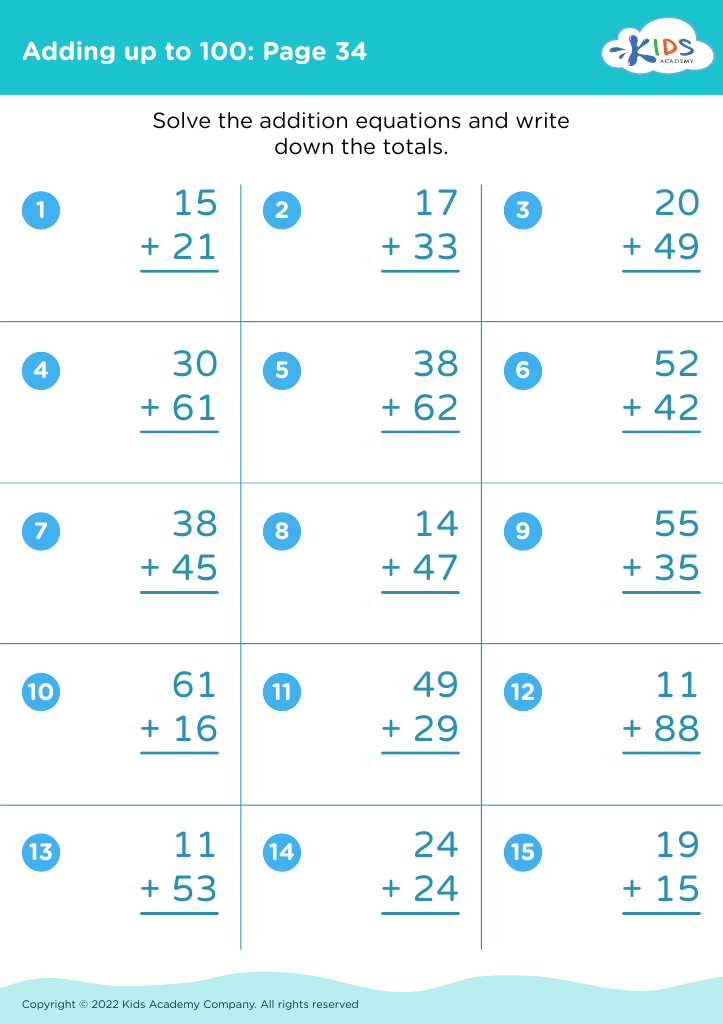
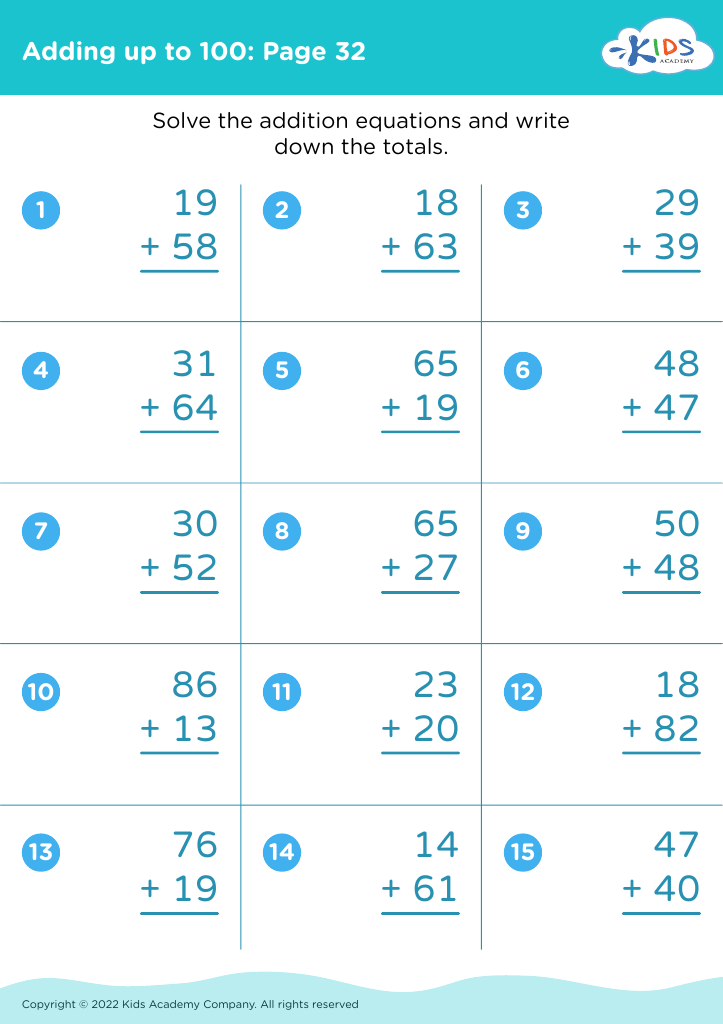
Explore our comprehensive collection of "Fraction Simplification Adding up to 100" worksheets designed for children aged 6-8. Our engaging activities help young learners grasp the fundamentals of fraction simplification while developing essential math skills. Tailored for easy understanding, these printable worksheets guide students through the process of adding fractions up to 100, enhancing their problem-solving abilities and confidence in math. Perfect for classroom use or at-home practice, our worksheets involve vibrant visuals and interactive tasks to make learning fun and effective. Boost your child's math proficiency today with our expertly crafted materials! Access now and watch them excel!
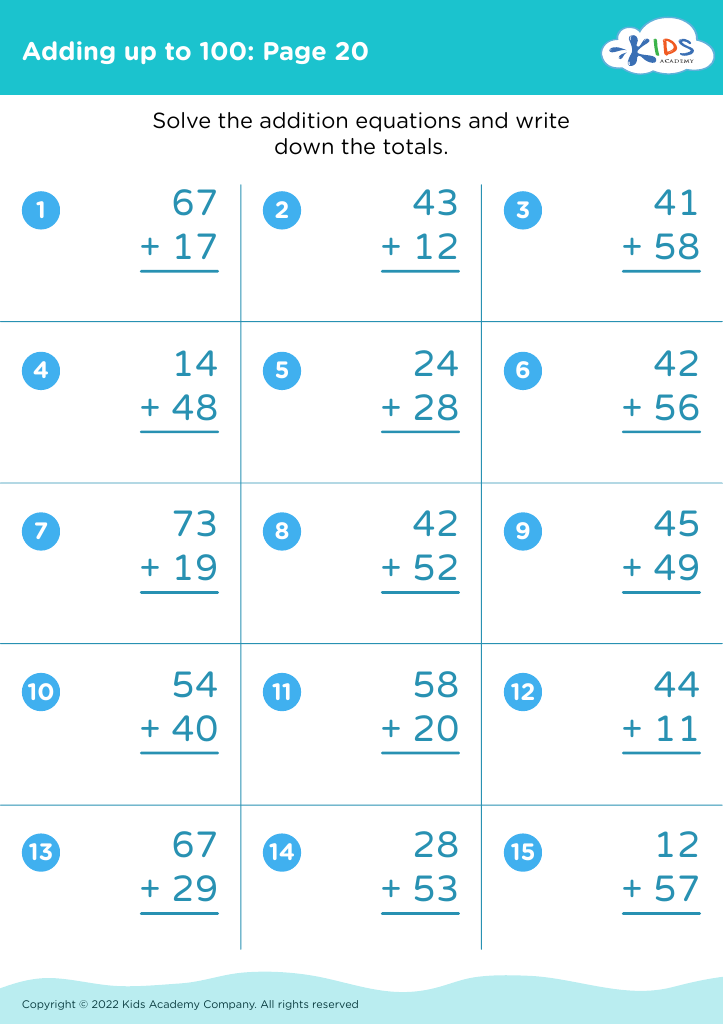
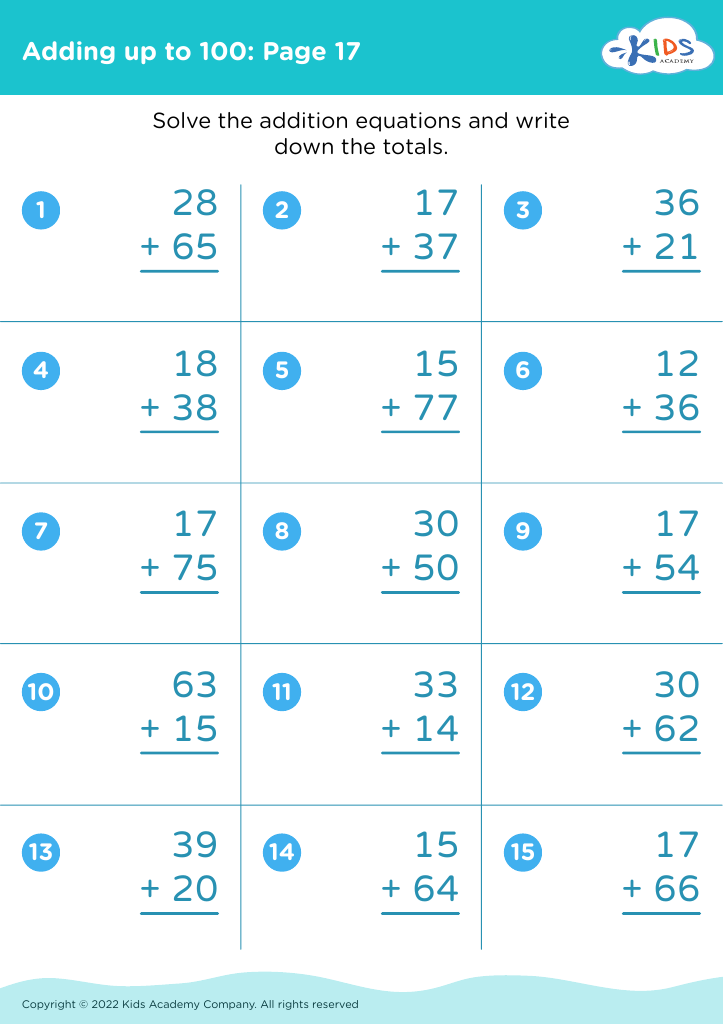
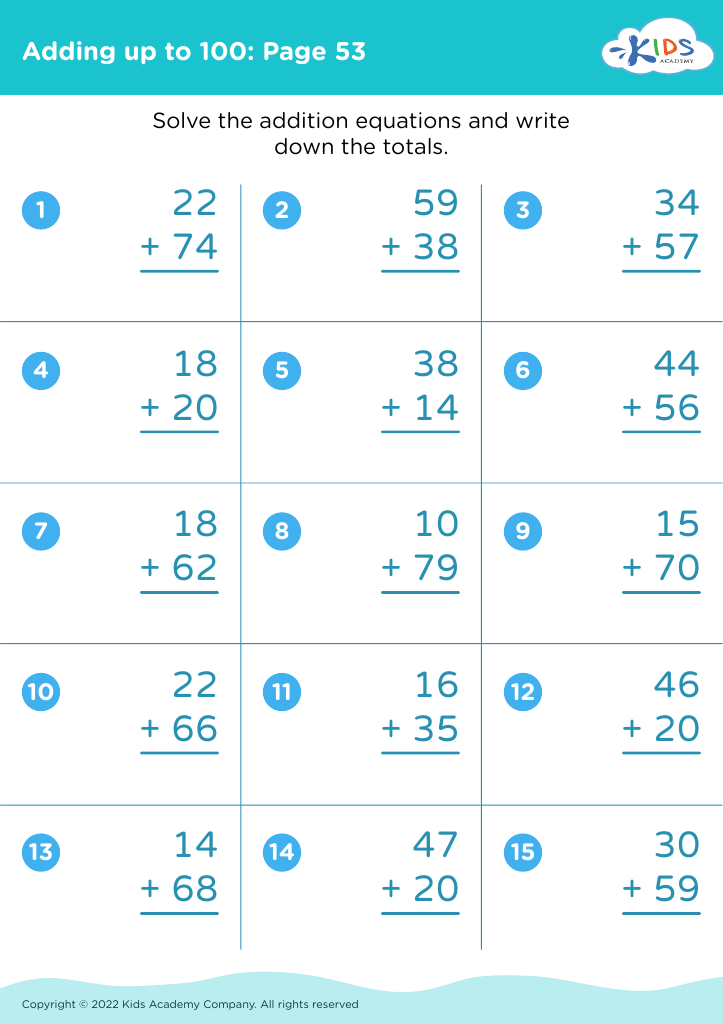
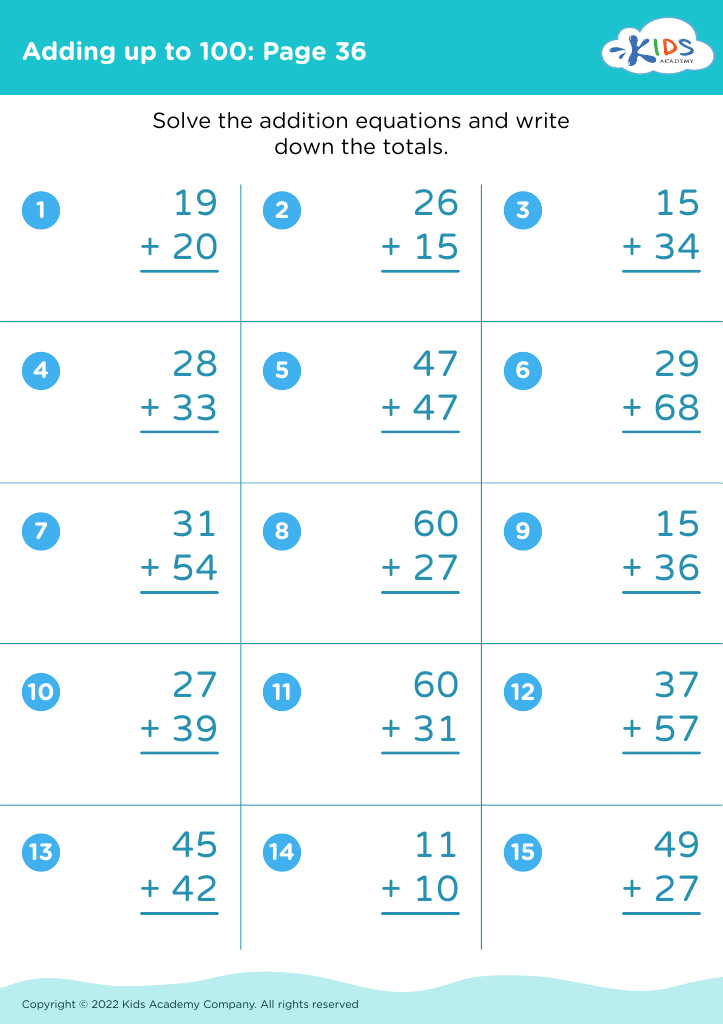


Fraction simplification and adding up to 100 are crucial mathematical skills that significantly impact a child's overall development, especially at ages 6–8. During these formative years, young children are foundationally araising arirtomic operations. Let’s explore why these skills are important.
Understanding fractions, and their simplifications, introduces students to the concept of parts and wholes, which is pivotal in mathematics. Simplifying fractions helps children internalize efficient problem-solving strategies and promotes deeper comprehension beyond mere rote learning. Simplified fractions enhance comparison skills, such as understanding that 1/2 is greater than 2/5, which is essential for daily life situations.
Adding up to 100 cultivates number sense and ensures that children become genuinely comfortable with basic addition. Instant recall of addition facts strengthens mental arithmetic skills and builds confidence—vital for higher mathematics.
Both skills promote analytical thinking, precision, and logical reasoning, which are key skills in every aspect of life. This incremental mastery sets up a positive learning trajectory in mathematics. Reinforcement of these skills at home or in the classroom offers continuous practice, ensuring that students not only catch up but genuinely understand these concepts, preventing future learning gaps. Investing in these foundational skills fosters a strong mathematical mindset and supports ongoing academic success.