Reading comprehension Adding up to 100 Misc Worksheets for Ages 6-8
3 filtered results
-
From - To
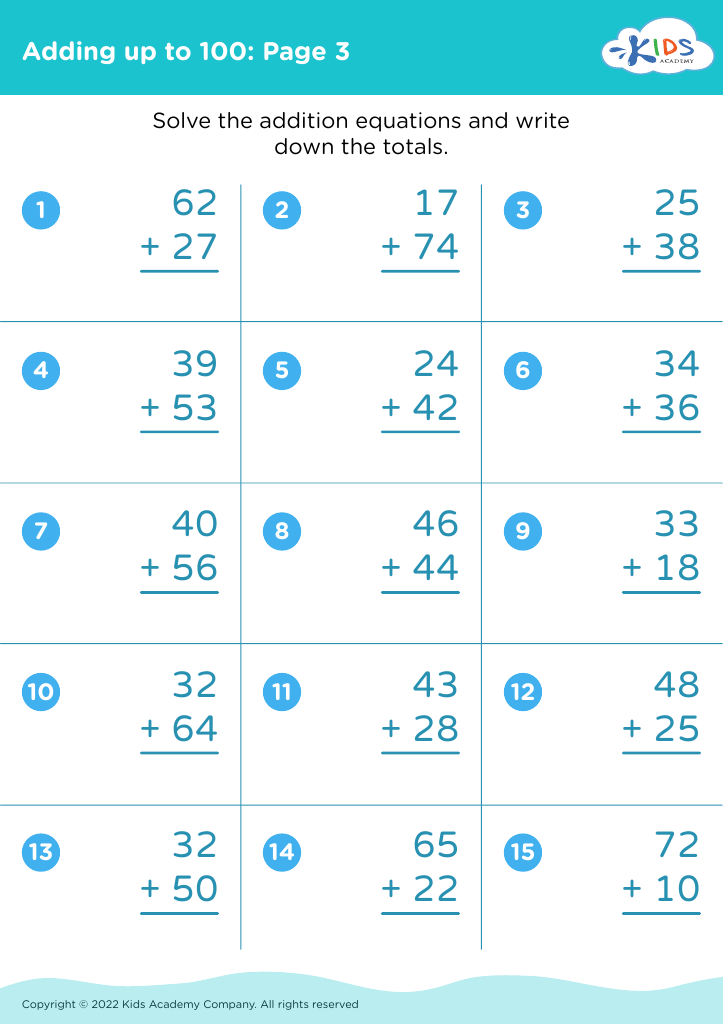
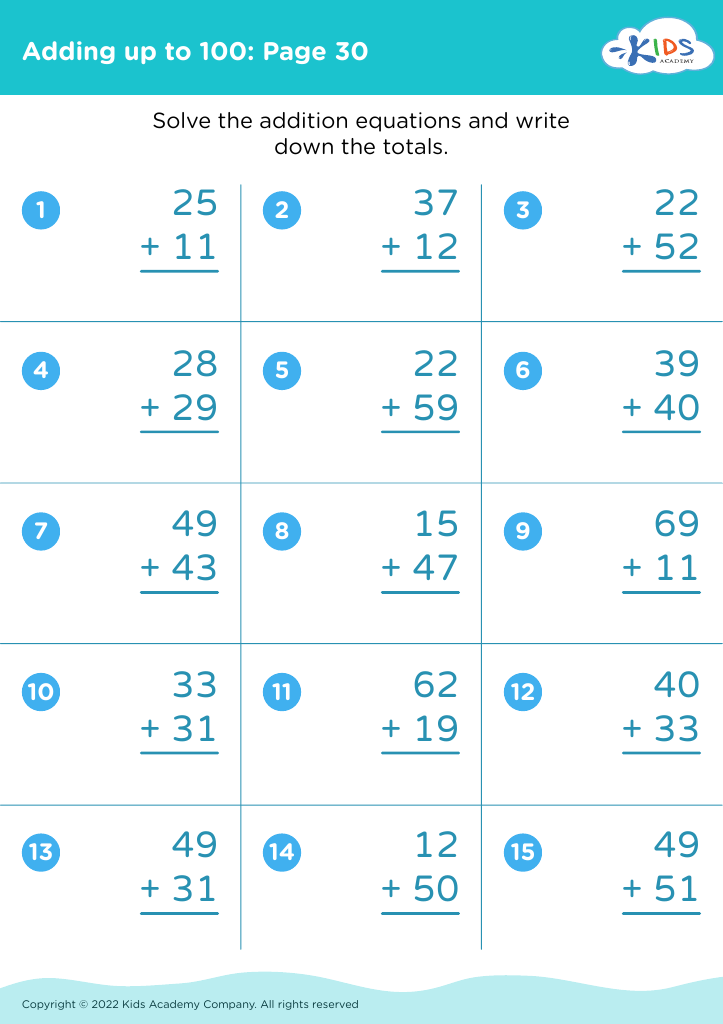
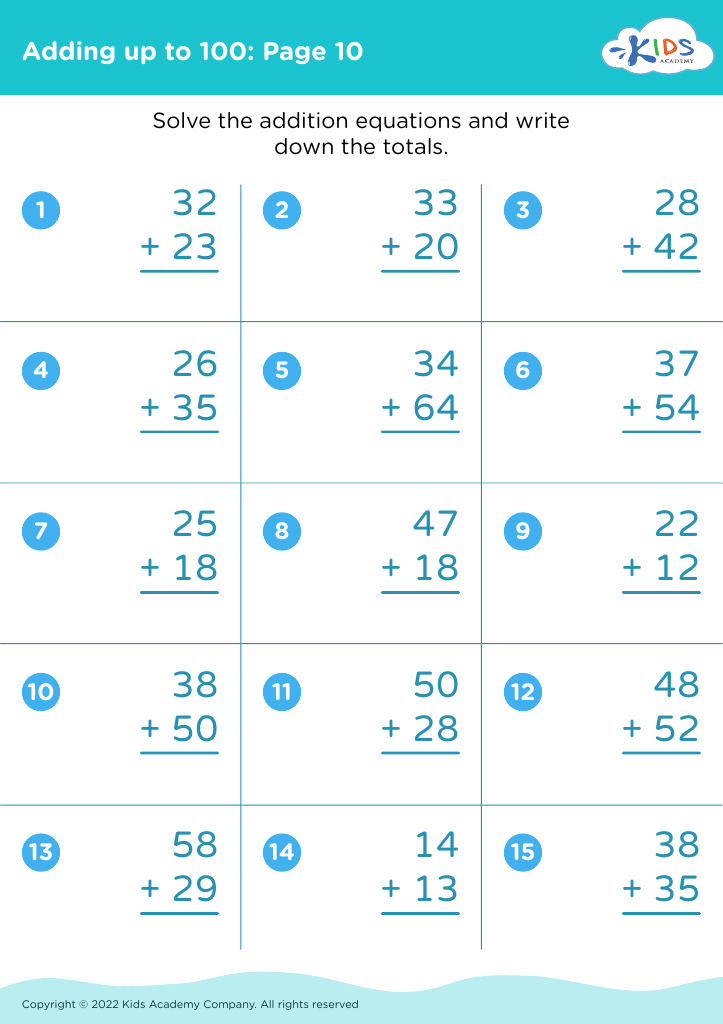
Welcome to our "Reading Comprehension Adding Up to 100 Misc Worksheets" designed specifically for children aged 6-8. This engaging collection helps young learners enhance their reading and comprehension skills while practicing addition up to 100. Each worksheet features fun and interactive exercises, combining storytelling with math challenges to keep kids motivated and excited. Perfect for classroom use or at-home learning, these worksheets encourage critical thinking and foster a love for reading and math. With varied themes and levels of difficulty, your child will enjoy plenty of practice, helping them build confidence and proficiency in both subjects. Unlock the joy of learning today!


Reading comprehension is a vital skill for children ages 6-8, forming the foundation for all future learning. It allows young learners to understand, engage with, and enjoy written material, influencing their academic success across subjects. When children comprehend what they read, they can make connections, expand their vocabulary, and enhance their critical thinking abilities.
Parents and teachers should prioritize reading comprehension as it directly impacts a child's confidence and motivation. Children who struggle to understand texts may feel frustrated, leading to disengagement from reading altogether. By fostering comprehension skills early, adults can nurture a lifelong love of reading, helping students view literature as a tool for discovery rather than a chore.
Additionally, strong comprehension skills support better performance in standardized tests, which assess students’ abilities in content areas that often require reading analysis. Encouraging interactive reading experiences at home and school—asking questions about a story or summarizing paragraphs—can significantly enhance understanding.
Moreover, supporting reading comprehension aligns with broader educational goals, ensuring children develop into competent communicators and innovative thinkers. Therefore, investing time and energy into teaching and nurturing comprehension skills is essential for empowering young learners on their educational journey.