Recognizing shapes Adding up to 100 Misc Worksheets for Ages 6-8
4 filtered results
-
From - To
Welcome to our "Recognizing Shapes Adding Up to 100 Misc Worksheets" collection, designed specifically for children ages 6-8! These engaging worksheets help young learners develop essential math skills while recognizing and distinguishing various shapes. Each activity promotes critical thinking and encourages the application of addition concepts through fun illustrations and vibrant designs. Ideal for classroom use or at-home practice, our worksheets make learning enjoyable and interactive. By mastering shape recognition and addition skills, students will build a strong foundation for future mathematical understanding. Dive into our colorful collection, and watch your child's confidence grow as they learn through play!
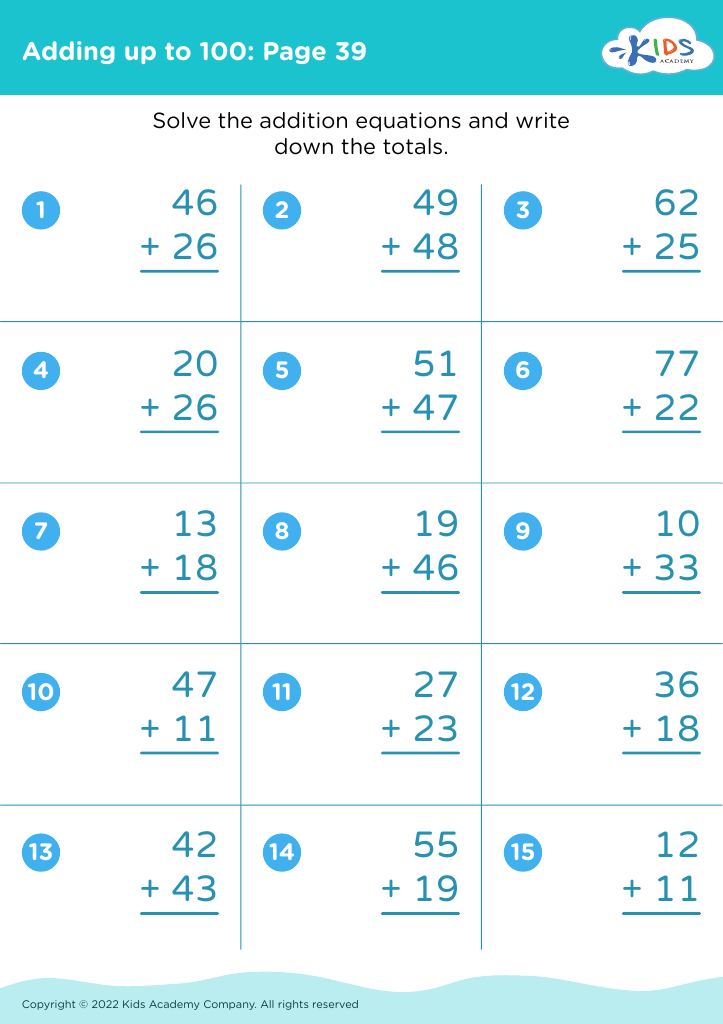
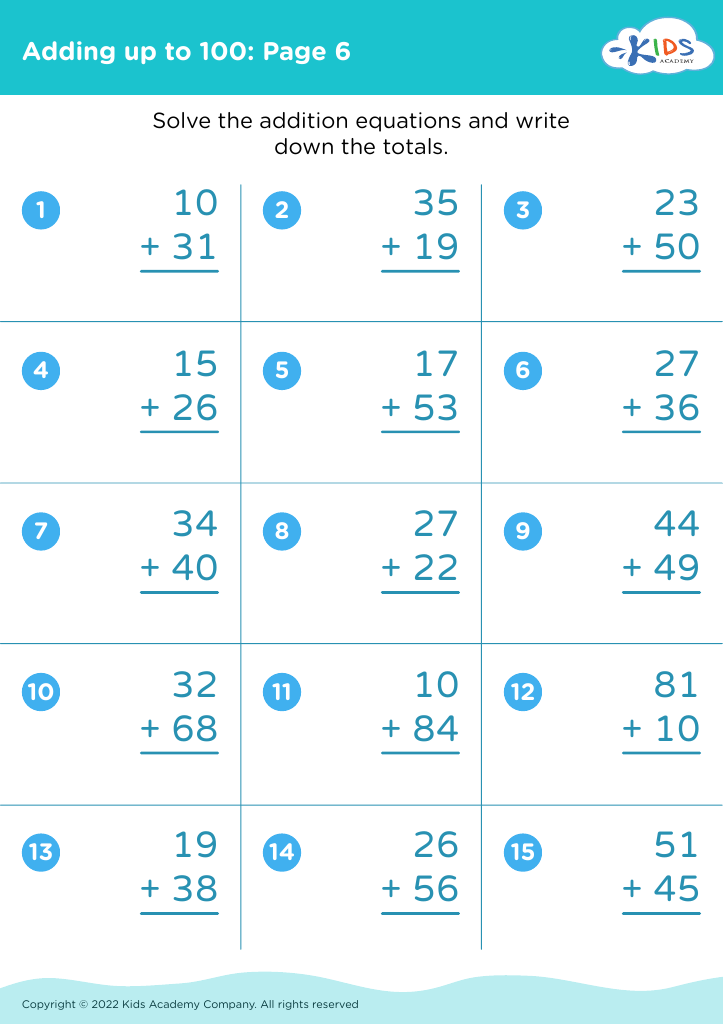
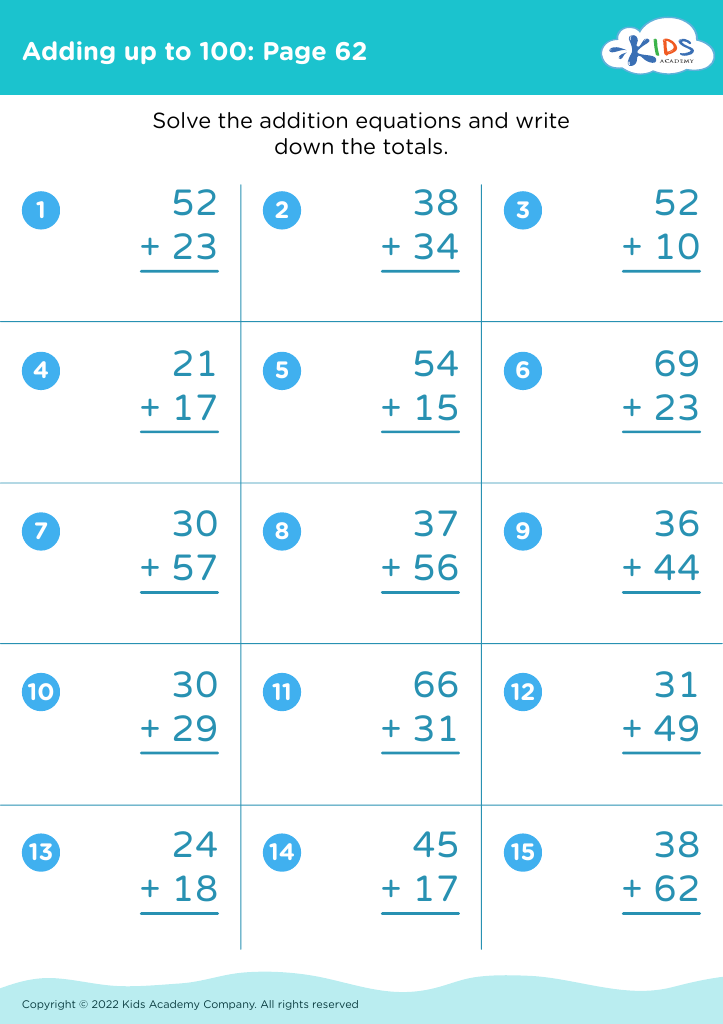
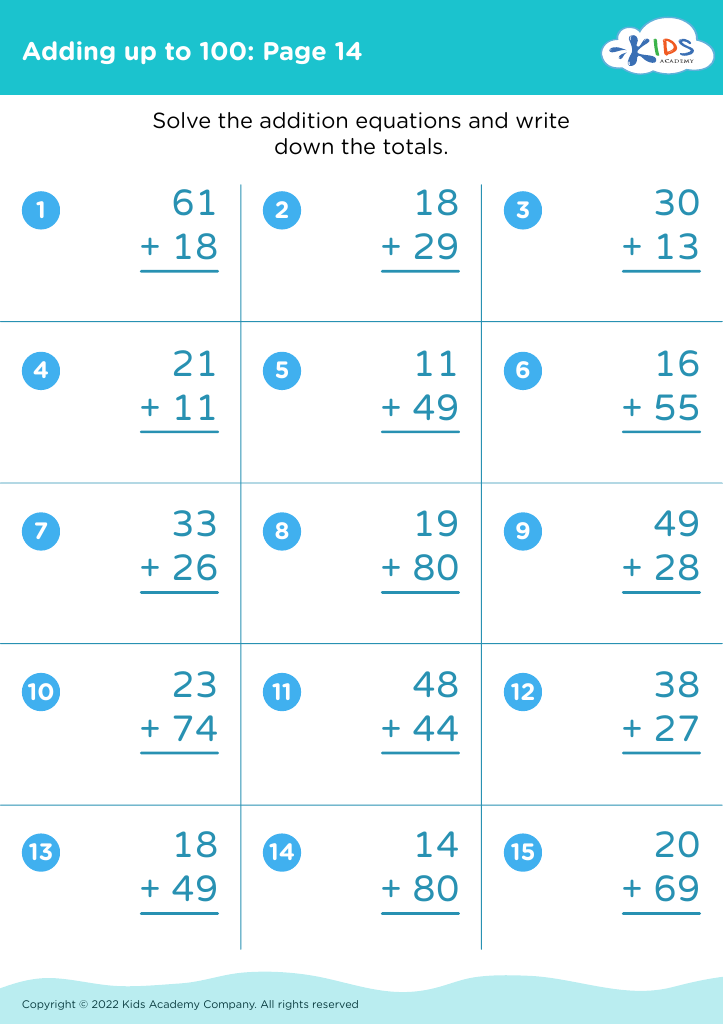


Recognizing shapes and understanding addition, especially in the context of reaching a sum of 100, are fundamental skills for children aged 6-8. Parents and teachers should care about these skills because they are the building blocks for more advanced mathematical concepts necessary for academic success.
Shape recognition enhances spatial awareness and cognitive development, fostering creativity and critical thinking. Familiarity with geometric shapes helps children recognize patterns and relationships in their environments, which can translate into better problem-solving skills in subjects like science and engineering.
Furthermore, grasping the concept of addition up to 100 is essential for developing numeracy skills. Mastery of this skill equips children with the ability to perform basic arithmetic, understand number relationships, and engage in real-world math applications like budgeting or telling time. It lays the groundwork for later learning, including multiplication, division, and algebra.
By focusing on these areas, adults can support children’s confidence and interest in math, turning potential frustration into engagement. Ultimately, fostering these foundational skills promotes a positive attitude toward learning and empowers children to become more proficient, independent thinkers as they progress academically.