Understanding Sequences Adding up to 100 Misc Worksheets for Ages 6-8
4 filtered results
-
From - To
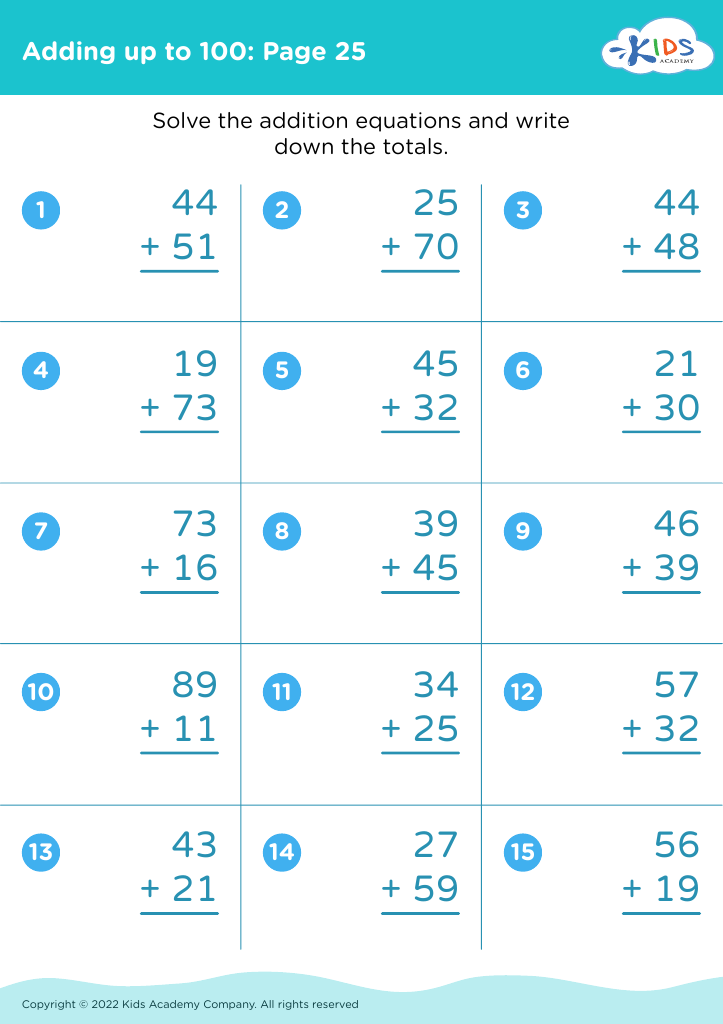
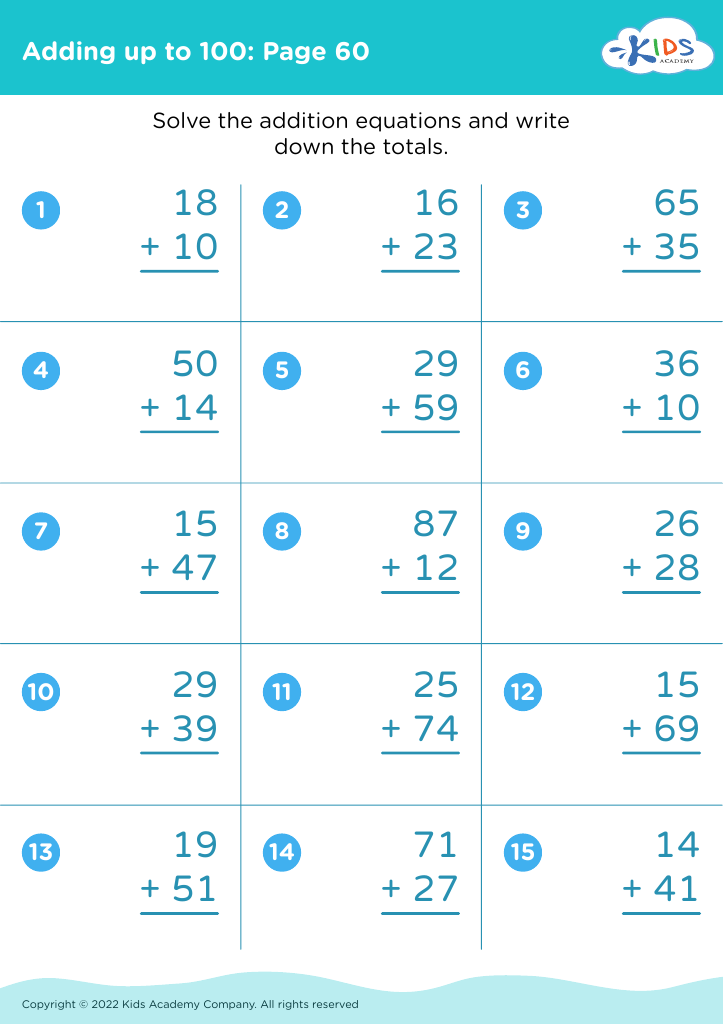
Unveil the magic of numbers with our "Understanding Sequences Adding up to 100 Misc Worksheets for Ages 6-8." Perfect for young learners, these worksheets guide children through fun and engaging activities that cultivate their math skills. Through varied exercises, kids will grasp the concept of number sequences, learn to recognize patterns, and practice adding numbers up to 100. Our worksheets are designed to support cognitive development and build mathematical confidence, ensuring a solid foundation for future learning. Aligned with educational standards, they provide an enjoyable way for kids to enhance their problem-solving abilities and advance their numerical understanding.
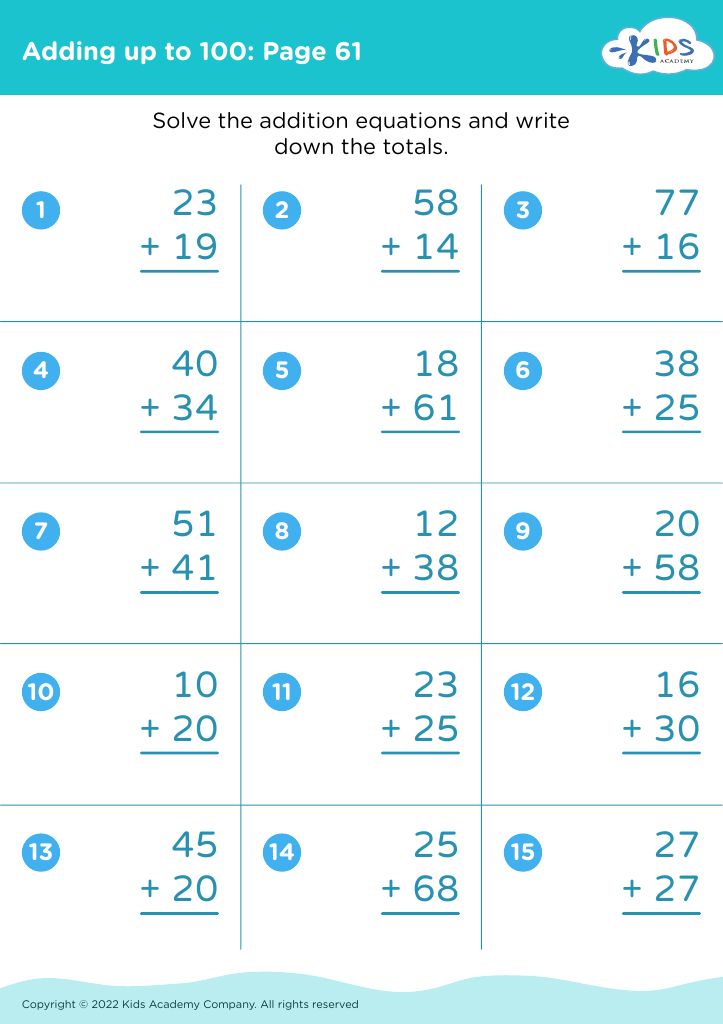
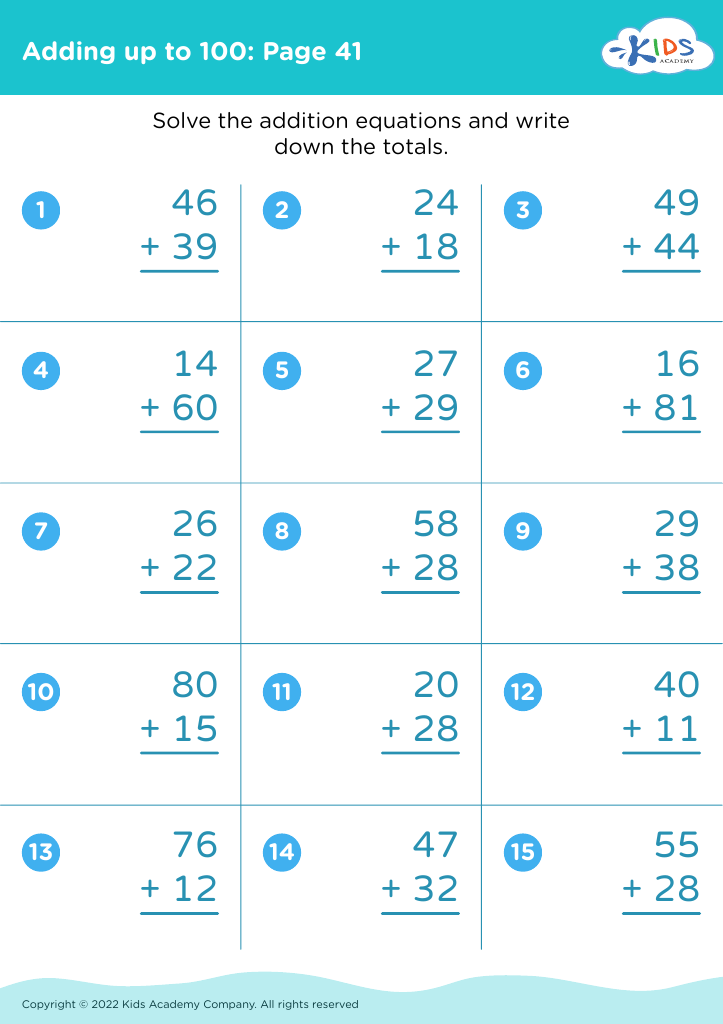


Understanding sequences adding up to 100 at an early age provides a foundation that supports numerous essential skills in young learners. Firstly, implementing sequences in math learning engages children's pattern recognition, one of the vital cognitive abilities that aid problem-solving and critical thinking processes. Recognizing and creating patterns ensure children can predict and understand the progression of numbers, which further solidifies their number sense.
Secondly, by working with sequences that sum up to 100, young students practice addition, an essential arithmetic operation, frequently and in a manageable yet challenging way. This repetitive practice ensures that they become fluent in their addition skills, which will have long-lasting educational benefits.
Thirdly, this activity promotes confidence in handling larger numbers, which might initially seem daunting for ages 6-8. Learning that such large sums can be broken down and understood through smaller, sequential steps demystifies the concept of large numbers and builds confidence in tackling more complex mathematical problems in the future.
Lastly, introducing engaging and interactive math tasks early keeps learning enjoyable and relevant, fostering a love for the subject. Supporting early age students in understanding mathematical sequences, therefore, not only bolsters their current learning trajectory but also prepares them for higher mathematical thinking later on.