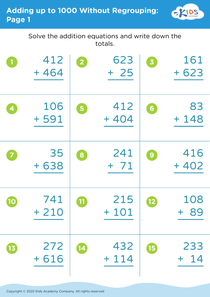
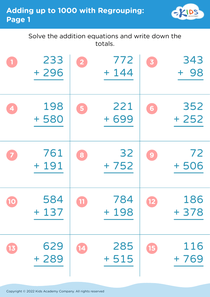
Comparing Fractions Adding up to 1000 Misc Worksheets for Ages 6-8
5 filtered results
-
From - To
Dive into the world of fractions with our engaging "Comparing Fractions Adding up to 1000" worksheets, designed for ages 6-8! Our assortment of printable materials makes learning fun and interactive, helping young learners grasp the concepts of comparing and ordering fractions. With colorful visuals and relatable examples, students will master identifying equal parts and simple comparisons. These worksheets not only enhance math skills but also boost critical thinking and problem-solving abilities. Perfect for both classroom use and home practice, our resources support learning at every step. Start exploring and watch young minds thrive!
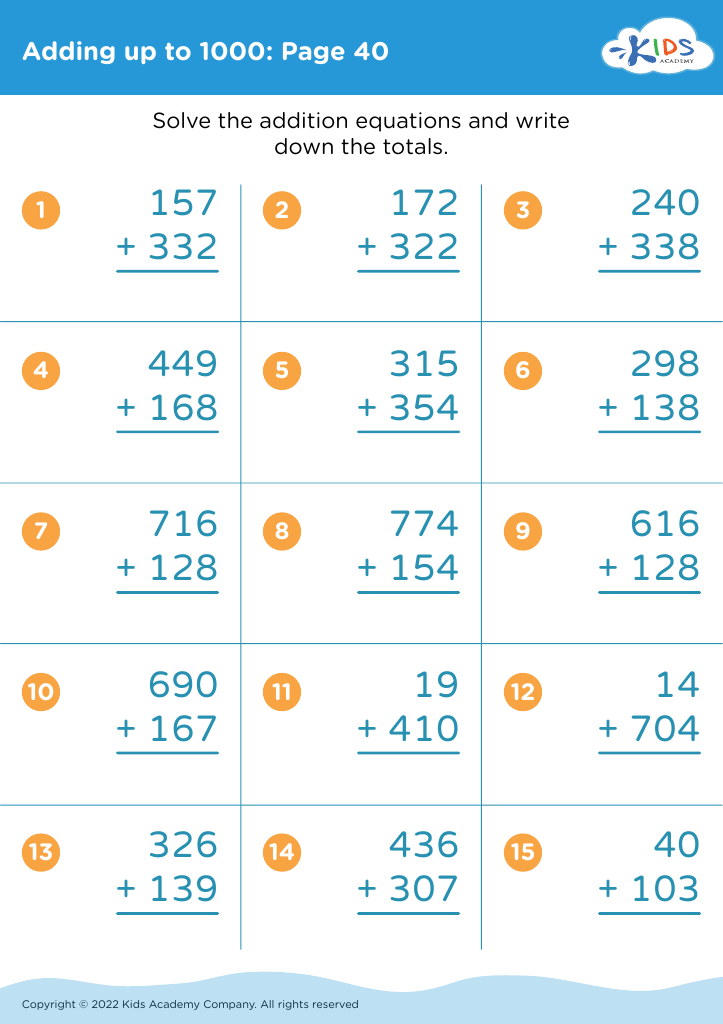
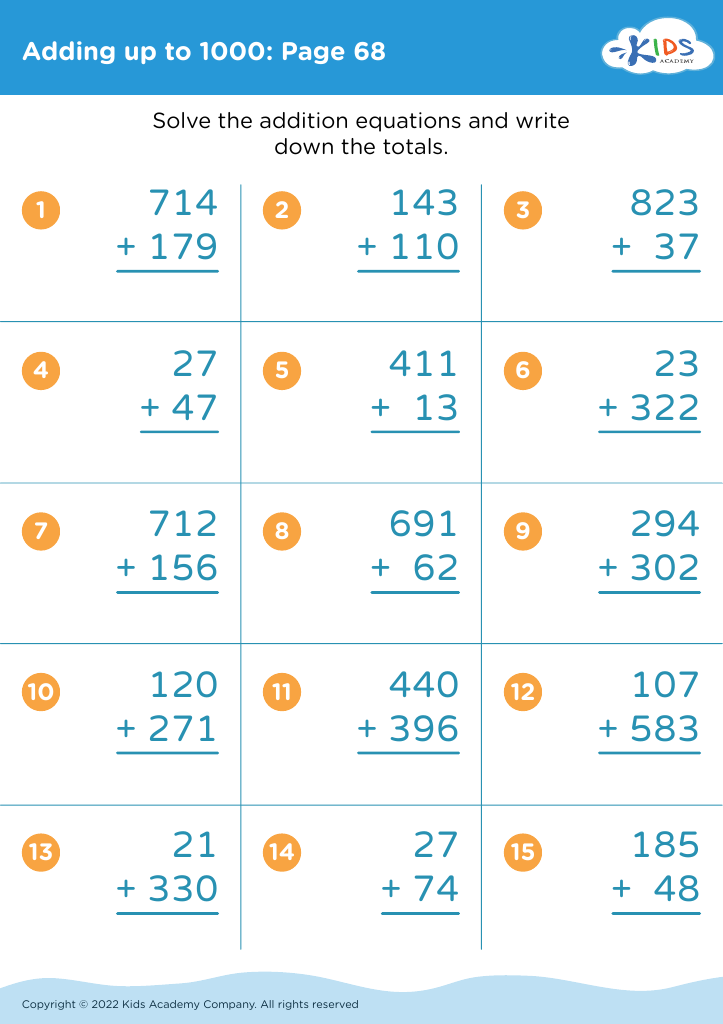
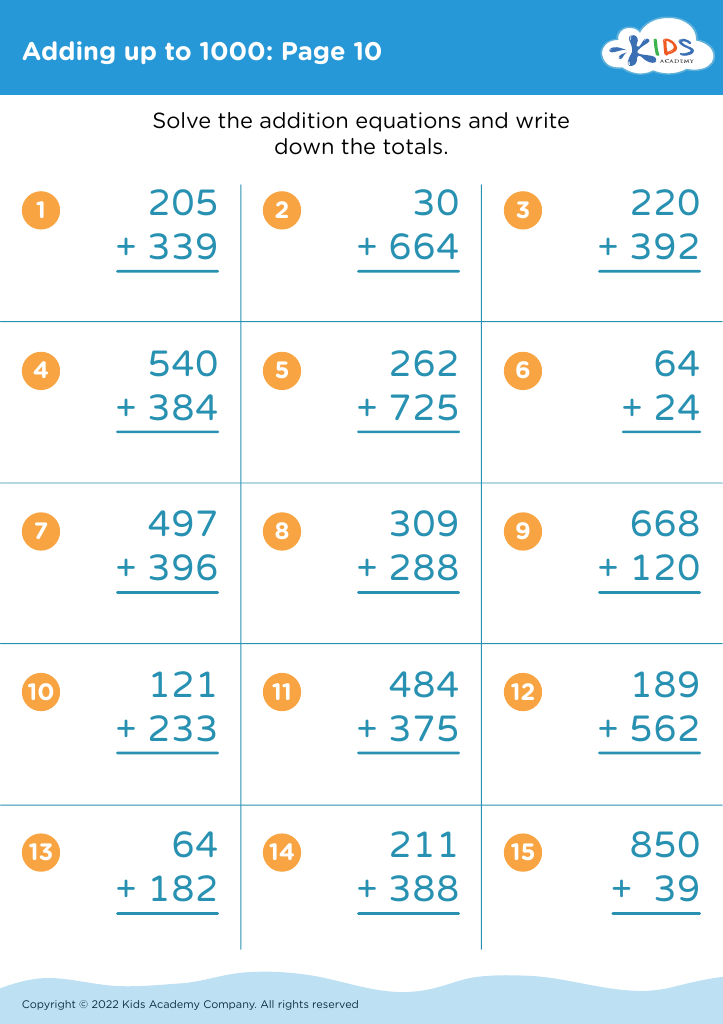
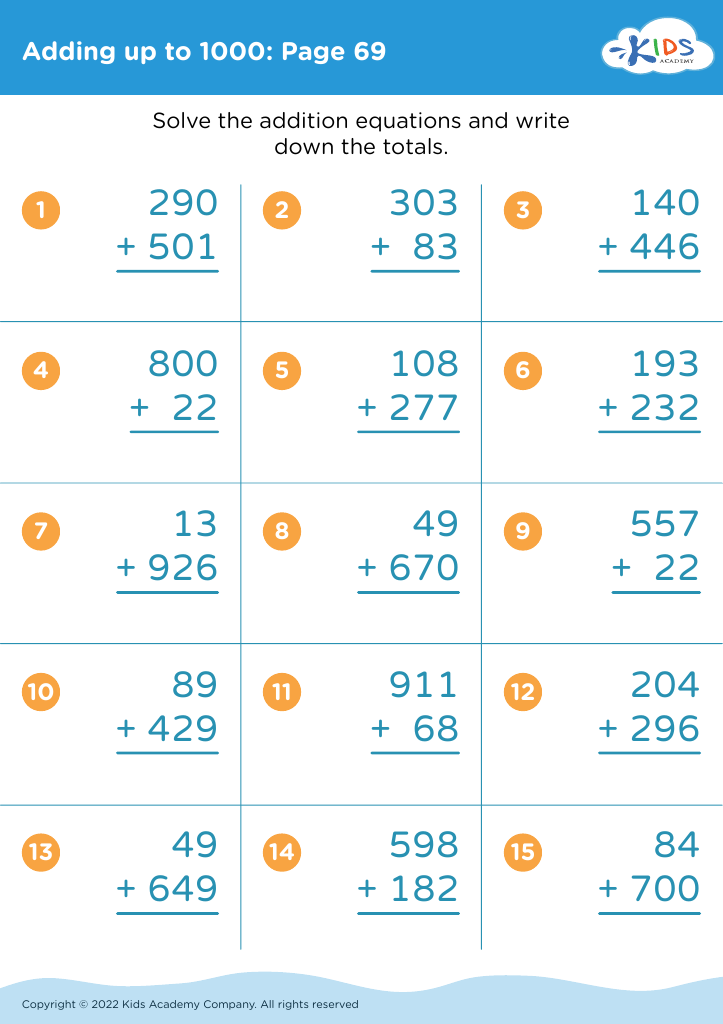
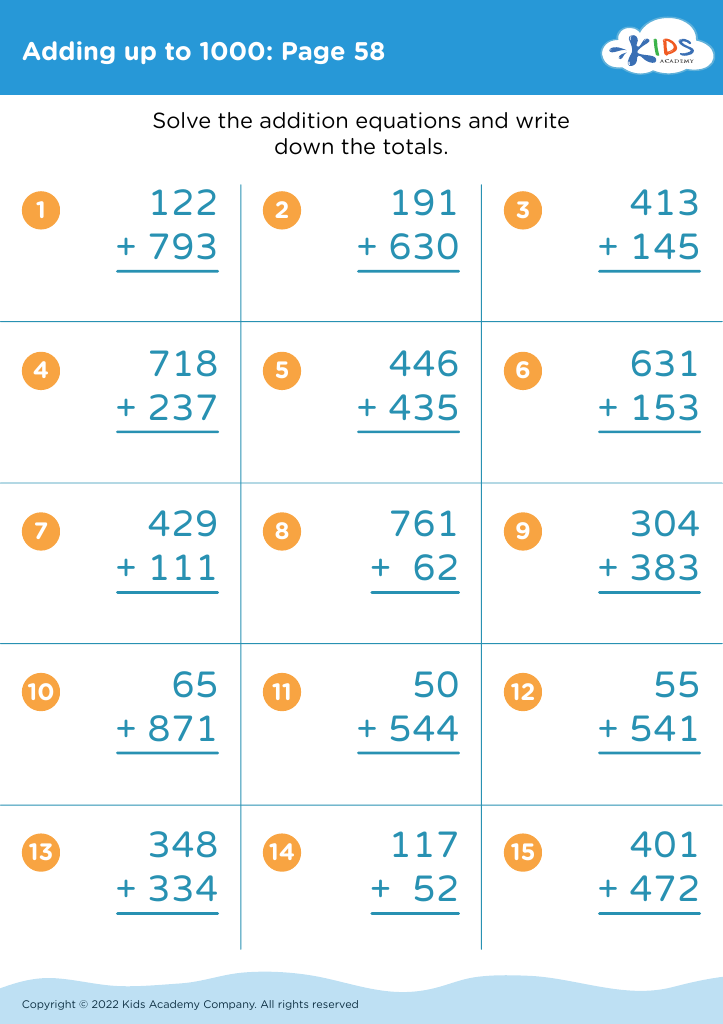


Teaching children aged 6-8 to compare fractions and add up to 1000 is crucial for several reasons. Firstly, these foundational math skills improve their numerical understanding. Learning how to break down and manipulate fractions and sums boosts cognitive development. This foundational knowledge supports later concepts in mathematics, such as algebra and geometry.
Understanding fractions builds a child’s ability to think critically. Fractions often represent parts of a whole or ratios, which help in real-world applications like measuring ingredients or dividing objects equally. Without grasping these basics, children may struggle with both academic and everyday tasks.
Learning to sum numbers up to 1000 expands their number sense and arithmetic skills. This helps children not only in math but also in other subjects that require precise calculations, such as science and technology.
Moreover, fostering these skills early promotes confidence and curiosity in mathematical learning. When children feel comfortable with numbers, they’re more likely to engage and excel in math subjects throughout their education.
For parents and teachers, ensuring the children understand these fundamental concepts sets them on a path toward academic success and lifelong problem-solving abilities. It’s an investment in their future capabilities, both in school and beyond.