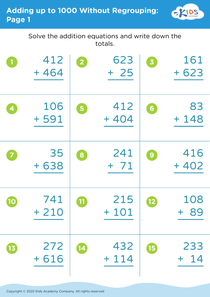
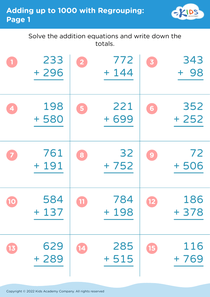
Improve reading skills Adding up to 1000 Misc Worksheets for Ages 6-8
3 filtered results
-
From - To
Boost your child's reading skills with our exclusive collection of "Adding up to 1000" miscellaneous worksheets designed for ages 6-8. Created by education experts, these printable activities seamlessly blend math practice with reading comprehension to enhance cognitive abilities. Each worksheet presents engaging addition problems and compelling textual exercises that make learning both fun and effective. Perfect for classroom or home use, these sheets inspire confidence and proficiency in young learners. Download now to support your child's academic journey and watch their literacy and numeracy skills soar!
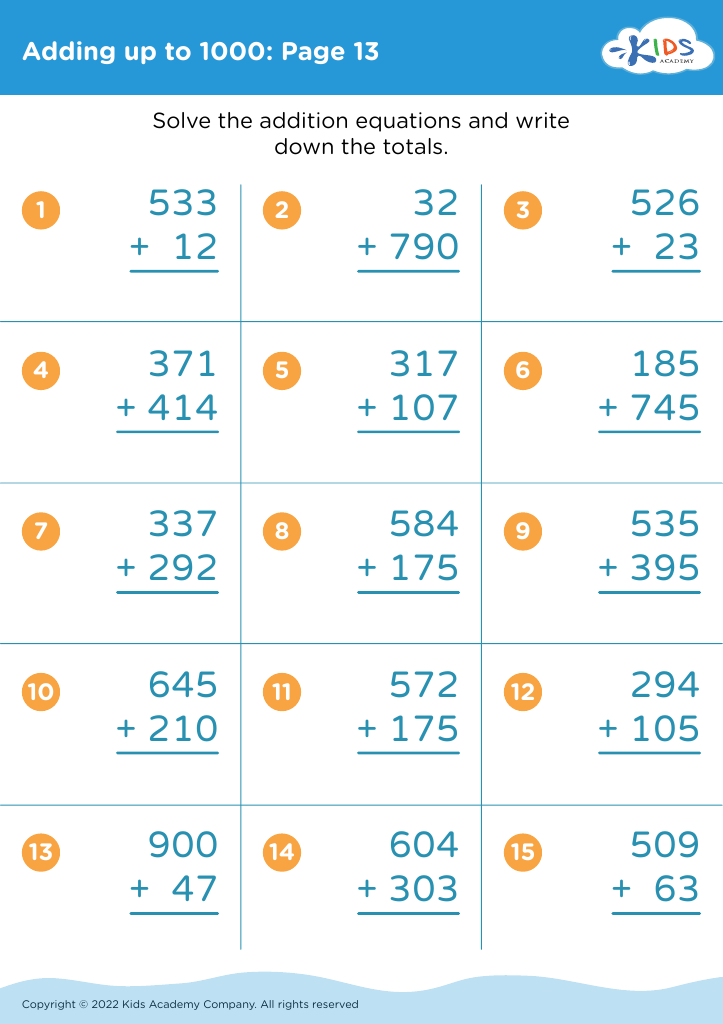
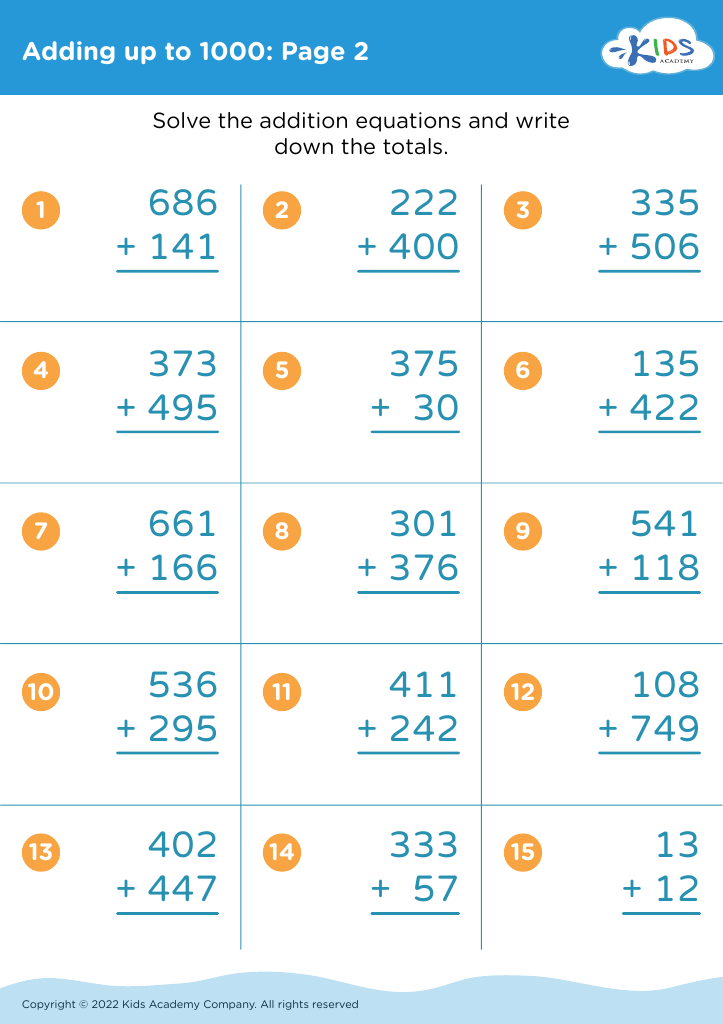
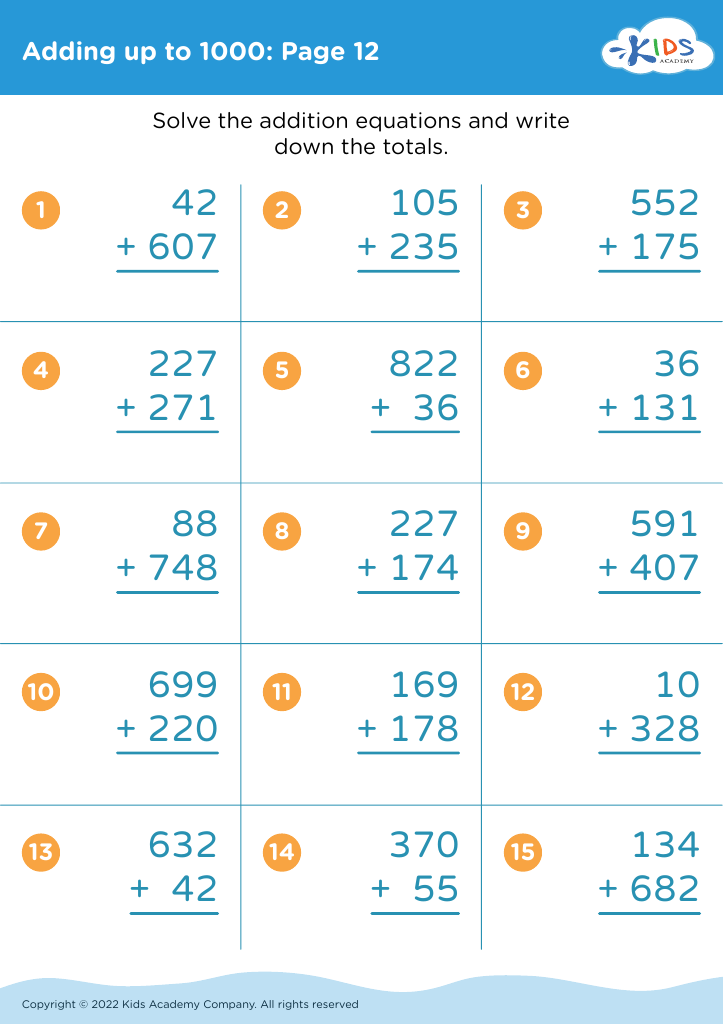


Improving reading skills and achieving arithmetic milestones, such as adding up to 1000, are critical developmental steps for children aged 6-8. For parents and teachers, nurturing these abilities is pivotal. Strong reading skills form the foundation for academic success, enabling children to understand textbooks, follow instructions, and engage with diverse viewpoints and subject matter. Proficiency in reading enhances vocabulary, boosts cognitive ability, and improves attention span.
On the arithmetic front, learning to add up to 1000 equips children with essential math skills that are the building blocks for more advanced concepts. Mastering basic math fosters logical thinking and problem-solving abilities, crucial for everyday life and future academic pursuits. It also enhances self-confidence and independence in tackling complex tasks.
By investing time and resources in developing these skills during the ages of 6-8, parents and teachers ensure that children have a strong academic foundation. This early investment pays off by preventing future learning difficulties, reducing frustration, and fostering a positive attitude towards school and learning. Simply put, improving reading and arithmetic skills at an early age sets children on a path to lifelong learning and success.