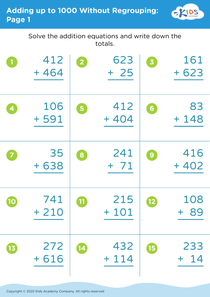
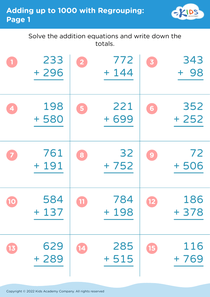
Understand multiplication Adding up to 1000 Misc Worksheets for Ages 6-8
3 filtered results
-
From - To
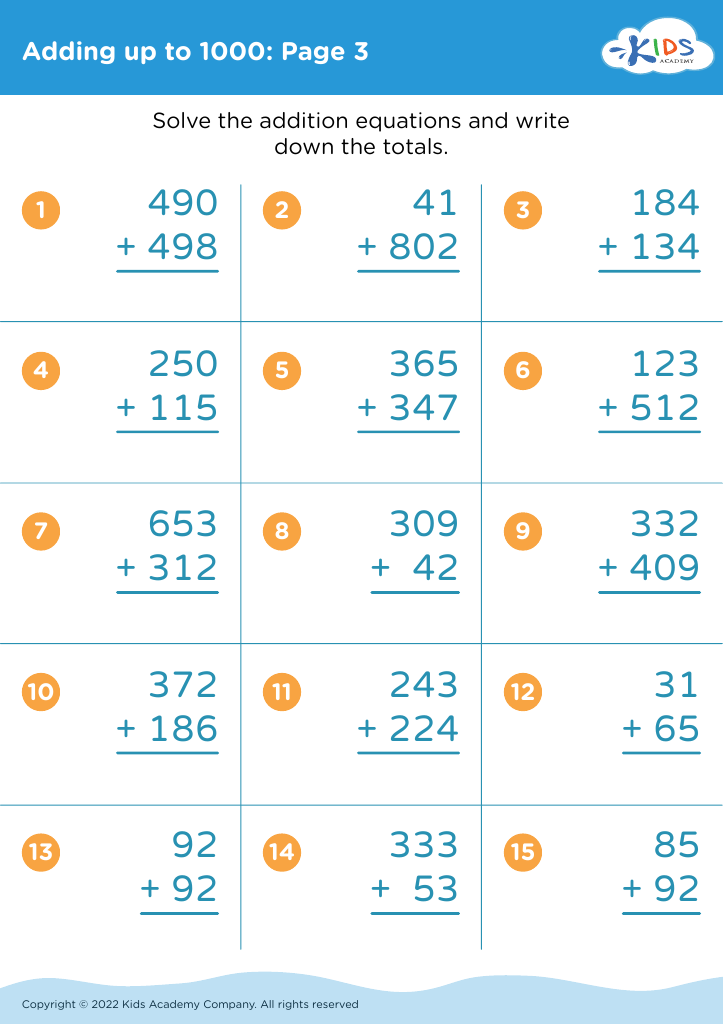
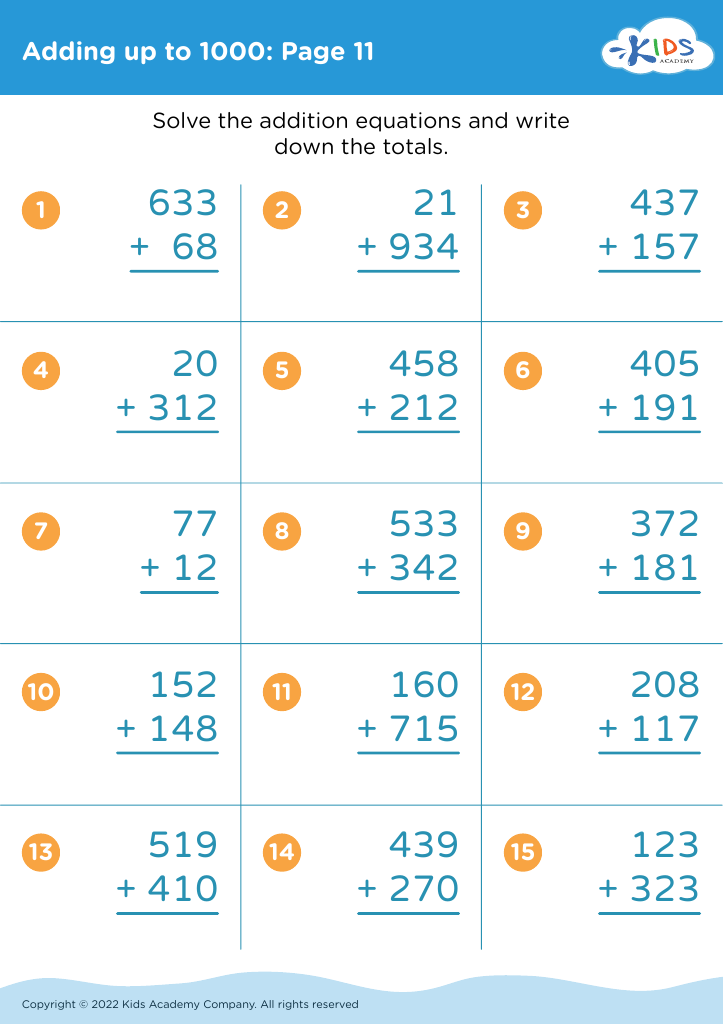
Understanding multiplication is essential for young learners, and our "Adding Up to 1000 Misc Worksheets" for ages 6-8 provides the perfect tools to build this foundational skill. Designed to recognize the connection between addition and multiplication, these worksheets guide children through strategies for grouping and repeated addition. With engaging and diverse problems tailored to young minds, our resources offer a fun, interactive way to solidify comprehension of adding up to 1000. Ideal for classroom or home use, each activity is crafted to enhance learning and ensure math becomes a joyful, confidence-boosting adventure. Visit our page to explore and download these valuable materials.
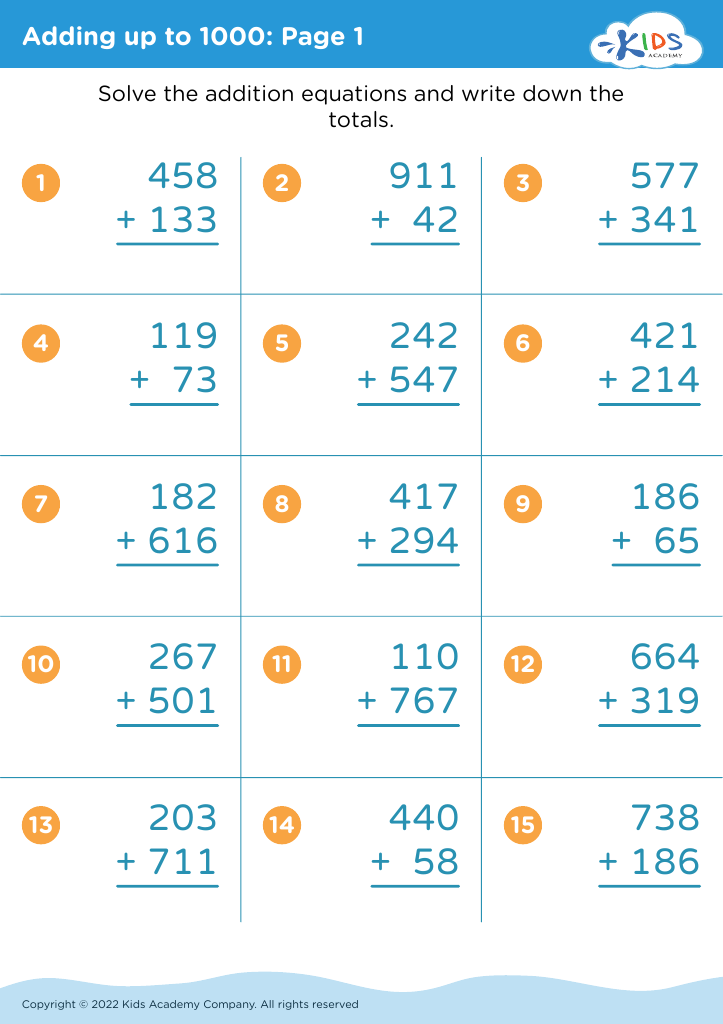


Understanding multiplication is a fundamental math skill that serves as the building block for many more advanced math concepts. For children aged 6-8, learning multiplication not only helps with immediate math skills but also encourages logical thinking, problem-solving, and the ability to notice patterns.
Teaching multiplication at an early age prepares young students for real-world scenarios. For example, if a child knows how to multiply, they can determine how much something costs when buying in multiples or find out how many items they need to reach a total quantity. Mastery at this age also makes future math concepts, like division, fractions, and algebra, more intuitive and less intimidating.
Similarly, working with numbers up to 1000 enhances a child’s number sense and ensures they understand the decimal system, which is crucial for understanding larger numbers and performing more complex calculations. Miscellaneous math skills, such as estimation or recognizing number patterns, build a child's flexibility and agility with numbers.
For parents and teachers, focusing on these skills through engaging and appropriate activities can set a solid academic foundation. It leads to a positive attitude toward math, turning it into an enjoyable and rewarding subject, rather than a challenging hurdle. Investing in these basic skills early on promotes lifelong numeracy and problem-solving abilities.