Shape Recognition Adding up to 1000 with Regrouping Worksheets for Ages 6-8
6 filtered results
-
From - To
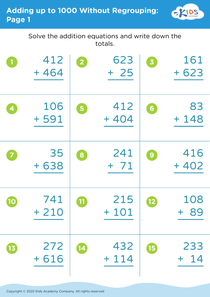
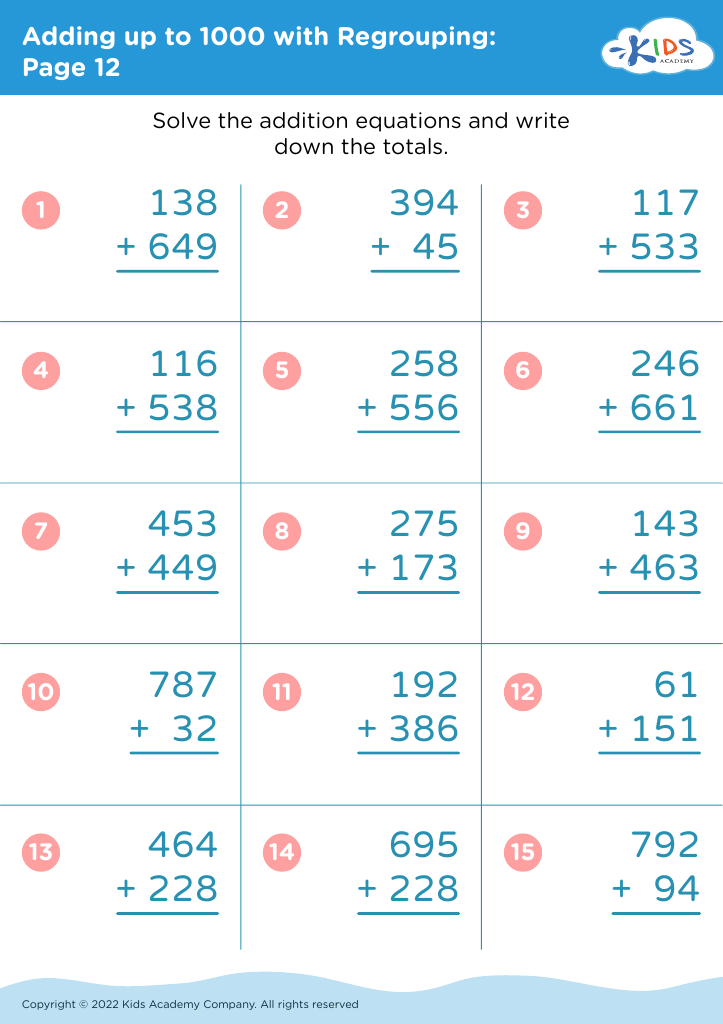
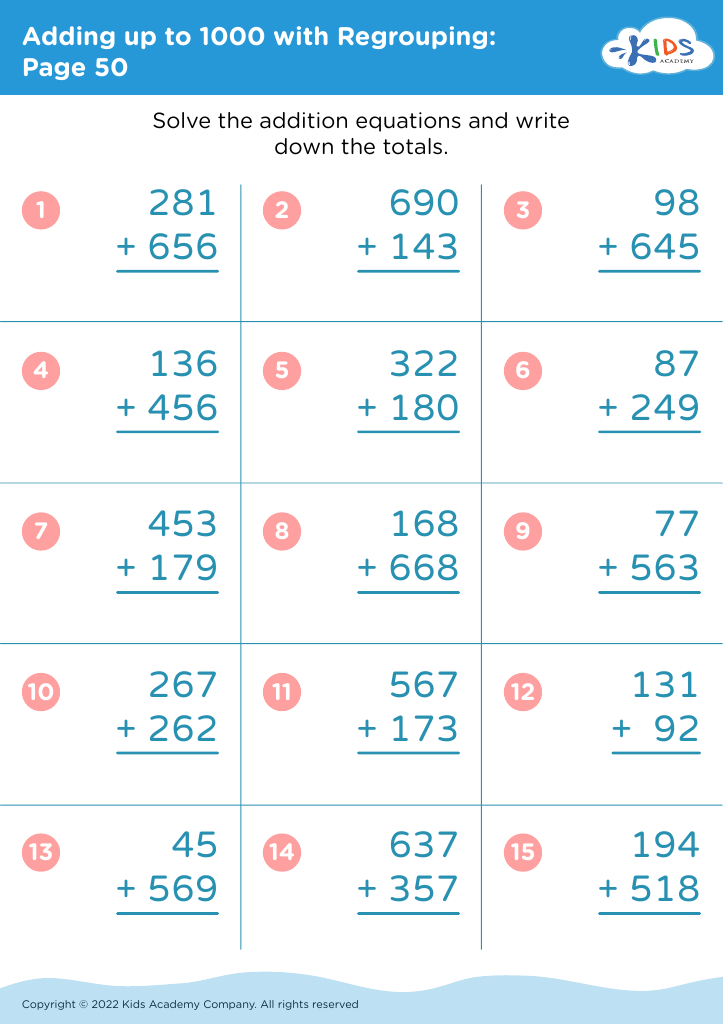
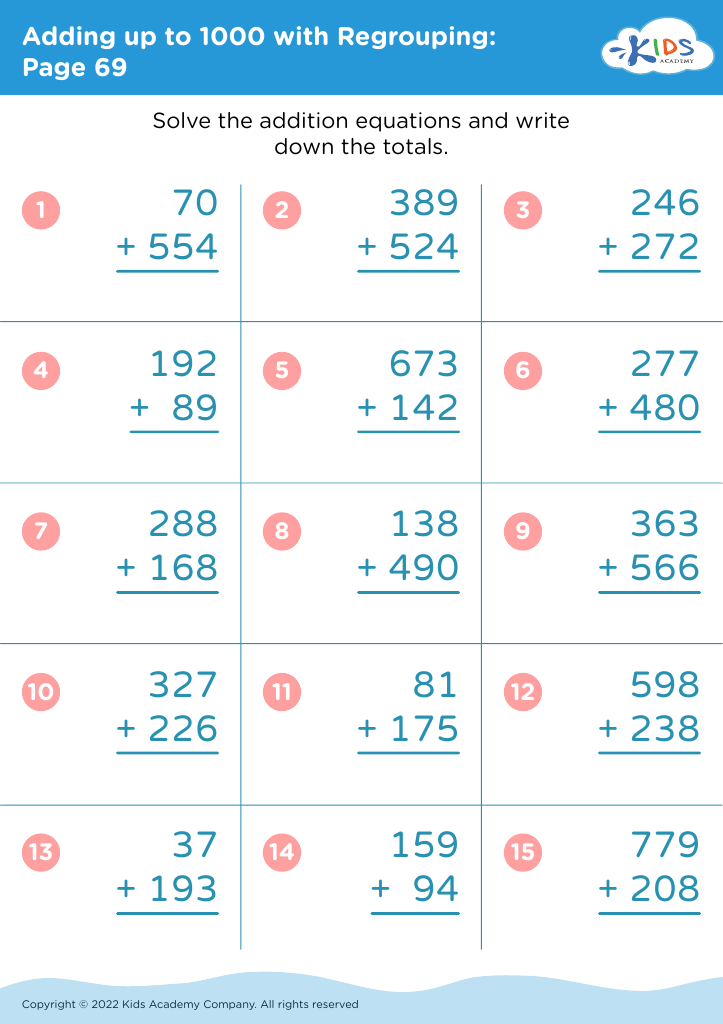
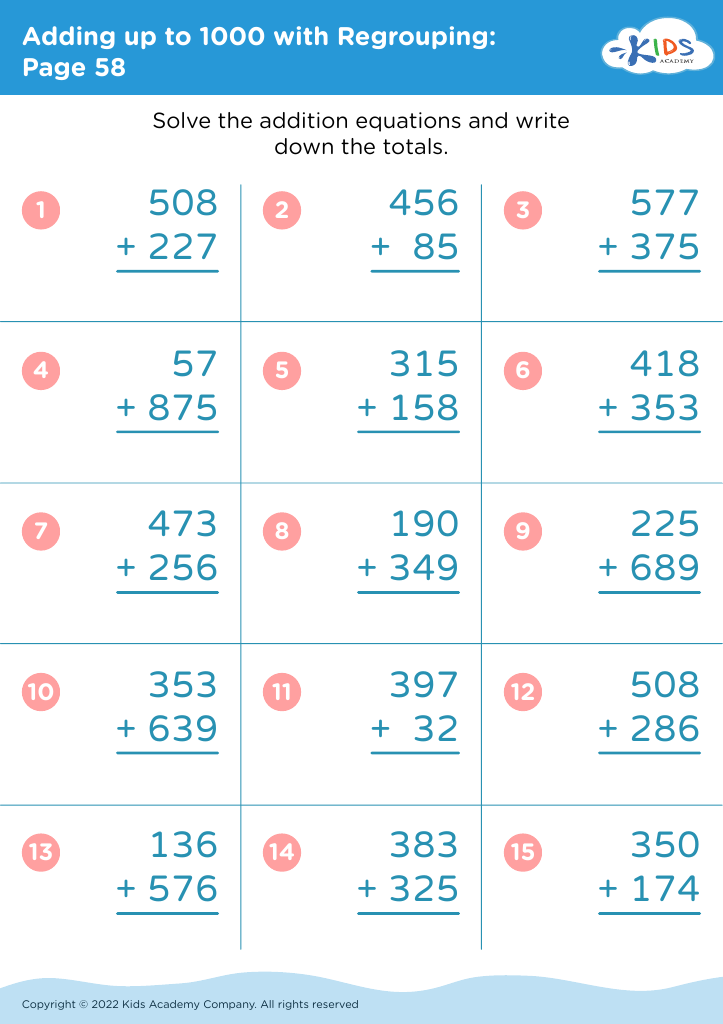
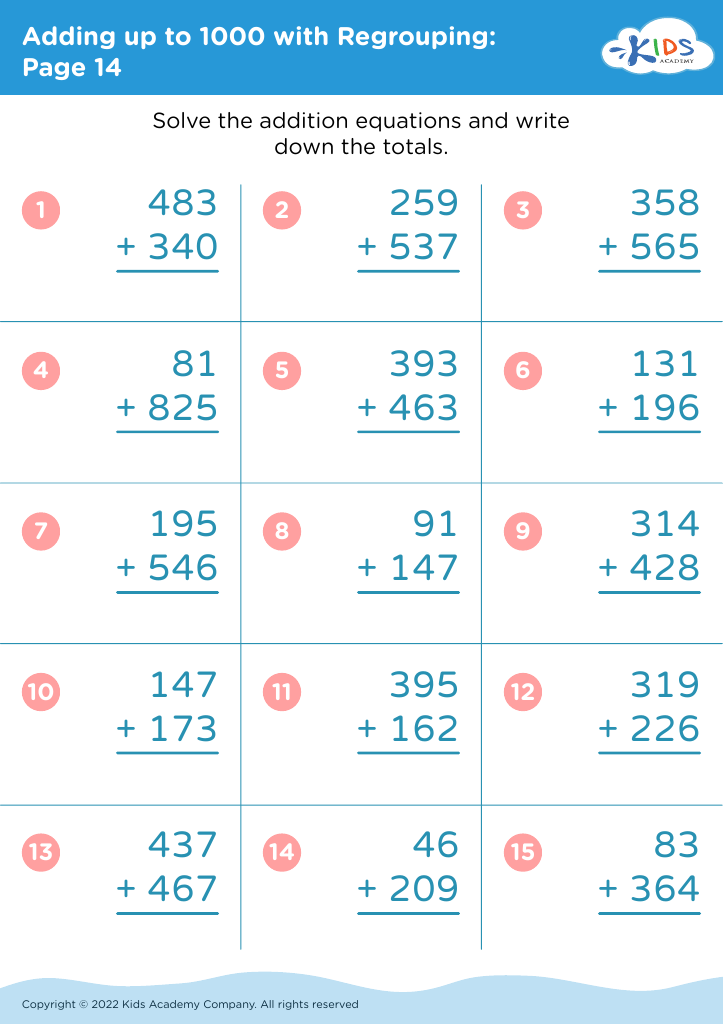
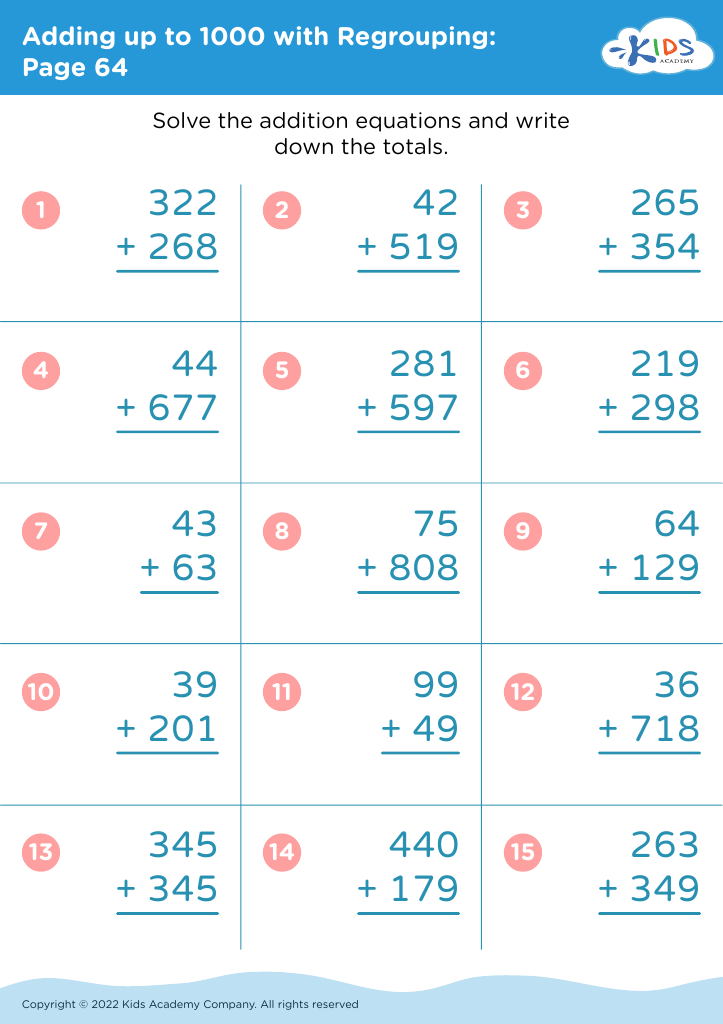
Enhance your child's learning experience with our "Shape Recognition Adding up to 1000 with Regrouping Worksheets" designed specifically for ages 6-8. These engaging worksheets integrate shape recognition with math concepts, enabling students to grasp the fundamentals of adding numbers up to 1000 with regrouping effectively. Each activity encourages critical thinking while reinforcing shape identification and spatial awareness. Perfect for at-home practice or classroom use, these resources help build confidence in math skills through fun and interactive learning. Foster your child's excitement for mathematics with our thoughtfully crafted worksheets, combining essential skills in both geometry and addition for a comprehensive educational experience.


Shape recognition and the ability to add up to 1000 with regrouping are crucial skills for children aged 6-8, as these foundational concepts play a significant role in their overall cognitive development.
Shape recognition helps children identify and understand different geometric forms, which fosters visual-spatial skills and encourages creativity. Recognizing shapes is not just about names; it lays the groundwork for more complex mathematical concepts such as symmetry, perimeter, and area. As children progress, these skills will also benefit literacy, as many letters and numbers share similar shapes.
Adding up to 1000 with regrouping teaches children essential arithmetic skills while promoting critical thinking. Understanding how to regroup—carrying numbers over to the next place value—enhances their ability to tackle larger numbers, paving the way for more advanced calculations later on. This process nurtures perseverance, as children learn to navigate challenges and develop problem-solving strategies.
Incorporating both shape recognition and regrouping into teaching encourages a holistic approach to learning. It engages students not only in math but also in logical reasoning, spatial awareness, and creative thinking. Parents and teachers should prioritize these skills to help students build confidence, achieve academic success, and cultivate a lifelong interest in learning.