Understanding fractions Adding up to 1000 with Regrouping Worksheets for Ages 6-8
18 filtered results
-
From - To
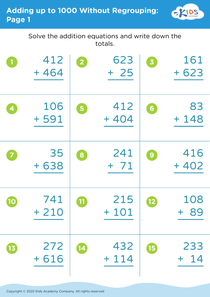
Looking to strengthen your child's understanding of fractions and addition with regrouping? Our "Understanding Fractions Adding up to 1000 with Regrouping Worksheets" are perfect for kids aged 6-8. These engaging and educational worksheets help young learners grasp the concept of fractions while practicing addition sums up to 1000. With fun, colorful activities designed to make learning enjoyable, children will improve their math skills and develop essential problem-solving abilities. Ideal for parents and teachers alike, these printable resources ensure that students build a solid foundation in math while enjoying their learning journey. Download now and enhance your child's educational experience!
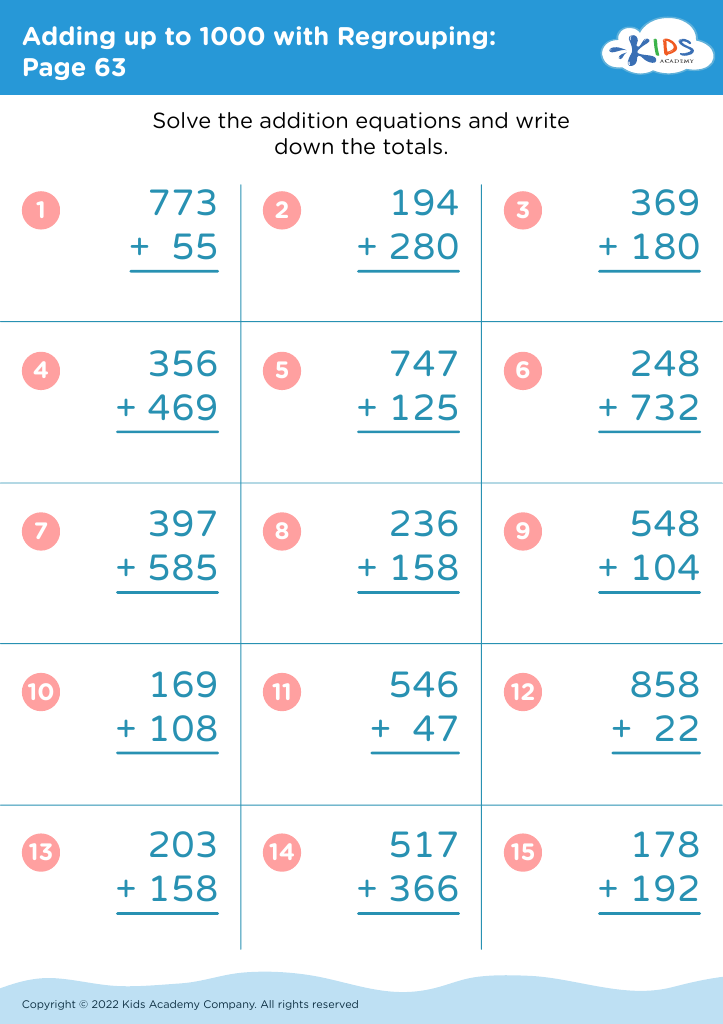
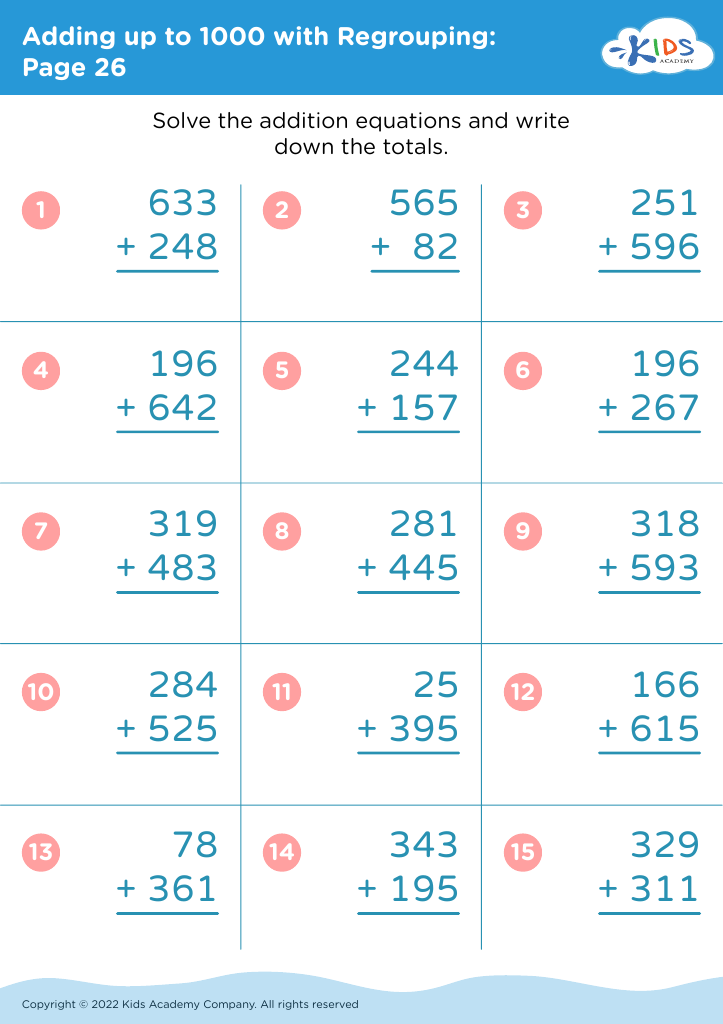
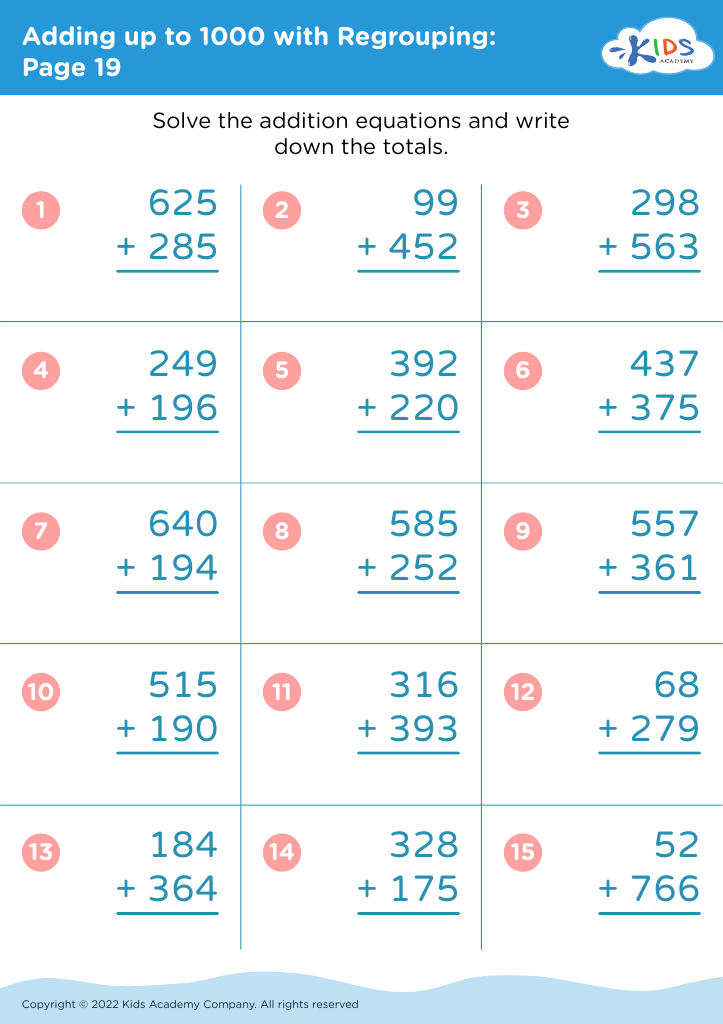
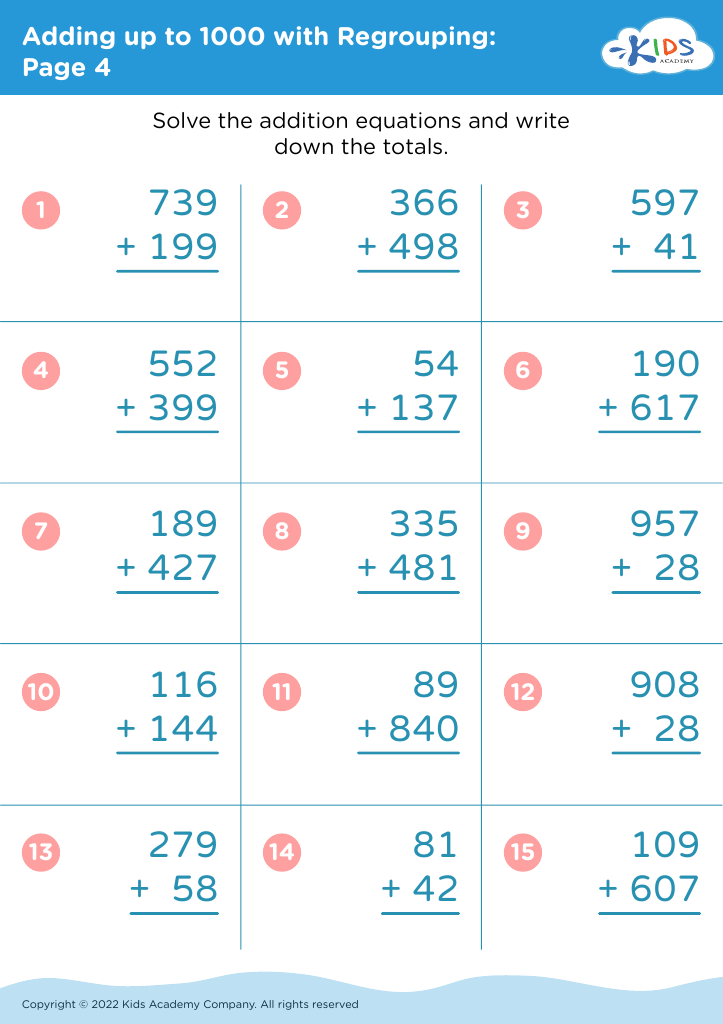
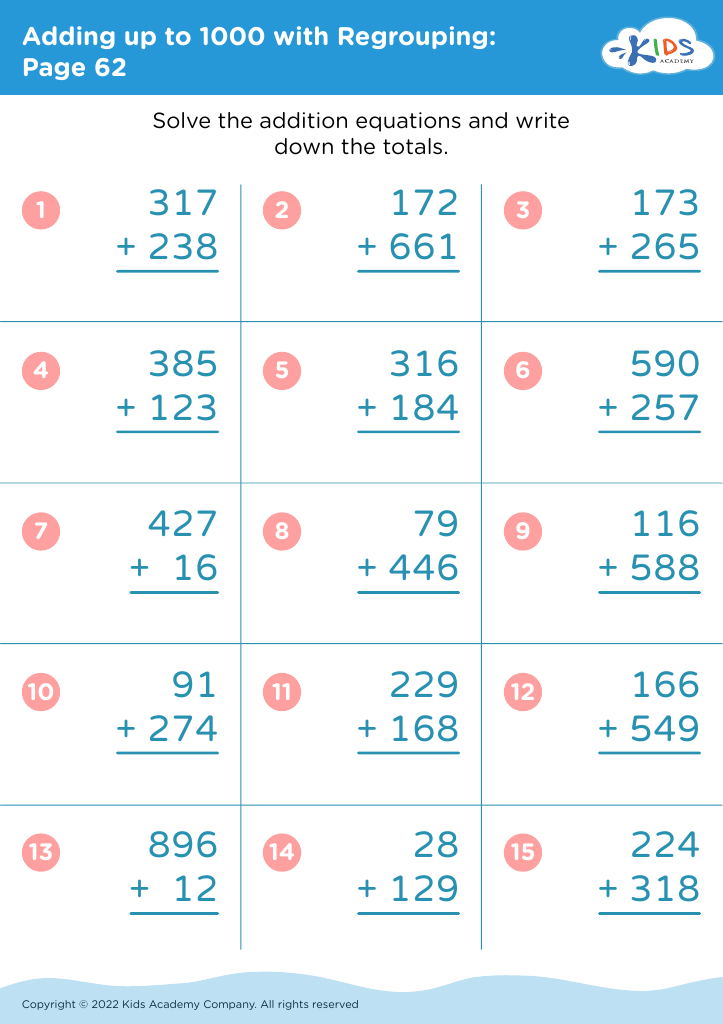
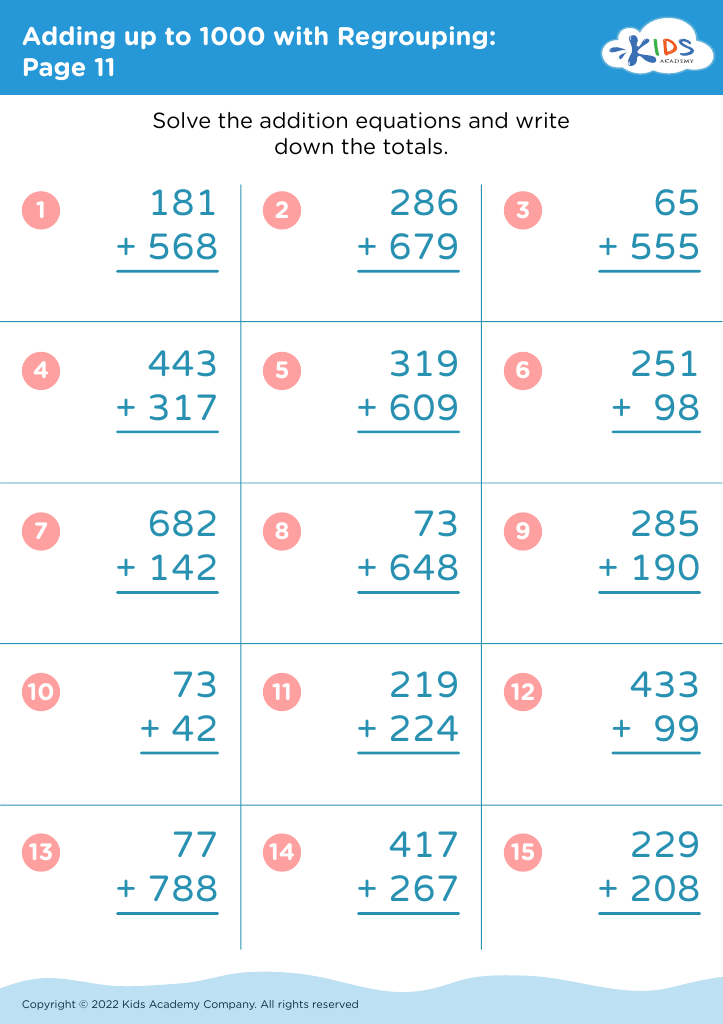
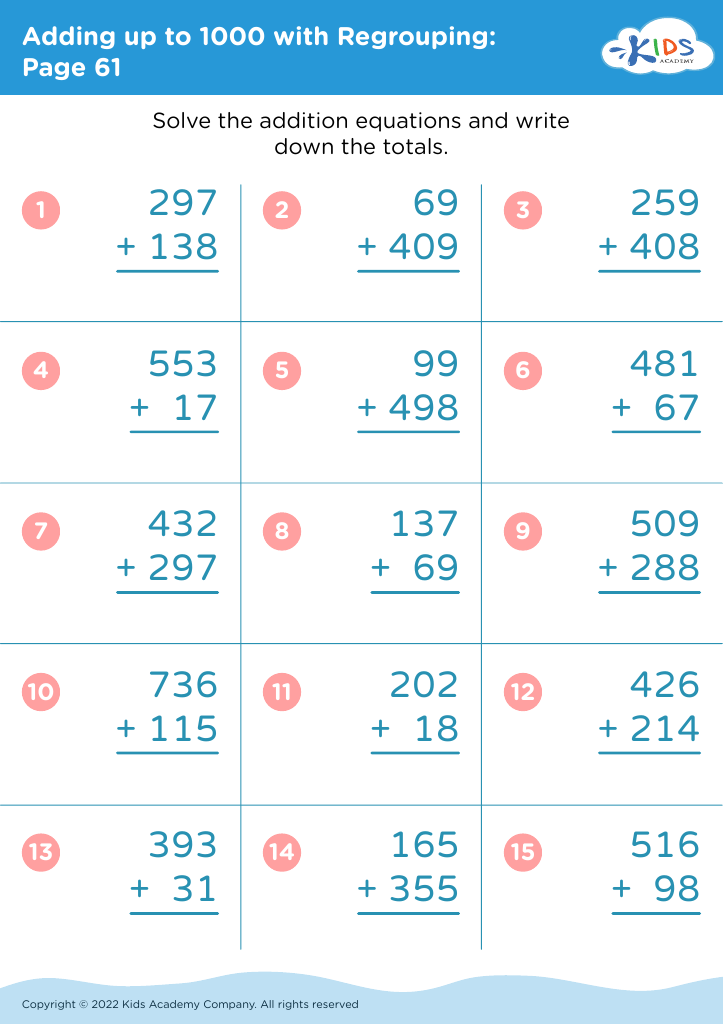
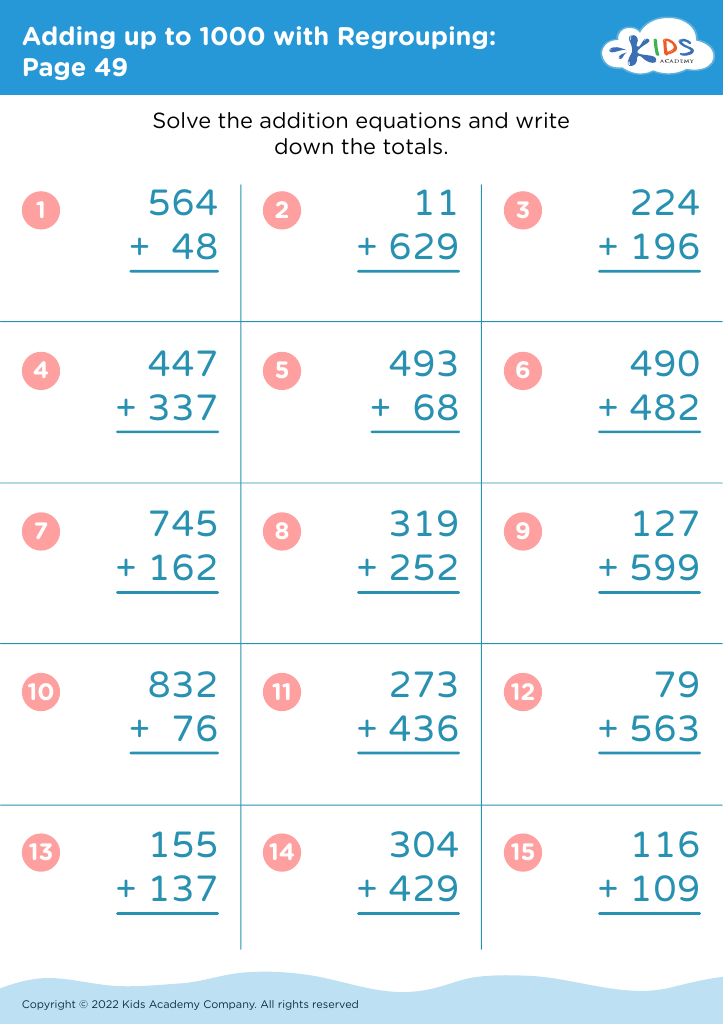
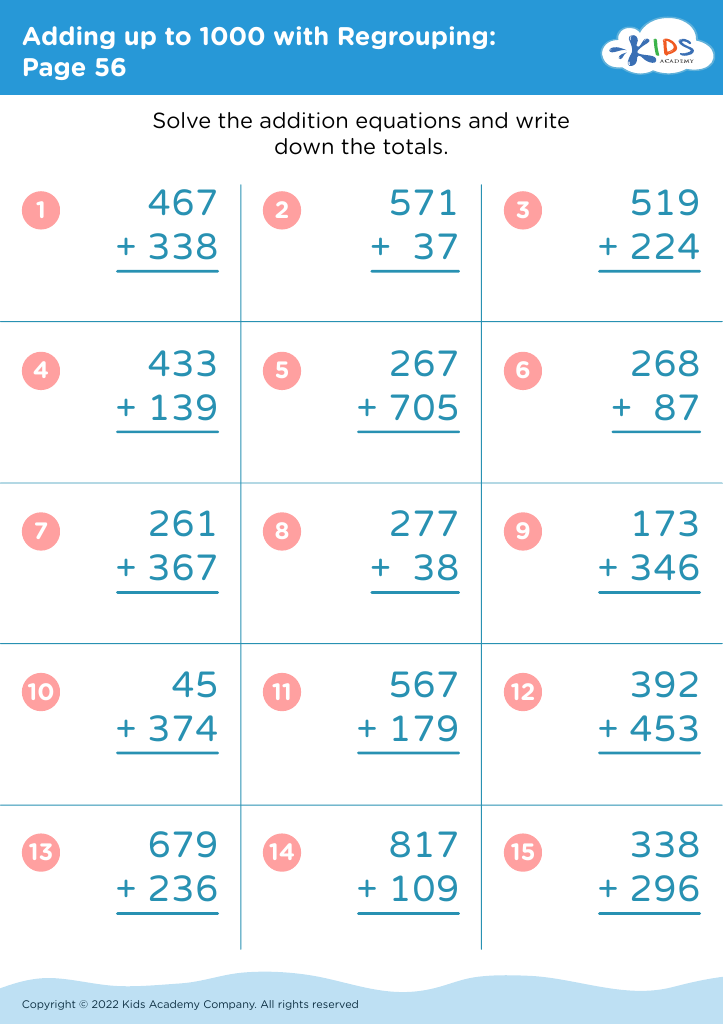
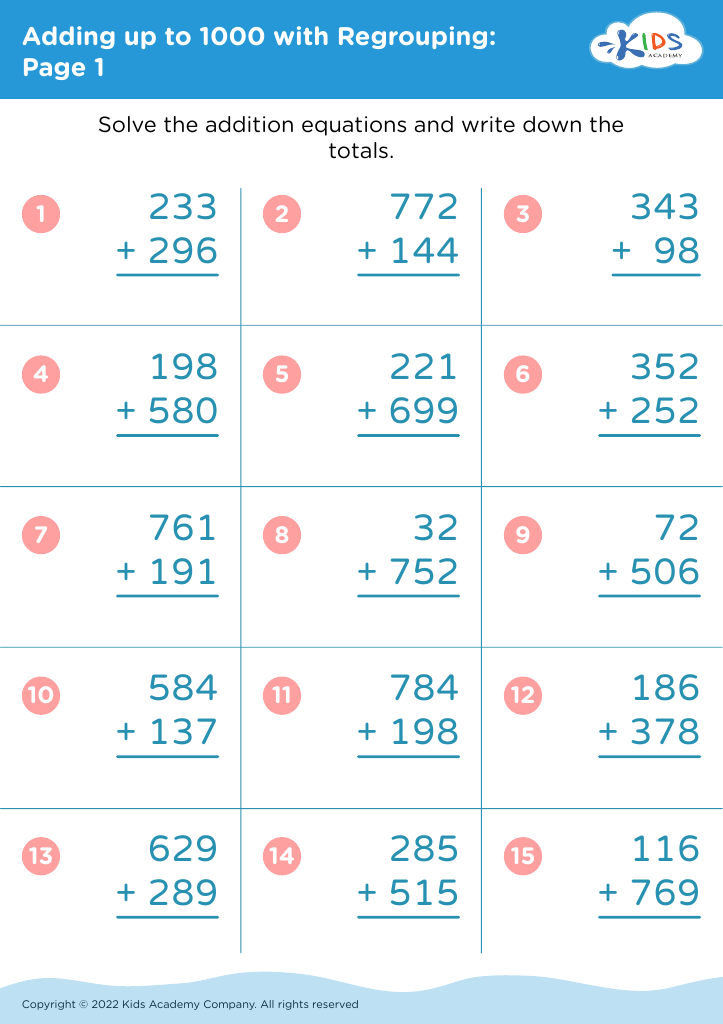
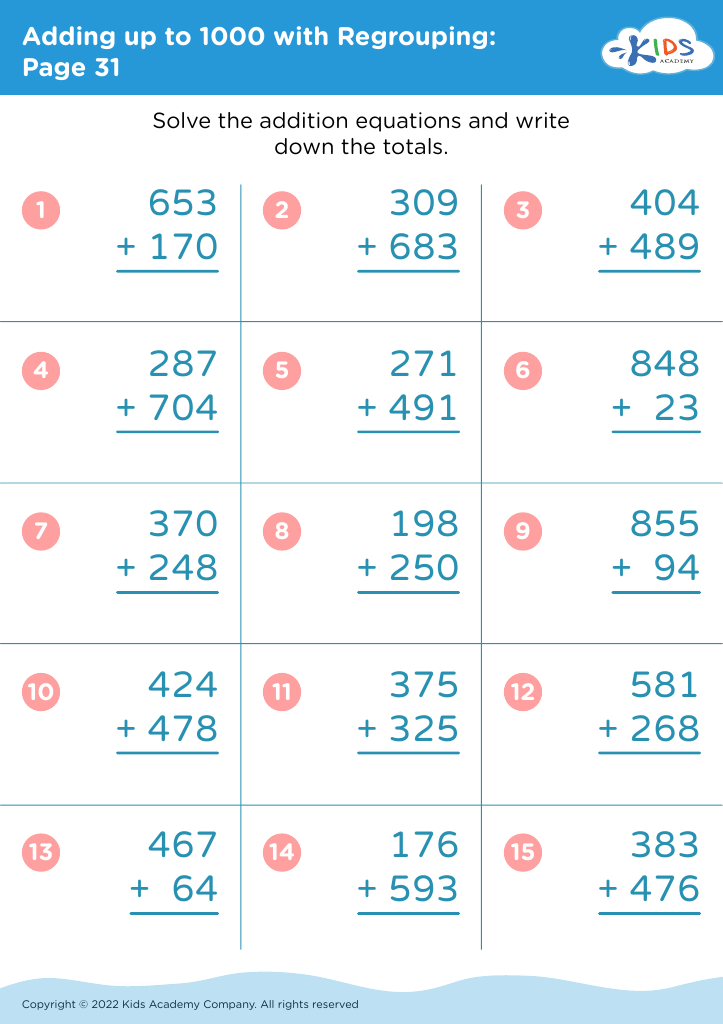
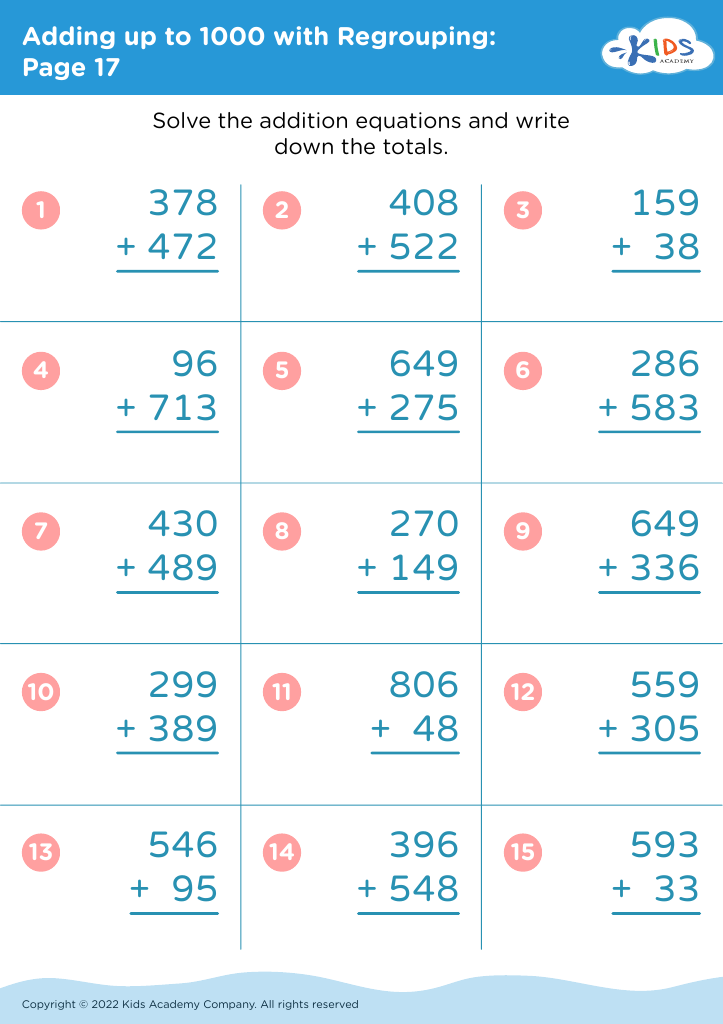
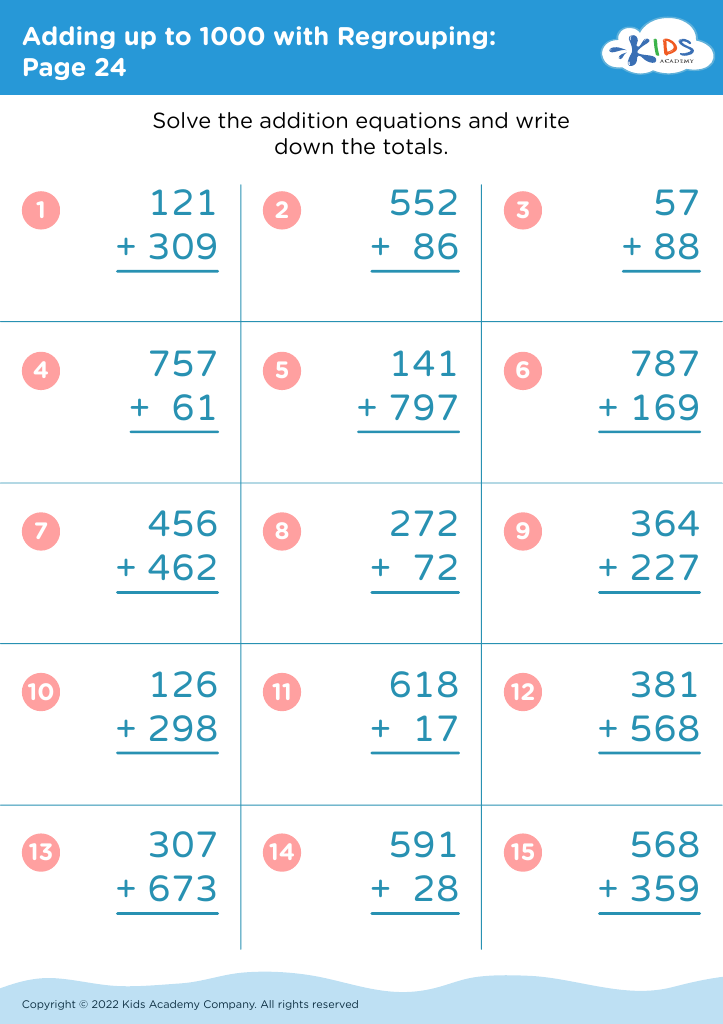
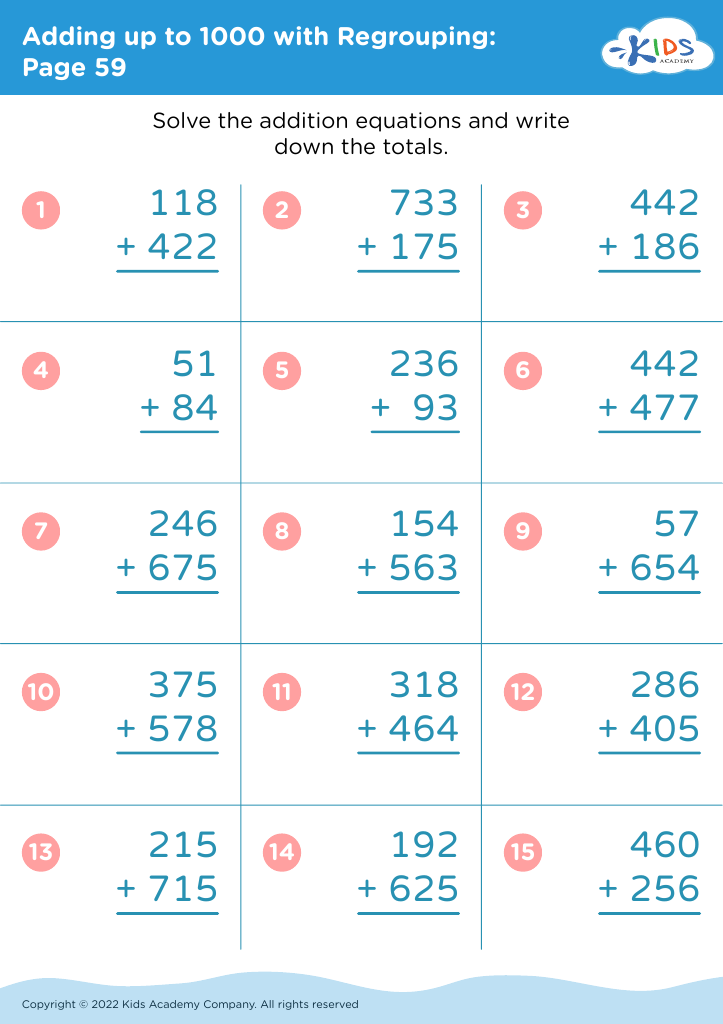
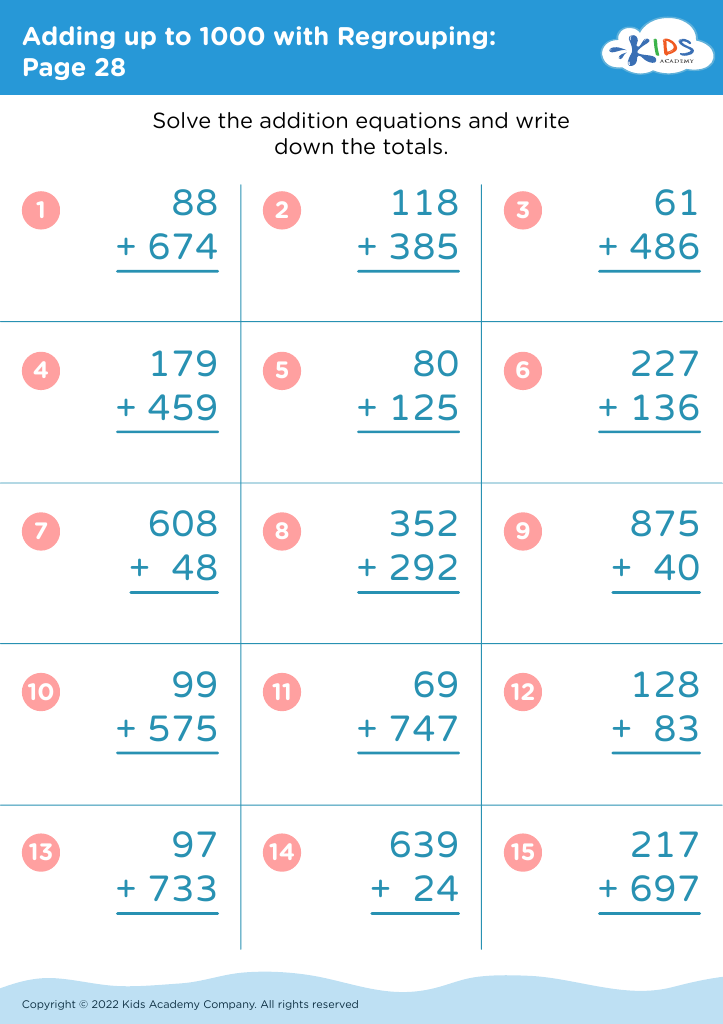
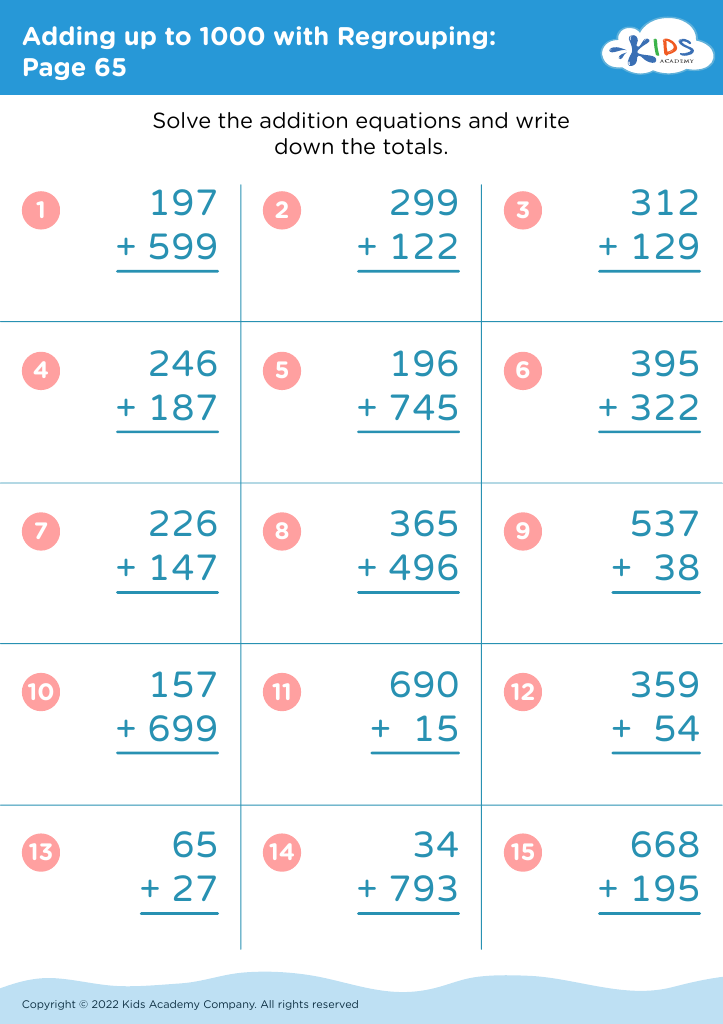
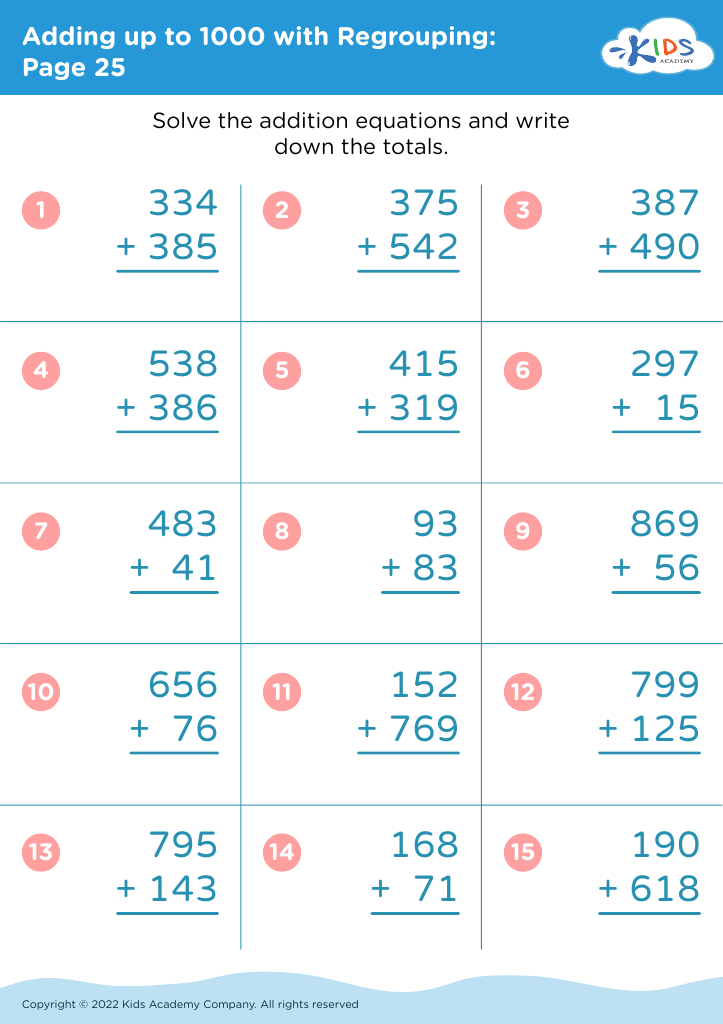
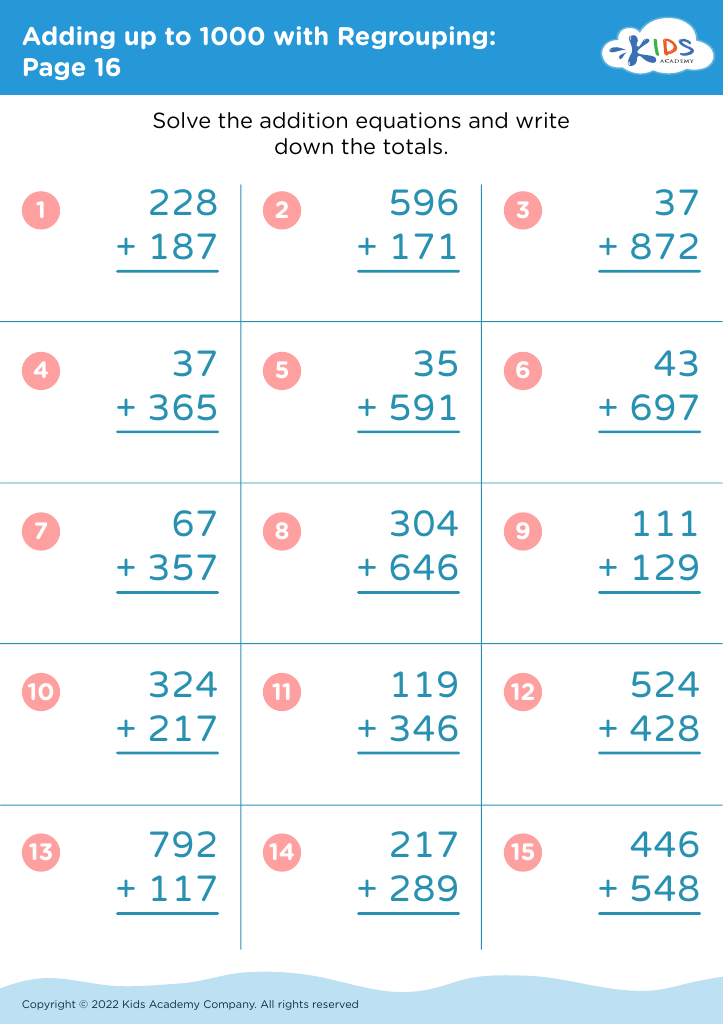


Understanding fractions and adding up to 1,000 with regrouping are essential mathematical skills for children aged 6-8, laying crucial foundations for their future learning. Firstly, fractions introduce kids to the concept of parts and wholes, which is a fundamental idea not just in math but also in everyday life and various sciences. Grasping fractions early helps children develop a better number sense and prepares them for more complex mathematical concepts such as ratios, percentages, and algebra.
Adding up to 1,000 with regrouping, also known as carrying over, hones students' abilities to handle larger numbers and builds their proficiency in multi-step calculations. It promotes logical thinking, mental arithmetic, and strategic problem-solving, all of which are transferable skills valuable across various subjects and real-life scenarios. Solving problems that require regrouping teaches patience and persistence, encouraging a growth mindset essential for academic and personal growth.
By mastering these mathematical skills, children gain confidence and a sense of achievement, fostering a positive attitude toward learning and challenging themselves. Moreover, these competencies equip them to tackle higher-level math topics with greater ease, ensuring continued academic success. Thus, parents and teachers should prioritize these areas to nurture a well-rounded mathematical foundation in young learners.