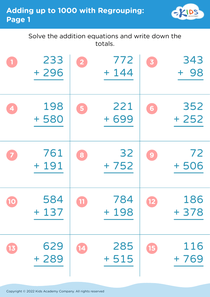
Counting practice Adding up to 1000 Without Regrouping Worksheets for Ages 6-8
4 filtered results
-
From - To
Welcome to our Counting Practice section, featuring worksheets designed specifically for children ages 6-8! These engaging materials focus on addition skills, allowing young learners to add numbers up to 1000 without the need for regrouping. Our thoughtfully crafted worksheets enhance counting abilities, promote confidence, and lay a strong foundation for future math learning. Ideal for classroom use or home practice, these worksheets feature a variety of fun and colorful activities that keep students motivated as they master addition. Encourage your child's mathematical journey and watch them excel with our easy-to-use and targeted counting practice worksheets!
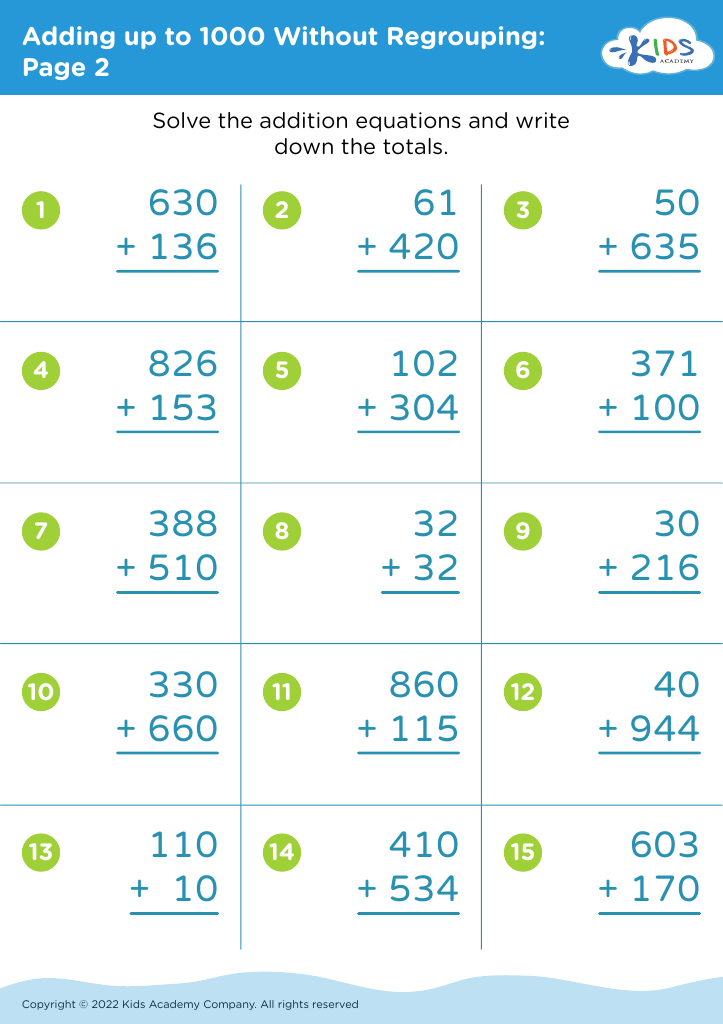
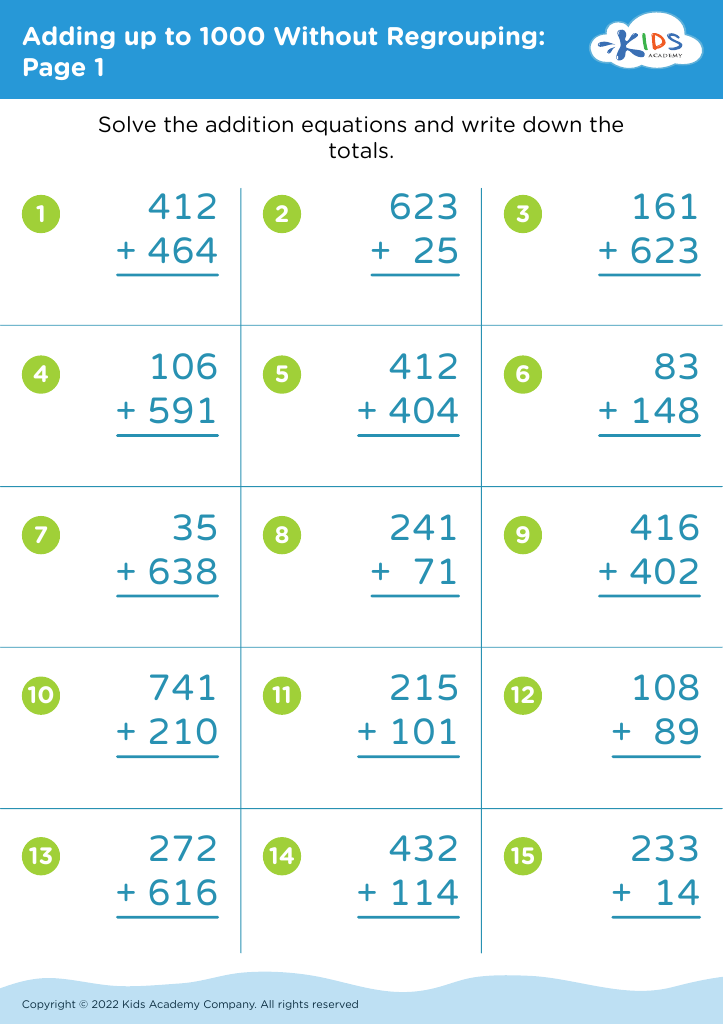
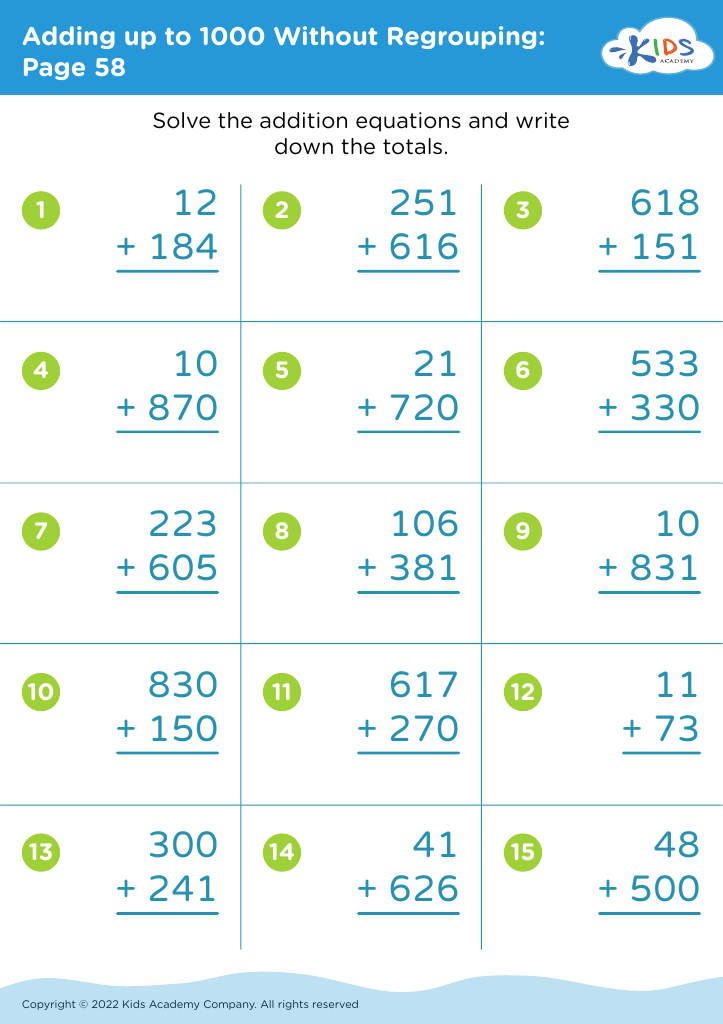
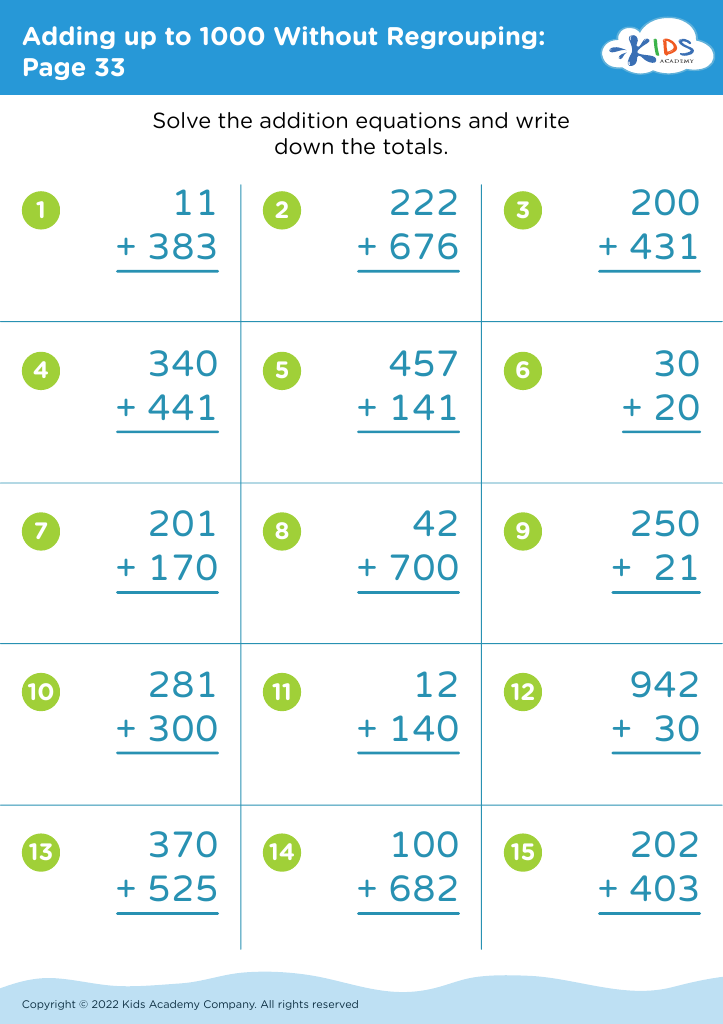


Counting practice, particularly adding up to 1000 without regrouping, is essential for students aged 6-8 as it lays the foundation for their mathematical understanding. At this stage, children are developing their number sense, which is critical for more advanced mathematical concepts. Engaging in this practice reinforces addition skills, enhances cognitive development, and increases confidence in handling numbers.
For parents and teachers, promoting counting practice helps improve a child's problem-solving abilities and boosts their overall academic performance. Understanding addition and number combinations without regrouping allows children to apply these skills in everyday situations, such as budgeting for a small purchase or measuring ingredients for a recipe. Furthermore, it fosters a positive attitude toward mathematics by making the learning process fun and engaging.
These early math skills are not just about numbers; they cultivate analytical thinking and logical reasoning, which are essential in other subjects and areas of life. Repetition and practice at this age solidify concepts and ensure students are well-prepared for future math challenges. Therefore, investing time in counting practice not only supports immediate learning outcomes but also equips children with lifelong skills that extend beyond the classroom.